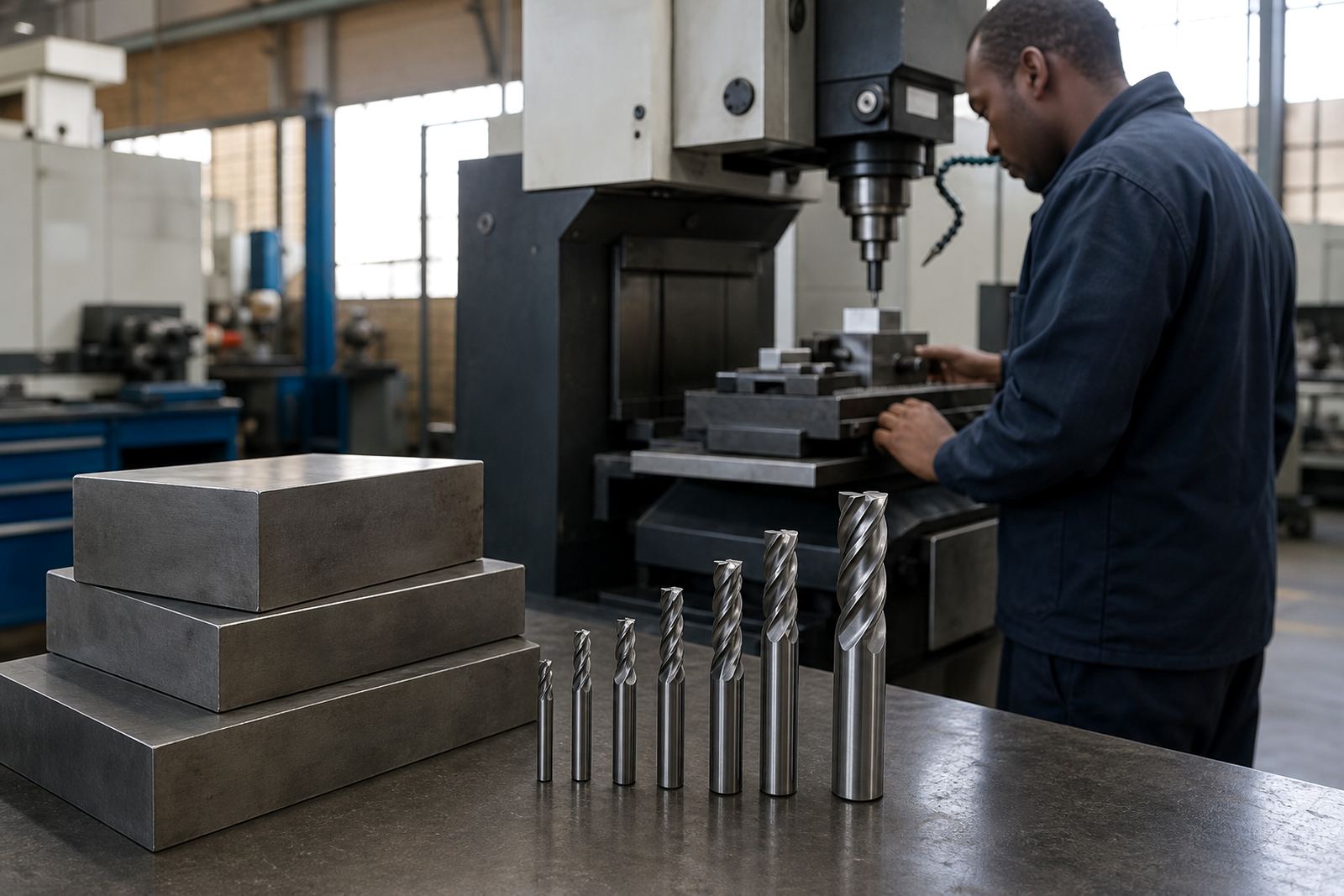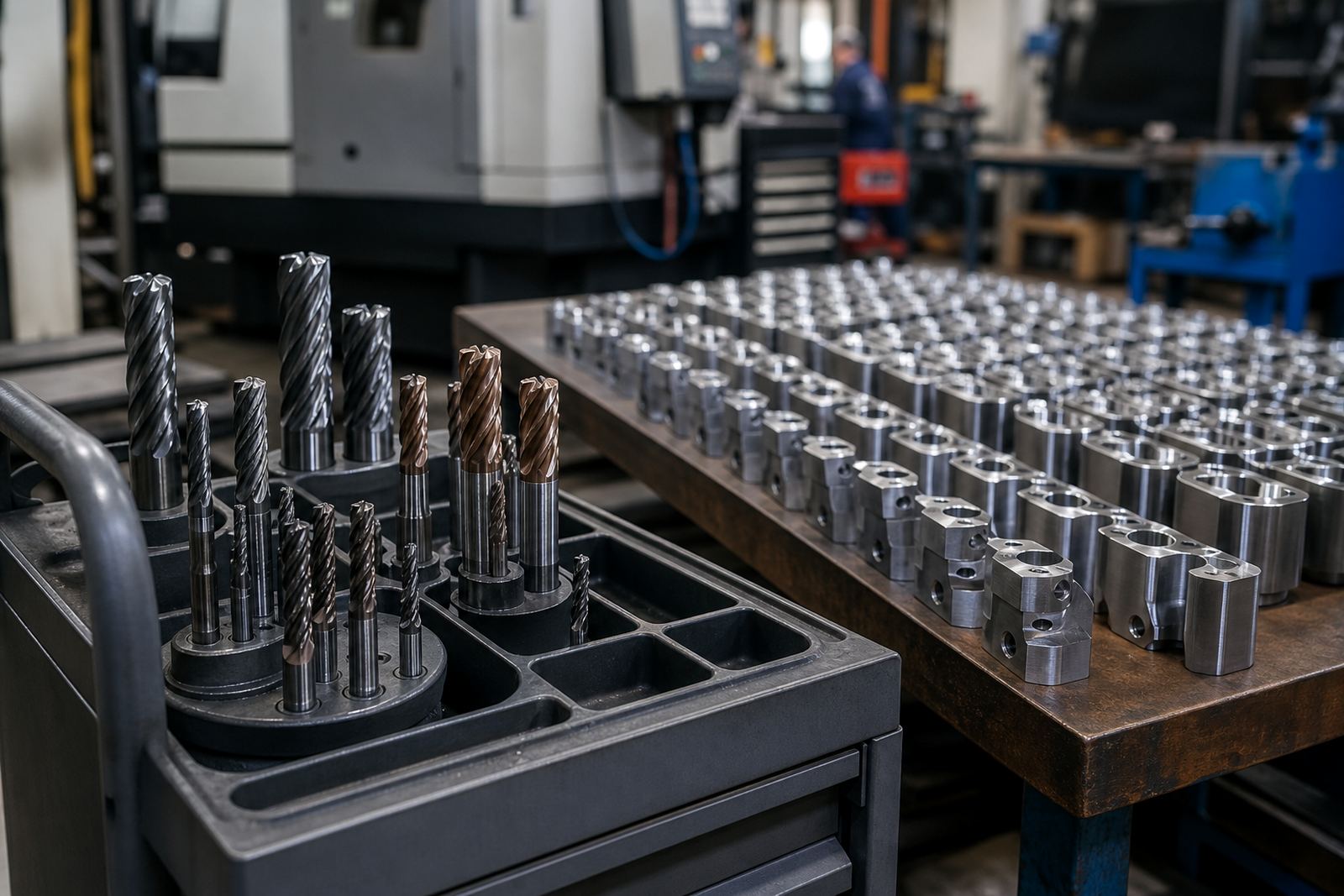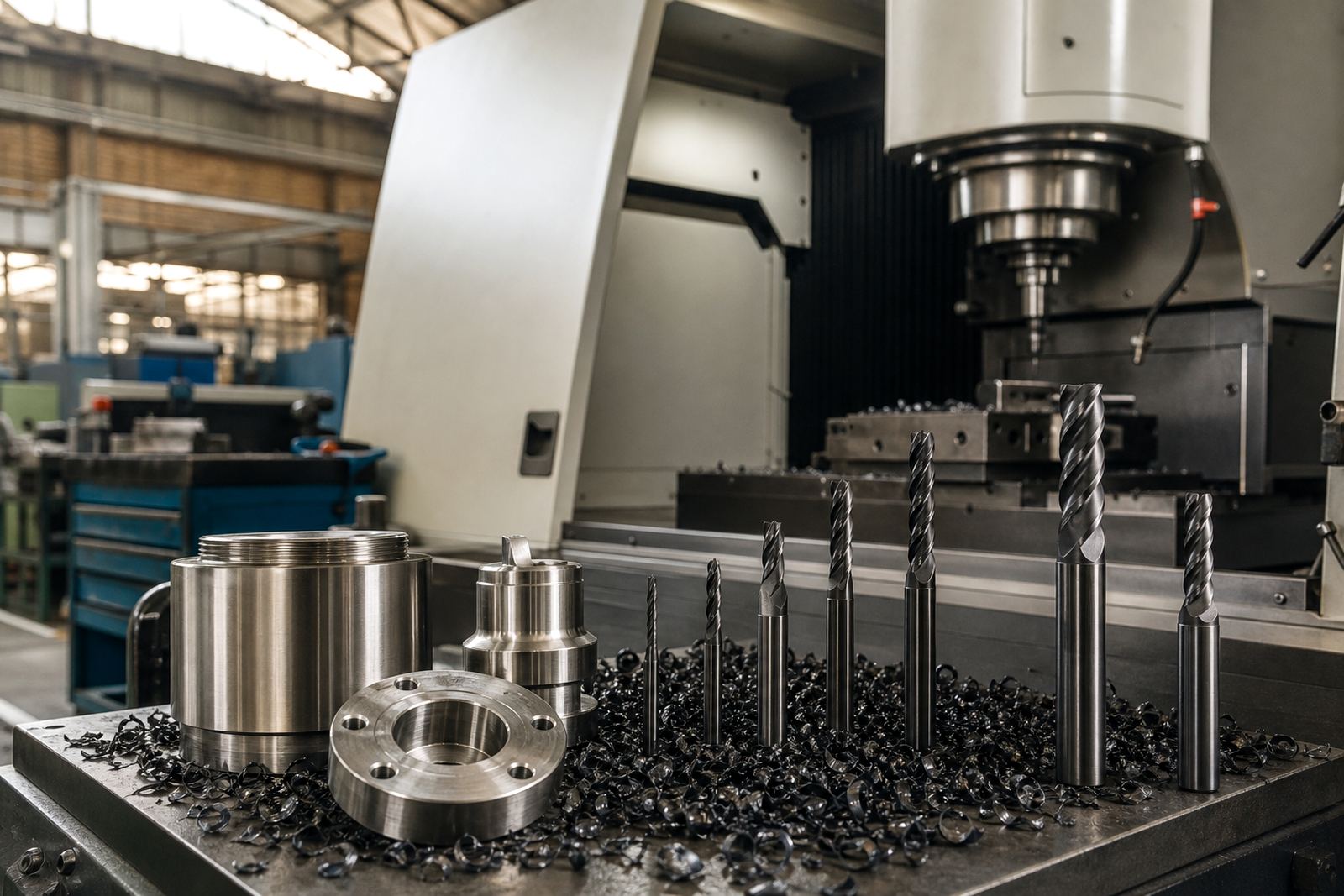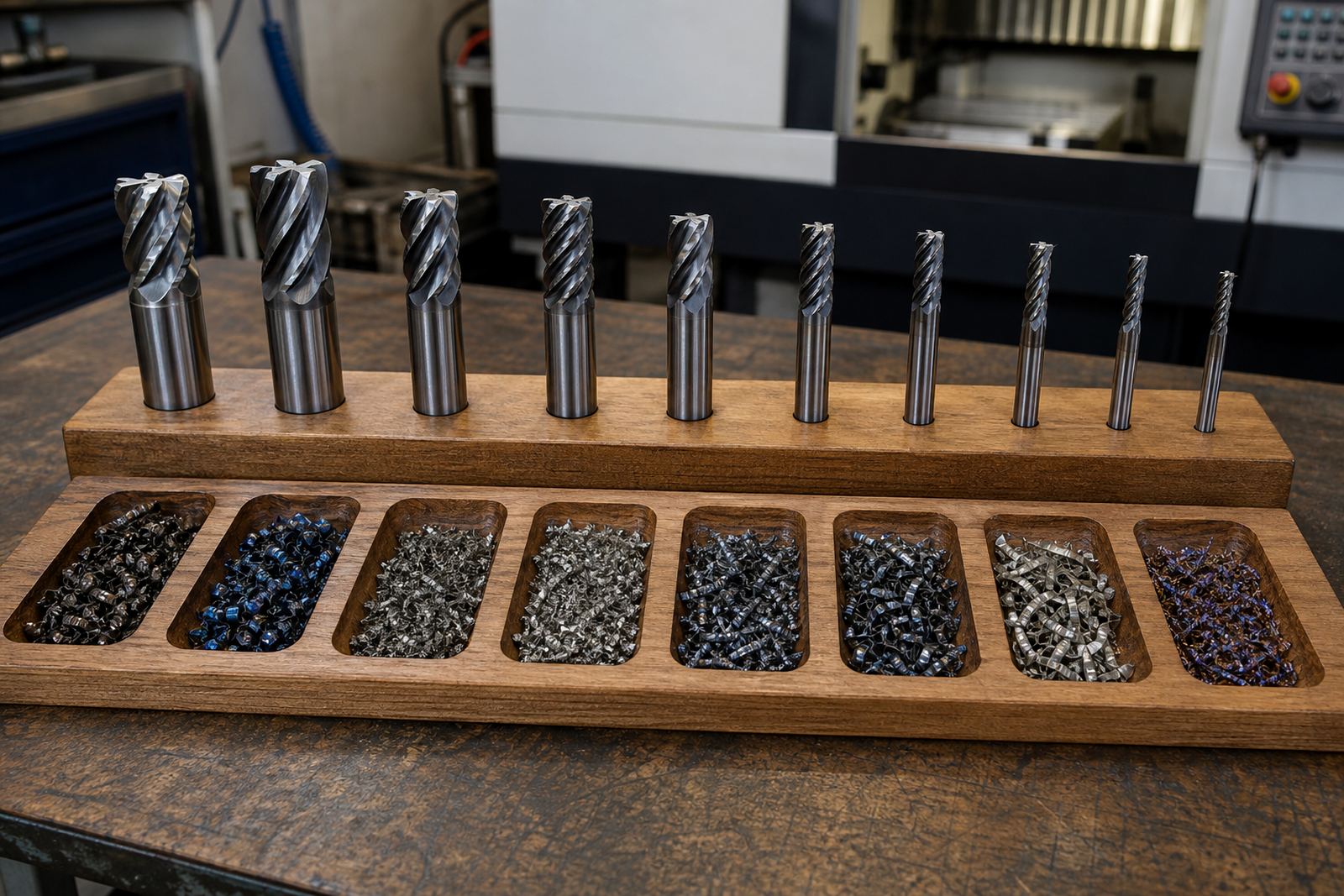
Start with the material and the chip you need to make
Flute count is not only about speed. It starts with the material, the chip form and how fast your machine can clear swarf from the cut. In South African workshops, this matters on long shifts, during load-shedding recovery runs and on jobs where the machine must finish a batch without babysitting.
For soft, gummy or chip-heavy materials, fewer flutes usually give chips more space to escape. For harder materials and finishing passes, more flutes can improve contact and help hold a cleaner wall. The goal is simple: let the cutter remove material without rubbing or recutting chips.
- Soft materials and deep slots: lean toward 2 or 3 flutes.
- General milling on steel and stainless steel: 3 or 4 flutes often works well.
- Finishing and lighter radial cuts: 4 flutes or more can help.
- Always check machine horsepower, spindle speed and coolant delivery before choosing.
When 2 flutes make the most practical sense
Two-flute solid carbide end mills are the practical choice when chip clearance is the main problem. They suit slotting, plunge entry in some materials and work where the cutter needs room to move chips out fast. If the flute pack is too tight, the chips rub, heat rises and tool life drops off quickly.
They are often the safest option for aluminium, plastics and other free-cutting materials, especially on jobs with long continuous cuts. They also help where the machine has limited coolant pressure or where evacuation is partly by air blast. In smaller Gauteng workshops, that can mean the difference between a clean run and a packed slot.
- Choose 2 flutes for deep slots or high chip load work.
- Use them when the cut is interrupted by poor evacuation.
- Good where heat must be reduced by removing chips quickly.
- Check tool life after the first few parts and adjust feed if needed.
Two flutes are not the answer for every job, but on many roughing tasks they are the simplest and most reliable choice.
Why 3 flutes are a strong general-purpose choice
Three flutes sit in the middle and that is why many machinists use them as a daily workhorse. They offer more cutting edges than a two flute tool, but still leave enough space for chip flow in many materials. For general machining in Johannesburg, Pretoria and Boksburg, this balance is often useful on mixed production work.
A 3 flute tool can be a sensible choice when you need decent chip evacuation, reasonable finishing and good productivity in one cutter. It often works well in aluminium, mild steel and some stainless applications, depending on rigidity and the machine setup. On CNC machining centres that run several part numbers in a week, this type of tool can reduce changeovers and keep stock planning simpler.
- Use for mixed jobs where roughing and finishing both matter.
- Suitable when you want better feed capacity than a 4 flute in open cutting.
- Helpful for shops standardising common cutter sizes across multiple machines.
- Confirm flute length and neck relief for the actual depth of cut.
If the job is from a customer in Cape Town or Durban and the material varies from batch to batch, a 3 flute option can give more room to adjust without changing the whole process.
When 4 flutes or more add value
Four flute cutters are common where finish quality, edge stability and lighter chip loads matter. They can be a better fit for profiling, finishing walls and working in materials where the chip is small and manageable. On harder steels or when you need a cleaner surface before the next operation, this extra cutting edge can help.
More flutes can also mean more contact time per revolution, which supports smoother cutting when the setup is rigid and the machine is properly tuned. That said, chip space is reduced, so the risk of chip packing rises if the feed is too slow or the coolant is not doing its job. On humid coastal jobs in Gqeberha or Durban, any sticky residue can make this worse if the cut is not set correctly.
- Choose 4 flutes for finishing and lighter radial engagement.
- Use when the machine is rigid and the part is well supported.
- Best where surface finish matters more than heavy stock removal.
- More flutes are not ideal for deep slots in soft, gummy material.
For some steels and mould work, more than 4 flutes can make sense, but only when chip size is small and the machine can keep the cut clean. Otherwise the cutter starts rubbing instead of cutting.
A practical selection checklist for the shop floor
Before choosing flute count, run through the job in the same way every time. A quick checklist helps you avoid expensive trial and error, especially when a customer wants urgent tool supply or a sample tool trial to prove a process before production standardising.
- What material are you cutting: aluminium, mild steel, stainless steel or cast iron?
- Is the job roughing, slotting, profiling or finishing?
- How deep is the cut and how much chip space do you need?
- Is coolant strong enough, or are you relying on air and gravity?
- How rigid is the machine, the holder and the workholding?
- Do you need the best finish, the fastest cycle time, or the longest tool life?
If you answer those questions honestly, the correct flute count usually becomes clear. A shop in Germiston may run the same part very differently from a shop in Centurion, because spindle power, coolant and material supply can all vary. The cutter should suit the actual process, not just the size on paper.
Common mistakes that shorten tool life
The biggest mistake is treating flute count as a fixed rule. A cutter can fail early simply because it was chosen for the wrong operation. Another common issue is using a higher flute count when there is not enough spindle speed or feed to keep the edge cutting cleanly.
Watch for packed chips, blue edges, squealing, poor finish and sudden size drift. These usually point to the wrong balance between flute count, speed, feed and chip evacuation. In local production, where downtime can be costly and replacement windows are tight, this is where technical support and process troubleshooting pay for themselves.
- Do not use more flutes than the chip space allows.
- Do not slow the feed so much that the tool rubs.
- Do not ignore holder runout and part clamping.
- Do not assume one setting suits every machine in the workshop.
If a cutter is failing early, look at the full setup before blaming the tool alone. Often the answer is in the feed rate, entry method or chip clearing method, not just the flute count.
How CuTools Carbide helps you choose the right cutter
CuTools Carbide supplies solid carbide end mills and drills from Wadeville, Germiston to machining shops across South Africa. The team supports tool selection, application support, speed feed advice, tool life optimisation and material matching for real production work, not theory. Whether you are planning stock for Johannesburg, Pretoria, Cape Town, Durban or Gqeberha, the aim is to match the cutter to the job properly.
With advice from Marius van der Merwe and the team, you can compare flute count against the material, setup and production target before ordering. That matters when you need technical quotations, sample tool trials or urgent tool supply and cannot afford a wrong pick. A good flute choice saves time on the machine and reduces scrap at the end of the shift.
Use the enquiry form on the contact page if you want help narrowing down the options for your next job. Give the material, machine type, cut depth and finish requirement, and the recommendation can be matched more accurately to your process.