Start With the Steel Grade and the Finish You Need
Before you pick a cutter, identify the material properly. Mild steel is usually easier on tools, while alloy steel can push up cutting forces and heat. A part that machines nicely in flat plate may behave very differently once it has scale, weld heat affected zones or interrupted cuts from pockets and keyways.
For general CNC work in Germiston, Johannesburg and Pretoria, start by noting the material spec, hardness if known, the finish required and whether the cut is roughing or finishing. If the job includes long run times, consider how load-shedding, coolant interruption and operator changeovers may affect consistency. A cutter that works for a short trial may not hold up over a full shift.
- Confirm the steel type and any heat treatment
- Check if the cut is full slot, side milling or ramping
- Note whether the machine is rigid enough for higher feed rates
- Allow for scale, burrs and any previous machining marks
At CuTools Carbide in Wadeville, Germiston, we support shops across South Africa with tool selection and material matching, so the cutter suits the part and the machine, not just the drawing.
Choose Flute Count, Helix and Core Strength
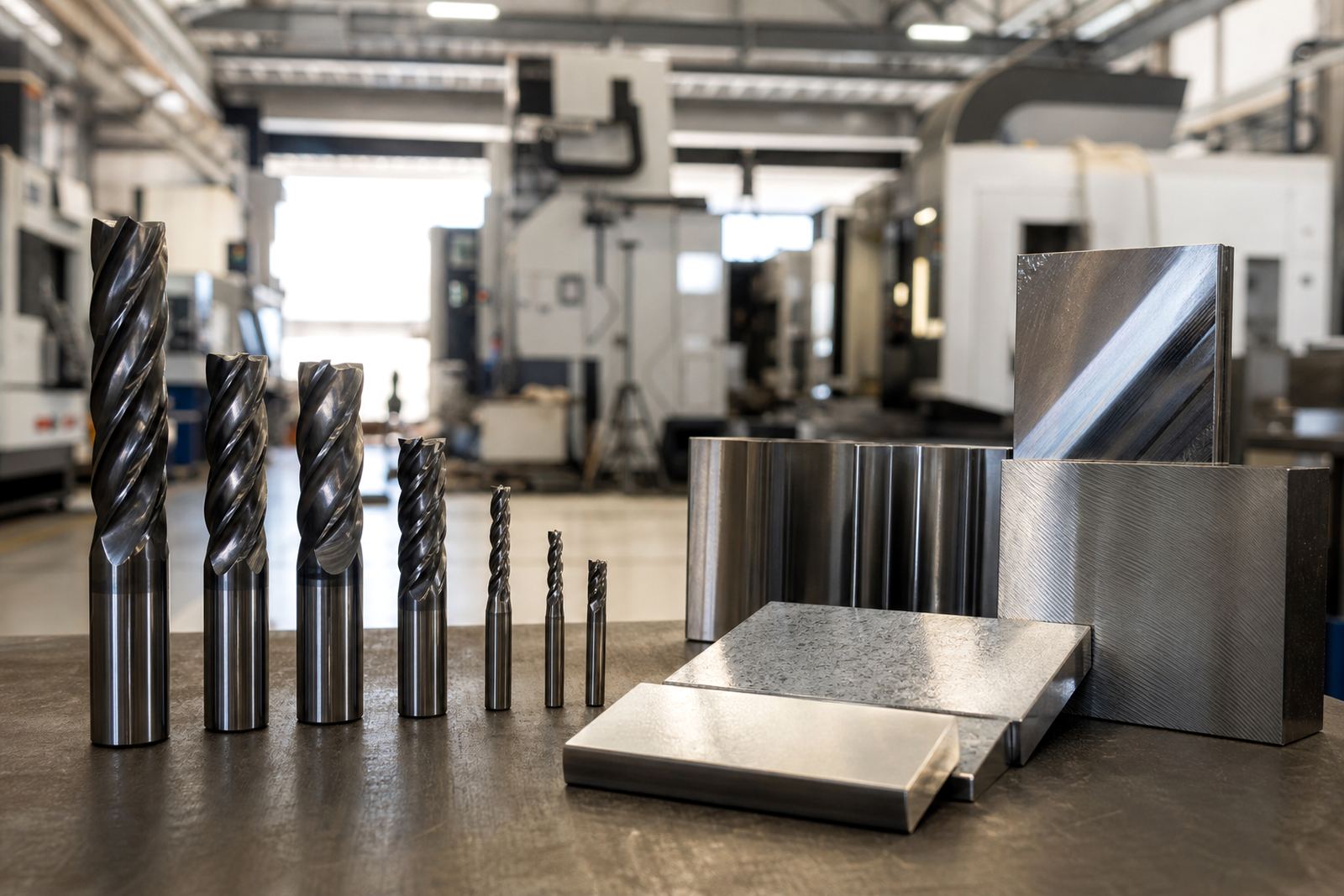
For steel milling, the flute count is one of the first choices to get right. Fewer flutes leave more space for chip evacuation, which helps on roughing and deeper cuts. More flutes can improve finish and stability on lighter cuts, but they need the machine to keep chip load under control.
A general rule is simple: use a 3 flute or 4 flute solid carbide end mill for most steel work, then move higher only when the cut is lighter and chip evacuation is under control. A stronger core helps resist chatter in harder alloy steels. Helix angle also matters. A moderate helix often gives a good balance between smooth cutting and edge strength.
- 3 flute: good for roughing and chip clearance
- 4 flute: common all-round choice for steel
- Higher flute count: better for finishing and lighter engagement
- Variable helix: useful where chatter is a concern
If your shop in Boksburg or Alberton is running older machines, keep the geometry practical. A cutter that demands perfect rigidity may not suit real production conditions.
Match Diameter, Stick-Out and Reach to the Job
The strongest cutter in the world will still fail if it is hanging out too far from the holder. Stick-out should be kept as short as possible while still clearing the part and fixture. In many steel jobs, a shorter, stiffer cutter gives better tool life than a longer one with the same diameter.
Diameter choice depends on the feature size and the machine power available. Small diameters can be useful for detail work, but they are easier to overload in steel. Larger diameters remove more material, yet they need stable workholding and enough spindle power. If the job has deep pockets or wall reach, check whether a necked tool or long-reach option is actually necessary before ordering one.
- Keep stick-out as short as the setup allows
- Use the smallest diameter that still meets cycle time targets
- Check holder balance and tool clamping before running at speed
- For deep work, confirm flute length and overall length before quoting the job
Our technical applications support helps shops in Centurion, Cape Town, Durban and Gqeberha choose tools that fit the setup, not just the drawing dimensions.
Use the Right Coating and Edge Prep for Steel
Coating choice affects heat, wear and chip flow. For steel, a suitable coating can improve life and reduce built-up edge, especially on mild steel where gummy chips can cling to the cutting edge. Edge preparation matters too. A sharp edge suits freer cutting, while a slightly honed edge can handle heavier loads and improve edge strength in alloy steels.
There is no single best option for every part. If the job is a light finishing pass, a sharper edge may give a cleaner result. If the job is roughing or the material is abrasive, a tougher edge prep may last longer. The correct choice also depends on coolant, through-tool cooling if available and whether the cut is dry or wet.
- Use coatings and edge prep matched to the steel grade
- Ask for a tool that suits dry, mist or flood conditions
- Consider chip colour and edge wear after the first batch
- Do not force one tool to suit every material in the workshop
Coastal humidity in Durban or Gqeberha can also affect storage and tooling handling, so keep stock dry and packaged properly to avoid corrosion on holders and cutting edges.
Set Speeds, Feeds and Step Over Carefully
Cutting data should be treated as a starting point, then tuned on the machine. In steel, too slow can cause rubbing and premature wear, while too fast can overheat the edge or increase chatter. Feed per tooth, radial engagement and axial depth all work together. Changing one without adjusting the others can upset the cut.
For roughing, many shops reduce radial engagement and use a steadier feed to keep chip load healthy. For finishing, lighter step over and stable machine conditions usually matter more than brute force. If the machine is running across multiple shifts, note the settings that actually hold tool life and part size over time. That is how tool life optimisation pays off in rand, not just in theory.
- Start from the recommended cutting data, then test in small steps
- Watch for squeal, chip colour changes and edge chipping
- Keep coolant flow consistent through the cut
- Record the settings that give the best life per part
Johan Smit and the technical team at CuTools Carbide can help with speed feed advice and sample tool trials, especially when a job is giving inconsistent results.
Use a Simple Shop Checklist Before You Order
A practical buying check saves time and avoids emergency calls after the tool is already on the machine. The best result comes when the tool, machine and part are reviewed together. That is why production standardising and stock planning matter as much as the cutter itself.
Use this checklist before placing an order or requesting a technical quotation:
- Material grade confirmed and, if possible, hardness known
- Roughing or finishing defined
- Tool diameter, flute count and length checked against the fixture
- Holder type and machine spindle size confirmed
- Coolant method known
- Expected batch size and tool life target set
- Urgent backup stock identified for critical jobs
Our warehouse in Wadeville supports urgent tool supply, while Thabo Molefe and the operations team keep stock moving for repeat jobs. If a client needs a sample tool trial or material match for a new steel part, that can be arranged through the enquiry form on our contact page.
When to Call for Technical Support
If the job is burning edges, leaving poor finish or eating tools too quickly, the issue may not be the cutter alone. The problem could be runout, clamping, machine vibration, incorrect cutter length or the wrong strategy for the steel. That is where on site consultation and process troubleshooting help.
Marius van der Merwe leads CuTools Carbide from Germiston, with support from Lerato Mokoena, Anele Dlamini, Priya Naidoo, Zanele Khumalo and the rest of the team. We work with CNC machining shops across South Africa and supply from Germiston, Johannesburg, Pretoria, Boksburg, Alberton, Centurion, Cape Town and Durban. If you need a solid carbide end mill or drill for steel, we can help match the tool to the job and keep production moving.
For many shops, the answer is not a more aggressive tool. It is a better-matched one that gives stable life, cleaner parts and less stoppage over the week.