
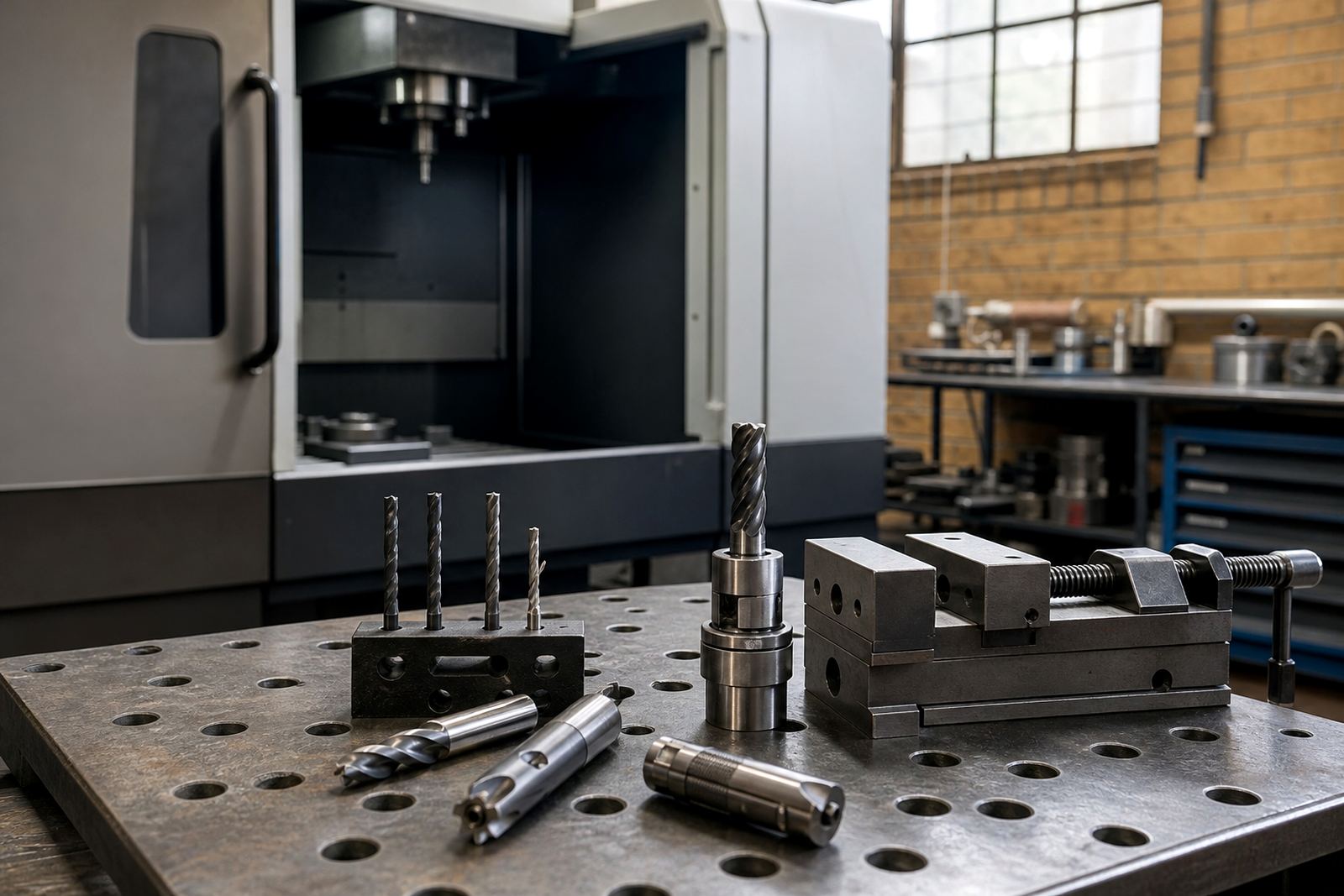
Why a short spot can matter on CNC work
A drill does not always start exactly where the program says it should, especially on thin material, hard skins or surfaces with a slight curve. The cutting lips want to follow the path of least resistance, so if the tool hits off centre it can skate before it bites. A spotting tool makes a small, controlled start point that helps guide the drill into the correct position.
In a busy shop, that small step can save time later. Less wandering means fewer rejected parts, less rework and cleaner hole entry. It also helps when you are running tight pitch patterns or matching drilled holes to tapped, reamed or dowelled features. On some jobs you can drill straight through with no issue, but on others the extra step is good insurance.
Materials where spotting pays off most
Spotting is especially useful on materials that are hard on the first contact point or have uneven surface conditions. That includes scaled mild steel, castings, stainless, aluminium with a tough oxide layer and parts that have been laser cut, plasma cut or flame cut. In these cases the drill can deflect if it enters without a proper start.
- Cast or formed surfaces where the entry face is not perfectly flat
- Thin plate where the drill can pull across the surface
- Stainless steel where work hardening starts early
- Longer drills where flute length and tool overhang increase movement
- Small diameter drills that are more sensitive to runout and side load
In Gauteng job shops, we often see this on general engineering parts where the blanks come in from a laser cutter and need accurate holes for assembly. A light spot can keep the drill honest, especially when the part is clamped in a hurry and needs to go through the machine same day.
When spotting is worth the extra cycle time
Not every hole needs spotting. If the material is forgiving, the hole is large enough and the drill is short and stiff, you may be fine without it. The trick is knowing when the added cycle time is worth it. If a job has close positional tolerances, deep holes or critical fit-up, the spotting step is usually cheaper than scrapping parts.
Use spotting when the hole has to stay exactly where it is for the next process. That includes bolt circles, pilot holes for tapping, holes that must line up across multiple operations and workpieces where appearance matters too. A neat start reduces burrs and helps the drill enter more cleanly, which can make deburring quicker later on.
- Close tolerance positional holes
- Deep holes or high length-to-diameter ratios
- Parts needing tapped, reamed or pressed fit follow-up operations
- Jobs with surface scale, coating or slight face distortion
- Production runs where consistency matters across many parts
Choosing the right spotter and geometry
The spot tool should do just enough to guide the drill, not create a large cone that makes the drill lose guidance. A common mistake is using a spot that is too wide or too deep. That can reduce the drill’s support instead of improving it. The goal is a clean, shallow location mark with a stable entry angle.
In practice, tool selection depends on the drill type, hole size and material. Some setups need a very short spot to break the surface only. Others need a more defined chamfer to handle a tougher skin. Tool runout, spindle condition and toolholder balance also matter. If the holder is not running true, no spot will fully fix the problem, it will just hide it for a while.
- Keep the spot shallow unless the material really needs more support
- Match the spot diameter to the drill point and intended hole size
- Check tool wear, especially on production runs
- Use the same holder setup where possible for repeatable results
A Germiston example from a busy production floor
A typical example comes from a Wadeville job shop making brackets for industrial assemblies. The parts were cut from 8 mm plate and had to line up with mating components from another process. The first batch showed slight hole wander on the outer positions, nothing dramatic, but enough to create fit problems during assembly. The team tried adjusting feeds and speeds first, but the issue kept showing up on the outer holes.
Once a spot was added before drilling, the holes stayed where they were meant to be and the finish improved as well. The cycle time went up a little, but the scrap rate dropped and the fitter on the floor stopped chasing misaligned parts. That is often the trade-off: a few extra seconds in cutting to avoid minutes of sorting, grinding and rework later. For a shop working across Johannesburg and Pretoria, that makes a real difference on a Friday afternoon when the machine queue is full and the order is urgent.
Practical rules for shops that want cleaner holes
If you are deciding whether to spot before drilling, start with the part quality requirement and the material condition. Then look at tool length, hole size and how stable the setup really is. A short, rigid drill in clean aluminium may not need it. A small carbide drill entering stainless through a rough face very likely does.
Good spotting practice is about control, not habit. If you spot every hole by default, you can waste time and create other problems. If you never spot, you may spend more on broken drills, scrap and machine time. The best approach is to standardise by job type and material, then review the results with the operators and setters. That way the shop builds a process that holds up under load-shedding interruptions, shift handovers and the normal pressure of production.
- Use spotting on jobs with tight hole location tolerances
- Avoid over-spotting and oversized cone starts
- Review the first parts before committing to the full run
- Record which materials and drill sizes need a spot every time
- Keep an eye on spindle runout and tool wear, especially in repeat work
Keep drilling accurate without adding wasted effort
Spotting before drilling is not about making every job slower. It is about choosing where a small extra step protects quality, tool life and throughput. On the right work it helps position holes more accurately, keeps the drill from wandering and gives a cleaner start for the rest of the machining process.
For CNC shops in Germiston, Boksburg, Alberton, Centurion and beyond, the best results come from matching the tool to the material and the job requirement. If the hole matters, the first cut matters too. A sensible spot can save a lot of trouble further down the line, and that is usually the better bargain.