Why stainless needs a different cutting mindset
Stainless is not difficult because it is soft, it is difficult because it work hardens when the cutter rubs instead of bites. Once the edge starts to polish rather than cut, heat climbs, chips turn stringy and tool life drops sharply. That is why stainless jobs need a calmer approach than carbon steel or mild steel work.
In machining shops around Germiston, Johannesburg and Pretoria, the same mistake comes up often: using a general purpose setting that looks fine on paper but runs too light in practice. If the tool is only skimming the surface, the material hardens under the edge and the next pass gets tougher. The result is chatter, blue chips and a finish that looks patchy.
For a stable result, think in terms of a positive cutting action, controlled engagement and enough feed to keep the edge in clean contact. It sounds simple, yet it is the difference between a part that runs in one setup and a part that keeps coming back for rework.
Heat control starts before the first pass
Heat in stainless machining is not only a spindle speed issue. It starts with toolpath choice, clamping, coolant delivery and even the order in which features are machined. If the tool spends too long rubbing in corners or at the bottom of a pocket, the edge loses its bite very quickly.
Good heat control usually means shorter dwell, smoother entry and a cut that keeps the chip moving. In South African workshops where power interruptions can interrupt cycle timing, it also helps to restart jobs with the same coolant flow and tool condition each time. A warm tool that has already done half a cycle can behave differently after a stop, so check the edge before continuing.
- Use a sharp, purpose selected carbide tool rather than a worn general cutter.
- Keep coolant or air blast aimed at the cut, not just the part.
- Avoid long pauses in the cut, especially on thin wall parts.
- Reduce recutting of chips in deep pockets and slot work.
Edge protection depends on feed, chip load and chip shape
Stainless wants a cutter that stays engaged enough to form a proper chip. Too little feed lets the edge rub. Too much feed can overload the flute and cause micro chipping, especially on smaller diameters. The sweet spot is usually where the chip comes off as a short, bright curl rather than dust or long snarls.
Speed and feed advice should be matched to the exact grade and machine condition. A well tuned CNC machining centre in Durban or Cape Town may carry a different result from a machine in an older plant in Boksburg if spindle condition, rigidity and coolant pressure vary. That is why tool life optimisation is not just about a table of values, it is about how the tool behaves in your shop.
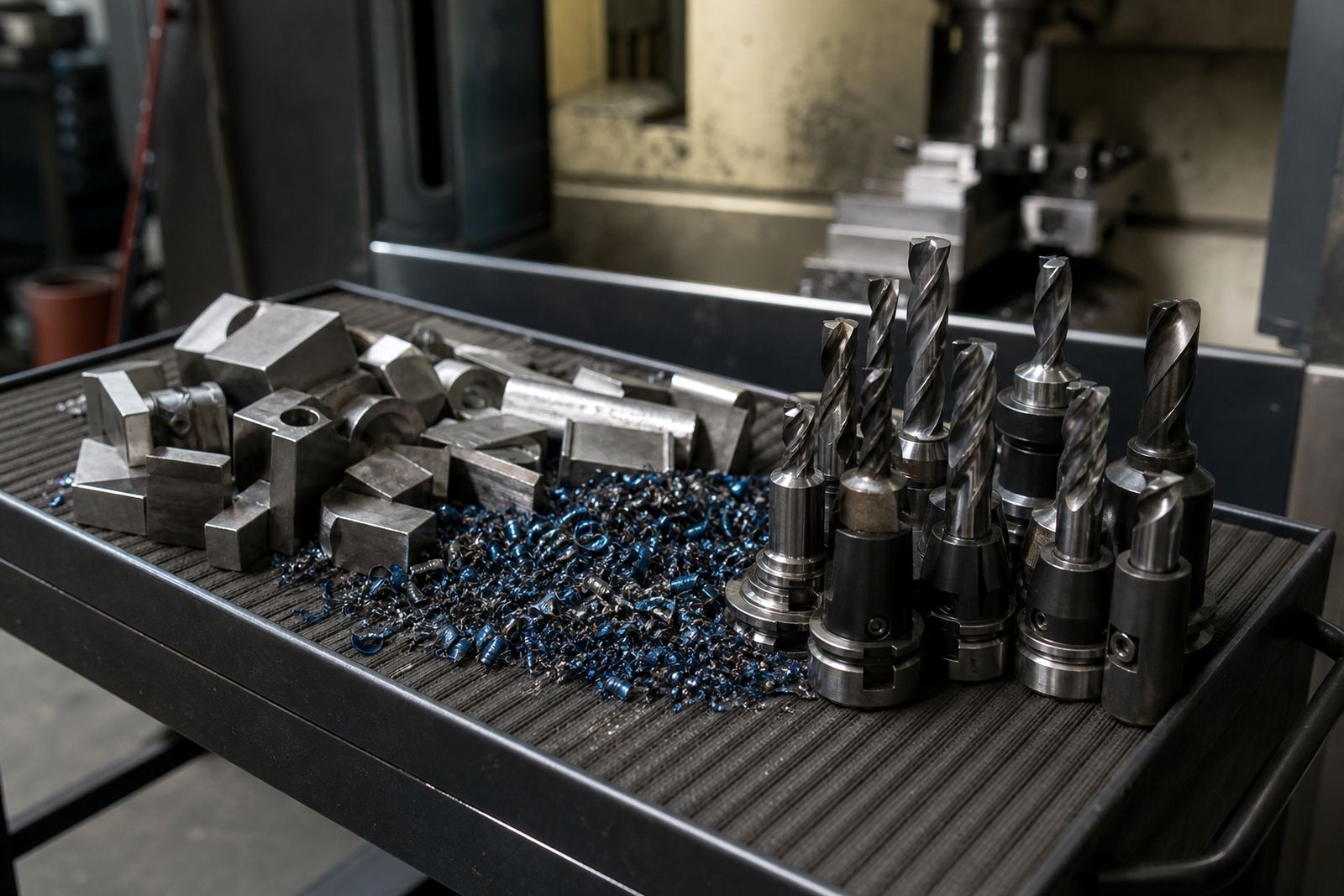
- Watch for blue or straw coloured chips, which often point to excess heat.
- If chips are long and stringy, increase cutting action and improve evacuation.
- If the edge chips early, check entry method, runout and tool stickout.
- On smaller drills and end mills, keep the setup as rigid as possible.
Material matching matters more than most shops admit
Not all stainless behaves the same way. Austenitic grades can be gummy and harden quickly, while other grades may be more abrasive or more demanding on the edge in different ways. A tool that works well on one component might fail early on another, even if both are called stainless by the client.
This is where material matching saves money. If the job is a batch of valve bodies for a Randburg customer or a bracket run for a Gqeberha plant, the right flute count, corner design and coating choice can make a big difference. The aim is not just to cut the material, but to cut it consistently across the full batch.
We often see shops trying to force one end mill to do roughing, finishing and slotting all in one. That usually shortens edge life and makes surface quality drift from part to part. A better plan is to separate duties, even if it means using more than one tool on the same job.
What to check when stainless starts giving trouble
When a stainless job begins to squeal, mark the part or throw out a bad finish, the problem is usually visible before the tool fails completely. The signs are often small at first, so a quick checksheet on the floor can save a lot of scrap.
- Check tool stickout and holder grip.
- Measure runout, especially on small diameter drills and end mills.
- Inspect coolant delivery, blocked nozzles and weak flow.
- Look at chip colour, chip size and whether chips are recutting.
- Review entry moves, stepovers and dwell points in the program.
In coastal areas, humidity can also affect storage and setup. Tools left exposed near open roller doors can pick up moisture and grime quicker than expected. That does not sound like much, but over a week it can affect the consistency of a precision tool before it even reaches the spindle.
A Germiston example: one job, two tool choices
A machining shop in Wadeville was running a stainless flange job with repeated finish issues on the bore and outside edge. The first setup used a general end mill and a light finishing pass, but the cutter was rubbing in the corners and the part was work hardening before the last pass. Tool life was poor and the operator was spending too much time cleaning up edges.
After reviewing the application, the shop changed to a more suitable solid carbide tool with a more stable cutting action and adjusted the feed so the edge stayed active. The cut became more controlled, the chips shortened, and the finish improved across the batch. The team also standardised the order of operations so the tighter features were machined before the part started heating up too much.
The result was not dramatic on paper, but it mattered on the floor: less rework, fewer tool changes, and a cleaner routine for the next production run. That is often what good stainless cutting looks like, steady and predictable rather than flashy.
Keeping stainless stable in South African production
Shops supplying Johannesburg, Pretoria, Cape Town, Durban and surrounding industrial areas face the same pressure: parts must be on time, and tool cost has to stay under control. Stainless work punishes guesswork, so the most useful habit is to standardise what works and record it properly.
That means keeping a simple job note for tool type, speed feed range, coolant approach, stickout and the number of parts achieved before the edge dropped off. It also means reviewing the setup after a production change, not only after a failure. If a new operator, a different machine or a new batch of material changes the result, the process should be updated quickly.
For shops that need help with tool selection, process troubleshooting, sample tool trials or urgent tool supply, the best starting point is a clear enquiry with the material grade, machine type and the cut conditions you are using now. Stainless machining rewards detail, and small adjustments often pay off faster than a full process overhaul.