Why tolerances move when tooling starts to wear
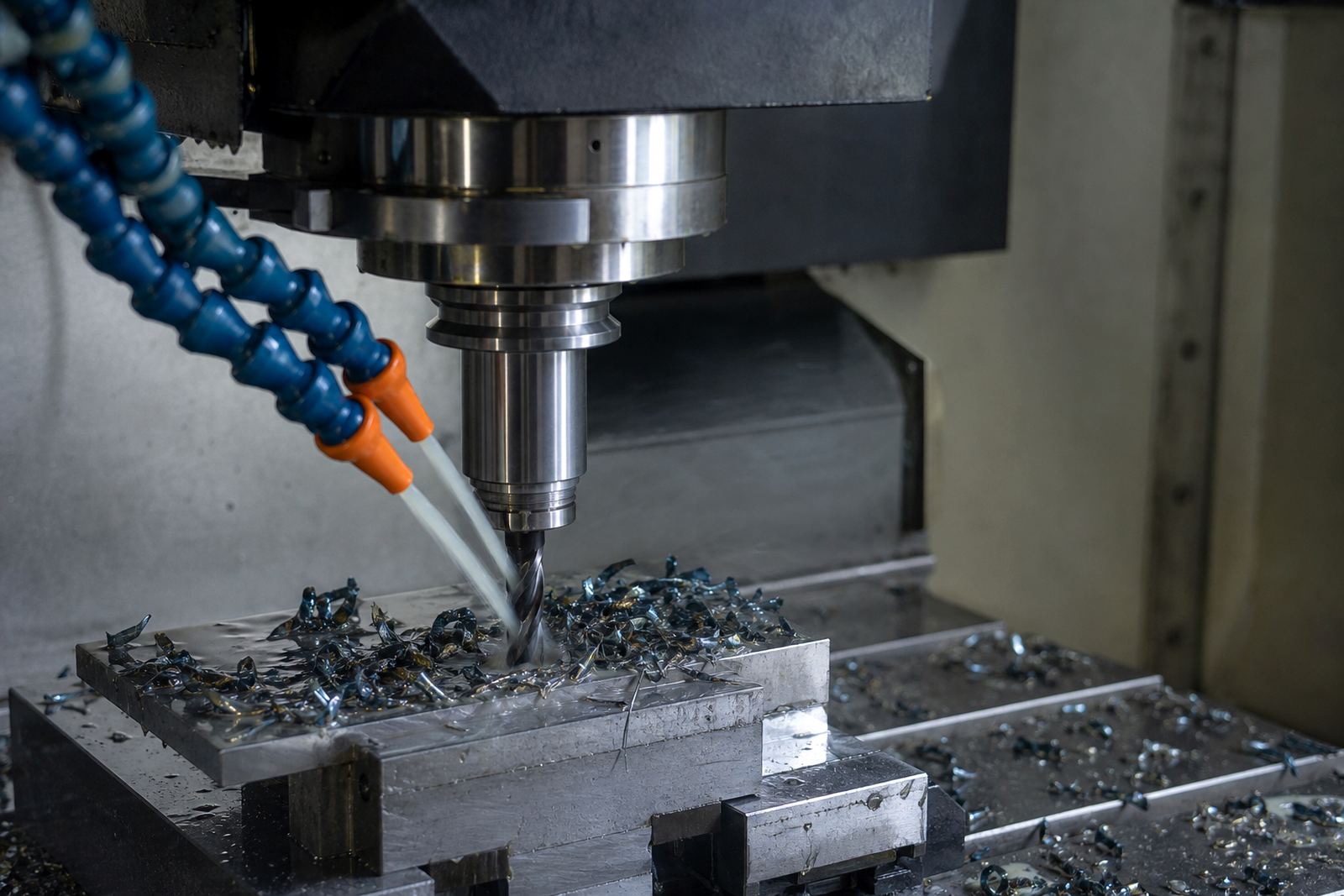
Most machinists know the moment a job starts drifting. The first parts measure fine, then a bore opens up a little, a slot runs wide, or the finish changes and the operator has to chase offsets. Tool wear is often the quiet cause. Even on a well maintained CNC machining centre, a cutter that is losing its edge will change cutting forces, chip flow and heat generation.
Solid carbide end mills and drills are chosen for accuracy because they hold form well under load, but they still need the right conditions. A cutter that is too long, too blunt, or matched poorly to the material will flex more and leave a different size from one part to the next. That is where repeatability suffers.
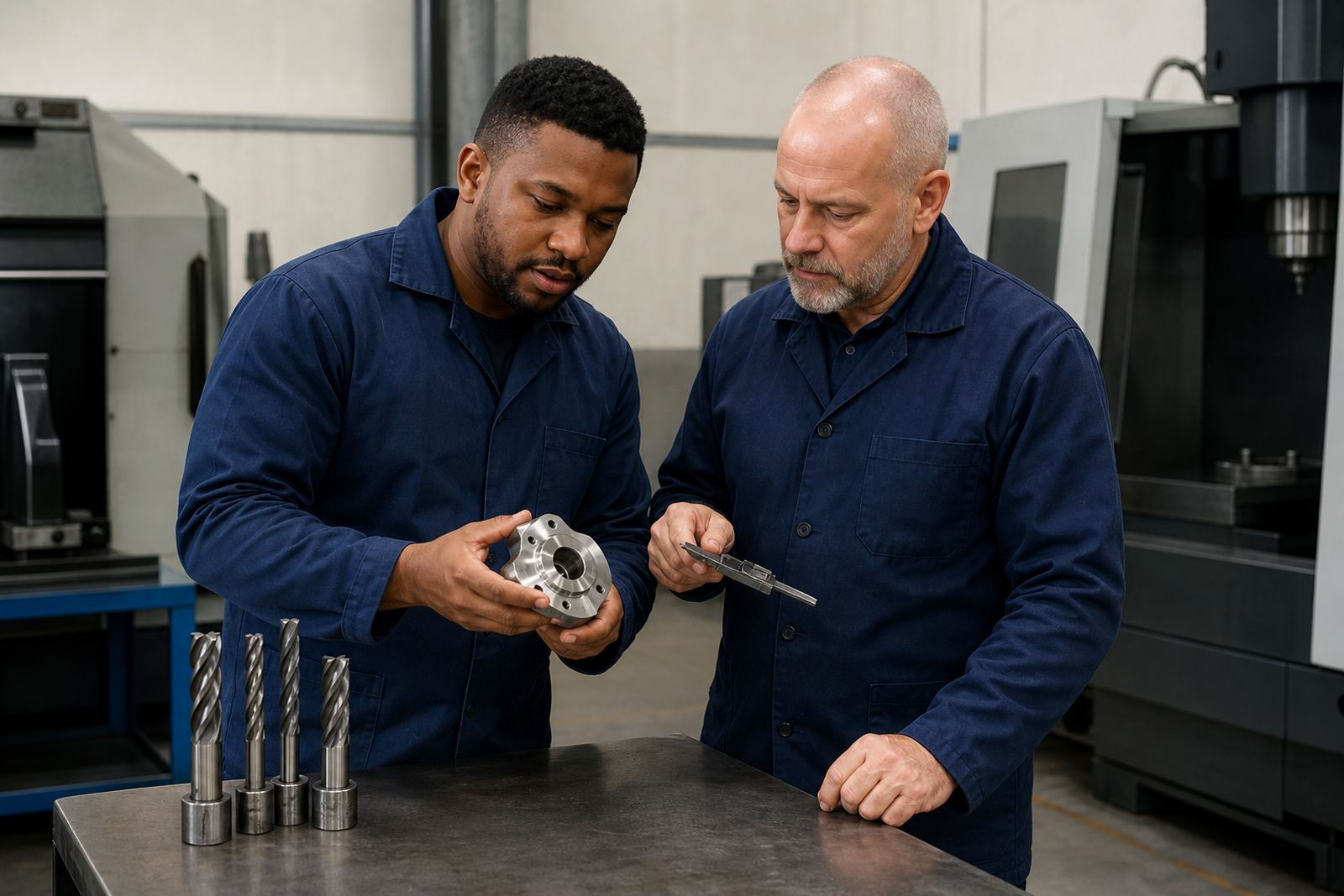
For shops in Germiston, Johannesburg or Pretoria running steel, stainless or aluminium, holding tolerance means watching the whole cutting system, not only the drawing. The machine, holder, clamping method, speed and feed all matter, but the tool is the point where all of that meets the workpiece.
Tool geometry that supports repeatable dimensions
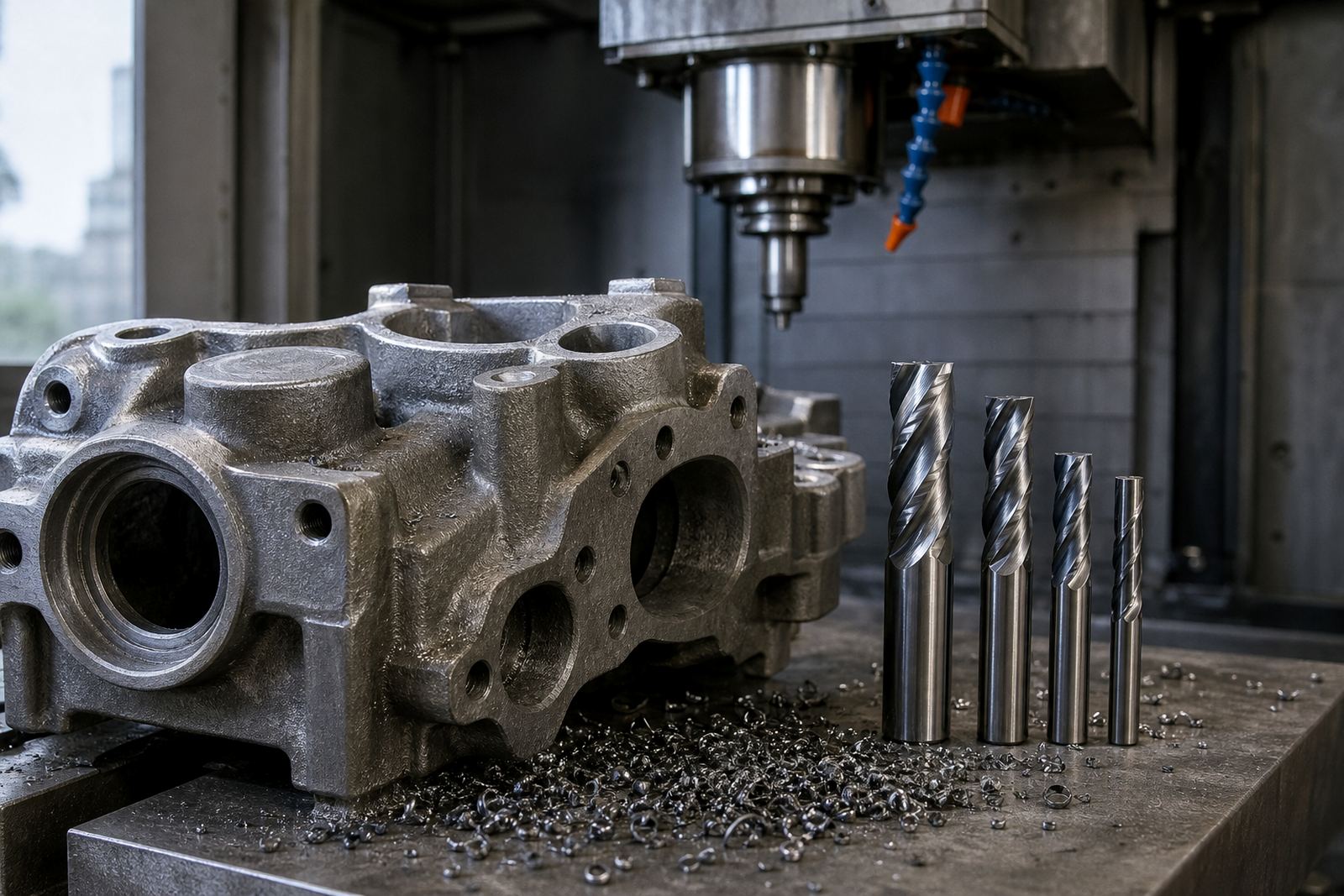
When a part has to stay within a tight size band, the cutter geometry has to suit the job. A general purpose tool may remove material well enough, but a tool selected for the material and the feature usually gives better control. Corner radius, flute count, helix angle and coating choice all influence how the tool cuts and how much heat builds up in the cut.
For example, a lightweight aluminium component with a thin wall needs a different end mill from a mould component in tool steel. If the cutting edges are not suited to the material, the tool may chatter or pull the wall, and that can move the dimension by a few hundredths before anyone notices.
- Use shorter tool overhang where possible to reduce deflection.
- Match flute count to chip evacuation and material type.
- Choose a cutting edge that suits the surface finish required.
- Keep drilling and milling tools separate by job instead of forcing one tool to do everything.
Those small choices are often what keep a job inside tolerance on the last piece, not just the first one.
Feed, speed and chip control on South African shop floors
Correct speeds and feeds are not a theory exercise, they are part of tolerance control. A tool cutting too slowly can rub instead of cut, which raises temperature and shortens tool life. A tool running too hard can chatter, deflect or break down early. In both cases the size of the feature starts to drift.
Chip control also matters more than many people think. Poor chip evacuation can recut material, increase heat and mark the surface. That is a real issue in long runs, especially where one operator has to keep a machine going through a full shift and manage interruptions from load-shedding or power changeovers. If the cut is not predictable, the part size can vary before the next inspection point.
A practical feed and speed plan should be checked against the actual machine, the fixture and the material batch. Even a small difference in material hardness can change how the tool behaves. That is why technical guidance and sample trials are useful before a production run is locked in.
Holding tolerance through the full batch, not only the first sample
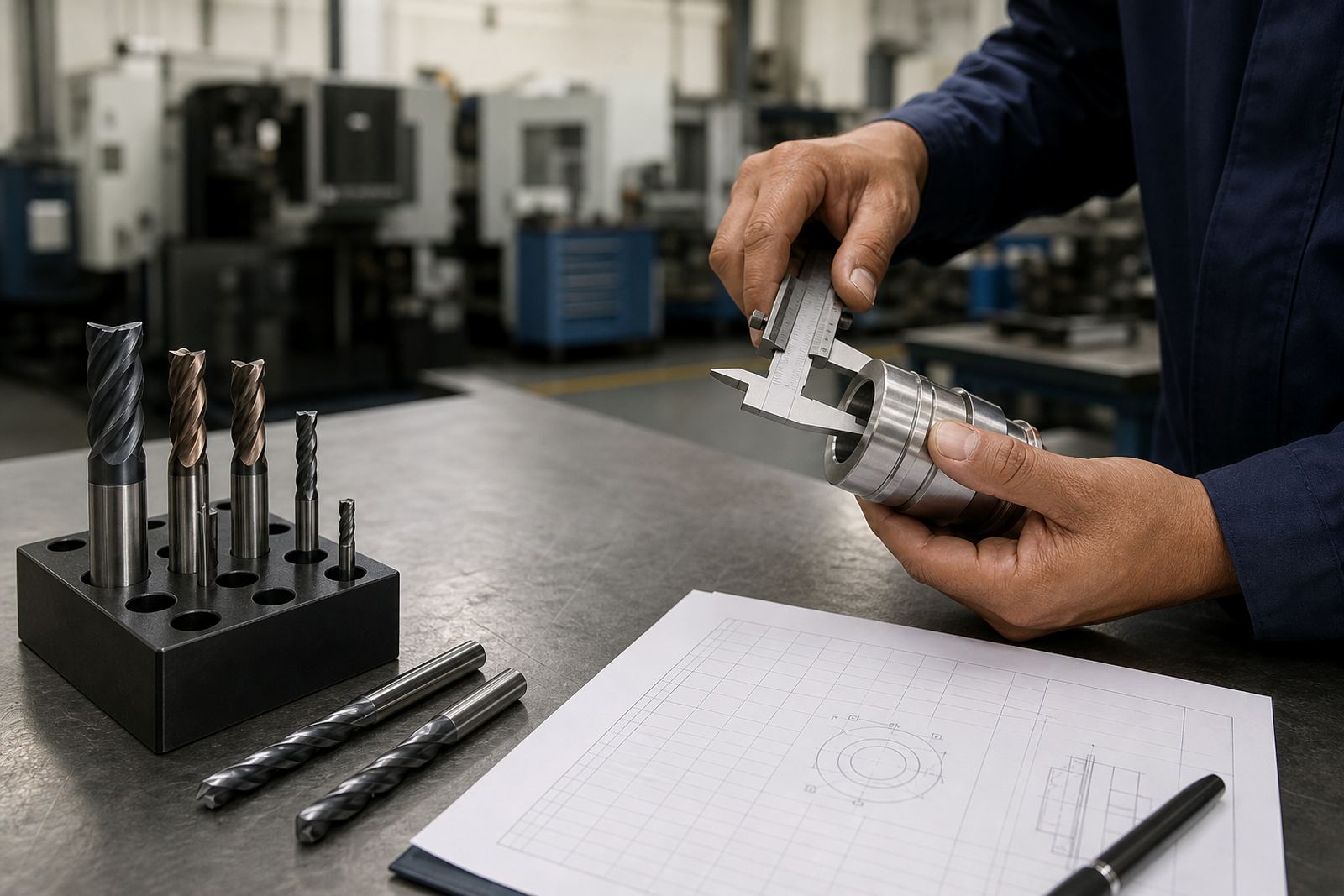
First article approval is useful, but it does not prove the whole batch will stay in spec. To hold tolerance across a run, a shop needs a plan for tool wear, changeover timing and in process checks. Once a cutter starts to lose edge quality, the machine may still sound normal while the size slowly moves.
Good batch control usually includes:
- setting a tool life limit before the cutter becomes unpredictable
- checking the first few pieces after every tool change
- tracking dimensional drift against tool hours, not only part count
- keeping replacement tools ready so the machine is not forced to run one extra worn part
In a high pressure production environment, that discipline saves time and scrap. It also helps a shop quote more confidently because the process becomes easier to repeat.
A local example from a Johannesburg production run
A machining shop in the East Rand may be cutting a steel bracket for a mining supplier, with bore size held to a narrow tolerance and a deadline that leaves no room for rework. The first set of parts measures correctly, but by mid shift the bore starts creeping over size. The issue is not only the machine, the cutter is deflecting slightly as edge wear increases and the chip load shifts.
By changing to a more suitable solid carbide drill and end mill combination, shortening overhang, and adjusting the feed to suit the material, the shop can usually stabilise the process. The important point is that the fix is often small, not dramatic. A better tool choice and a proper cutting plan can stop a tolerance problem before it becomes a scrap pile.
That is especially useful for shops serving Johannesburg, Boksburg and Alberton where turnaround times are tight and repeat orders are common. If a process can be standardised once, it becomes easier to hold the same size next month, not just today.
What to ask before you release a tight tolerance job
Before a critical job goes into production, the tooling question should be asked early. Many size problems are preventable if the team reviews the cutter and process before chips start flying.
- Is the tool suitable for the material and feature depth?
- Will the holder and stickout keep deflection low?
- Has the speed and feed been checked against the actual machine condition?
- Do we have a plan for wear, inspection and replacement?
- Can the part be trialled on sample pieces before the full batch?
For shops in Cape Town, Durban and Gqeberha as well as Gauteng, this kind of planning is even more valuable when stock has to arrive on time and production windows are limited. Holding tolerance is rarely luck. It comes from a tool that cuts consistently, a process that is set up properly, and a team that notices drift early.
At CuTools Carbide, the focus is on helping machining shops choose the right solid carbide end mills and drills for reliable dimensional control, with practical support for tool selection, process troubleshooting and stock planning.