Fixture work in Randburg needed less guesswork
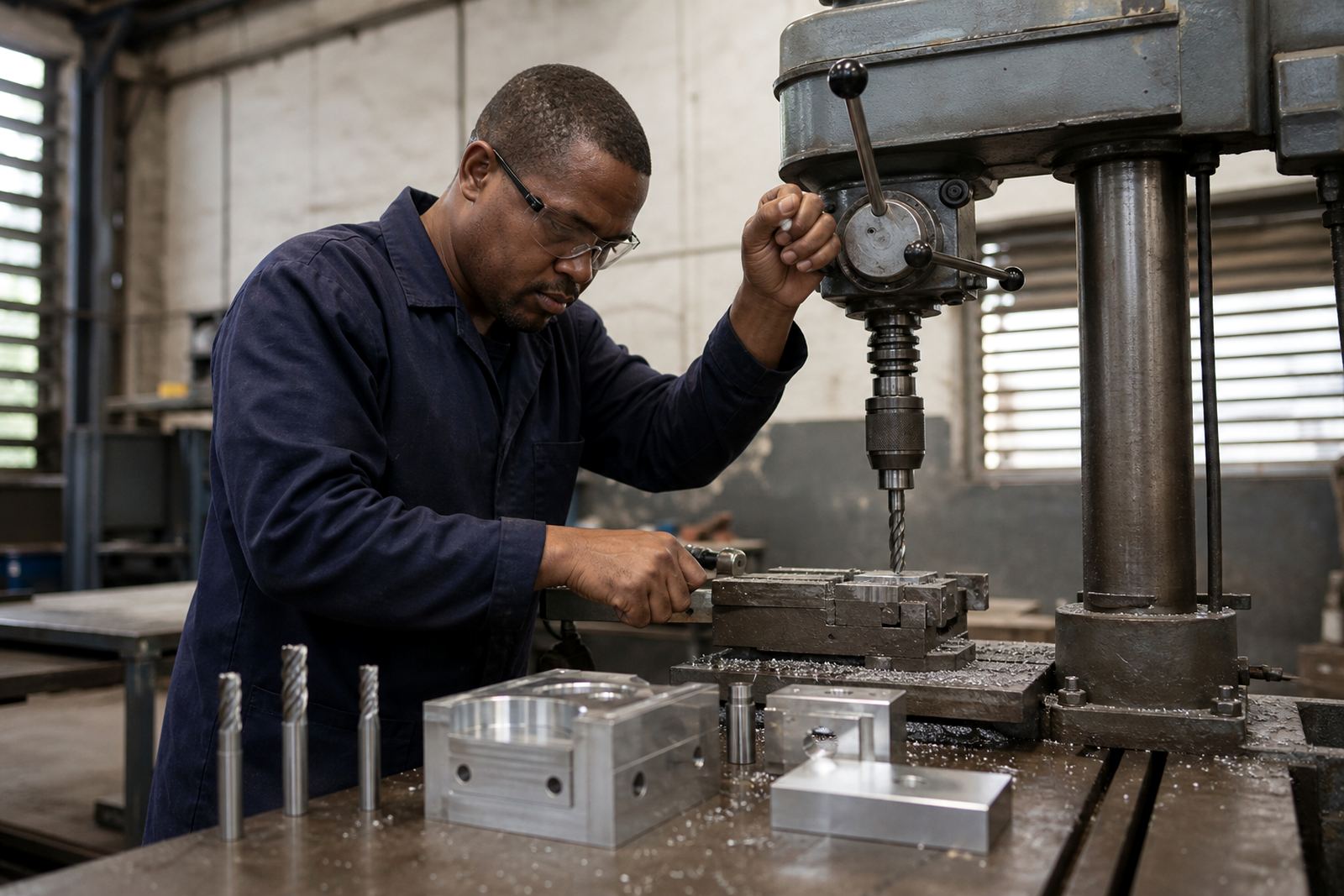
The client was a tooling room in Randburg supporting a light manufacturing operation that builds fixtures, jigs and small production aids. Their work included mild steel parts, aluminium locating blocks and occasional stainless wear pieces. The team had good machines and skilled setters, but the same cutter was being used across too many jobs and the finish varied from run to run.
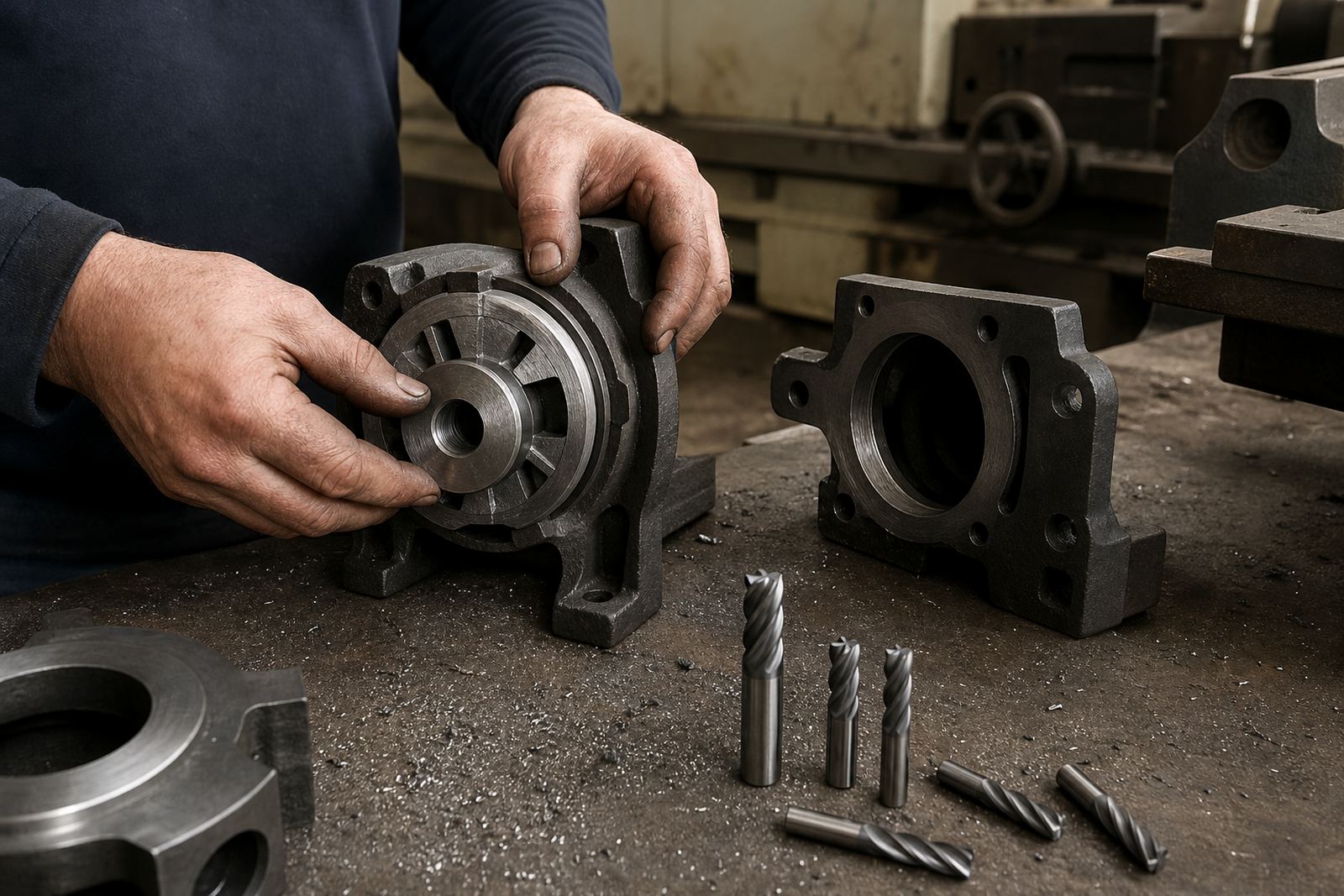
The main problem was rework. Holes were coming in slightly oversize on some parts, while other jobs were leaving burrs on edges and tight pockets needed extra hand finishing. Tool life also changed too much between shifts. One operator would get through a batch and the next would lose a cutter early. They wanted a simple, repeatable tooling set-up that could be controlled without slowing production.
We looked at the parts they made most often, the machine spindle ranges and the way coolant was being used. The brief was clear: reduce rework, keep cycle times sensible and standardise the tooling room around a few proven cutters instead of a long list of near-matches.
The brief, constraints and machine conditions
The client runs CNC machining centres and a small manual back-up area for correction work. The largest constraint was mixed material work on the same week, sometimes even on the same day. Their production room also had to cope with load-shedding, so tool choice needed to stay reliable when start-stop running affected coolant flow and operator attention. In summer, the Randburg environment brought temperature swings that made chip evacuation and edge wear more noticeable.
We focused on three practical constraints: flute count, chip clearance and surface finish. Three-flute end mills were better for aluminium pockets and deeper chip loads, while four-flute cutters suited steel and more stable finishing passes. For drilling, we kept the range tight so the team could hold stock without overbuying. This made the tooling room easier to manage and reduced the chance of grabbing the wrong cutter in a rush.
- Material mix: mild steel, aluminium and limited stainless wear parts
- Machine type: CNC machining centres with fixed production cycles
- Problem areas: oversize holes, burrs, poor chip evacuation and inconsistent finish
- Operational constraint: load-shedding and limited time for trial and error
What we supplied and how we matched the cutters
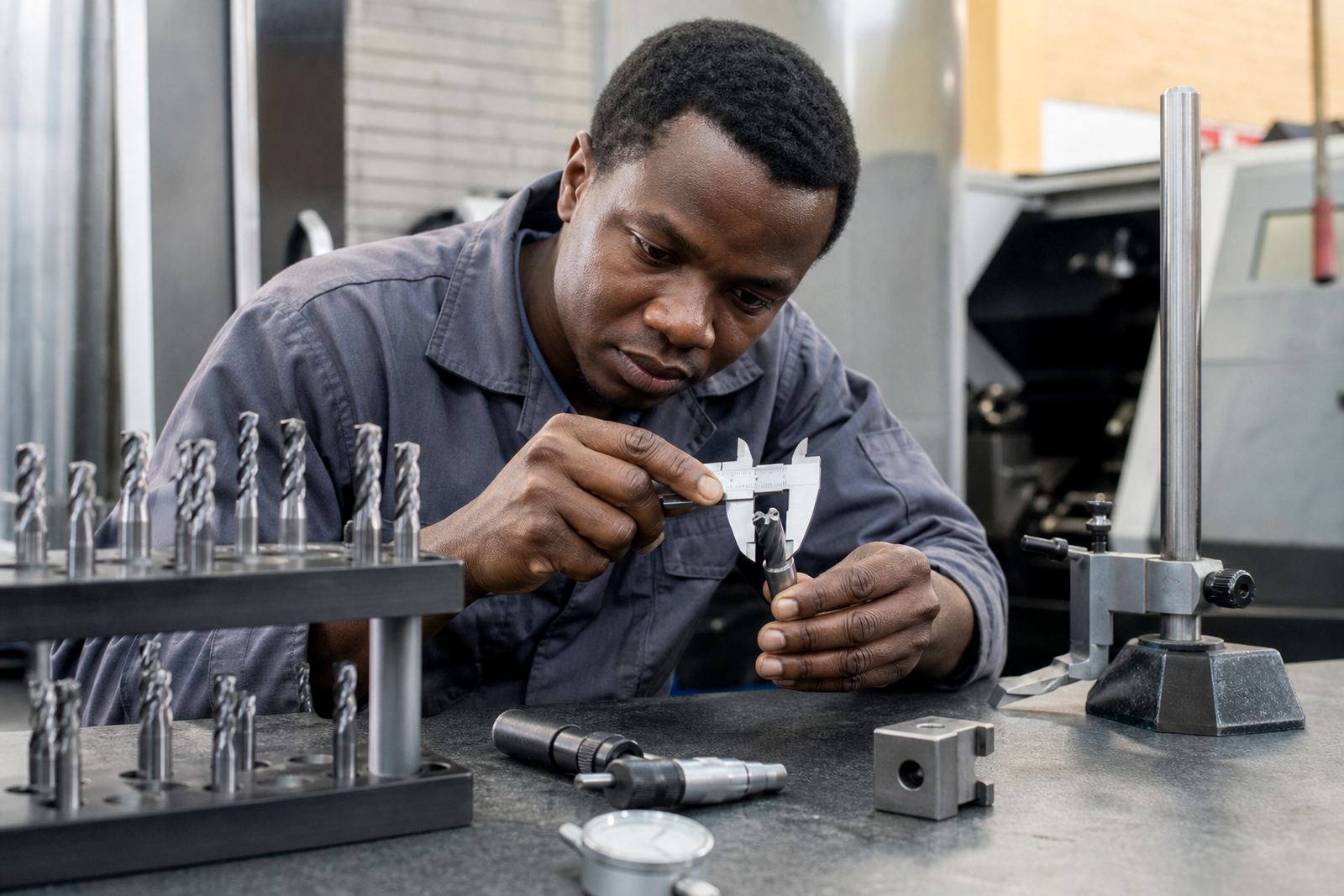
We supplied solid carbide end mills and drills selected for the actual material groups on site, not just the nominal job title. For aluminium and softer non-ferrous parts, we recommended 3 flute cutters in sizes from 6 mm to 12 mm where chip space mattered most. For steel and finishing passes, 4 flute end mills were used to improve stability and edge control. Drill choices were matched to hole depth, entry speed and the need for clean chip break.
We also helped the team align their feed rates and spindle speeds with the cutters rather than forcing the cutters to work around old settings. Johan from our technical team reviewed the existing programmes and gave speed and feed advice based on tool diameter, material and the type of cut. On a few of the parts, a small change in flute count made a bigger difference than expected, especially where chips had been packing in the slot.
- Solid carbide end mills for profiling, slotting and finishing
- Solid carbide drills for repeatable hole size and cleaner entry
- 3 flute options for aluminium and heavier chip loads
- 4 flute options for steel and finishing work
- Technical quotations tied to the actual part mix
Trial work on the shop floor
The project took 3 weeks from first enquiry to the point where the tooling room had a stable standard list. Week one was the review of parts, drawings and worn tools. Week two was sample tool trials on the most problematic fixture components. Week three was spent checking the results, adjusting feeds and confirming which cutters should become regular stock.
During the trials, the team compared pocket walls, hole roundness and post-machining cleanup. The change was immediate on the aluminium parts, where chip evacuation improved and burrs dropped. On steel parts, the four flute cutters gave a more consistent finish with less chatter, especially on smaller diameters. We also helped them separate roughing tools from finishing tools so they were not forcing one cutter to do too much work. That step alone cut down on random wear and a fair bit of frustration.
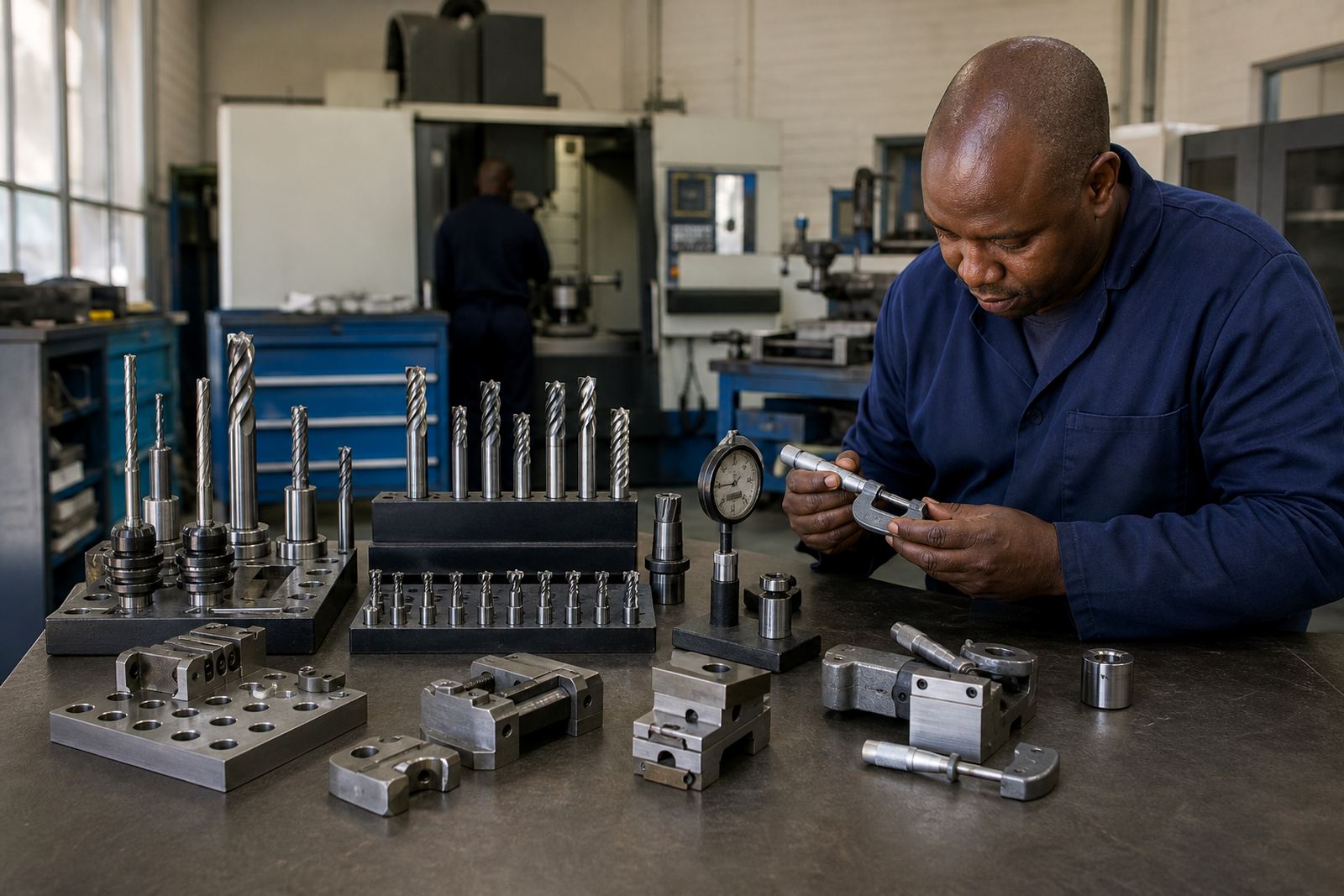
One practical point was stock planning. We looked at their monthly usage and suggested a minimum set of common diameters to keep on hand for urgent tool supply. That reduced downtime when a cutter chipped late in the day or a rush order came in from production.
Measured results for the tooling room
By the end of the project, the tooling room had a much cleaner process for choosing cutters and checking speeds before a run started. Rework dropped because the right flute count was being used for the right material, and the operators no longer had to fight chip packing on aluminium jobs or accept rough finishes on steel. The client also reported fewer aborted cycles, which mattered on a site that had to work around power interruptions and short windows for machine time.
The numbers below were the main outcomes they tracked:
- Rework on fixture parts reduced from frequent touch-up to only occasional correction
- Hole quality improved enough to cut manual deburring on repeat jobs
- Tool life became more predictable across shifts
- Setup time dropped because the tooling room used a shorter standard list
- Less material was scrapped after interrupted runs and tool wear issues
For a small tooling room, this matters. Saving a few parts on each batch adds up quickly when the same fixtures are made every week and the jobs need to go straight back into production.
What we would repeat on the next job
If we were doing this again, we would follow the same sequence: review the part mix, separate tools by material, trial the high-risk cutters first and then lock in a standard stock list. That approach works well for tooling rooms in Gauteng where job variety is high and turnaround time is tight. It also suits coastal sites and inland plants alike, because the logic is simple and practical rather than tied to one machine or one operator.
We would also keep the focus on application support after the first supply. A cutter on paper is not enough if the feed, coolant and clamping are off. Once the team in Randburg had a proper standard, they could keep using it without having to rethink each job from scratch. That is the kind of change that saves time every week, not just on the first batch.
If your tooling room is seeing the same pattern of rework, we can help with tool selection, sample trials and process troubleshooting. Marius and the team work from Wadeville, Germiston and supply CNC shops across South Africa, including Johannesburg, Pretoria, Cape Town, Durban and Gqeberha.
Key facts
| Project town | Randburg, Gauteng |
|---|---|
| Client type | Tooling room producing fixtures and jigs |
| Primary materials | Mild steel, aluminium, limited stainless wear parts |
| Tools supplied | Solid carbide end mills and drills |
| Key change | Flute count matched to each material |
| Project timeline | 3 weeks from review to standardisation |