Start with hole depth, not just hole diameter
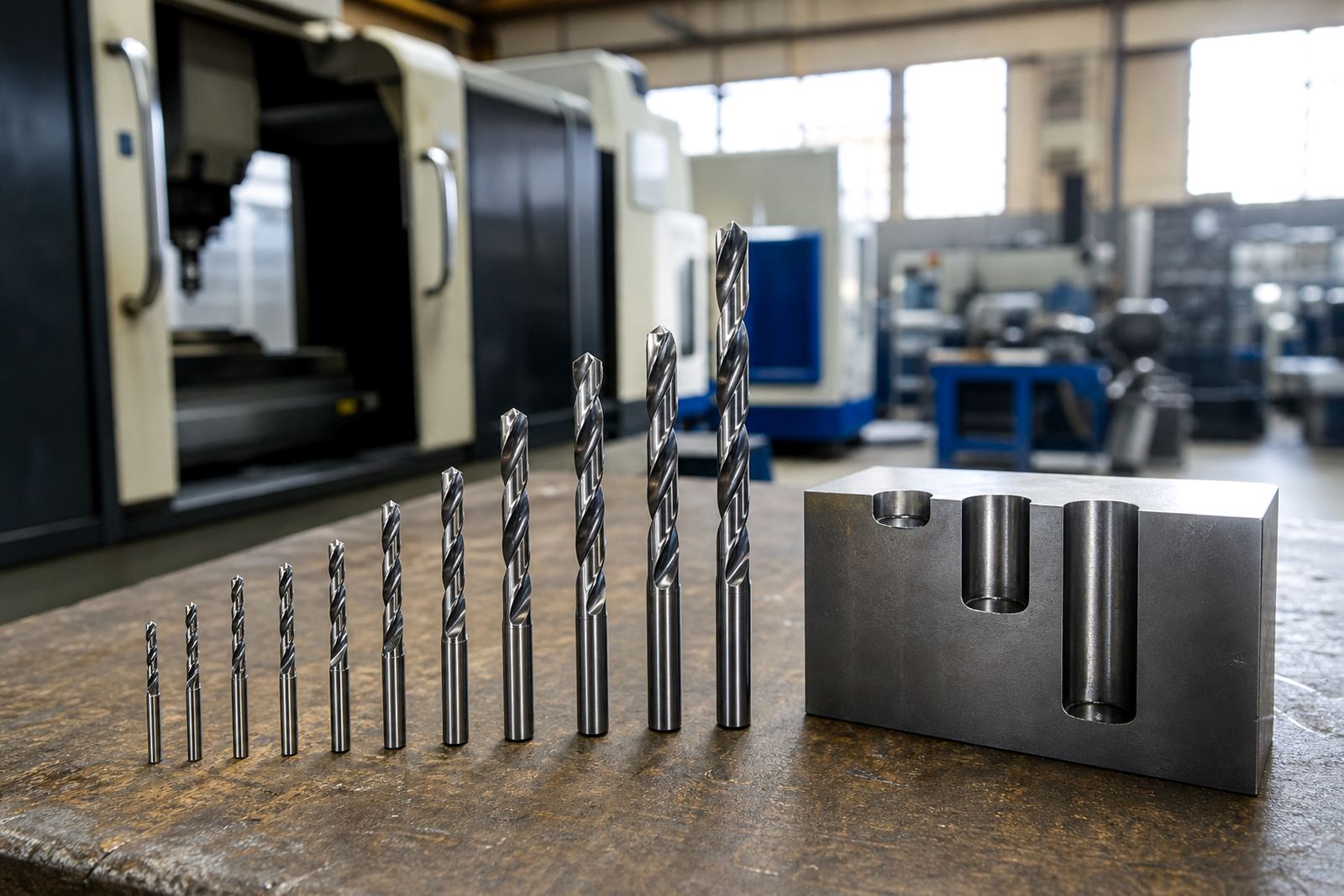
Before you pick a drill, measure the full hole depth and decide how much extra length you need for clearance, point length and safe breakout. A 12 mm hole at 18 mm deep is not the same job as a 12 mm hole at 45 mm deep, even though the diameter is identical. The deeper the hole, the more likely chip packing, heat build-up and wander become a problem.
As a rule, match the drill length to the actual depth with a little margin, but do not choose a longer tool than the setup can support. Extra flute length sounds useful, yet it can reduce rigidity and increase chatter. In small-job work around Germiston, Johannesburg and Pretoria, we often see teams use a long drill where a shorter one would give better finish and longer tool life.
- Measure hole depth from the correct face, including any chamfer or counterbore requirement.
- Allow for point length when checking whether the drill will reach full depth.
- Check if the machine spindle, holder or turret gives enough clearance at full feed.
- Confirm the part can be clamped so the drill does not have to overreach.
Choose the shortest drill that still clears the job
For shallow holes, a stub or jobber length drill is usually the better choice because it is stiffer and less likely to deflect. Once you move into deeper work, you may need a longer flute and overall length, but only as much as necessary. A shorter tool running at the correct speed will often outlast a longer one that is forced to do the same work.
In CNC machining centres across South Africa, setup stability matters as much as the tool itself. If the workholding is light, the machine is busy with multiple fixtures, or the material has hard scale, keep the tool as short as the operation allows. That one decision can save scrap and rework, especially on parts made in mild steel, stainless, aluminium or brass.
- Use short drills for holes up to about 3x diameter where possible.
- Move to medium length when the hole gets deeper but the setup is still solid.
- Reserve extra-long drills for specific reach requirements only.
- Check runout before blaming the drill for poor hole position or oversize results.
Match coolant style to chip evacuation needs
Coolant is not just for temperature control, it is also there to move chips out of the hole. For shallow holes, flood coolant may be enough. For deeper holes, especially where chips can pack inside the flute, internal coolant or a high-pressure setup can make a big difference. If the hole is blind, chip evacuation becomes even more important because packed chips can score the wall and snap the tool.
South African shops working through load-shedding or variable machine time often need practical process choices, not fancy ones. If coolant pressure is limited, reduce peck size, slow the feed slightly and clear chips more often. On coastal sites in Durban or Gqeberha, keep an eye on corrosion and stored tool condition too, because humidity can affect tool handling and consistency.
- Flood coolant suits many through-holes and lighter depth work.
- Internal coolant helps on deeper holes and tougher materials.
- Use peck drilling when chips cannot clear cleanly in one pass.
- Check coolant concentration and flow before starting a long cycle.
Set feed and peck strategy by depth band
Depth changes the way a drill cuts. In shallow holes, you can often use a continuous feed with less interruption. As the hole gets deeper, chip control becomes the main concern, so pecking, dwell control and feed reduction may be needed. Do not use the same cycle for every part because it is easy to overcut shallow work and underperform on deeper holes.
A practical approach is to group jobs by depth band and material. For example, keep one setup for short through-holes, another for medium-depth blind holes, and a third for deep holes in harder stock. That makes quoting and production planning easier for shops in Boksburg, Alberton and Centurion, where the same machine may need to handle varied work in one shift.
- Use a full feed cycle for short, free-cutting holes where chip flow is open.
- Use moderate pecking for medium depths and materials that make longer chips.
- Use shorter pecks for deep blind holes, especially in stainless or alloy steel.
- Reduce feed if chips come out as long ribbons or begin to clog the hole.
Check the setup before you commit to a deep hole
Deep drilling exposes weak clamping, poor alignment and worn machine components very quickly. Before running the part, make sure the workpiece is flat, the clamp points are secure and the spindle is running true. Even a good solid carbide drill will struggle if the part shifts or the tool starts cutting off-centre.
Use a quick pre-run checklist and keep it standard across shifts. This is especially useful when multiple operators share a machine, because one missed step can waste material and time. If your team is drilling a repeat job, note the proven setup details so the next run starts cleanly and the results stay consistent.
- Confirm workholding tightness and part location before first cut.
- Inspect drill edges for wear, chipping or built-up material.
- Verify coolant delivery at the point of cut, not just at the nozzle.
- Check tool stick-out and holder condition before running long cycles.
Use a simple checklist for hole depth decisions
When a new drilling job comes in, do not guess. Work through the basics in the same order every time so the tool choice matches the depth and machine conditions. A clear process makes it easier to plan stock, quote accurately and avoid urgent tool changes halfway through production.
For shops supplying across Johannesburg, Pretoria, Cape Town, Durban and Gqeberha, a depth guide should sit beside the job card. That way the operator can compare the hole depth, material, coolant setup and cycle time before cutting starts. It is a small step, but it saves a lot of trouble when the schedule is tight and the order has to move fast.
- What is the hole depth, and is it blind or through?
- What material are you drilling, and does it make long chips?
- How much tool reach is needed after point length and clearance?
- Can the setup support a short drill, or is longer reach unavoidable?
- Will flood coolant, internal coolant or peck drilling control chip flow best?
- Is the machine, holder and workholding stable enough for the depth?
When to ask for application support
If a hole is deep, small in diameter, or being drilled in a material that keeps breaking tools, get application advice before the next batch runs. The right drill length is only part of the answer. Feed, coolant, surface speed, peck cycle and material match all work together, and one wrong setting can shorten tool life quickly. A short discussion can often prevent scrap and rework.
CuTools Carbide supplies solid carbide end mills and drills from Wadeville, Germiston to machining shops across South Africa. Our team helps with tool selection, speed and feed advice, tool life optimisation, process troubleshooting and urgent tool supply when the job cannot wait. If you need a practical depth check for a repeat job or a new component, send the details through the enquiry form on our contact page.