Start with the jobs you actually cut every week
Before buying anything, list the materials and features that come in most often. In many South African jobbing shops that means mild steel, stainless steel, aluminium, tool steel, and the odd plastic or cast part. If your work changes from one day to the next, your starter kit should favour general purpose solid carbide tools that can handle varied conditions without constant tool changes.
The aim is not to cover every possible operation. It is to cover the first 80 percent of work with a small, reliable set. That keeps stock value down and reduces the number of times a machinist has to stop and wait for a special size. In Germiston, Johannesburg and Pretoria shops, that matters when the machine room is already juggling urgent turnarounds and load-shedding windows.
- List your top 10 recurring parts
- Note the main materials and thicknesses
- Record common slot widths, holes and corner radii
- Separate roughing work from finishing work
- Mark which tools fail first and why
The core end mill sizes every jobbing shop should carry
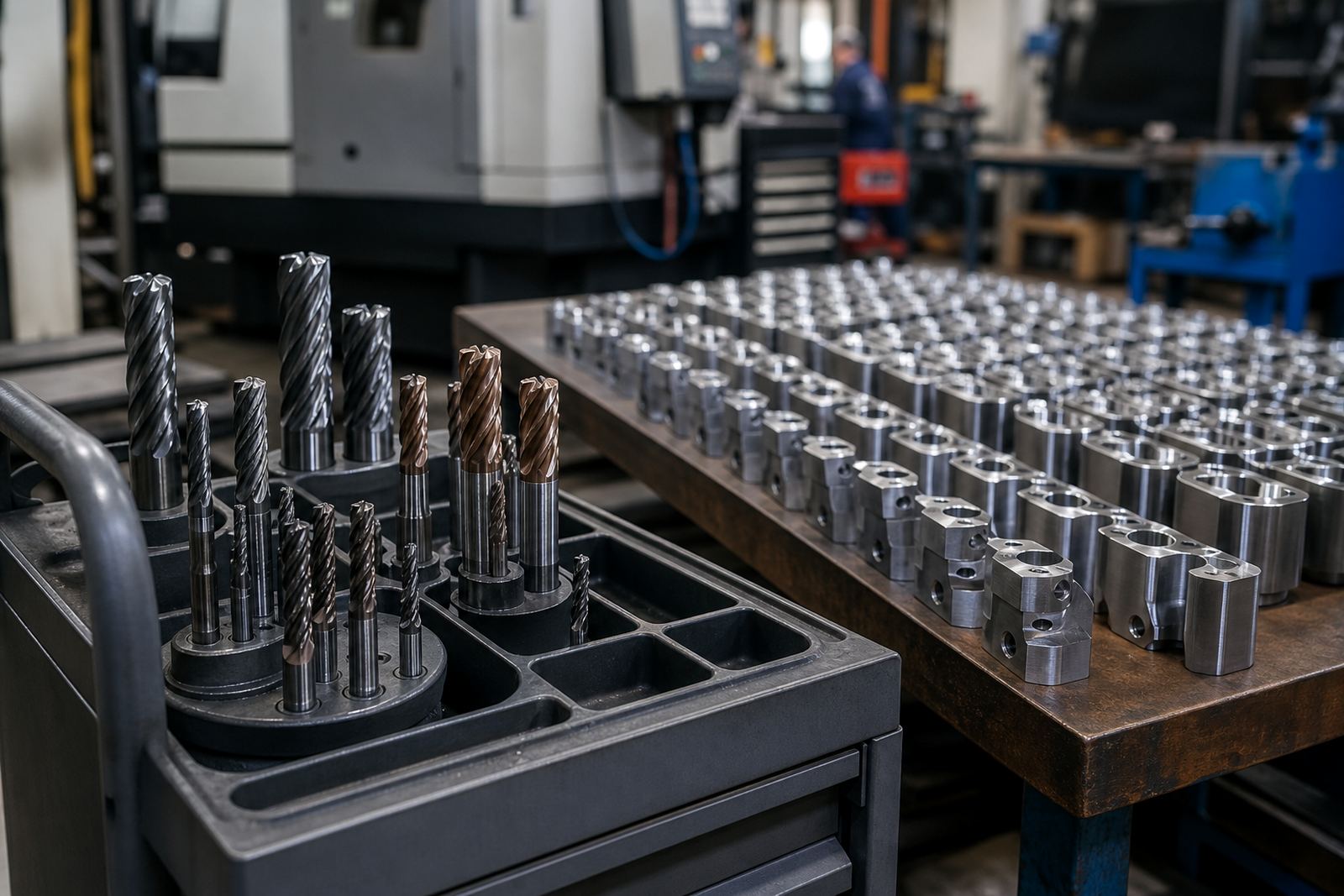
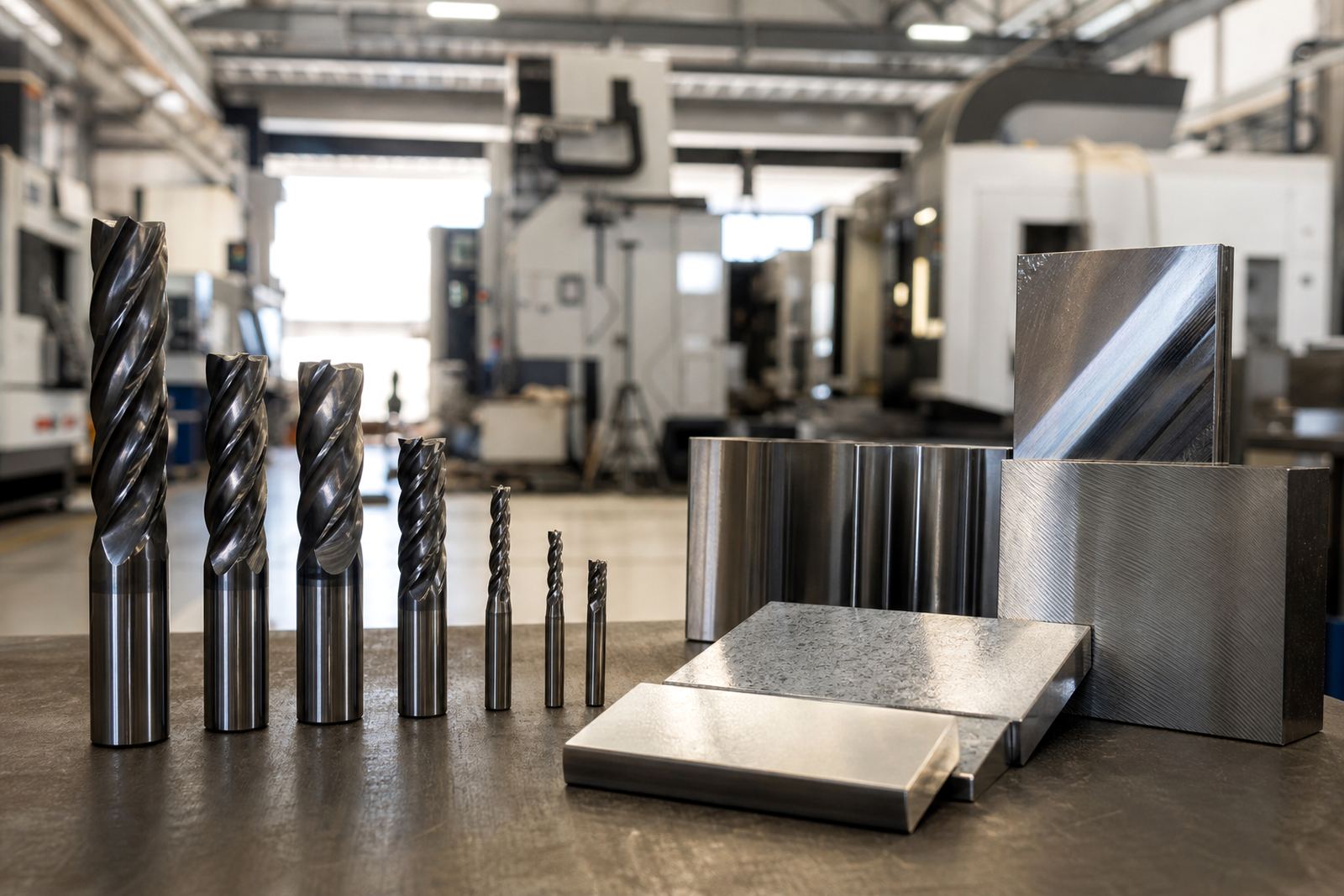
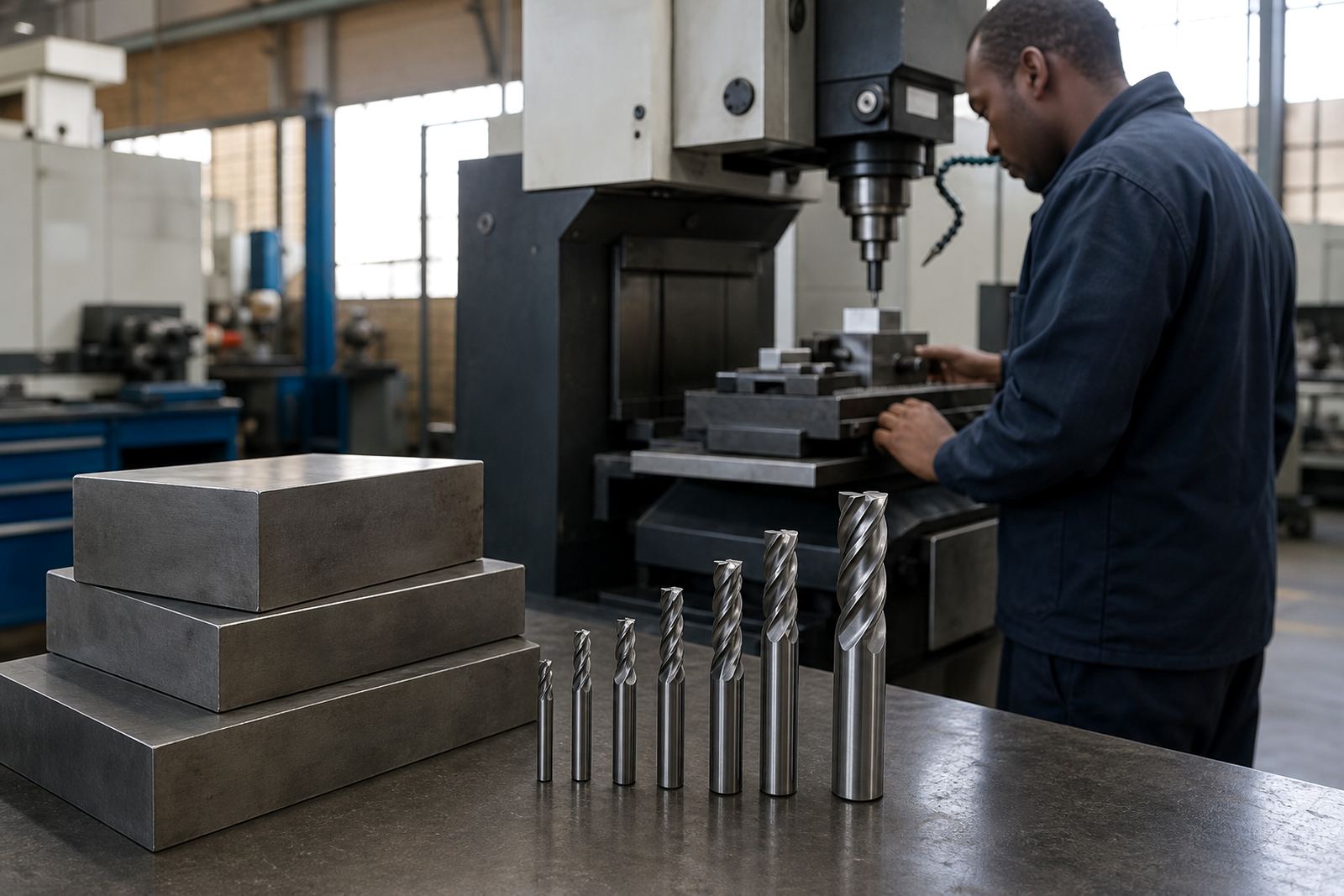
A starter set should begin with a few reliable solid carbide end mills in the sizes you use most often. For mixed work, that usually means 3 flute and 4 flute tools in small, medium and larger common diameters. Keep one shorter reach range for rigidity and one longer reach range for awkward pockets, but do not overload the shelf with long tools unless you truly need them.
A practical mix would include 3 mm, 6 mm, 8 mm, 10 mm, 12 mm and 16 mm cutters, with enough duplicates of the most used sizes. Shops doing general sub-contract work often wear out 6 mm and 10 mm tools first. If you machine more aluminium, add higher helix options. If stainless and hard mild steel are common, keep a heavier duty option for slower feeds and stronger edge life. The right mix saves time on setup and reduces chatter that can wreck a good finish, especially on older machines or during unstable power periods.
- 3 mm and 6 mm for small features and fine detail
- 8 mm and 10 mm for general pocketing and profiling
- 12 mm and 16 mm for heavier cutting and larger stock removal
- Short series for rigidity
- Long reach only where access demands it
Build the drilling side around repeatable hole sizes
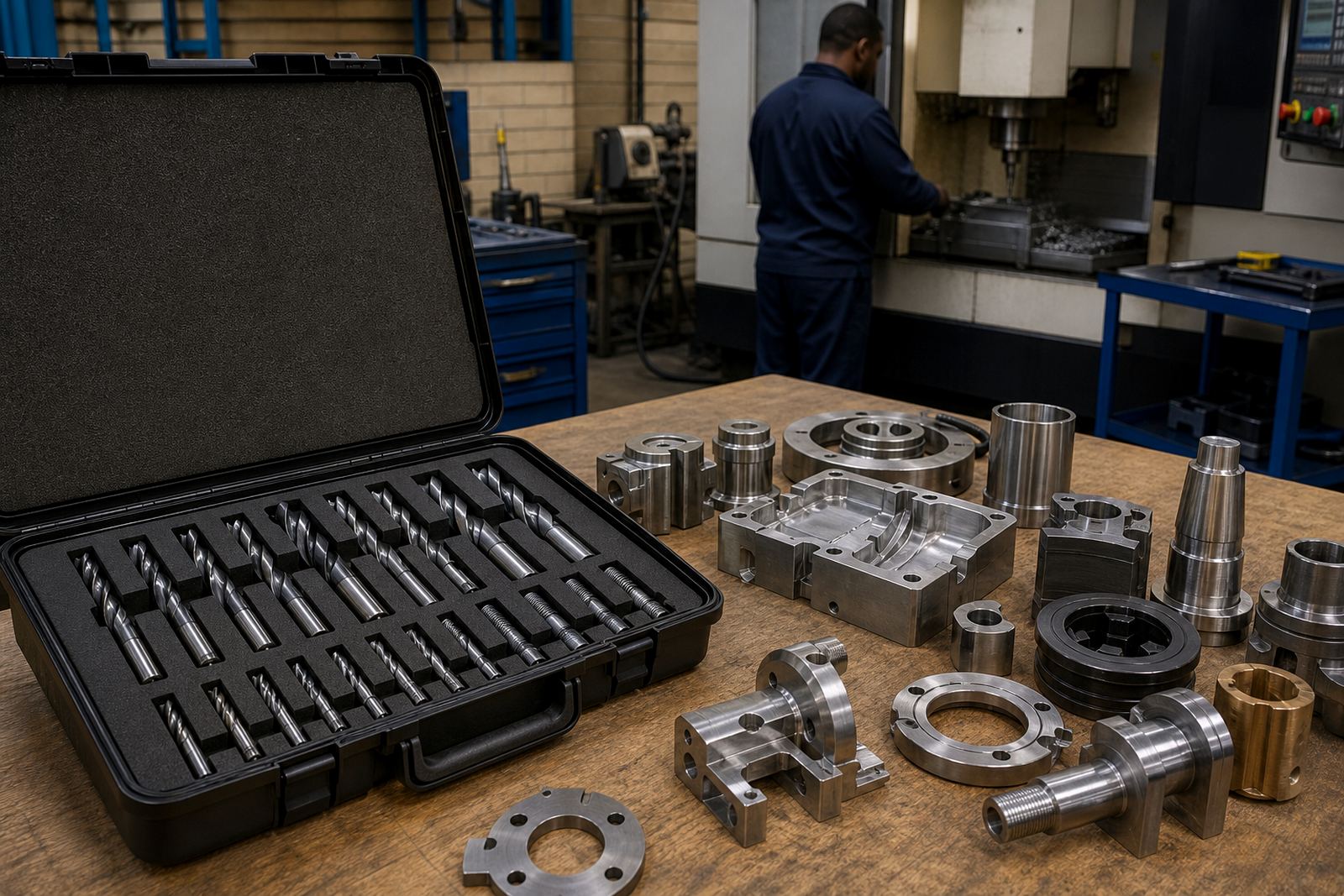
Drill stock should follow the workholding and hole patterns you see most often. In many shops, a few solid carbide drills cover a large amount of day to day work, especially where repeat parts, jigs and fixture plates are involved. A starter kit is best when it includes common metric sizes from 2 mm up to 12 mm, with duplicates on the sizes that get used all week.
Do not forget pilot drills and spot drills. Good spotting reduces wander on curved or painted surfaces and helps with accurate hole position on parts that need clean fitment. For stainless and tougher alloys, drill life improves when chip evacuation is controlled and peck cycles are sensible. In coastal areas like Durban and Gqeberha, keep an eye on storage because humidity can affect holders, labels and coolant condition if the shop is not managed well.
- Spot drills for accurate starts
- Common metric carbide drills in the sizes you use most
- Spare drills for high wear diameters
- Pilot sizes for larger hole work
- One or two longer drills only if depth demands it
Separate roughing, finishing and emergency stock
A good starter kit is organised by use, not just by diameter. Roughing tools take abuse and should be kept ready for rapid material removal. Finishing tools should be protected from knocks and regrinds. Emergency stock must stay easy to reach for urgent jobs that arrive late in the day or after a machine changeover.
Keep the stock plan simple. When operators can find the right cutter quickly, tool room mistakes fall away and production keeps moving. It also helps to record which tools are best for aluminium, which are better for steel, and which should stay dedicated to stainless. That sort of discipline makes quoting easier too, because the real cutting time becomes clearer. A smaller, better organised stockroom usually outperforms a larger, untidy one.
- Roughing tools for fast material removal
- Finishing tools for final passes and surface quality
- Emergency stock for urgent replacement
- Material specific sections for steel, aluminium and stainless
- Clear labels for diameter, flute count and overall length
Use process support to stop tool waste before it starts
The starter kit works best when it is matched to feeds, speeds and material type. A cutter that looks right on paper can still fail if chip load, stick-out or coolant delivery is wrong. This is where practical application support matters. If a job shop is losing tools too quickly, the problem may be the setup rather than the cutter itself.
Ask three questions before changing the tool selection: Is the material consistent? Is the reach shorter than it needs to be? Is the machine and holder combination rigid enough for the cut? When these basics are right, tool life improves and cycle times come down. The same logic helps in workshops from Boksburg to Centurion where mixed work and short lead times leave little room for trial and error.
- Check the material and hardness
- Confirm the machine, spindle and holder condition
- Review stick-out and clamping
- Set feeds and speeds for the actual cut
- Monitor wear before the tool fails
A simple ordering checklist for the first stock buy
If you are putting together a new tooling stock or tightening up an existing one, start with a controlled first buy. Do not order everything at once. Buy enough to cover current work, then add by usage after a few weeks of production. That keeps cash flow steadier and reduces dead stock on the shelf.
The best starter kits are built from actual consumption. Record what gets used, what lasts, and what sits untouched. Use that record to shape the next order. For jobbing shops in Gauteng and along the coast, this also helps with stock planning around supplier lead times, urgent calls and year end shutdowns. A decent tool plan should support production, not interrupt it.
- Top used end mills by diameter and flute count
- Top used drills by diameter and length
- Spare quantities for urgent work
- Back-up stock for high wear sizes
- Notes on which materials need a special option
When to add specials and when to stay standard
Special cutters have their place, but they should come after the core kit is stable. If a part keeps repeating or a material keeps giving the same problem, then a special geometry may be worth it. If the job is a once-off, standard tools with sensible settings usually make more sense. That keeps the shop lean and easier to manage.
As a rule, add specials only when they clearly improve tool life, finish quality or cycle time. Otherwise, stick to the core set and keep the process simple. A well chosen starter kit gives a mixed-work shop the flexibility it needs without filling the tool room with gear that only gets used once. For many South African job shops, that balance is the difference between chasing work and controlling it.