
What Tool Life Optimisation Covers
Tool life optimisation is not only about making a cutter last longer. It is about getting repeatable wear, less chipping and a more stable finish from the first part to the last. For CNC machining centres in South Africa, that can mean fewer emergency changes during a night shift, less scrap after load shedding restarts, and better planning for stocked tools in Germiston, Johannesburg, Pretoria, Cape Town, Durban and Gqeberha.
We work with solid carbide end mills and drills used in general engineering, component manufacturing, mould work and production runs. The aim is to match the tool to the job, then tune the cutting conditions so the edge is not overloaded. On humid coastal jobs, or when cutting abrasive materials, this often makes the difference between edge wear that is even and wear that turns into sudden breakage.
- Reduce flank wear, chipping and built-up edge
- Improve tool consistency across multiple machines
- Support safer cutting data for production shifts
- Cut unnecessary tool changes and scrap parts
How We Assess Wear and Failure Patterns
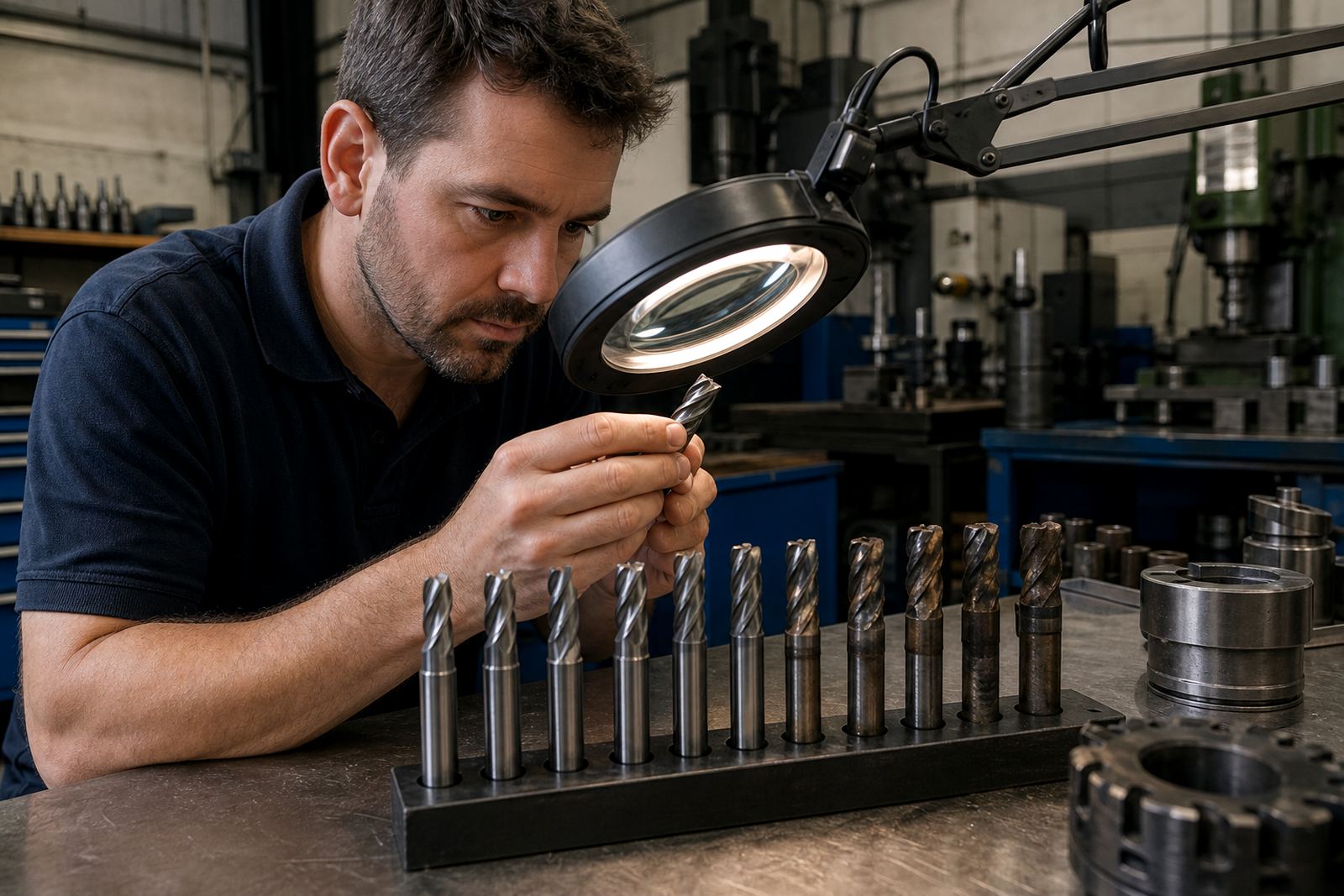
We start by checking the tool condition, the material being cut and the machine setup. A tool that fails at the tip is telling a different story from one that wears along the cutting edge or burns at the shank. We look at chip load, tool stick-out, coolant delivery, spindle speed, feed rate and the rigidity of the setup. If a drill is walking, or an end mill is singing at one corner of the part, the cause is usually in the setup, not just the tool itself.
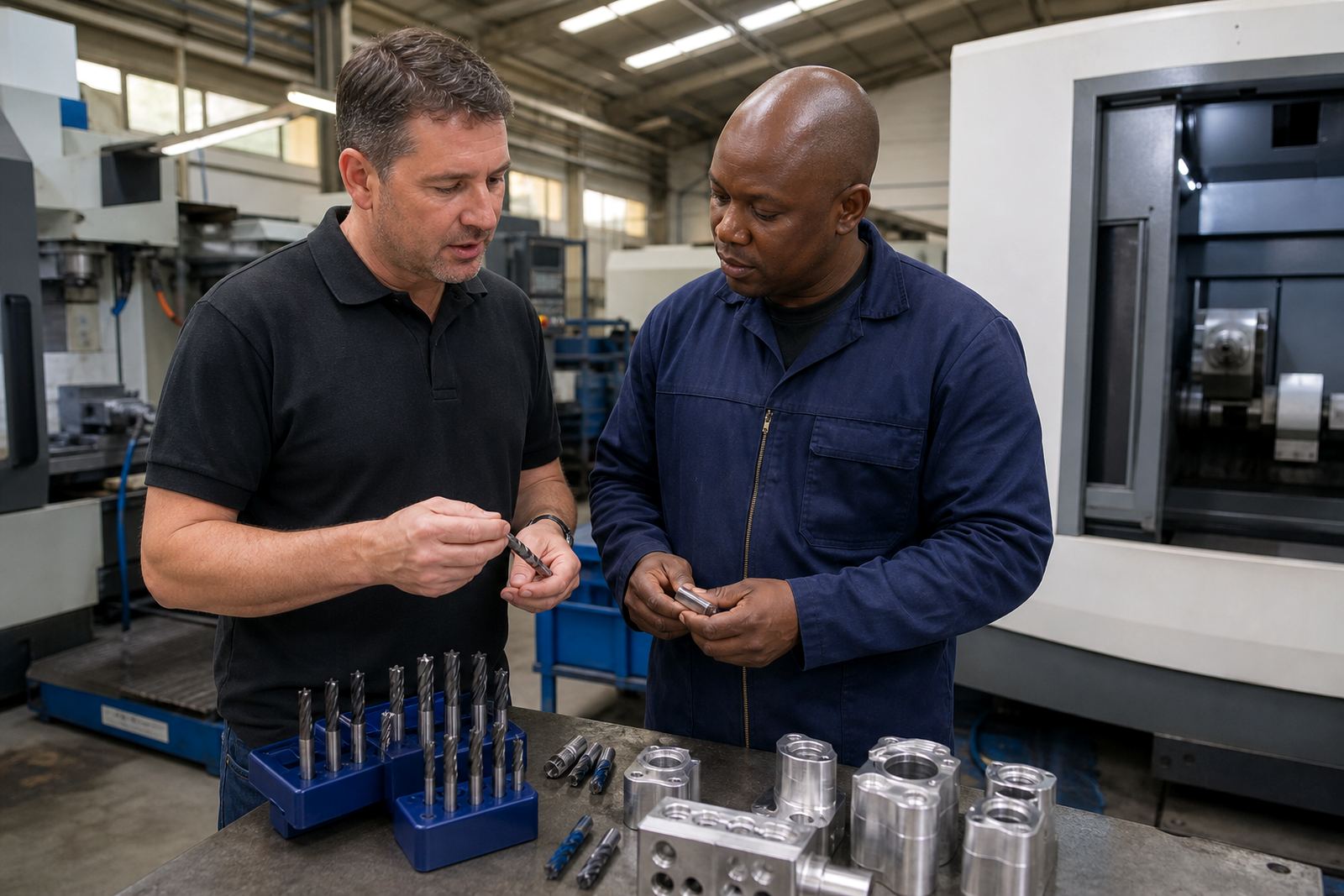
Our team in Wadeville, Germiston works from practical shop-floor information. That includes photographs of failed tools, sample parts, cycle times and any current speed and feed data. Johan Smit handles technical applications support, while Zanele Khumalo checks quality and procurement history when stock behaviour or batch consistency needs to be reviewed.
- Visual wear checks on cutting edges and rake faces
- Review of speeds, feeds, depth of cut and coolant use
- Material matching against mild steel, stainless, cast iron and aluminium
- Assessment of machine condition, runout and tool holder wear
What Is Included in the Service
The service is built for production shops that need straight answers and practical adjustments. We do not only recommend a different cutter. We also help you decide whether the same tool can be used longer with better parameters, or whether a different geometry will give better value. For many customers, the biggest gain comes from changing one or two settings and then standardising the result across the floor.
Included support can cover single tools, a full tool family, or a specific job that keeps causing problems. If your shop runs multiple CNC machining centres, we can help standardise the tool list so operators are not guessing at every setup. That is especially useful where weekend work, shift handovers and urgent municipal or subcontract work leave little room for trial and error.
- Tool life review for end mills and drills
- Application support for production and prototype work
- Speed and feed advice matched to the material
- Tool life extension planning for repeat jobs
- Process troubleshooting for breakage, chatter and heat build-up
Step by Step Process From Enquiry to Action
Clients reach us through the enquiry form on our contact page. From there we gather the job details, tool sizes and the problem you are seeing. If needed, we ask for photos of the worn tool, the material grade and the machine programme settings. Priya Naidoo then coordinates the response so the right person follows up quickly, and Thabo Molefe checks stock availability where an urgent replacement or sample tool is needed.
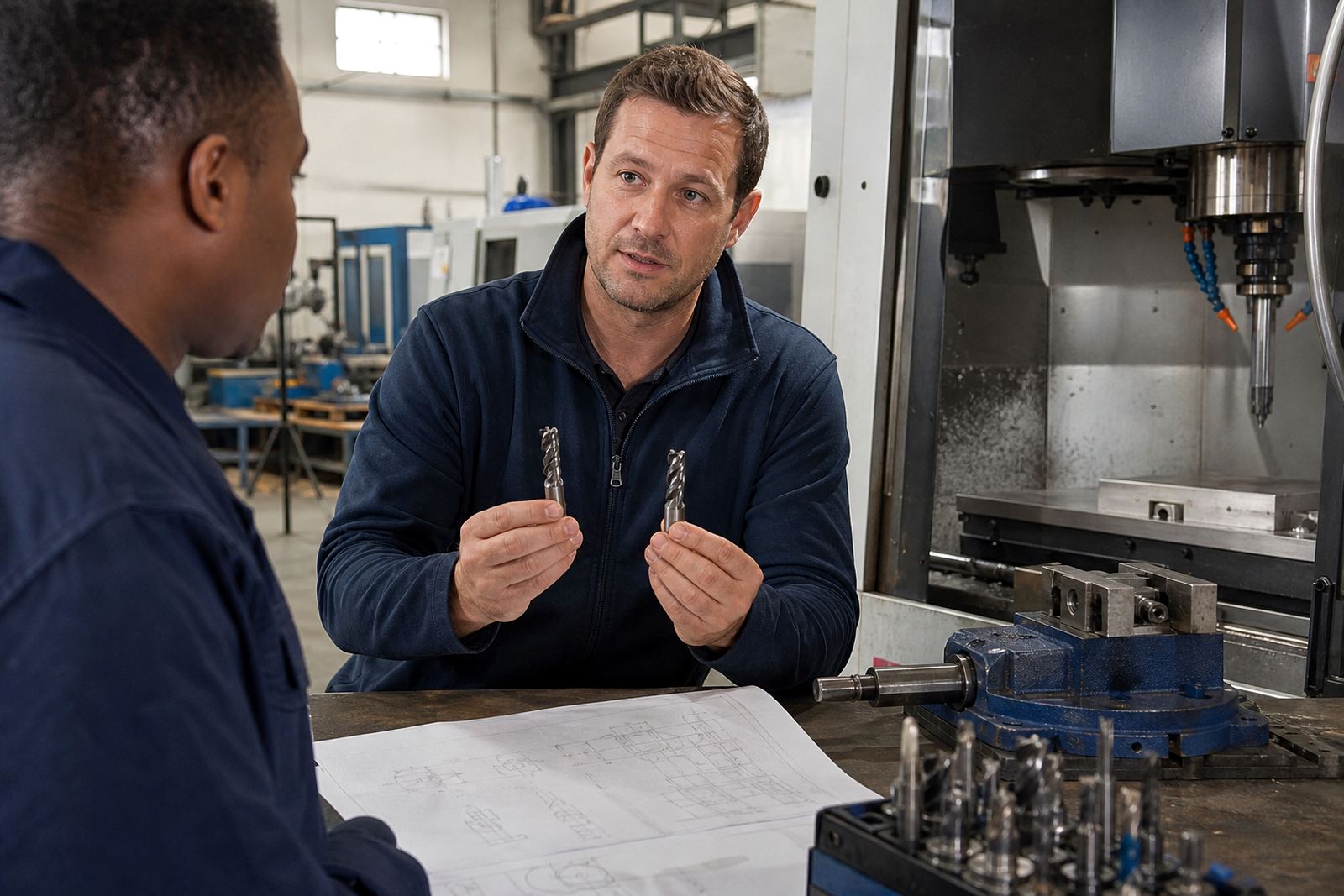
Once we have the details, we review the application and send a practical recommendation. In some cases that is a revised cutting data sheet. In others, it is a suggestion for a different flute count, coating type or drill point style. Where the job is critical, we can arrange sample tool trials and compare performance against the current setup.
- Step 1: Submit your enquiry with job details and symptoms
- Step 2: We review material, machine, tool and process data
- Step 3: Technical recommendation and quotation are issued
- Step 4: Sample trials or supply of the agreed tooling
- Step 5: Follow-up review and standardising for repeat production
Turnaround Times, Pricing and Stock Support
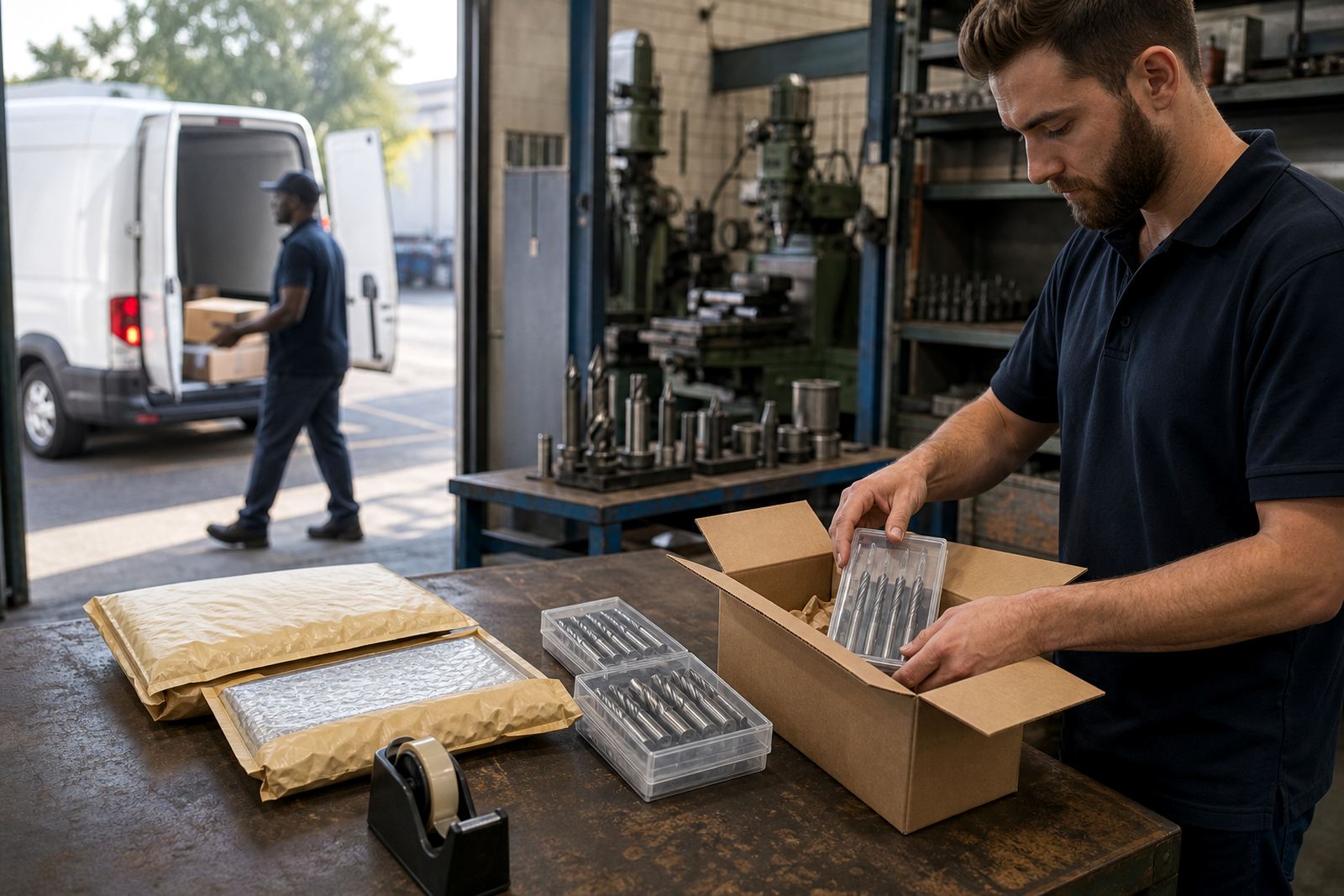
For common enquiries, turnaround is usually same day or within one working day, depending on the detail provided and current stock. Sample tool trials and more technical reviews can take longer if we need to inspect worn tools or compare several options. Because we supply from Wadeville, Germiston, urgent orders for the Gauteng corridor can often move faster than long-distance requests, though we still support customers nationwide.
Pricing is based on the amount of technical work needed, the number of tool lines being reviewed and whether the job needs on site consultation. We keep pricing practical and tied to the outcome. If a tool family is being used across several machines, it often makes sense to review the full range together rather than paying for repeated one-off fixes. Stock planning can also reduce rush orders and downtime when materials are due in, and the power goes off mid shift.
- Simple application review: quoted per job or per tool group
- Technical support and trials: quoted after problem assessment
- Urgent supply: based on stock and delivery destination
- On site consultation: arranged by area and job urgency
Maintenance Intervals and Specs That Matter
Tool life optimisation works best when maintenance is not left until a cutter fails. For production work, we recommend checking wear at planned intervals based on material hardness, machine run hours and the part tolerance. High volume mild steel work may only need a short review every few shifts, while stainless, hardened materials and abrasive alloys may need closer monitoring. If the job runs through long shifts in hot weather or coastal humidity, check condition more often because corrosion and edge wear can show up faster.
We also look at the physical specs that affect life. These include diameter, flute count, overall length, cutting length, helix angle and the shank size that matches the holder. A good tool can underperform if it is too long for the job or if the chip evacuation is poor. A little adjustment here can save a lot of rework later, as any good foreman knows.
- Weekly check: inspect wear marks, chips and finish quality on repeat jobs
- Shift change check: confirm tool length, runout and coolant delivery on critical parts
- Monthly review: compare tool life against cycle time and scrap rate
- After any power interruption: verify restart conditions and first part quality
Key facts
| Service area | Germiston base, supplying Johannesburg, Pretoria, Boksburg, Alberton, Centurion, Cape Town and Durban |
|---|---|
| Tool types | Solid carbide end mills and drills for CNC machining centres |
| Typical review inputs | Material grade, machine settings, wear photos, part tolerance, coolant details |
| Support options | Application review, trials, process troubleshooting, stock planning, on site consultation |
| Turnaround | Same day to 1 working day for standard assessments, longer for detailed trials |
| Pricing approach | Quoted per job, tool group or site visit based on technical scope |