What our tool selection service covers
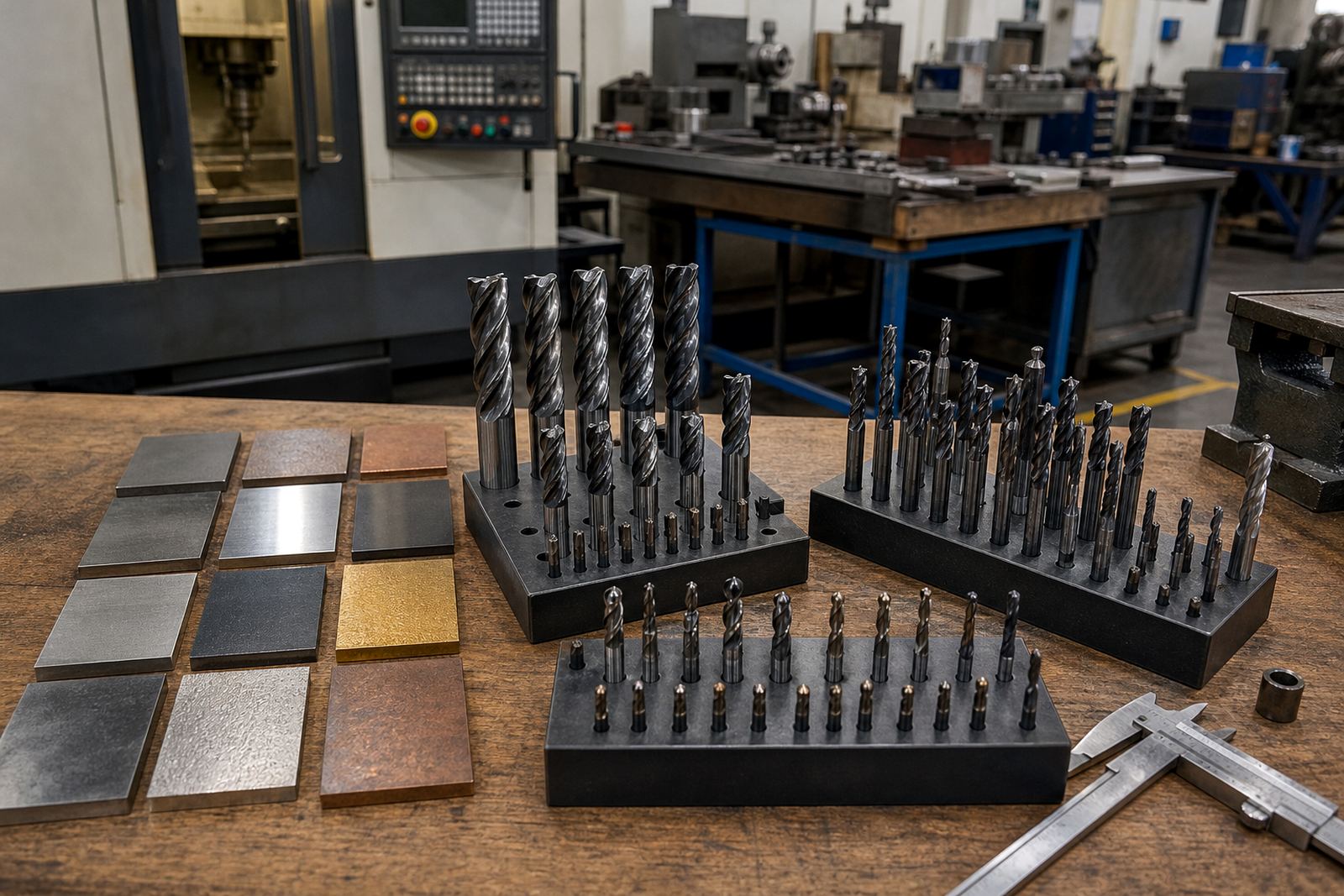
We help machinists, production teams and workshop managers choose solid carbide end mills and drills that suit the job, not just the catalogue. That means matching flute count, corner radius, overall length, coating type, helix angle and cutting diameter to the actual workpiece, machine spindle and feed capability.
For shops in Germiston, Johannesburg, Pretoria, Cape Town, Durban and Gqeberha, the right choice often comes down to small details. A tool that works well in mild steel may struggle in stainless, cast iron or aluminium if the chip evacuation, radial engagement or stick-out is wrong. We look at what you are cutting, what finish you need, and how many parts you need to run before the next changeover.
- Solid carbide end mills for slotting, profiling, finishing and high-feed work
- Drills for through holes, blind holes and deep-hole production
- Options for small diameters from 0.5 mm upward and standard production sizes
- Advice on tool reach, neck relief, coolant use and chip control
How we match the tool to your material and machine
Every selection starts with the material. We ask what you are machining, whether it is low-carbon steel, tool steel, stainless, aluminium, brass, copper or a wear-resistant alloy. Then we look at hardness, scale, interrupted cuts and whether the job is roughing, semi-finishing or final sizing. That lets us narrow the tool shape before we look at speeds and feeds.
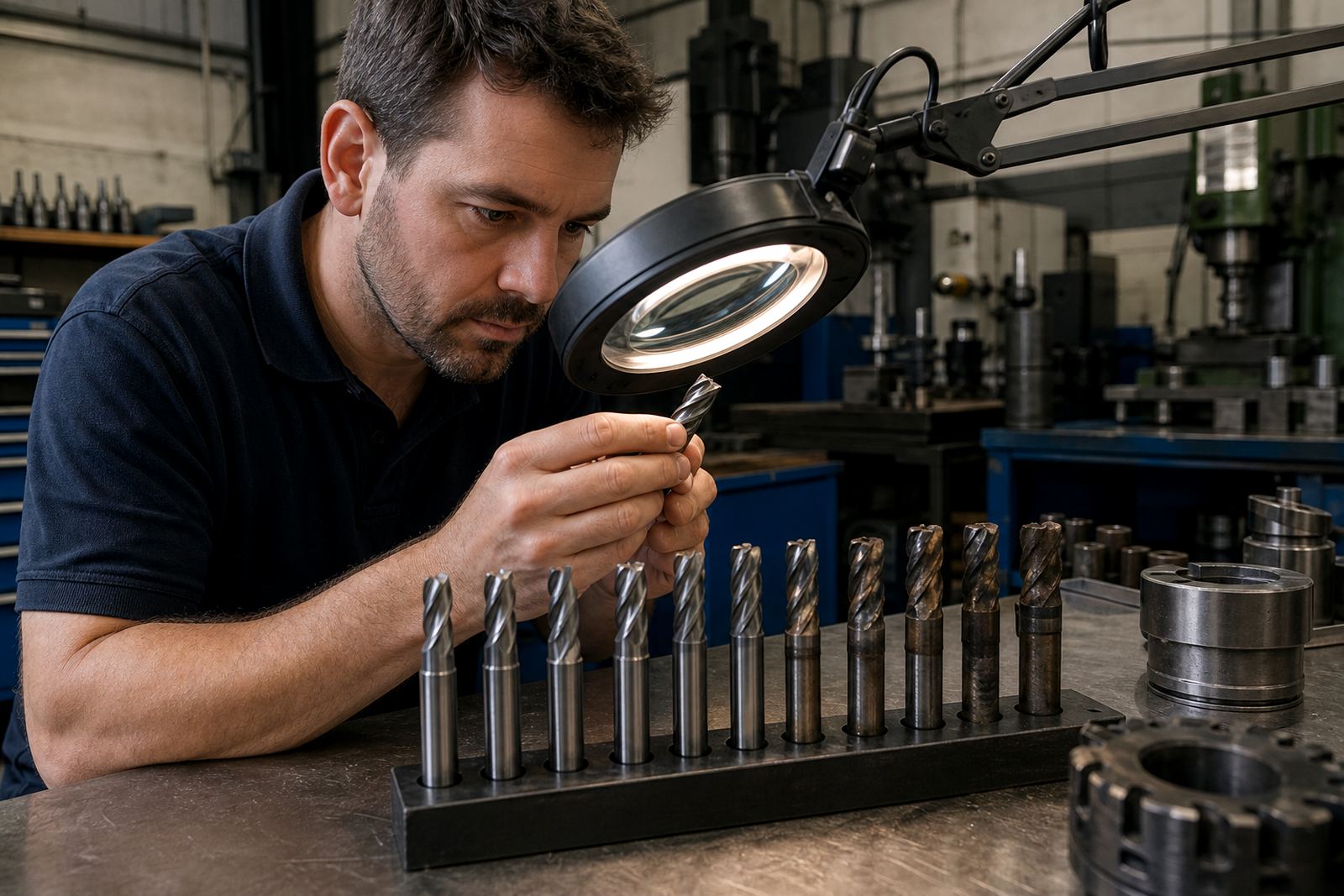
Machine condition matters too. A rigid VMC with good coolant delivery can use a different geometry from a lighter machine or a spindle already under load. We also consider local conditions like load-shedding interruptions, coolant quality and coastal humidity in places such as Durban and Gqeberha, where storage and corrosion control can affect tool life. A chipped edge or inconsistent runout can cause trouble fast, so we factor that in during selection.
- Geometry matched to the material and cutting strategy
- Coating guidance for heat, abrasion and built-up edge control
- Advice on lengths, flute counts and necked designs where needed
- Selection support for high-speed finishing and more aggressive stock removal
Our selection process from enquiry to recommendation
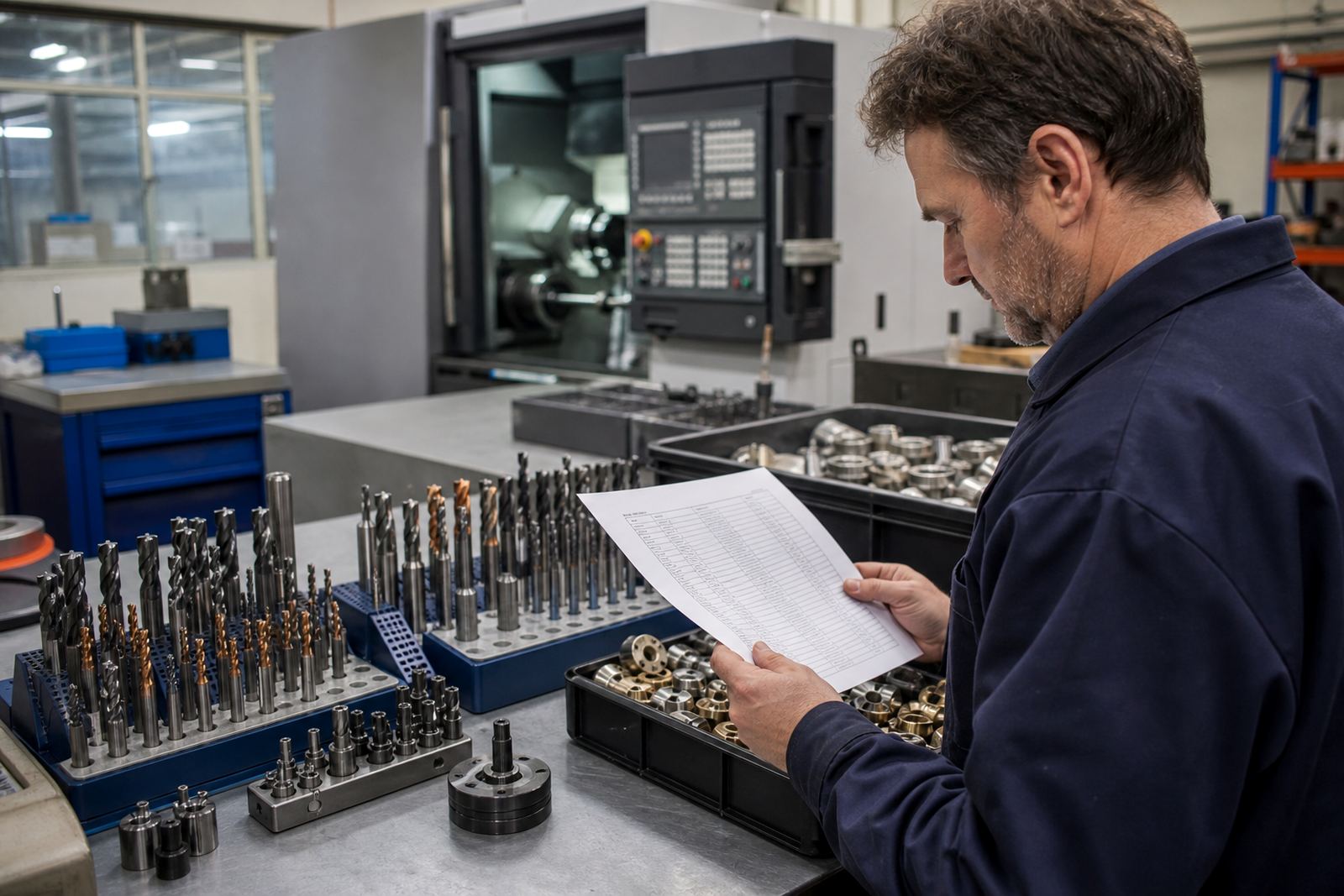
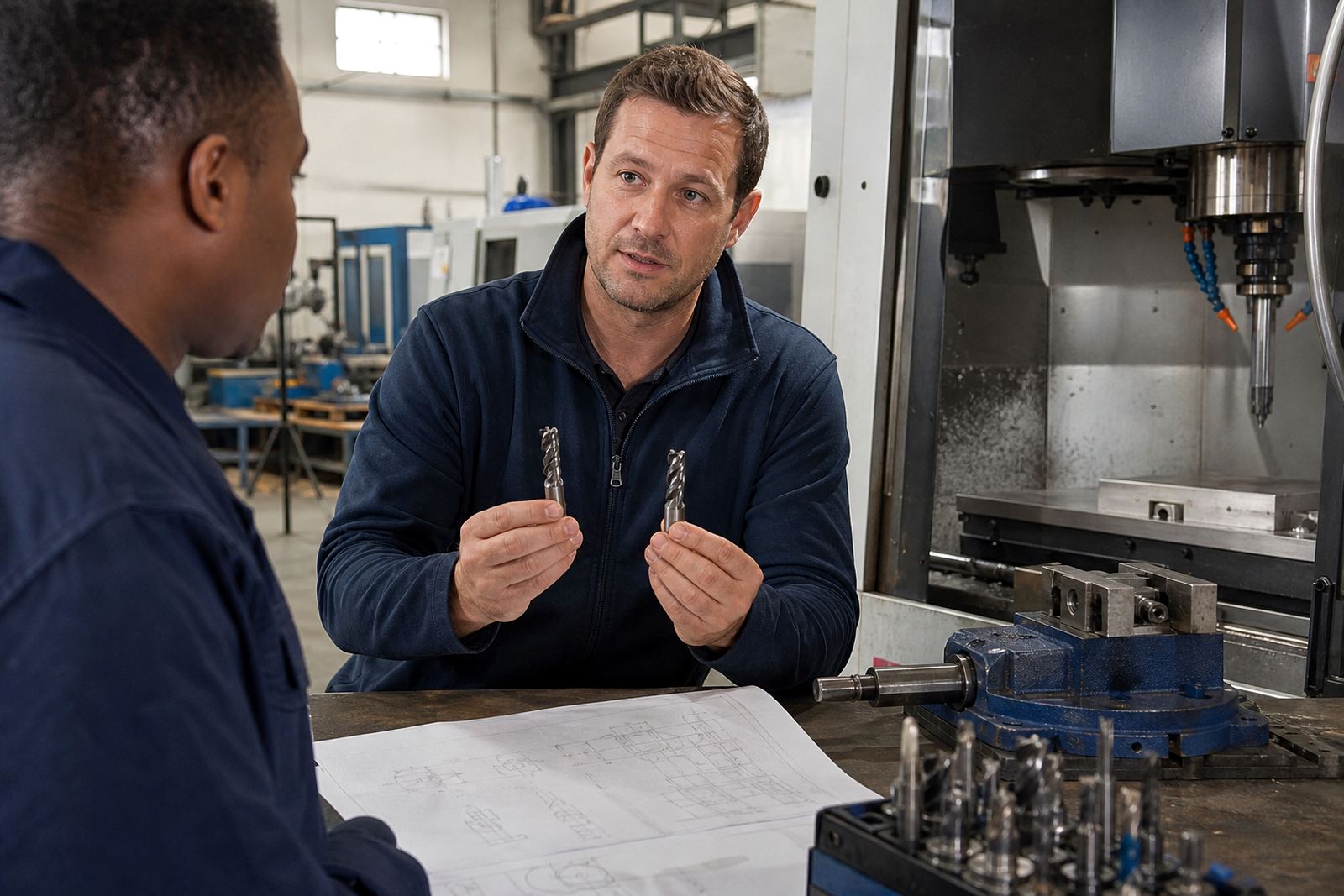
When you send an enquiry through our contact page, we start by reviewing the application details. If needed, we ask for the material grade, current tool size, spindle speed range, holder type, coolant setup and the target cycle time. From there, Johan Smit and the technical team compare the job against available tool options and recommend a practical starting point.
For repeat work, we also check what has already been tried. If a tool is wearing too fast or leaving poor finish, we look at chip evacuation, flute length, radial engagement and whether the cutting load is too high for the machine. Where necessary, we support sample tool trials and help standardise the choice across similar jobs, which can cut guesswork in the tool room.
- Step 1: Send the job details and part material
- Step 2: We review the machining conditions and output goal
- Step 3: You receive a recommended tool spec and application note
- Step 4: If needed, we refine the selection after trial results
Typical turnaround and stock planning
For common sizes and popular geometries, we aim to respond quickly and quote from available stock or likely lead times. Where the requirement is unusual, such as a special length or a narrow diameter for a deep cavity, we will advise the most practical route and whether a stock item can be adapted to the job. The aim is to keep your machine running, not leave you waiting for a fancy spec that does not suit production.
We also assist with stock planning for workshops that run the same components every week. That helps reduce emergency buying and the pressure that comes when a machine is booked but the right cutter is missing. In Gauteng especially, many shops prefer to hold a sensible buffer of fast-moving end mills and drills, because a single missed delivery can throw off the whole shift.
- Fast advice on standard tooling requests
- Technical quotations for regular or repeat orders
- Support for urgent tool supply when production is under pressure
- Stock planning around batch sizes and changeover frequency
Pricing approach and what affects cost
Our pricing is based on the actual tool specification, the quantity required and the level of technical input needed. A standard solid carbide drill or end mill usually costs less than a specialised long-reach or high-performance geometry, and coated tools may differ in price depending on size and application. We keep the approach clear so you can compare the tool cost against tool life and output, not just the purchase figure.
For many shops the cheapest tool is not the best buy once breakage, extra cycle time and rework are counted. We help weigh up cost per hole, cost per part and expected life in the real production run. That makes budgeting easier for jobbing shops and contract manufacturers alike, especially when material prices and machine time are already tight.
Maintenance intervals and when to review selection
Tool selection is not a once-off job. We recommend reviewing performance whenever you change material, alter feed rates, switch machines or see a rise in scrap and edge wear. In busy production environments, even a tool that worked well last quarter can become the wrong choice if the component spec changes or the machine setup drifts.
As a practical guide, review your cutters when you notice shorter tool life, rougher wall finish, rising burrs or a need for more manual deburring. Shops running long shifts should also check holder condition, runout and coolant delivery at regular intervals. A short review every few weeks can save hours of stoppages later, and it keeps the selection based on current conditions rather than old habits.
- Review after any material or process change
- Check runout, holder wear and coolant flow routinely
- Reassess tool life when batches get larger or deeper features are added
- Use trial results to update the standard tool list
Key facts
| Tool types | Solid carbide end mills and drills |
|---|---|
| Diameter range | From 0.5 mm upward, including standard production sizes |
| Application focus | CNC machining centres for production and jobbing work |
| Material matching | Mild steel, stainless, aluminium, cast iron and selected alloys |
| Service coverage | Germiston, Johannesburg, Pretoria, Cape Town, Durban and Gqeberha |
| Response method | Enquiry form on our contact page for technical selection and quotations |