
What our application support covers on real CNC jobs
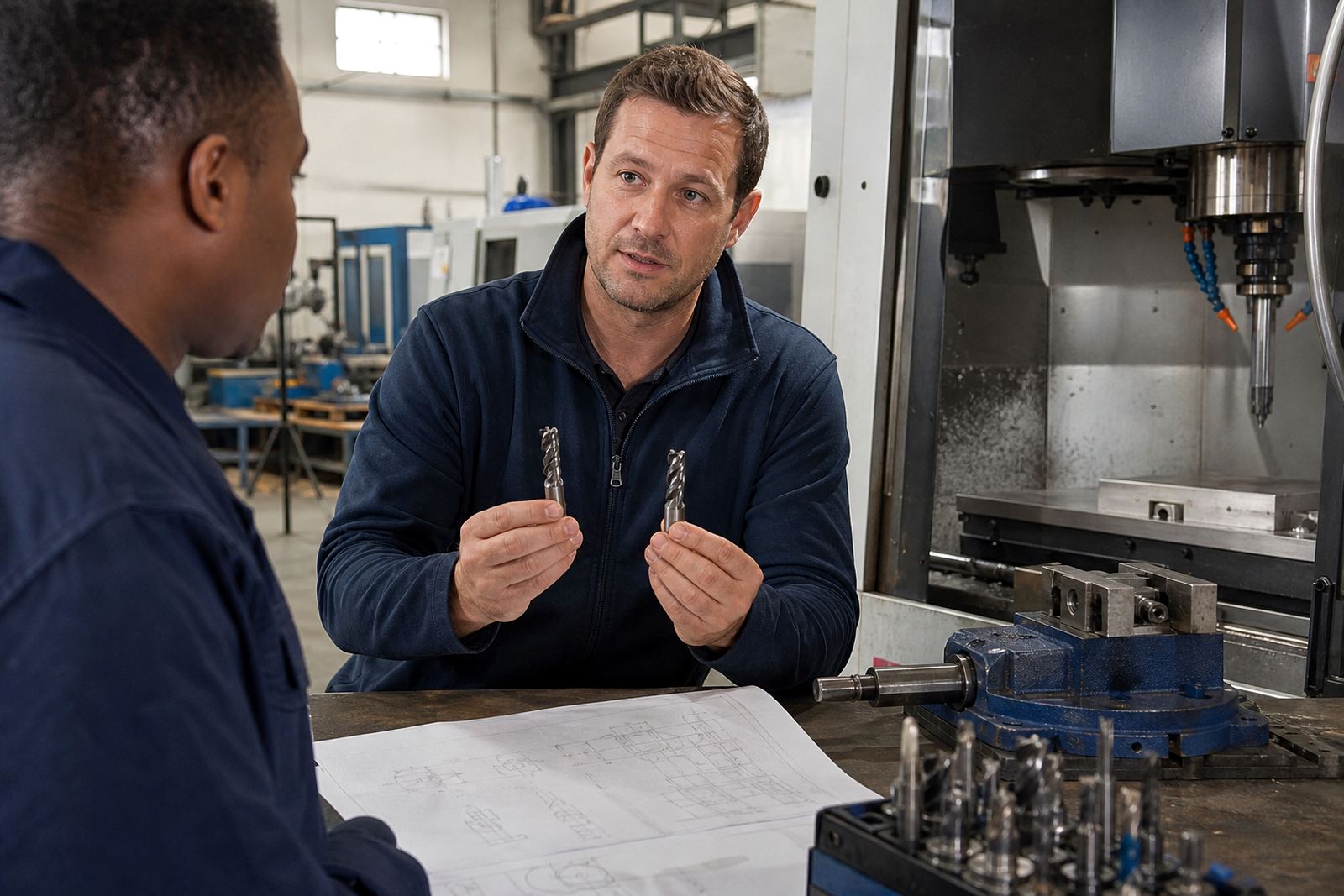
Application support is not only about choosing a cutter from a catalogue. It is about matching the tool to the material, spindle, holdng method and finish requirement on your machine. In Wadeville and across the country, many shops lose time because the tool is correct in size but wrong in geometry, flute count or chip evacuation. We look at the job as a whole and give practical recommendations that can be used on the floor.
Our support covers solid carbide end mills and drills for common production work in mild steel, stainless steel, aluminium, tool steel and cast iron. We advise on roughing, semi finishing and finishing, plus drilling cycles, pecking, coolant use and whether a longer or shorter reach tool will suit the setup better. The aim is to improve tool life, reduce chatter and keep tolerances under control without pushing the machine harder than it should be.
- Flute count selection for roughing or finish work
- Geometry advice for slotting, profiling, plunging and drilling
- Cutting data guidance for speed, feed and stepdown
- Tool life and wear checks for repeat jobs
- Material matching for common South African shop materials
How we decide on flute count, helix and coating choice
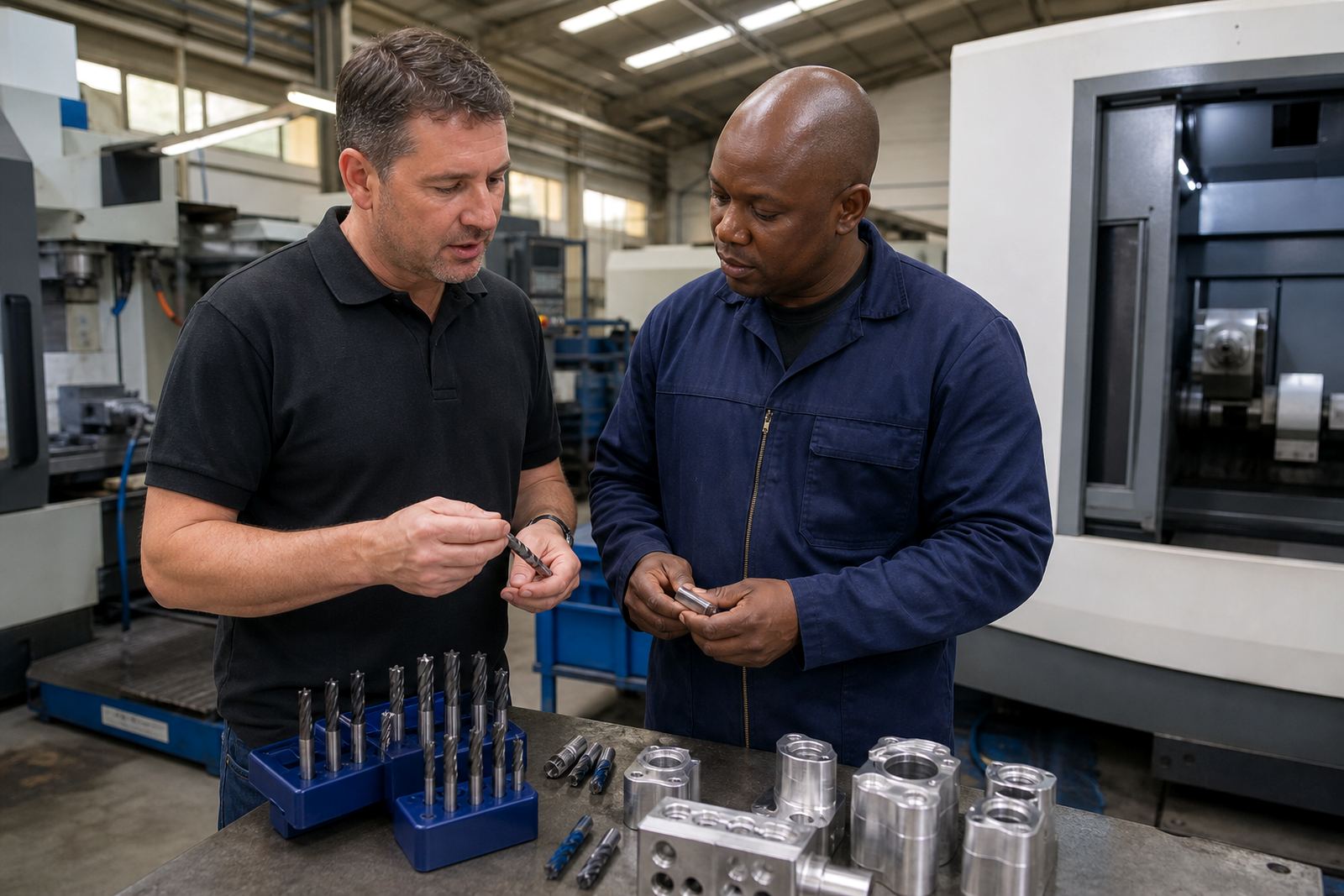
The same diameter tool can behave very differently depending on the flute count and helix. A 2 flute end mill is often better for aluminium and deep slotting where chip clearance matters. A 3 flute tool can give a better balance on general purpose work, while a 4 flute cutter is often more suitable for steel, finishing and lighter chip loads. We also look at helix angle, core strength and corner geometry, because those details change how the tool cuts and how long it lasts.
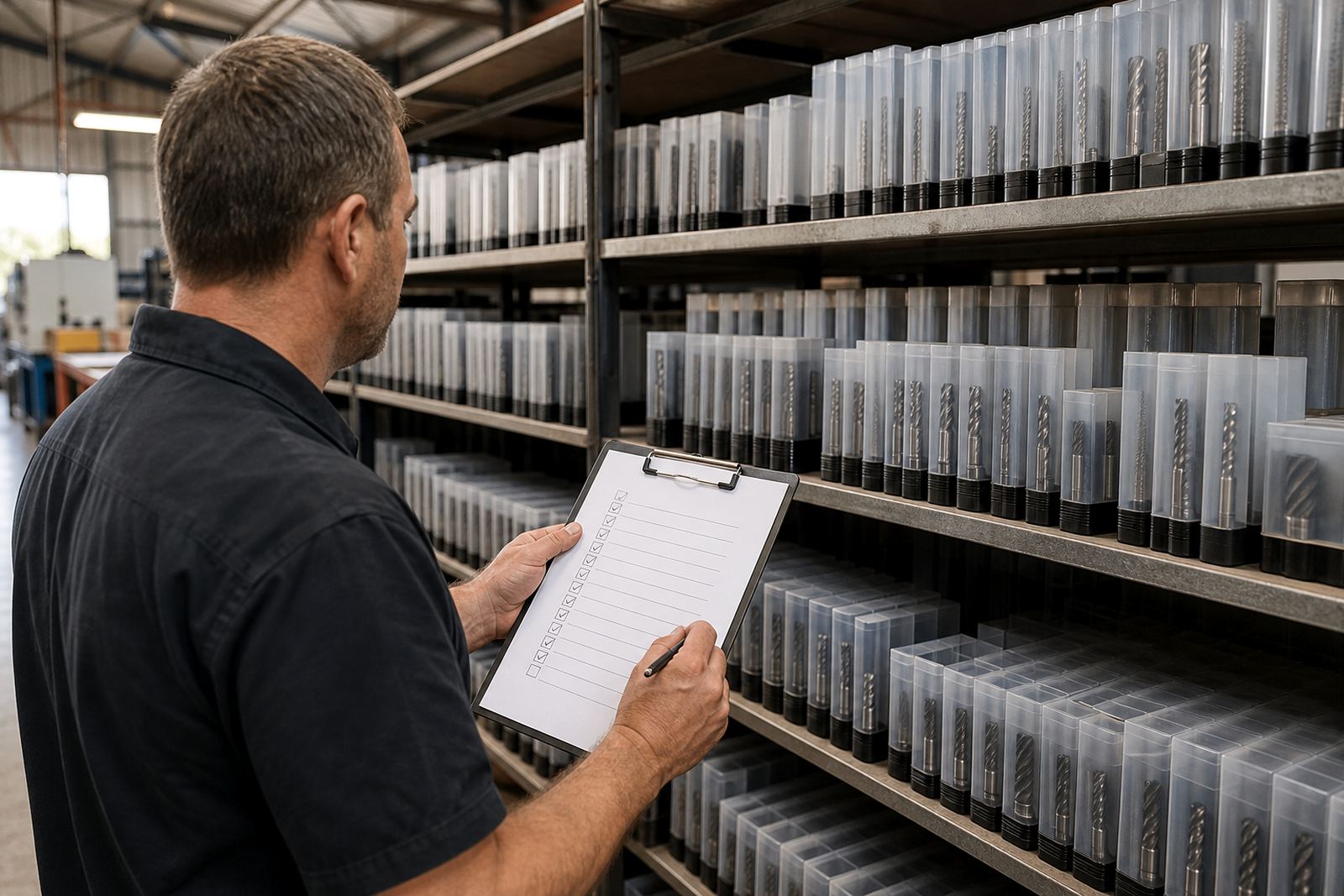
For coated and uncoated tools, the choice depends on material, coolant strategy and whether the job is dry, misted or fully flooded. On coastal work in Durban or humid conditions in Cape Town, we often consider storage and rust prevention as part of the recommendation too. A tool that sits for a week in a damp store room can lose performance before it even reaches the spindle.
- 2 flute: aluminium, plastics and fast chip evacuation
- 3 flute: mixed use, stable feed rates, good general purpose option
- 4 flute: steel, finishing passes and smaller chip loads
- High helix: smoother cutting in softer materials
- Strong core and corner radius: better for interrupted cuts and longer tool life
Our process from enquiry to cutting data
When you send an enquiry through our contact page, we start with the part drawing, material grade, machine type and the issue you are trying to solve. If the problem is chatter, premature wear, poor finish or broken tools, we ask for the current speeds and feeds, workholding details and any photos of the cut. That gives us enough information to make a practical recommendation rather than a guess.
The process is straightforward. We review the application, suggest a suitable tool style and provide basic cutting guidance. If needed, we adjust the recommendation for roughing versus finishing or for one off work versus repeat production. For shops that run multiple machines, we can also standardise the tooling list so operators use the same proven setup across the shop, which saves time and avoids confusion.
- Step 1: Send the job details and material grade
- Step 2: We check tool geometry, flute count and reach
- Step 3: We provide speed, feed and chip load guidance
- Step 4: You trial the tool and report performance
- Step 5: We refine the setup if the job needs further tuning
Turnaround times for urgent production support
We know that tool problems do not wait for a convenient day. If a line is down in Germiston, Pretoria or Boksburg, the support you need is often tied to the next production shift. For standard enquiries, we usually respond as soon as we have the job details and can often give a first recommendation without delay. More complex cases, such as difficult materials or high wear applications, may need a bit more information before we lock in the final suggestion.
Urgent support is treated as a production issue. Where stock is available, we can advise on a direct replacement or a closer match so you can get cutting again. If a trial is needed, we will say so clearly and explain what to watch for during the first run. That may include chip shape, spindle load, edge wear and finish quality. Small changes in feed or depth of cut can make a big difference, and sometimes the fix is simpler than expected.
Pricing approach for application support
Our pricing approach is practical and tied to the level of support required. Simple tool selection and cutting data advice is handled in line with the order or enquiry. More involved application work, such as sample tool trials, process troubleshooting or on site consultation, is priced according to time, travel and the complexity of the job. We keep the approach clear so you know what you are paying for before anything is committed.
For production shops in Johannesburg, Centurion or Cape Town that place regular orders, it often makes sense to build support into an ongoing supply relationship. That allows us to track what works, what wears out early and where standardisation can reduce cost. The result is usually better tool life and fewer emergency replacements, which matters when material prices and machine time are already under pressure.
- Simple guidance: suited to standard tool selection and cutting data
- Trial work: priced around the sample quantity and feedback loop
- On site support: based on location, time on site and job complexity
- Repeat production support: often easier to plan as part of regular supply
Maintenance intervals and when to review the setup
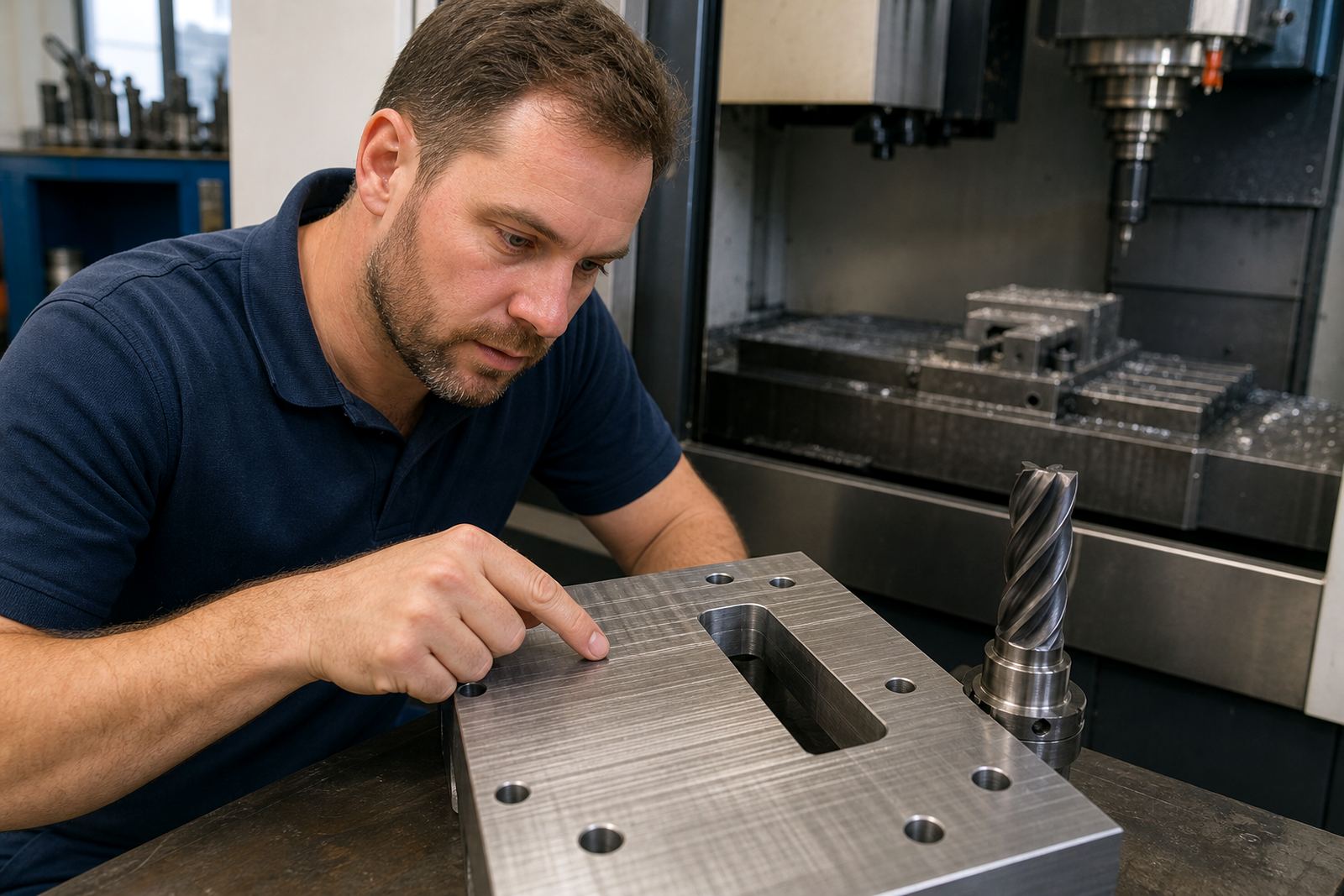
Tool maintenance starts with checking wear before it becomes a breakage. We recommend reviewing the setup whenever you see changes in finish, burr formation, spindle load or chip colour. In production work, that can be after a short run on a tough material, or after a batch if the job is stable. For repeat jobs, a planned review every few runs is often enough to catch wear trends before they affect quality.
Keep an eye on edge chipping, built up edge, taper on drilled holes and changes in tool sound. In humid stores or coastal plants, inspect unused tools regularly for surface condition as well. Good storage, dry packaging and proper tool handling all help, but they do not replace regular checks. If a setup has been pushed hard on one shift, it is worth reviewing the same next morning rather than waiting until the fault repeats.
- Check wear after any change in finish or load
- Inspect stored tools in damp or coastal conditions
- Review repeat jobs when tool life starts drifting
- Replace or regrind only when wear is measured, not guessed
What to send us so we can recommend the right tool
The more accurate the job detail, the better the recommendation. A drawing, material grade and the machine model are a strong start. If you have previous cutting data, send that too, even if the result was poor. We can work from what you have and adjust the advice for your operation, whether you are running a small job shop in Alberton or a higher volume line in Gqeberha. Exactness helps, but we can still work with incomplete information and fill in the gaps.
Useful details include the diameter range you want to run, the depth of cut, whether the tool is for slotting or profiling, and whether coolant through the tool is available. If you are dealing with tool chatter, let us know the clamping method and overhang. Often the fix is in the full setup, not just the cutter. A quick chat on the enquiry form can save a lot of scrap and a fair bit of frustration.
Key facts
| Material range | Solid carbide end mills and drills for mild steel, stainless steel, aluminium, tool steel and cast iron |
|---|---|
| Typical flute options | 2 flute, 3 flute and 4 flute, selected by material and cut type |
| Diameter guidance | Common CNC sizes from 1 mm to 20 mm, with job specific advice outside standard ranges |
| Application types | Slotting, profiling, pocketing, finishing, drilling and peck drilling |
| Support methods | Tool selection, speed and feed advice, process troubleshooting and on site consultation |
| Turnaround | Standard enquiries handled promptly, urgent production issues prioritised where stock and details allow |