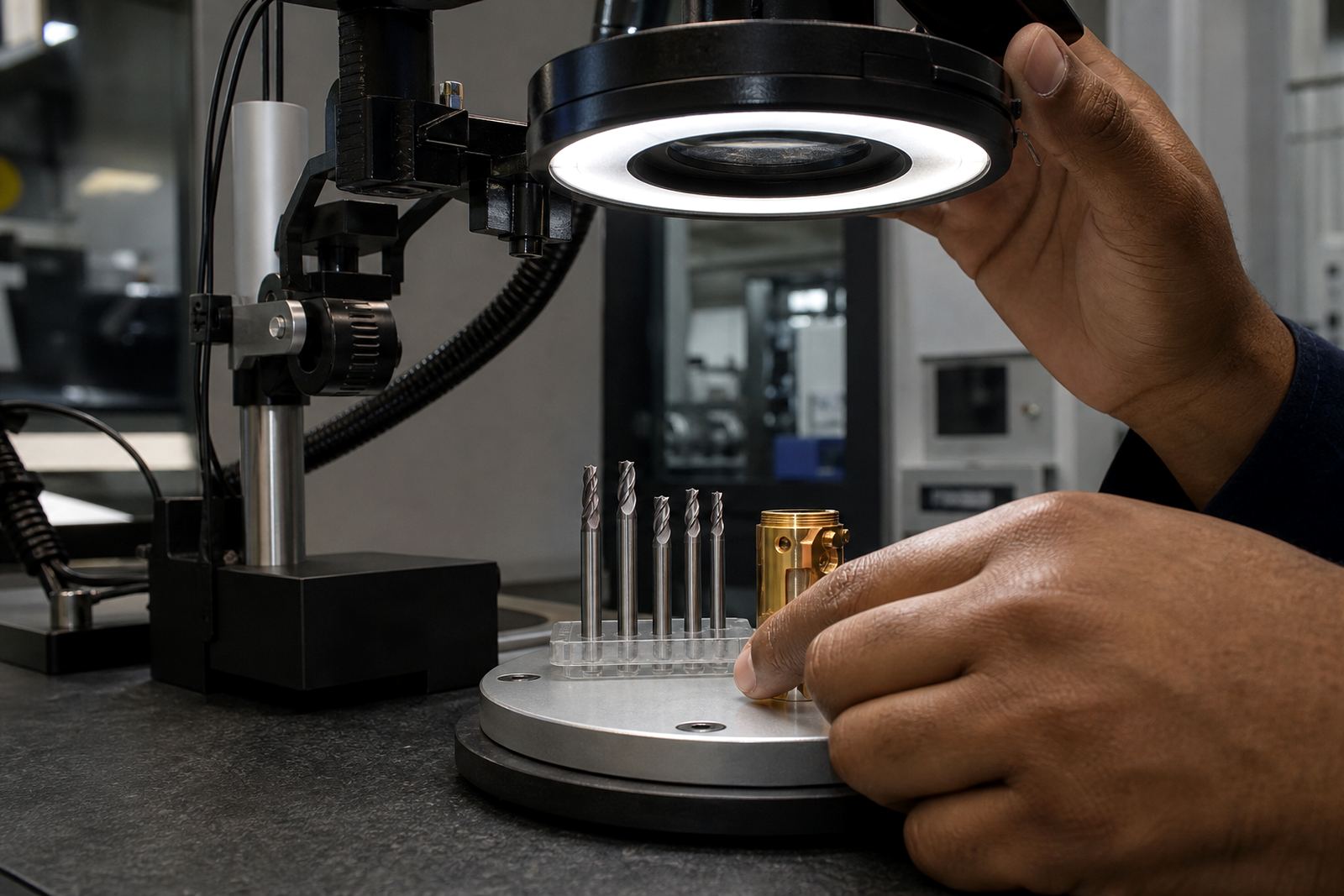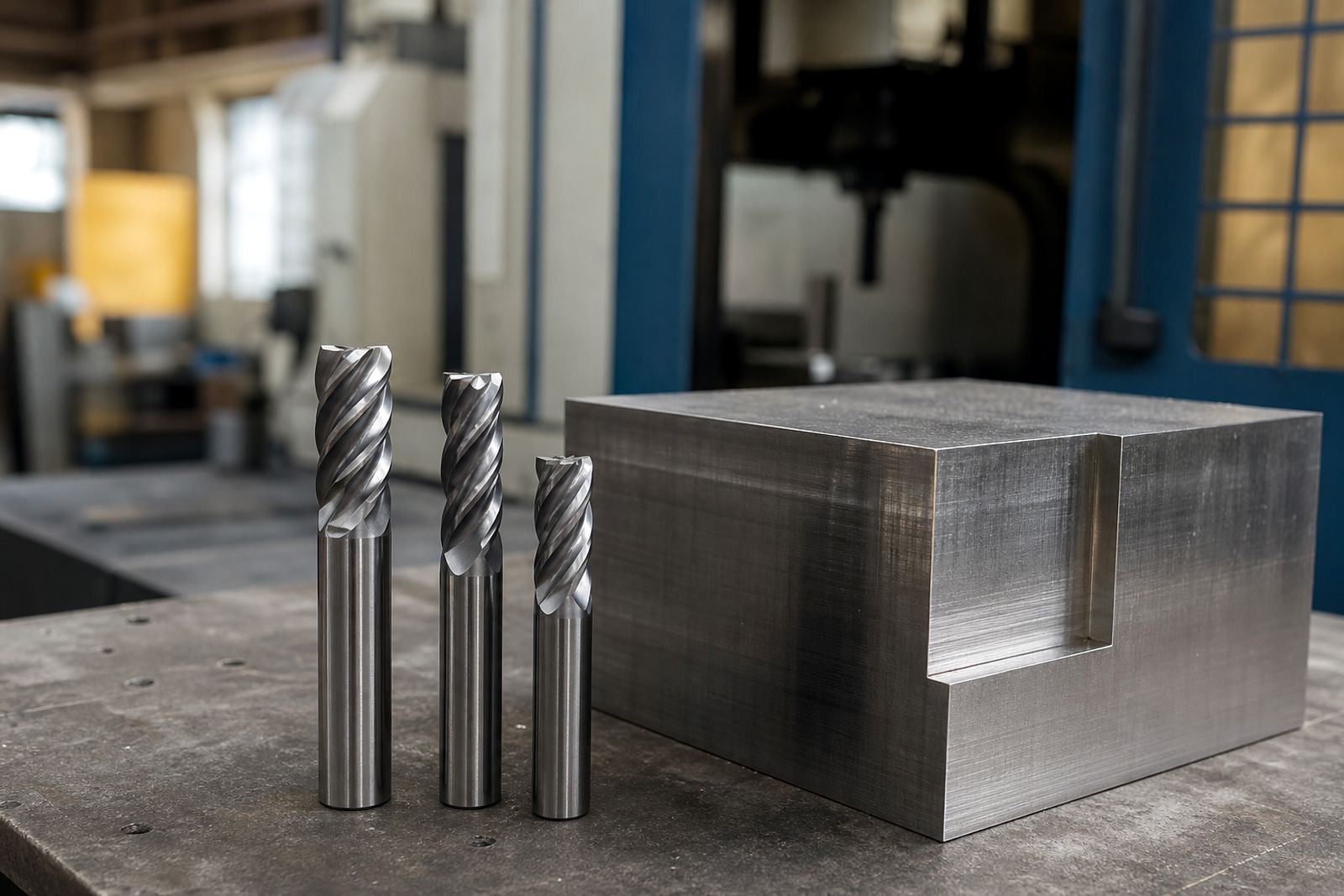

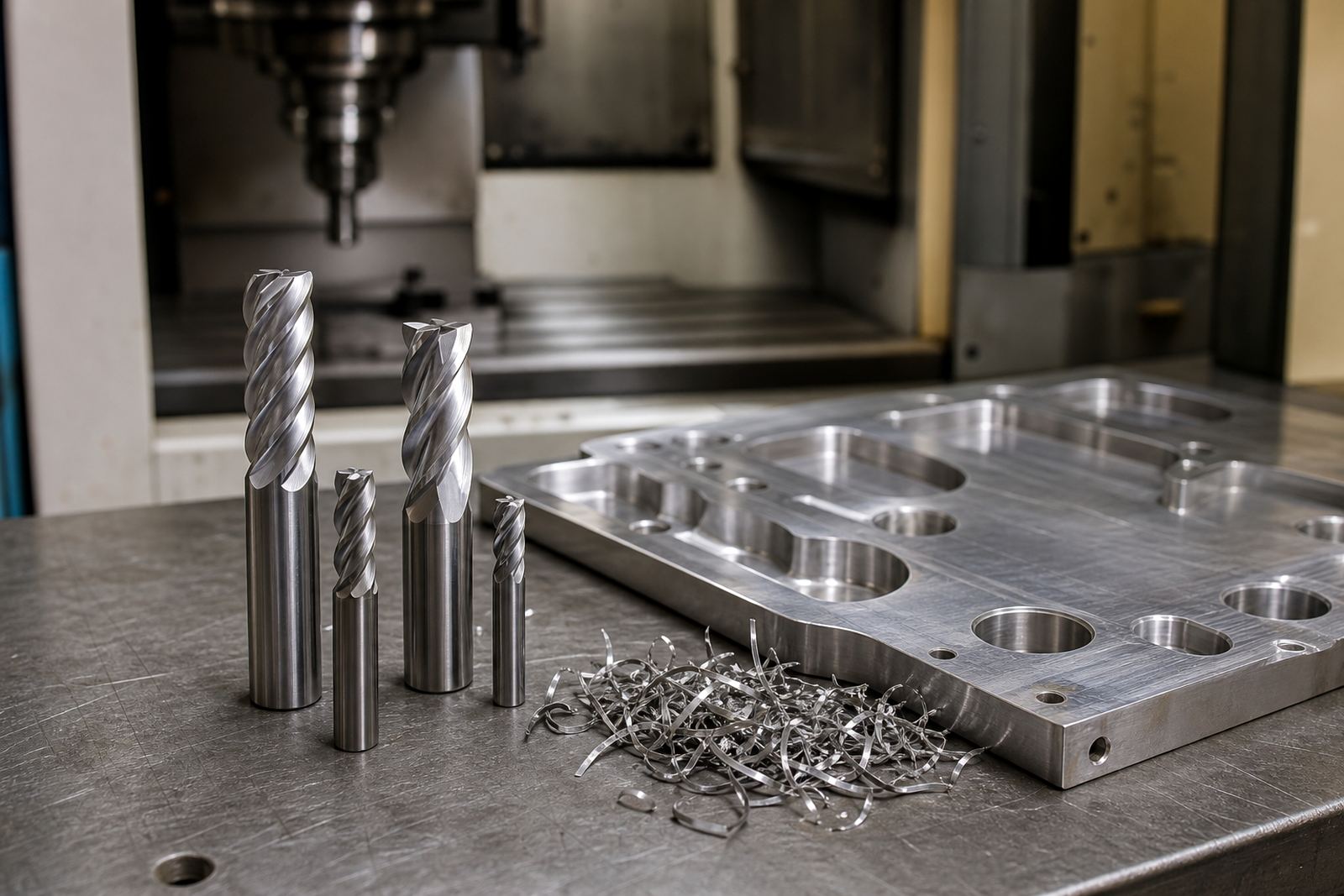
What aluminium end mills are used for
Aluminium end mills are solid carbide cutting tools made for non-ferrous work such as aluminium, brass, copper and many plastics. The flute geometry is designed to move chips out quickly, which matters when you are cutting sticky material or running long cycles on CNC machining centres in Wadeville, Germiston or anywhere else in South Africa where production stoppages cost real money.
These tools are chosen for slotting, side milling, profiling, pocketing and finishing on parts that need a clean edge with low burr formation. Polished flute surfaces help reduce chip welding and keep the cut cooler, so you can push feed rates without sacrificing surface finish. On the right setup, the tool leaves a bright finish and holds size better than general purpose cutters.
Available sizes, flute counts and shank options
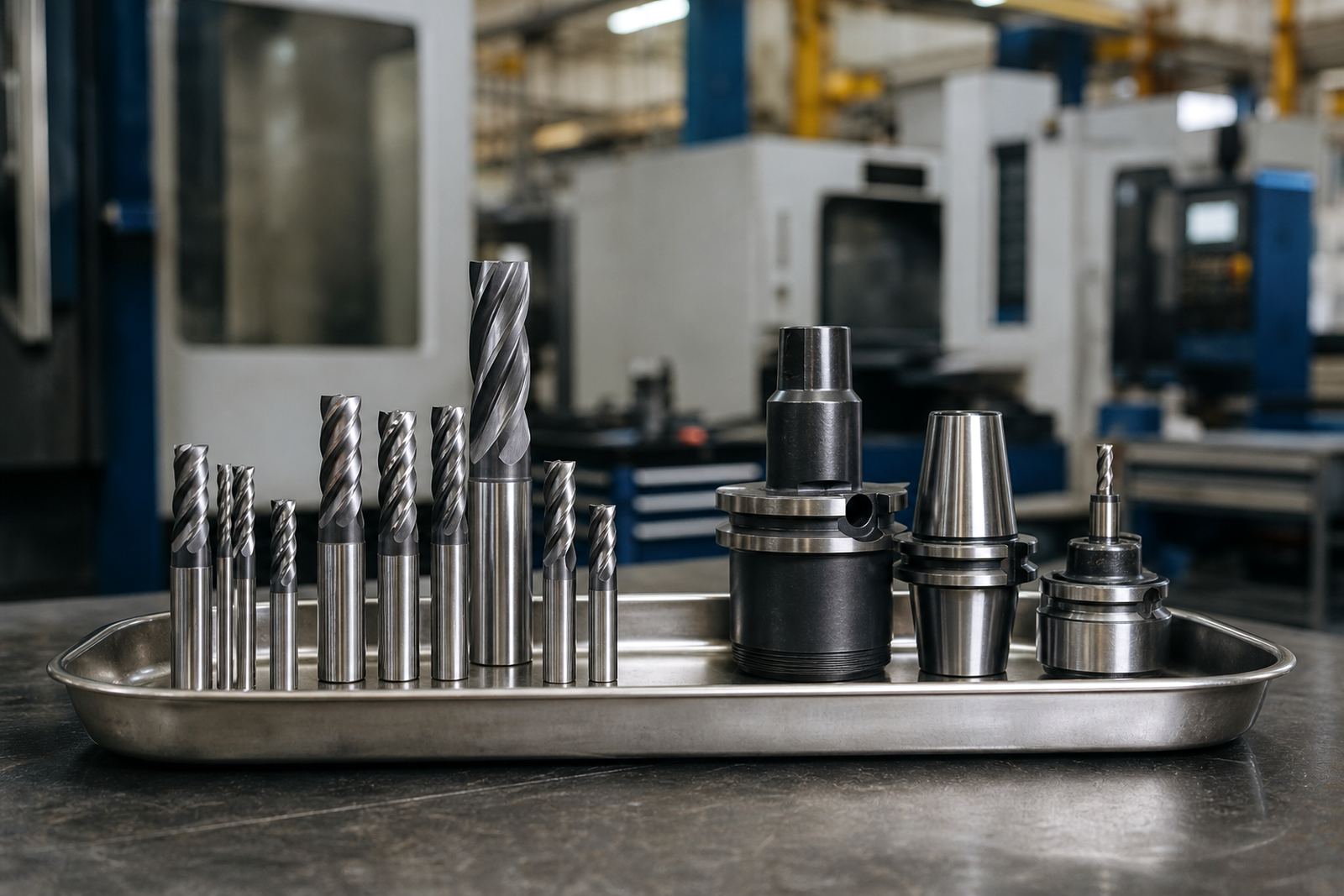
Aluminium end mills are available in a practical range of diameters and lengths for light detail work as well as deeper cuts. Typical sizes include 3 mm, 4 mm, 6 mm, 8 mm, 10 mm, 12 mm and 16 mm diameters, with longer reach options where the job needs access into deep cavities or around fixtures. Overall length and flute length should always match the part geometry, machine rigidity and holder setup.
The most common choices are 2 flute and 3 flute designs for aluminium. Two flute tools clear chips very well and suit aggressive evacuation, while 3 flute tools can improve finish and support higher feed on some jobs. Shank sizes are usually matched to the cutter diameter, and options may include standard straight shanks for ER collets, milling chucks and hydraulic holders.
- Diameter options from 3 mm to 16 mm for general CNC work
- 2 flute for maximum chip clearance on freer cutting jobs
- 3 flute for better finish on selected aluminium applications
- Standard and extended flute lengths for shallow or deep cuts
- Uncoated or specialised polished flute options depending on the job
Where these cutters suit local production work
These end mills suit job shops and production lines machining aluminium brackets, housings, covers, heat sinks, jigs, dies, appliance parts and automotive components. They also work well on technical plastics where a crisp edge and low heat are important. In coastal areas like Durban and Gqeberha, good chip control and proper coolant use help prevent staining and surface issues on stored stock.
For Gauteng workshops, the main advantage is consistent output in busy shifts where machine time is tightly scheduled. If your team is cutting on multiple CNC machining centres in Johannesburg, Pretoria, Boksburg or Centurion, the right aluminium cutter can reduce rework, improve cycle time and keep the finishing side more predictable. Even on simpler machines, a proper aluminium tool will usually outperform a general purpose end mill for this type of work.
- Best for aluminium grades, copper, brass and selected plastics
- Useful for production runs, prototypes and repeat jobs
- Suitable for shops needing clean finishes and low burrs
- Works across small toolrooms and high volume machining cells
Machine setup, spindle speed and coolant needs
Aluminium end mills do not need gas. They do need the correct spindle speed, rigid tool holding and a clean cutting path. Many aluminium jobs run best at higher surface speeds than steel, so check that the machine spindle can reach the required rpm and that your holder is balanced for the cutting load. A loose setup will give poor finish, chatter and short tool life very quickly.
Coolant or air blast is strongly recommended for chip clearing. Flood coolant is common on enclosed CNC machines, while mist, air blast or minimum quantity lubrication may suit certain jobs where chip control is good and the part geometry allows it. If you are running during load-shedding recovery or on a machine that has been idle, check spindle warm-up, toolholder cleanliness and coolant flow before starting production. Small details matter, and a dirty collet can ruin a fresh cutter.
- Use the correct collet or holder size with minimal runout
- Keep the spindle, taper and shank clean before fitting the tool
- Set chip load and feed to suit the cutter diameter and flute count
- Use coolant or air blast for proper chip evacuation
- Confirm machine rpm, feed capacity and rigidity before ramping up
Care, storage and when to replace the tool
Solid carbide cutters should be handled carefully because edge damage often starts before the tool even reaches the machine. Store them in their sleeves or holders, away from clamping knocks and moisture. In workshops near the coast, wipe tools down after use so humidity does not leave staining on the shank or packaging. A clean tool lasts longer, especially when stock is moved between the warehouse and the machining floor.
Replace the cutter when you see rising cutting noise, edge rounding, burrs increasing or the finish becoming dull. If the tool starts to rub instead of cut, it will generate heat and can leave built-up material on the flutes. That is the point where tool life is dropping fast. Keeping a record of part material, spindle speed and feed helps with tool life optimisation and makes re-ordering much easier.
What to check before you place an order
Before ordering, confirm the material grade, the diameter you need, flute length, overall length and whether the job needs a square end or a corner radius. Also note the holder type, spindle speed limits, coolant method and whether the tool must reach past a clamp or fixture. If the part has a deep pocket, measure the usable clearance properly because 2 mm can make a difference on the machine floor.
It also helps to tell us if the job is a roughing cut, finishing pass or a production standardising exercise. That lets the team recommend the right option for your cycle time and surface finish targets. If you are running urgent work in Germiston, Alberton or Randburg, stock planning matters as much as the cutter spec, so send the full job detail when you enquire through the contact page.
- Material type and alloy grade
- Required diameter, flute length and overall length
- Cut type: slotting, finishing, profiling or pocketing
- Holder type and machine spindle speed range
- Coolant method and expected cycle time
Support from CuTools Carbide
CuTools Carbide works with machining shops across South Africa that need steady supply, practical technical support and fast quotations. The team is based in Wadeville, Germiston and supports buyers in Johannesburg, Pretoria, Cape Town, Durban and Gqeberha through the enquiry form on the contact page. Whether you need sample tool trials, technical quotations, application support or urgent tool supply, the focus is on getting the right cutter into the spindle the first time.
Our team includes Marius van der Merwe, Lerato Mokoena, Johan Smit, Anele Dlamini, Priya Naidoo, Thabo Molefe and Zanele Khumalo, with experience across sales, technical applications, operations and quality control. That means your enquiry is handled by people who understand production pressure, not just part numbers. If a job is slipping on finish or chip control, we can help match the tool to the material and machine conditions.
Key facts
| Tool type | Solid carbide aluminium end mills |
|---|---|
| Typical diameters | 3 mm to 16 mm |
| Flute options | 2 flute and 3 flute |
| Application | Aluminium, brass, copper and selected plastics |
| Cutting style | Slotting, profiling, pocketing and finishing |
| Setup needs | Rigid holder, correct spindle rpm, coolant or air blast |