
What ball nose mills do in everyday CNC work
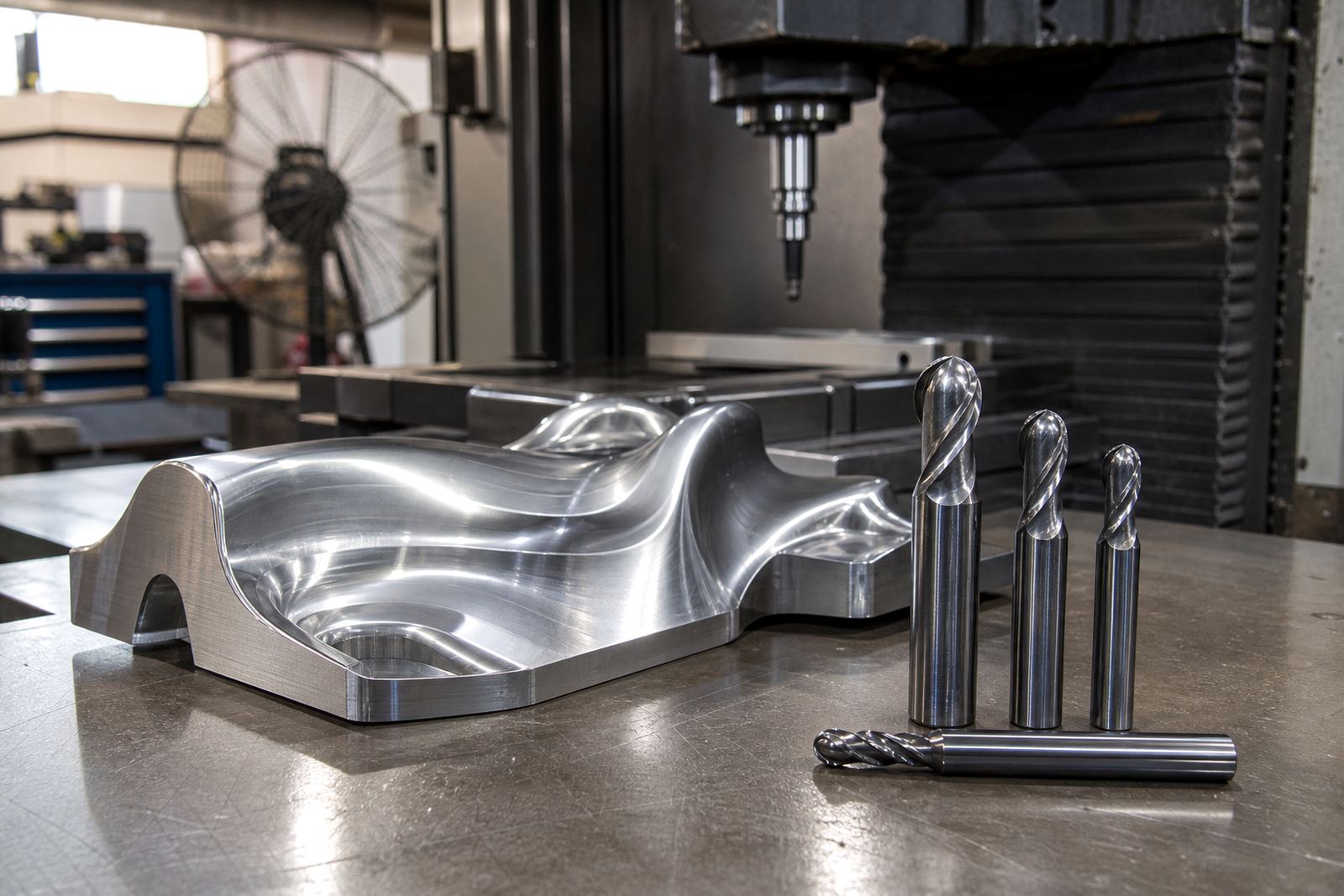
Ball nose mills are end mills with a rounded tip, used when a job needs smooth radius work rather than flat-bottom cutting. They are common on mould inserts, dies, aluminium housings, steel components and general machining where the final shape includes curves, pockets, ramps or blended surfaces. On a CNC machining centre, the rounded nose helps maintain a clean tool path on contour work and reduces the stepped finish you can get from a flat tool on a freeform surface.
In South African production shops, these cutters are often used for finishing after roughing with a larger tool. That helps take the pressure off the spindle, gives better surface quality and can reduce hand finishing. They are also useful on jobs where the drawing calls for tight transition radii, shallow 3D features or sculpted forms that need consistent repeatability. In busy shops in Germiston Pretoria or Durban, a ball nose cutter can save real time when the tool path has to run accurately over many parts in a shift.
Because the cutting edge meets the workpiece gradually, the tool can be run at sensible stepovers for a smooth finish. It is still important to match the cutter to the material, machine rigidity and tool path strategy. A ball nose cutter that works well in mild steel may not give the same life in stainless, cast iron or abrasive tool steel if the speed feed and coolant approach are not set correctly.
Sizes, shank options and cutter geometry
Solid carbide ball nose mills are supplied in a range of diameters and flute styles to suit light finishing and heavier production work. Common diameters include 1 mm, 2 mm, 3 mm, 4 mm, 6 mm, 8 mm, 10 mm and 12 mm, with longer reach options for deeper cavities and tighter access. Shorter overall lengths give better rigidity while extended reach helps with deep pockets or mould work, though the longer the tool the more careful the programming must be.
Typical options include 2 flute, 3 flute and 4 flute cutters depending on material and chip clearance needs. For aluminium and non ferrous work, higher flute counts may suit certain finishing passes, while steel and stainless often benefit from geometry that clears chips more freely. There are also coated and uncoated options depending on the material, coolant method and wear pattern you are aiming for.
- Diameter range: 1 mm to 12 mm standard, with selected larger sizes available on request
- Cutting length: short, medium and extra long reach options
- Shank: straight shank for standard ER collets and tool holders
- Flutes: 2, 3 or 4 flute depending on application
- Material: solid carbide for rigidity and wear resistance
- Use: rough finishing, finishing, 3D surfacing and radius detailing
When ordering, it helps to check the actual radius size called for on the drawing, not only the overall diameter. A 6 mm ball nose cutter does not mean a 6 mm corner radius in every case, so the tool path and component geometry need to be matched carefully.
Where ball nose cutters suit production best
These cutters suit CNC machining centres used in engineering, toolmaking, automotive components, general fabrication and precision subcontract work. They are especially useful for mould and die applications, mould base detail, curved slots, chamfers with a blended finish, and any job where the component surface needs to look clean as well as measure correctly. For shops working with stainless steel, alloy steel, aluminium and some plastics, the ball nose cutter is often part of the finishing sequence.
In coastal areas like Cape Town and Durban, humidity can affect storage and tool handling, so sealed packaging and dry storage matter. In Gauteng, dust and temperature changes can also affect tool life if cutters are left exposed on benches or near coolant mist. A good production floor keeps these tools in proper holders or sealed boxes until needed, especially where load-shedding interrupts the normal machine routine and tools may sit idle between shifts.
- Mould and die finishing
- 3D profiling and sculpted surfaces
- Radius blending on complex parts
- Aluminium and non ferrous finishing
- Steel and stainless machining with the right speed feed setup
- Short-run and repeat production where surface consistency matters
For shops that need the same finish across multiple machines or branches, standardising ball nose tool choice can make setup easier. It cuts down on trial runs and helps keep tool life more predictable from one operator to the next.
Machine setup, power needs and coolant use
Ball nose mills do not need gas or any special site service. They need a CNC machining centre with the correct spindle speed, rigid workholding and a holder that suits the shank size. The cutter itself is only part of the system. If the machine has play in the spindle, poor clamping or weak programme settings, the finish will suffer regardless of tool quality.
Power requirements depend on the machine and material, but the cutter should be matched to the spindle range and the available torque at the chosen speed. Smaller ball nose mills often run at high spindle speed with light cuts, while larger diameters need more torque and a steadier feed. Coolant can be flood, mist or air blast depending on the material and chip control. In some finishing jobs, air blast is enough, but in steel and stainless the right coolant flow can improve tool life and surface quality.
Setup also includes stick-out control. Keep the cutter as short as possible for the job. Too much overhang increases deflection, makes chatter more likely and can leave marks on the workpiece. If the part has deep features, use the longest reach only where needed and reduce stepdown and stepover accordingly.
Care, servicing and longer tool life
Solid carbide ball nose mills last longer when they are cleaned, stored and used properly. After a job, remove chips and coolant residue before putting the tool away. If you are cutting in abrasive material, check the edges for micro chipping and look at the finish under light. A dull or chipped nose can still cut, but it often leaves a poor finish and increases spindle load.
Do not mix used cutters loosely in a drawer with collets, drills and spanners. The cutting edges can knock against other tools and go blunt before the next run. Keep each size separated and labelled so operators can find the right cutter fast, especially when a job needs a quick change during a production shift. Where a workshop handles many repeat orders, a simple stock list for common diameters helps avoid emergency purchasing after hours.
- Store dry and clean, away from coolant mist
- Check for chipped tips before every critical job
- Replace cutters that leave marks or need extra force
- Keep holders clean to maintain true running
- Use the correct speed feed rather than forcing life out of a dull tool
With good care, tool life becomes more predictable and machining results stay consistent. That matters when your customer wants the same finish on every batch, not just the first good part.
What to check before you place an order
Before ordering ball nose mills, check the material you are cutting, the feature size, the depth of cut and the finish requirement. You should also know the holder type, collet size, spindle speed range and whether the programme calls for roughing or finishing. If the drawing has a tight radius or a deep cavity, the exact flute length and reach become important.
It also helps to know whether the job needs dry cutting, flood coolant or air blast. Some materials will tolerate a lighter setup while others need a more controlled approach to avoid built-up edge. If the machine is shared across shifts, ask for a cutter that can be repeated easily so settings do not change every time the operator changes. That saves time on rework and keeps production moving when there is pressure to meet dispatch.
Clients across Germiston, Johannesburg, Pretoria, Boksburg, Alberton, Centurion, Cape Town and Durban can send an enquiry through the contact page for tool selection, technical quotations, sample tool trials and urgent supply. If you are not sure which ball nose cutter suits the job, share the drawing, material grade and required finish and the right option can be matched to the application.
Key facts
| Product type | Solid carbide ball nose mills |
|---|---|
| Diameter range | 1 mm to 12 mm standard, selected larger sizes on request |
| Flute options | 2 flute, 3 flute and 4 flute |
| Reach options | Short, medium and extra long reach |
| Compatible materials | Aluminium, mild steel, stainless steel, alloy steel and selected plastics |
| Typical use | Contouring, 3D surfacing, radius blending and finishing on CNC machining centres |