General-length carbide drills for day-to-day CNC holemaking
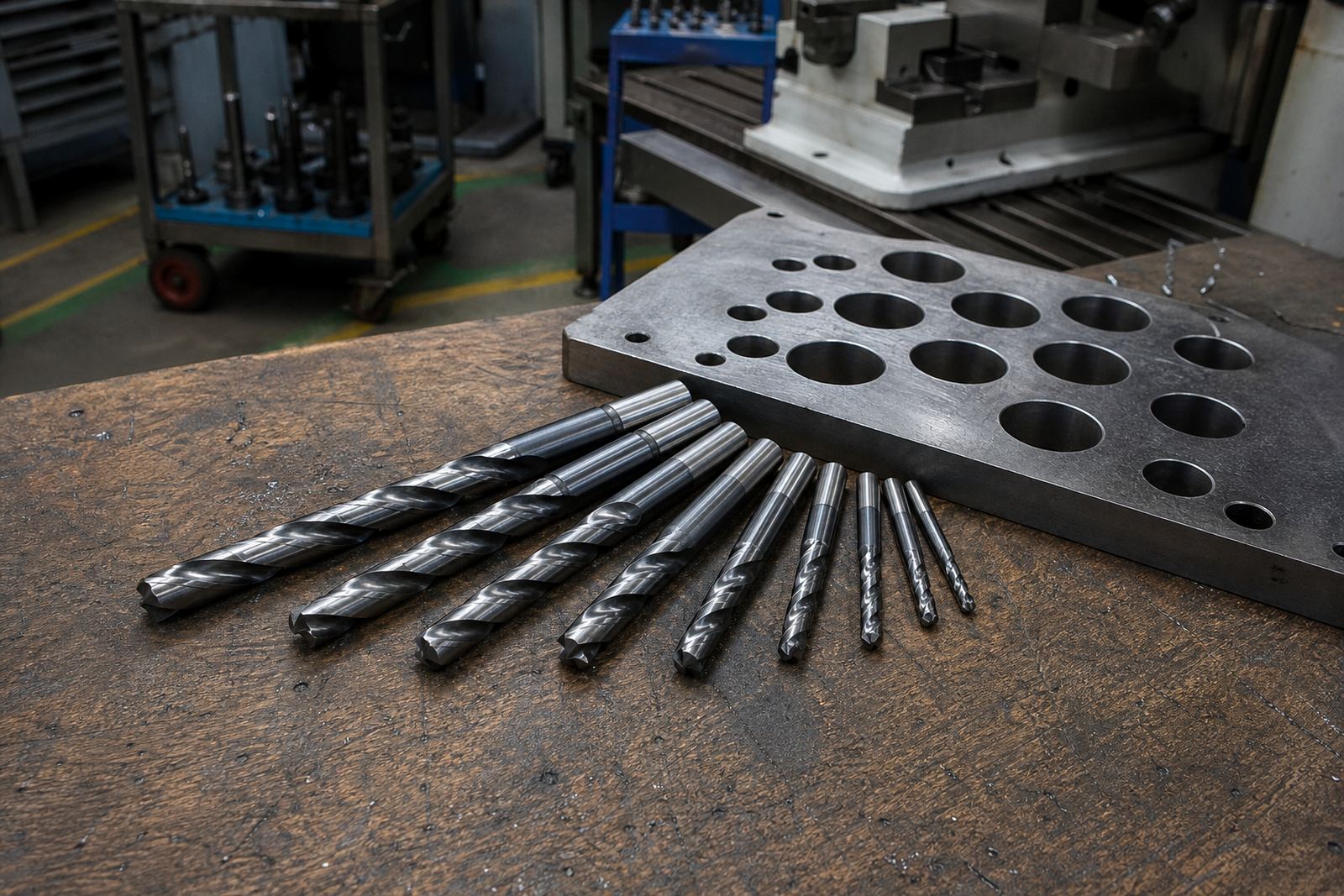
Jobber drills are the workhorse choice when you need a solid carbide drill that can cover common hole depths without the extra reach of long series tooling. On production parts, they are used for pilot holes, through holes and pre-hole drilling where a stable tool body helps keep size consistent from the first shift to the next. In busy shops around Germiston, Johannesburg and Pretoria, this is often the drill that stays in the spindle for repeat jobs, batch work and mixed-material schedules.
These drills are made for CNC machining centres, with a shorter overall length than extra-long drills and a practical flute design for normal chip evacuation. That makes them easier to control on parts with moderate hole depth, and they are a good fit where cycle times matter but hole quality cant be left to guesswork. For workshops running 2 or 3 shifts, a jobber drill is often the sensible middle ground between reach and rigidity.
- Solid carbide construction for stiffness and wear resistance
- General-length body for routine holemaking
- Better control than long-reach drills on standard depth holes
- Suitable for high-volume and mixed-job production
Sizes, point styles and coating options
Jobber drills are normally supplied in metric diameters for common workshop and production use, with small diameters for light fixtures and fine component work, right through to larger diameters for fastening, tapping prep and assembly holes. Selection usually depends on the material, hole tolerance and whether the hole will be finished later. A 4 mm drill for a light bracket is a very different choice from a 12 mm drill going into plate or bar stock, so the application must guide the size.
Point geometry matters just as much as diameter. General-purpose drills are often supplied with standard point angles for everyday use, while specific materials may call for a geometry that lowers thrust or improves centring. Coating choice can also help with tool life in hotter cutting conditions or abrasive materials. In coastal areas like Durban and Gqeberha, storage and handling matter too, since humidity can affect packaging, holders and coolant condition if a shop is not keeping an eye on it.
- Metric diameters for common production hole sizes
- Standard point geometry for general use
- Options for different materials and chip control needs
- Coating choices for heat, wear and longer service life
Where jobber drills work best on the shop floor
These drills suit machining shops that need dependable drilling across mild steel, alloy steel, stainless steel, aluminium and cast iron. They are especially useful on parts where the hole is being made before tapping, reaming or counterboring. Because the body length is kept practical, the drill remains more stable than a long series tool, which helps when the machine is running faster feeds and the operator needs consistent breaking of chips.
In South African production, jobber drills are often selected for general engineering, agricultural components, transport parts, enclosure work, pump fittings and maintenance jobs. They also help on repeated production runs where tool life can be tracked and standardised. If your shop is in Wadeville, Boksburg, Alberton or Centurion, and you are keeping a live stock plan for everyday consumables, this type of drill usually belongs near the top of the list.
- Routine holemaking on CNC machining centres
- Through holes and normal depth blind holes
- Pre-drilling for tapping, reaming or finishing operations
- Production work where repeatability is important
Machine setup, holder choice and power requirements
Jobber drills do not need gas or special utility connections. They do need a machine that can hold speed and feed steadily, with proper spindle condition, sound clamping and a suitable toolholder. For best results, the drill should run with minimal runout and secure part setup. If the workholding is weak, the drill will show it immediately through wandering, chatter or poor hole finish.
On CNC machines, use a holder that matches the shank size and keeps the tool centred. If you are drilling deeper holes or tougher materials, coolant delivery becomes important. Flood coolant is common, while internal coolant can help on certain jobs, especially where chip clearing is a problem. Shops dealing with load-shedding or unstable power should also keep an eye on restart procedures, because interrupted cycles can affect hole quality and tool life if the machine comes back on under poor conditions.
- No gas supply needed
- Use a rigid holder with low runout
- Match spindle speed and feed to the material
- Keep coolant flow consistent for chip removal and heat control
Care, rechecking and extending tool life
Solid carbide drills can last well when they are used in the right material at the right speed and feed, but they still need attention. Check for edge wear, chipped corners, built-up material and signs of rubbing. If the drill starts producing oversized holes, squealing on entry or poor chip breakage, it is time to stop and inspect the setup before the problem gets worse. Small faults caught early usually save both the tool and the part.
Store drills in labelled trays or sleeves so the edges do not knock against each other. Keep them clean and dry, especially in humid areas and coastal workshops. Coolant should be maintained so it does not go stale or contaminated. If a job is repeated often, it helps to record the cutting data, material and measured hole results. That makes production standardising easier and cuts the time spent re-figuring a proven cycle.
- Inspect cutting edges after heavy runs
- Keep tools dry, clean and separated in storage
- Track hole size, wear and cycle time on repeat jobs
- Review coolant condition and holder runout regularly
What to confirm before you place an order
Before ordering jobber drills, confirm the hole diameter, material, required hole depth and whether the hole is through or blind. It also helps to know the machine type, holder style and whether the job needs standard drilling or tighter size control. If the part will be tapped, reamed or assembled with a fastener, that changes the tolerance target and may affect the drill choice.
You should also check the stock quantity you need for your production plan. Some shops want a single trial size, while others need a full range for scheduled work. If your operation in Johannesburg, Pretoria, Cape Town or Durban needs urgent supply, a clear list of sizes and quantities makes quoting quicker and reduces errors. Include the material grade if you know it, since that affects the recommendation and the expected tool life.
- Hole diameter and depth
- Material type and hardness, if known
- Through hole or blind hole requirement
- Machine type, holder size and coolant method
- Quantity needed for stock or a specific job
Typical specifications for jobber drills
Jobber drills are supplied as solid carbide cutting tools for CNC use, with dimensions and cutting details selected to suit general production work. The exact specification depends on diameter and application, but the range is built around common workshop demands and repeatable machining. For shops that need a practical standard tool, this is the pattern many production teams rely on from one batch to the next, no drama required.
CuTools Carbide supports customers from Wadeville, Germiston and across South Africa with tool selection, application support, speed and feed advice, tool life optimisation and technical quotations. If you are standardising a holemaking process or comparing sizes for a new part, the team can help match the drill to the material and the machine.
Key facts
| Tool type | General-length solid carbide drill |
|---|---|
| Typical use | Routine holemaking on CNC machining centres |
| Common materials | Mild steel, alloy steel, stainless steel, cast iron, aluminium |
| Diameter range | Metric sizes for common production holes |
| Length style | Jobber length for standard depth holes |
| Supply area | Germiston, Johannesburg, Pretoria, Cape Town, Durban and Gqeberha |