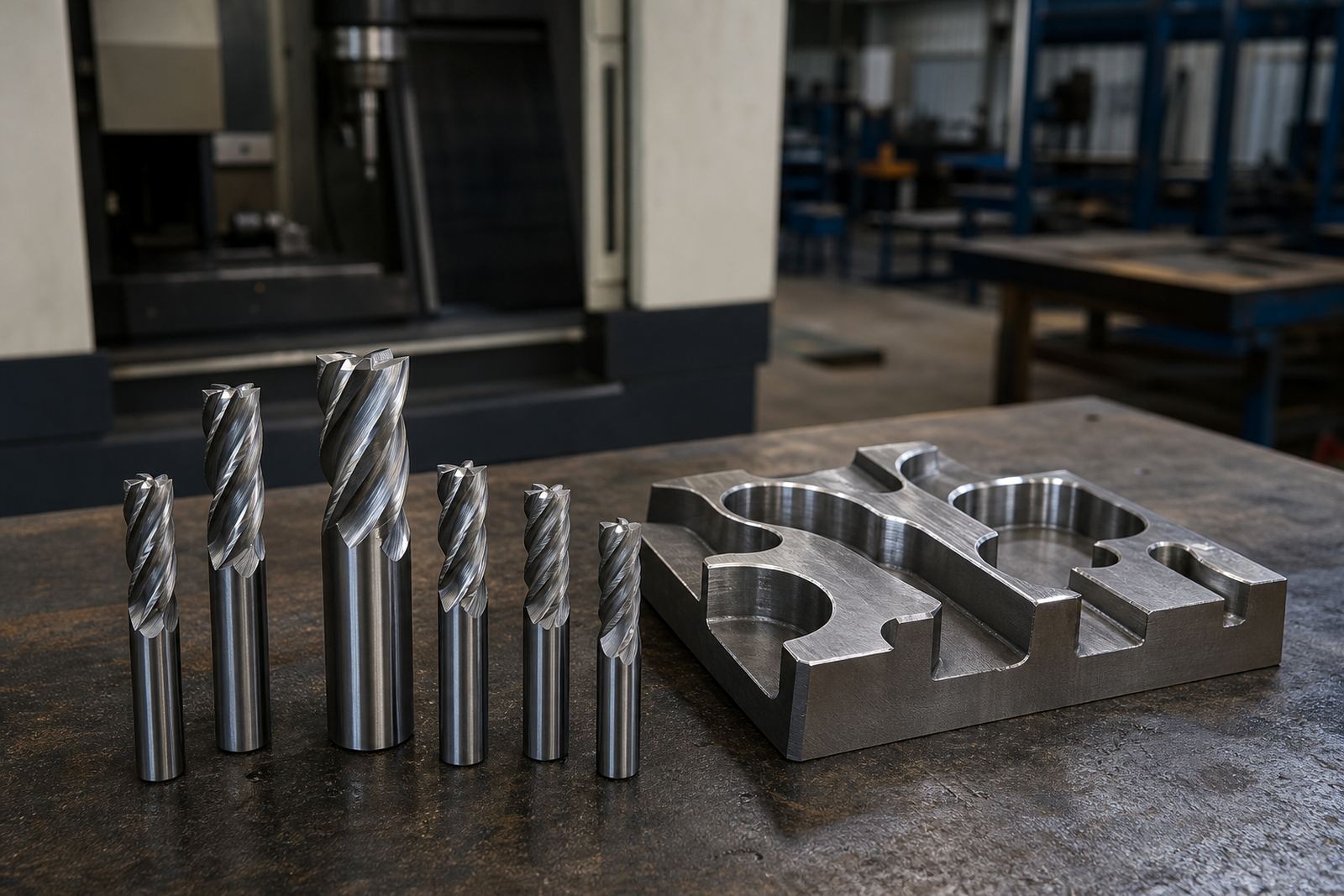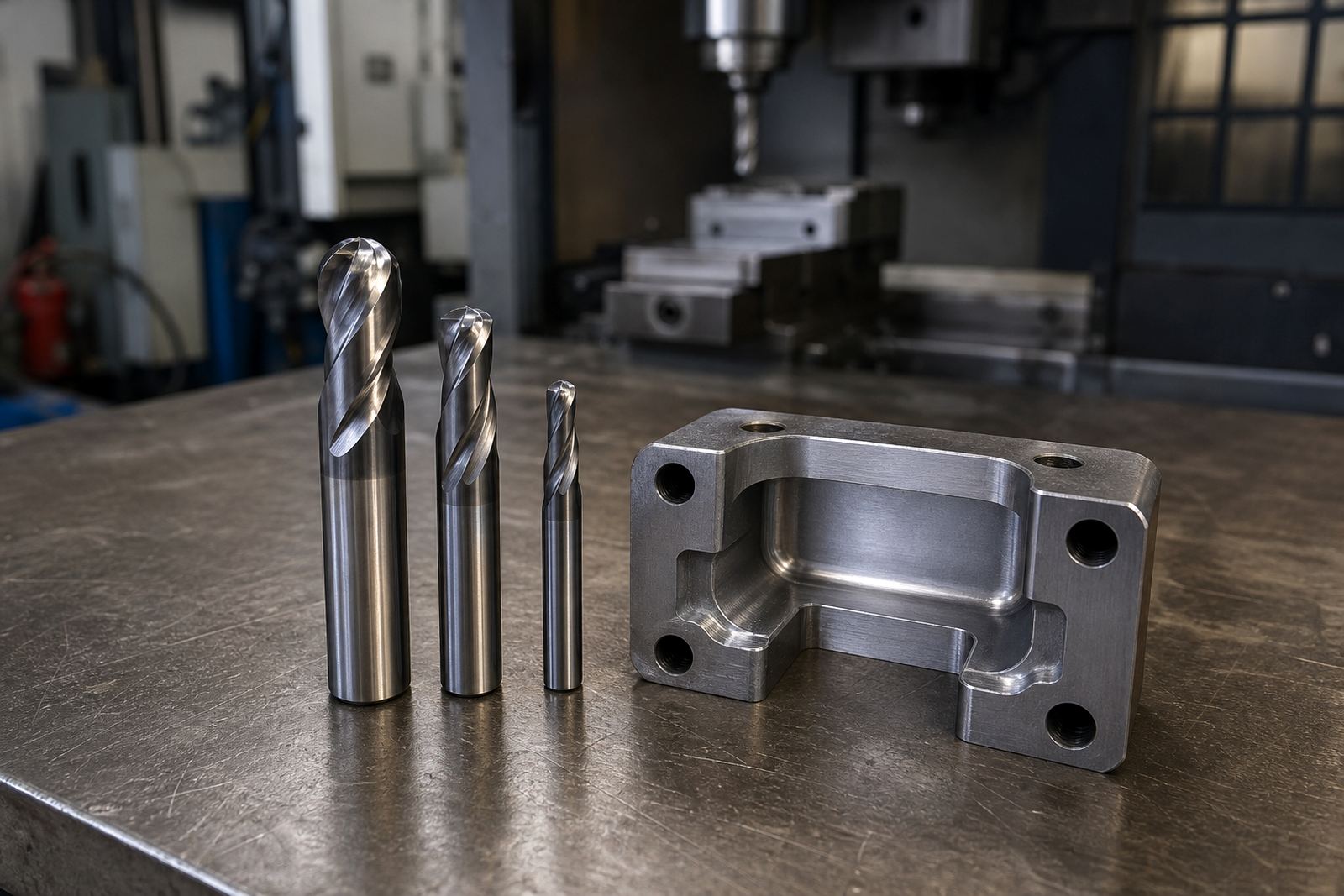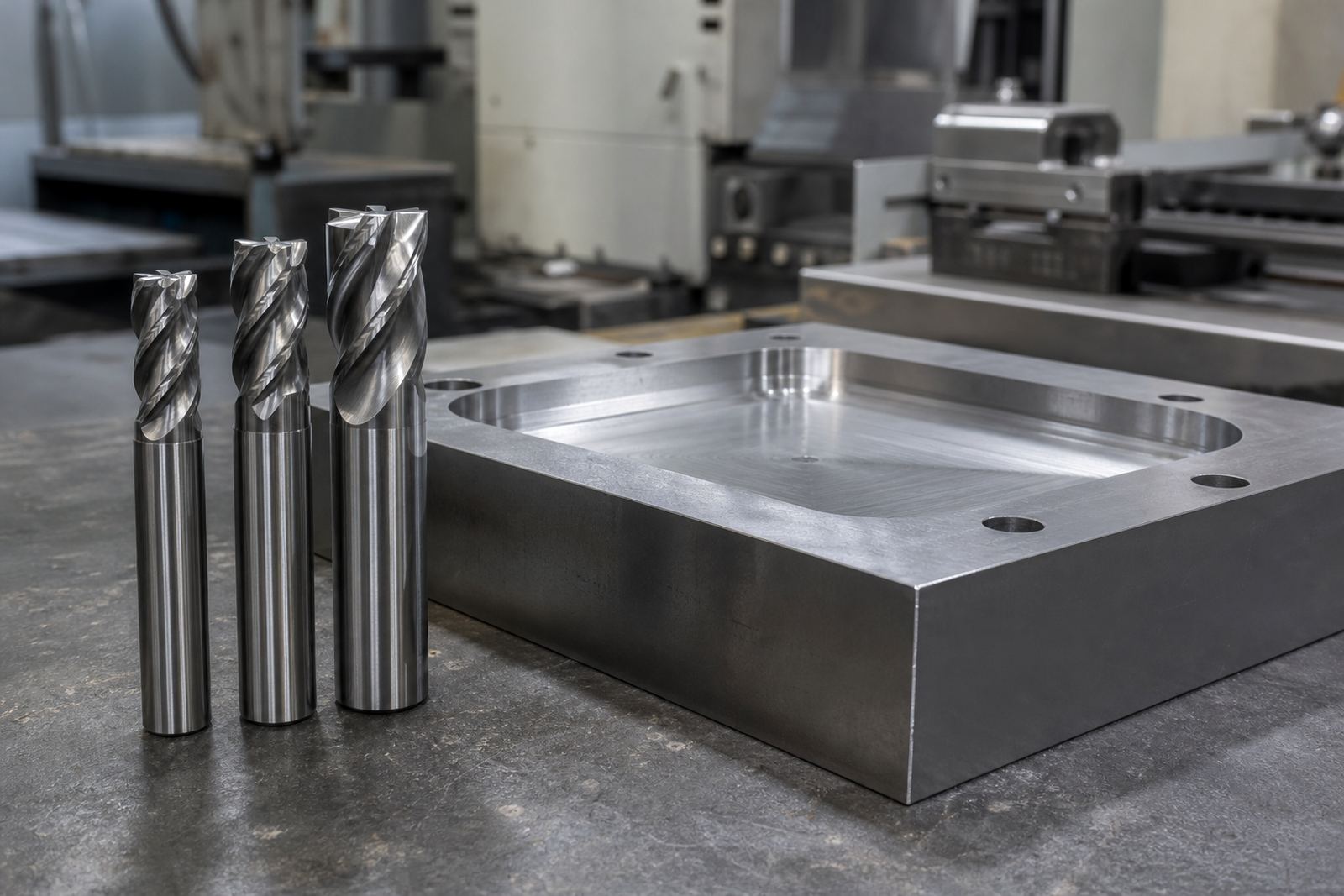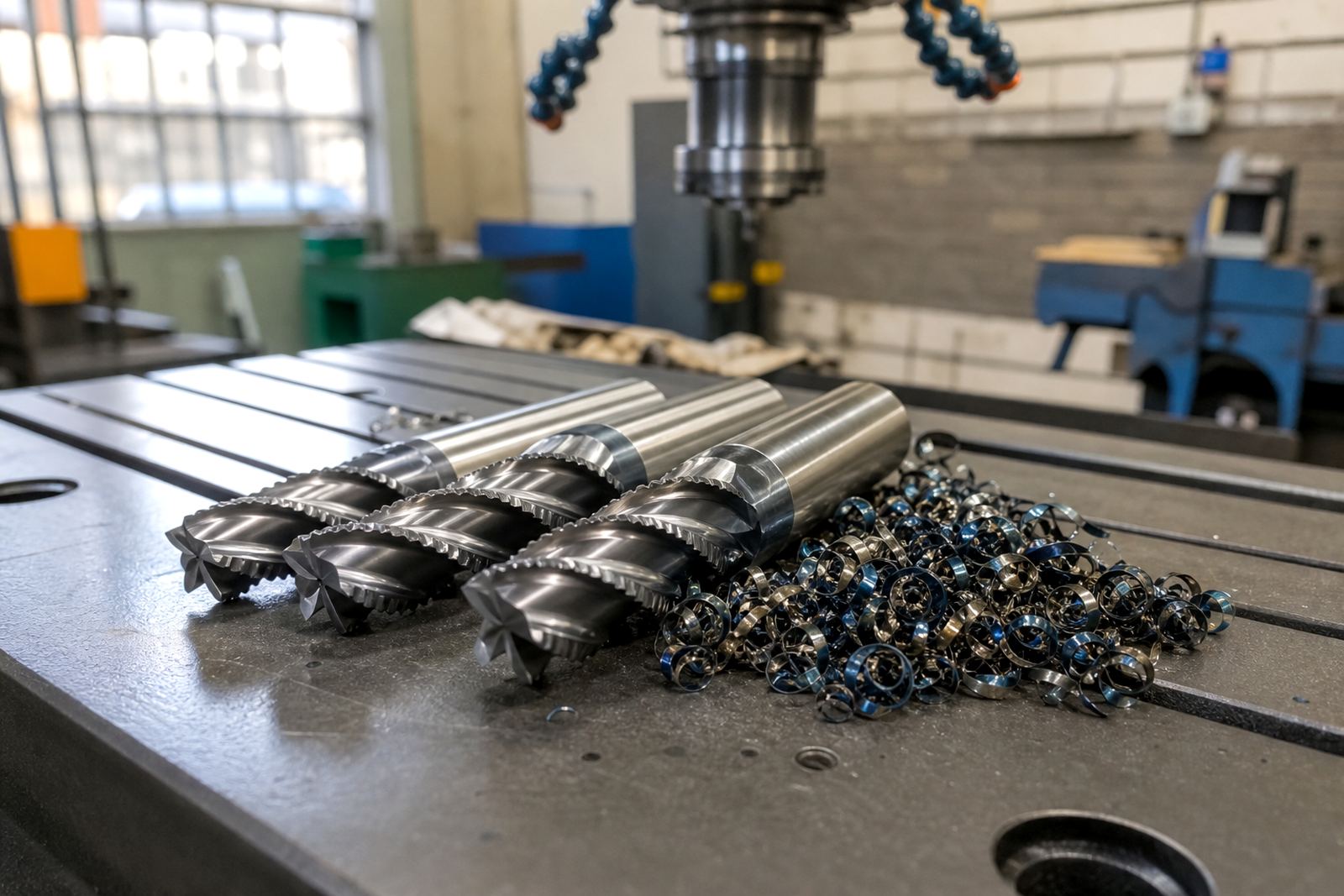
What roughing end mills do in heavy machining
Roughing end mills are made for taking off a lot of material quickly before a finishing cutter comes in. The serrated cutting edge breaks the chip into shorter lengths, which helps when you are clearing mild steel, alloy steel, cast iron and other free-cutting materials on CNC machining centres. In local shops where cycle times matter, these tools can reduce spindle load and keep the cut more stable during aggressive roughing passes.
They are a good choice for pockets, open slots, rough contouring and early stage 3D work where finish is not the first concern. The point is to move metal efficiently, keep the cutter cooler and leave enough stock for a finishing pass. On larger jobs that run through the day, that means less downtime for chip clearing and fewer interruptions during long production runs.
- Designed for high-chip-removal cutting
- Useful where chip evacuation is a problem
- Helps reduce chatter in demanding roughing work
- Leaves a controlled allowance for finishing
Sizes, flute counts and coating options
We supply solid carbide roughing end mills in common metric sizes suited to South African CNC production. Typical diameters run from 3 mm up to 20 mm, with selected sizes available in longer reach and extra long options for deeper cavities. Shank sizes generally match the cutter diameter on smaller tools, while larger cutters may use reduced shanks for better tool clearance in holders.
Flute count depends on the job. Two-flute roughers clear chips well in deeper cuts and softer materials, while three flute and four flute versions can give better balance and higher metal removal on certain materials. A corner radius option is useful when you need a stronger edge than a square end but still want controlled roughing. Some users prefer an uncoated tool for specific materials, while others choose coated carbide for improved wear resistance and heat handling.
- Diameters from 3 mm to 20 mm, depending on stock
- Standard, long reach and extra long reach styles
- 2 flute, 3 flute and 4 flute options
- Square end and corner radius styles
- Metric sizes for common CNC setups
Where roughing cutters work best in South African workshops
These cutters suit job shops, production plants and maintenance workshops that run CNC machining centres on a daily basis. They are especially useful where batch sizes change often and the operator needs one tool that can remove metal fast without causing constant chip packing. In Gauteng, many shops use roughers for high-volume component work in general engineering, fabrication and tooling. In coastal areas such as Cape Town, Durban and Gqeberha, a good carbide tool also helps when humidity and corrosion risk call for well-managed storage and clean tooling practice.
Roughing end mills are commonly used on:
- Mild steel, carbon steel and alloy steels
- Cast iron and selected abrasive materials
- Tool steel pre-forms before finishing
- Large pockets, slots and rough profiling
- General production work where speed matters more than finish
They are not the final tool for a polished wall or close tolerance surface finish. For that reason we often advise shops to pair a rougher with a finishing end mill in the same setup, so the machine does the heavy work first and the finish pass can stay light and predictable. That approach is usually better for tool life and machine stability too.
Machine setup, spindle load and coolant needs
These cutters are made for CNC machining centres with a rigid spindle, sound workholding and enough horsepower to handle the cut. Exact power needs depend on diameter, flute count, material and depth of cut, but roughing work generally calls for a machine that can maintain steady spindle speed and feed under load. If the setup is too light, the cutter can start to chatter or rub instead of cutting cleanly.
Coolant or air blast is important for chip evacuation. On many jobs, flood coolant is preferred because it helps control temperature and keeps chips from recutting. In some dry cutting applications, a strong air blast can work if the machine enclosure and extraction are suitable. During load-shedding recovery, shops should check that coolant pumps, chiller units and tool presetters come back online in the correct order so there is no dry start on a hot cutter.
- Use a rigid holder with minimal runout
- Check spindle condition before running heavy roughing cuts
- Use coolant or air blast for chip clearing
- Match feed and speed to cutter size and material
- Keep workholding firm to avoid vibration
For shops running long shifts, we also look at power availability and machine duty cycle when giving advice. A cutter that performs well on a stable 2 shift programme may need a more conservative setup on machines that face voltage dips or frequent restart cycles.
How to care for roughing end mills so they last
Roughing end mills last longer when they are stored dry, handled carefully and used with the correct feed range. Carbide does not like edge knocks, so cutters should be kept in proper trays or sleeves rather than loose in a drawer. In coastal conditions, a light rust preventive on the holder and clean storage for the tool itself can help avoid contamination on the machine side, even though the cutter body is carbide.
Check the tool after each job for chipped edges, built-up material and uneven wear on the serrations. If the tool starts leaving a poor surface or the machine begins to squeal, do not keep pushing it through a full batch. It is better to inspect the holder, collet or shrink-fit setup and replace the cutter before it damages the workpiece. For shops with repeat production, we can help standardise the cutter schedule so the same job runs the same way each time, which saves time and keeps scrap down.
- Store cutters in a dry, organised tray
- Avoid dropping or knocking the cutting edges
- Inspect for wear, chips and built-up edge
- Replace worn cutters before finish quality drops
- Track tool life by job, material and machine
What to check when ordering the right cutter
When ordering roughing end mills, the main detail is not just the diameter. You need to match the tool to the machine, the material and the cut depth. The wrong flute count or reach can create trouble even if the cutter size looks correct on paper. If you are running a new part, send us the drawing, material grade and machine details through the enquiry form on our contact page and we can advise on a suitable option.
Useful order details include:
- Cutter diameter and overall length
- Reach length and flute length needed
- Number of flutes required
- Square end or corner radius
- Material being machined
- Machine type, holder type and spindle speed range
- Whether the job is roughing only or roughing plus semi-finish
If you are uncertain, we can assist with sample tool trials, material matching and speed feed advice. That is often the best way to get stable results on a new component before placing a larger order. Our team in Wadeville supports shops across Germiston, Johannesburg, Pretoria, Boksburg, Alberton, Centurion, Cape Town and Durban with practical technical quotations and stock planning for repeat work.
Key facts
| Material | Solid carbide |
|---|---|
| Tool type | Roughing end mill with serrated cutting edge |
| Diameter range | 3 mm to 20 mm, selected sizes |
| Flute options | 2 flute, 3 flute and 4 flute |
| Reach options | Standard, long reach and extra long |
| Typical use | Heavy stock removal, chip breaking and roughing passes |