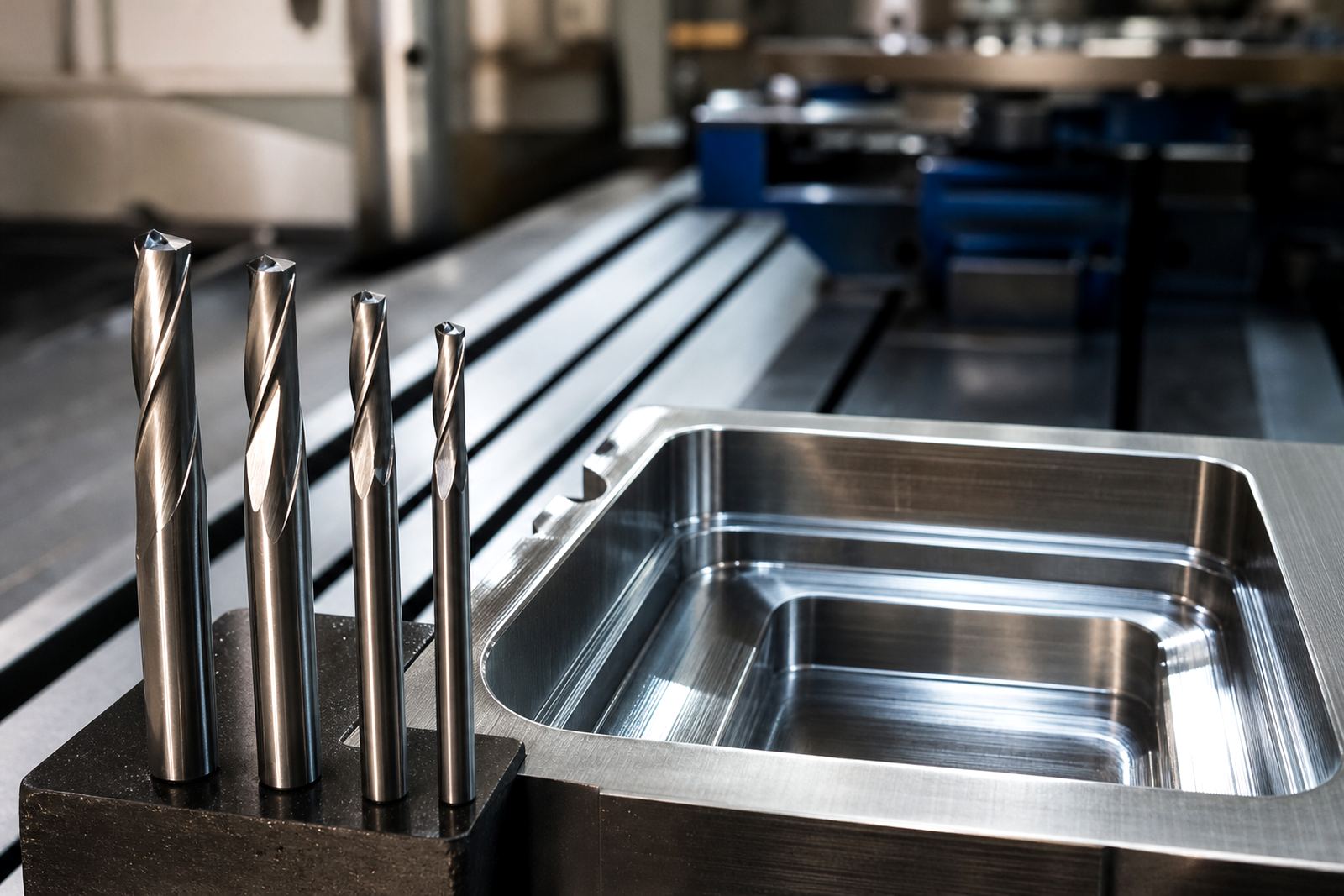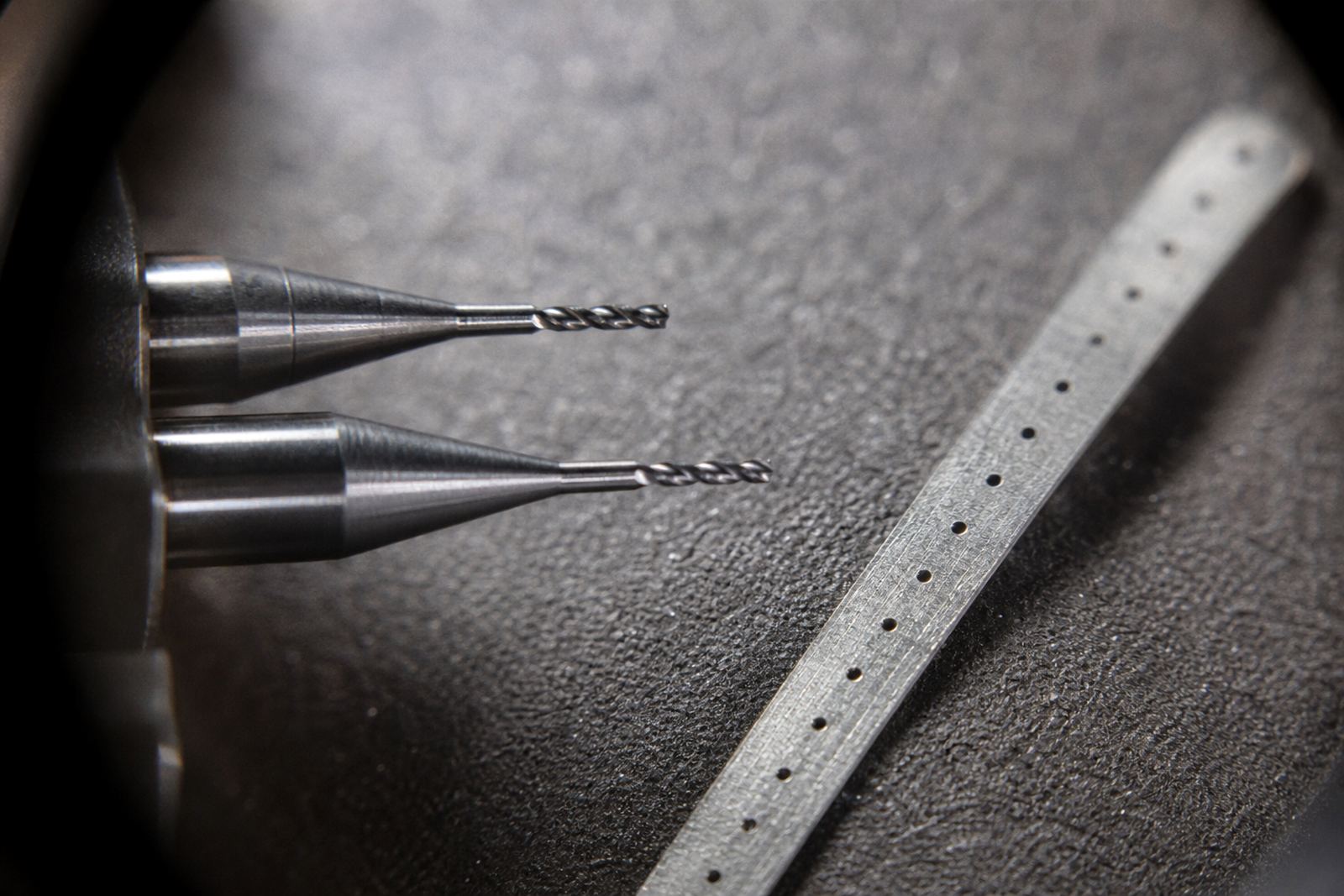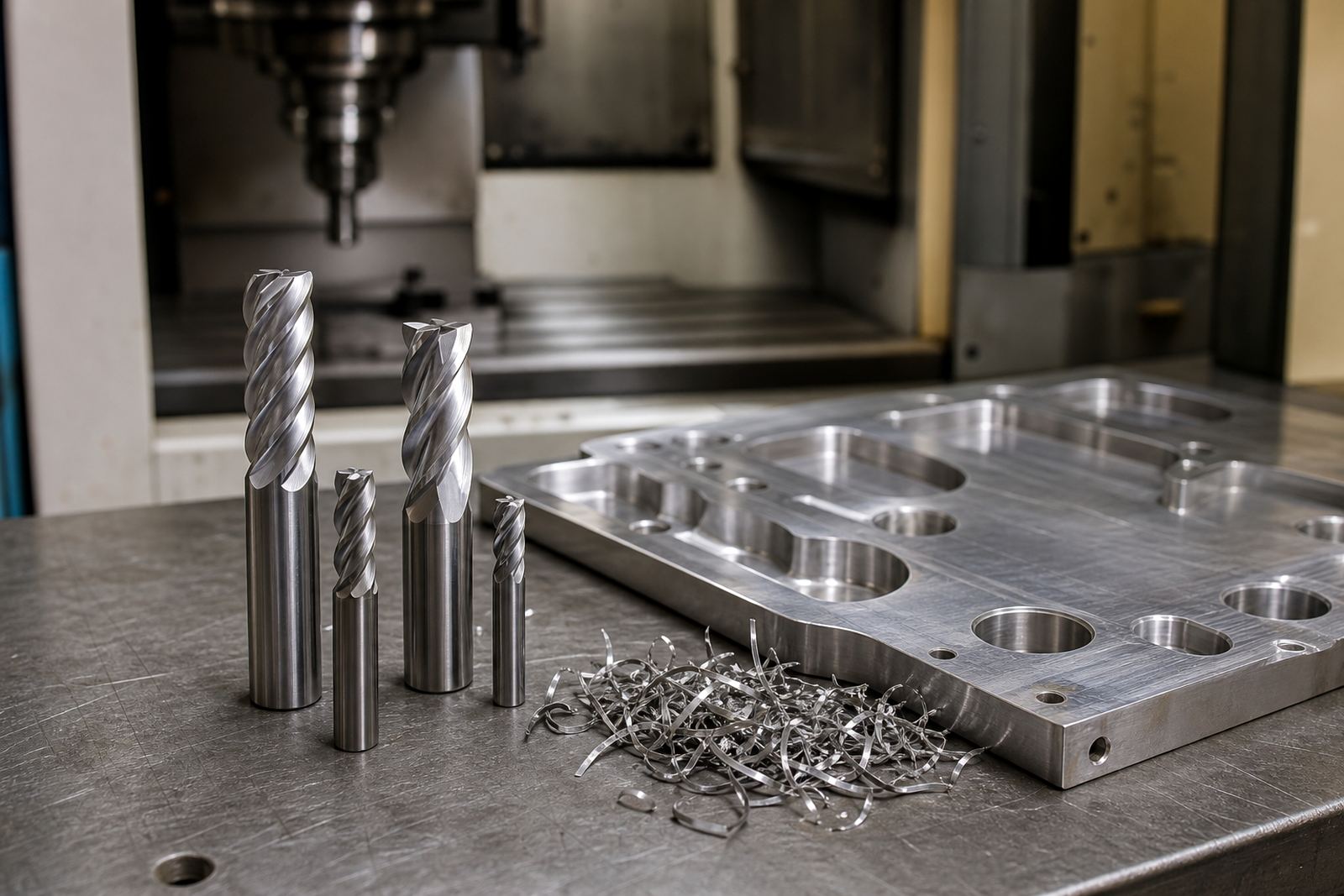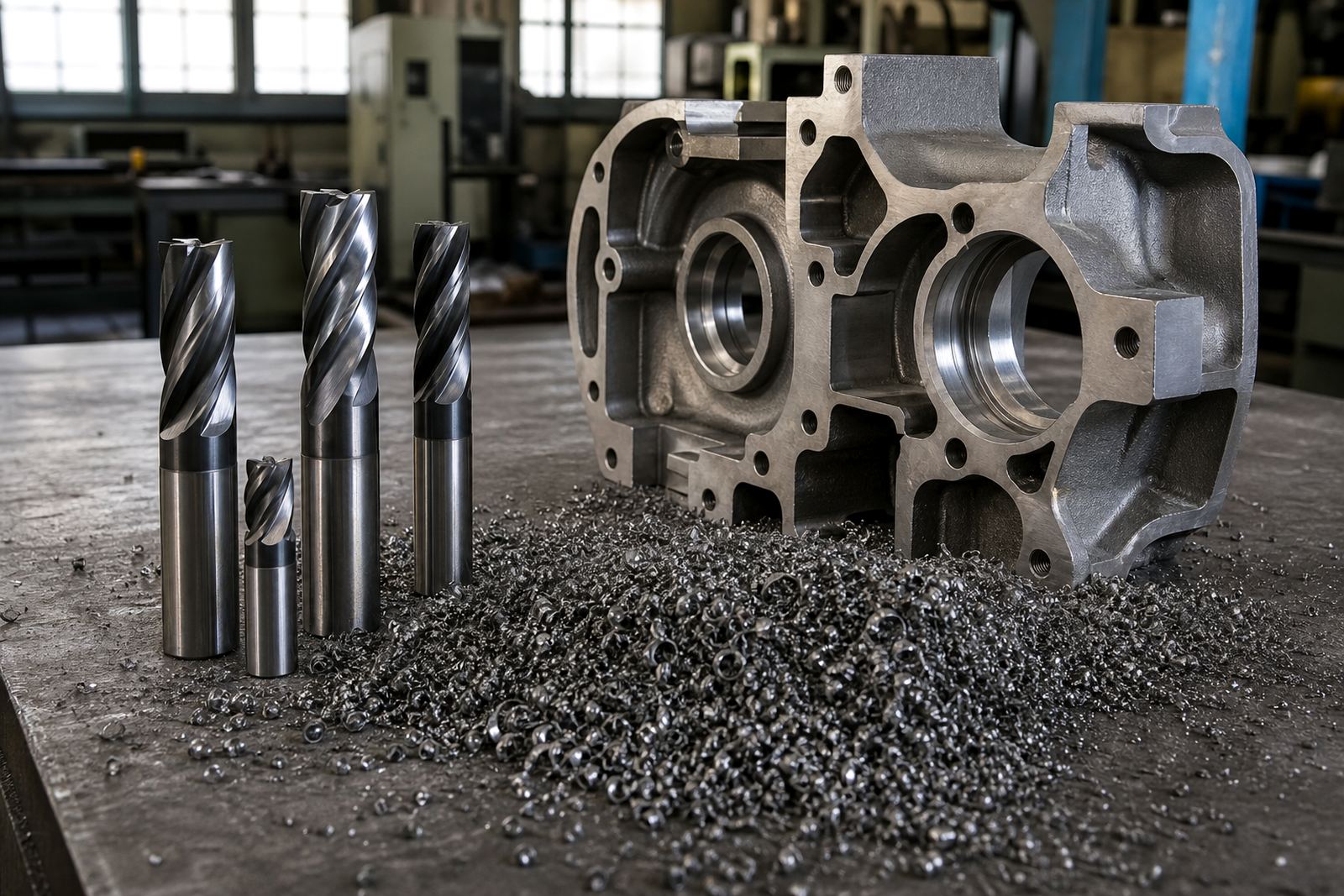
Cast iron milling tools built for harsh chip conditions
Cast iron is unforgiving on tooling. The graphite in the material helps with machinability, but it also creates abrasive dust and fine chips that can wear a cutter quickly if the geometry is wrong. Our cast iron mills are solid carbide end mills selected for dry or near-dry milling where the tool needs to hold an edge, keep heat under control and leave a clean finish on grey cast iron, ductile iron and similar components.
These cutters suit production shops in Germiston, Johannesburg, Pretoria, Durban, Cape Town and Gqeberha that run CNC machining centres on automotive parts, pump bodies, gearbox housings, brackets, machine bases and general engineering castings. When a job calls for stable cutting at higher spindle speeds and predictable tool life, a proper cast iron mill makes a real difference.
Typical benefits include lower cutting forces, better chip evacuation and less chatter on long overhangs. For dry milling, the right flute form and edge prep help reduce built-up wear, especially on rough cast surfaces and interrupted cuts. That matters when the machine is running through load-shedding recovery cycles and you need the next part to match the last one pratically without constant adjustment.
Sizes, flute styles and cutting options
We supply cast iron mills in a practical range of diameters and flute counts for common machining centre work. The best choice depends on whether you are roughing, finishing or handling deep pockets and side milling. Single-purpose cutters can be cost effective for repetitive production, while general-purpose options suit shops that change jobs often.
Common options include:
- Diameter sizes from 3 mm to 20 mm for small features through to heavier stock removal
- 3-flute and 4-flute designs for a balance of chip space and cutting stability
- Short, medium and long reach versions for different spindle-to-workpiece distances
- Centre cutting and non-centre cutting styles depending on plunge and slotting needs
- Uncoated and coated variants for dry milling and extended wear resistance
- Square end, corner radius and ball nose forms for different part profiles
For cast iron, many shops prefer a short rigid tool wherever possible. Less stick-out usually means less chatter, cleaner walls and longer life. If you are cutting around ribs, housings or uneven cast surfaces, a shorter flute length and a stable holder often outperform a longer tool even when the part looks awkward to clamp.
Where these cutters suit best on the shop floor
Cast iron mills are used where repeatability and finish are important on cast components. They suit CNC machining centres doing face milling, profiling, shallow slotting, finishing passes and pocket work on components that have already been cast and cleaned. Shops working for agriculture, mining, fabrication, pump repair and general engineering use them on parts that need flatness and consistent dimensions before assembly.
They are a good fit when the material is dry, dusty or abrasive, and when coolant is limited or avoided. Cast iron often machines better with controlled air blast or vacuum extraction rather than flood coolant, because slurry can stain the machine and create a mess that is hard to manage. In coastal areas like Durban and Gqeberha, it also helps to keep tools packed dry and to rotate stock so light surface rust does not build up on holders and shanks.
These tools are not the best choice for softer materials that smear, or for unstable machines with worn spindles. If the machine has vibration or poor runout, cast iron can punish the cutter fast. That is why tool selection and setup advice matter as much as the tool itself.
Machine setup, power and air requirements
Most cast iron milling work needs no special power source beyond a standard CNC machining centre with sufficient spindle speed and a rigid toolholding system. The real requirement is consistency. A machine with a sound spindle, accurate collet or holder and good table condition will get much better life from a solid carbide cutter than a machine that runs hot or vibrates at certain speeds.
For dry or controlled milling, the usual support needs are:
- Compressed air or air blast for chip clearing
- Dust extraction or extraction discipline around graphite dust
- Stable fixturing to reduce movement on rough cast surfaces
- Correct spindle speed and feed for the diameter and flute count
- Good runout control at the holder and spindle nose
No gas supply is required for the tool itself. If your shop runs on backup generators during outages, it helps to know the minimum spindle load and air demand before a changeover. Some cast iron jobs can continue after power returns without re-setting the entire process, but only if the cutters, holders and offsets were set properly before the stop.
Care, inspection and servicing between runs
Cast iron is abrasive, so cutter care is mainly about inspection and clean storage. After use, remove dust from the flutes and shank, then check the cutting edges under light. A worn edge on cast iron often shows as a dull line, tiny chips or a change in sound before the finish drops off. If a cutter is cutting hotter than usual or leaving a grey smear instead of a crisp surface, it is time to stop and inspect.
Good practice includes:
- Wipe the cutter dry before storing it
- Keep holders clean and free of fine dust
- Mark used cutters by job or material so life can be tracked
- Replace cutters before they break and damage the part
- Store stock in a dry cabinet, especially in humid areas
Our team can help with tool life optimisation, sample tool trials and production standardising so a shop can move from trial-and-error to a repeatable cutting method. That is useful when several operators share the same machine and you need one setting sheet that actually gets followed.
What to check before you order cast iron mills
To choose the right cutter, it helps to know the material grade, the machine type and the finish target. Cast iron varies a lot from job to job. A thin cover, a heavy housing and a deep ribbed casting may all need a different tool length or flute count. If you send the wrong diameter, a job can slow down fast, or the cutter can chatter and leave a poor finish.
Please check these details when ordering:
- Material type and grade, for example grey cast iron or ductile iron
- Diameter required and any tolerance limit
- Shank size and holder type on the machine
- Cut depth, slot width and whether the tool must reach into a pocket
- Dry milling, air blast or light coolant conditions
- Whether you need roughing, finishing or both
If you are unsure, our sales and technical team can assist with material matching, tool selection and speed and feed advice before you place the order. We also handle urgent tool supply and technical quotations for shops that need a fast answer for a live job in Johannesburg, Pretoria, Cape Town, Durban or surrounding industrial areas.
Key facts
| Product type | Solid carbide end mills for cast iron milling |
|---|---|
| Typical diameters | 3 mm to 20 mm |
| Flute options | 3-flute and 4-flute |
| Cutting style | Dry or controlled milling with air blast |
| Applications | Grey cast iron, ductile iron, housings, covers and machine parts |
| Use conditions | CNC machining centres with rigid holders and stable fixturing |