
What finishing end mills do on the machine
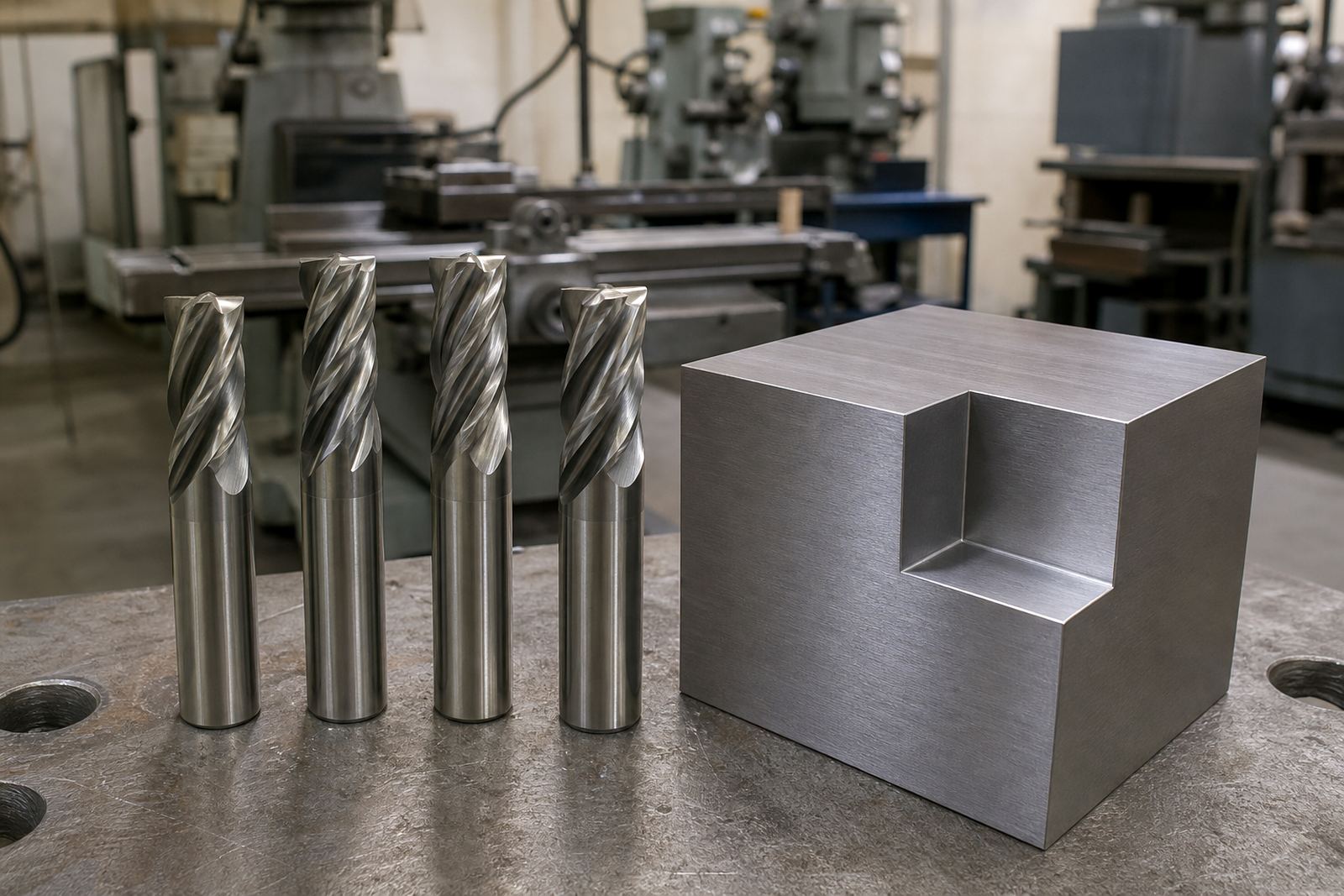
Finishing end mills are made for the last cut, where surface quality and size matter more than heavy stock removal. They are used after roughing to bring a part onto size, improve wall finish, and leave a smoother floor with less secondary hand work. On aluminium, mild steel, stainless and many tool steels, the right finisher can reduce chatter marks and help hold tighter tolerances across a batch.
These tools are a good fit for CNC machining centres where repeatability is important, especially in jobbing shops handling mixed work and short lead times. A well chosen finishing cutter can cut cycle time on finishing passes by keeping feed stable while still leaving a clean edge. That matters when production is running through load-shedding windows or when a machine must be pushed hard to meet delivery. The cut is lighter than roughing, but the result still depends on correct chip load and a stable setup.
Sizes, flute counts and geometry options
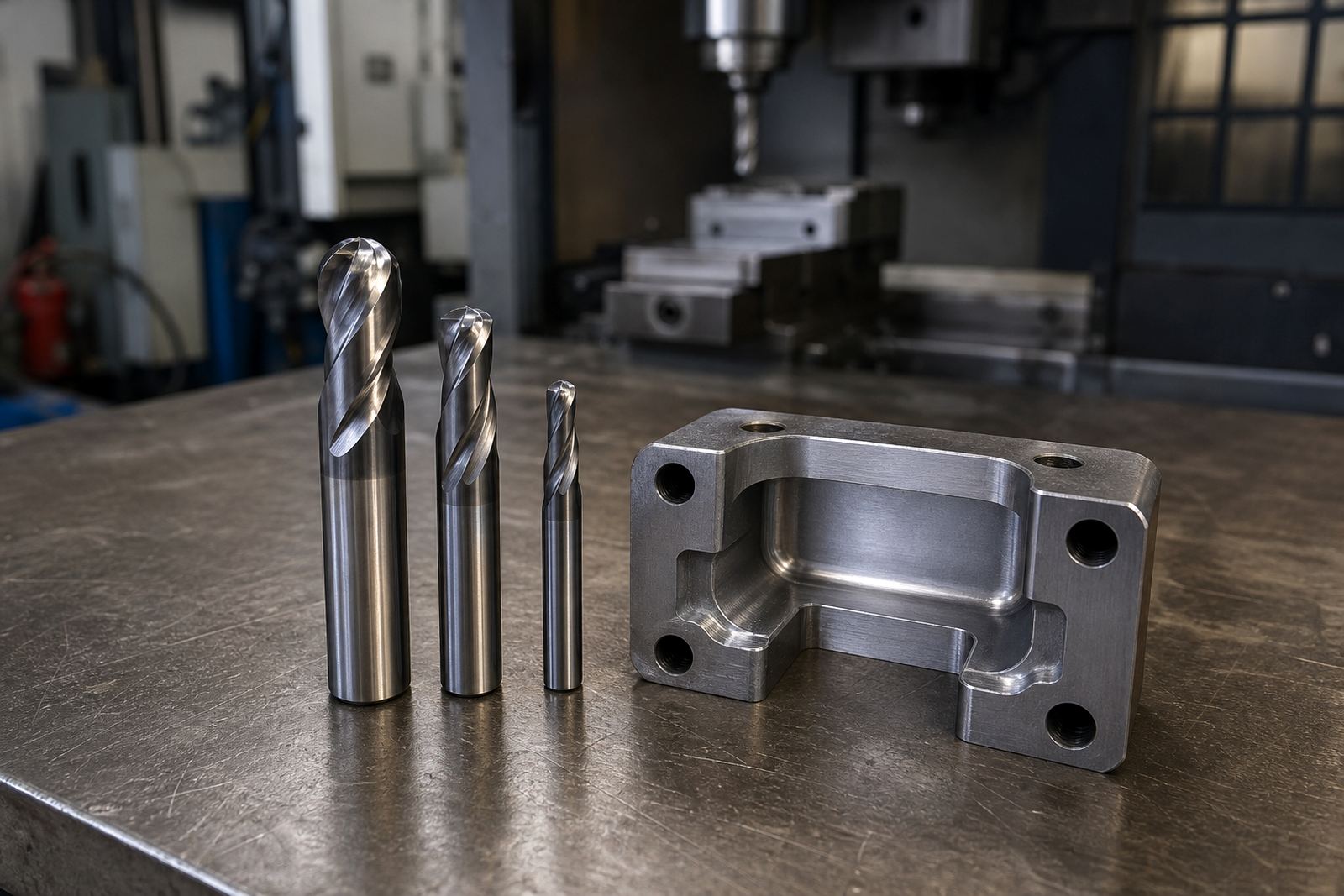
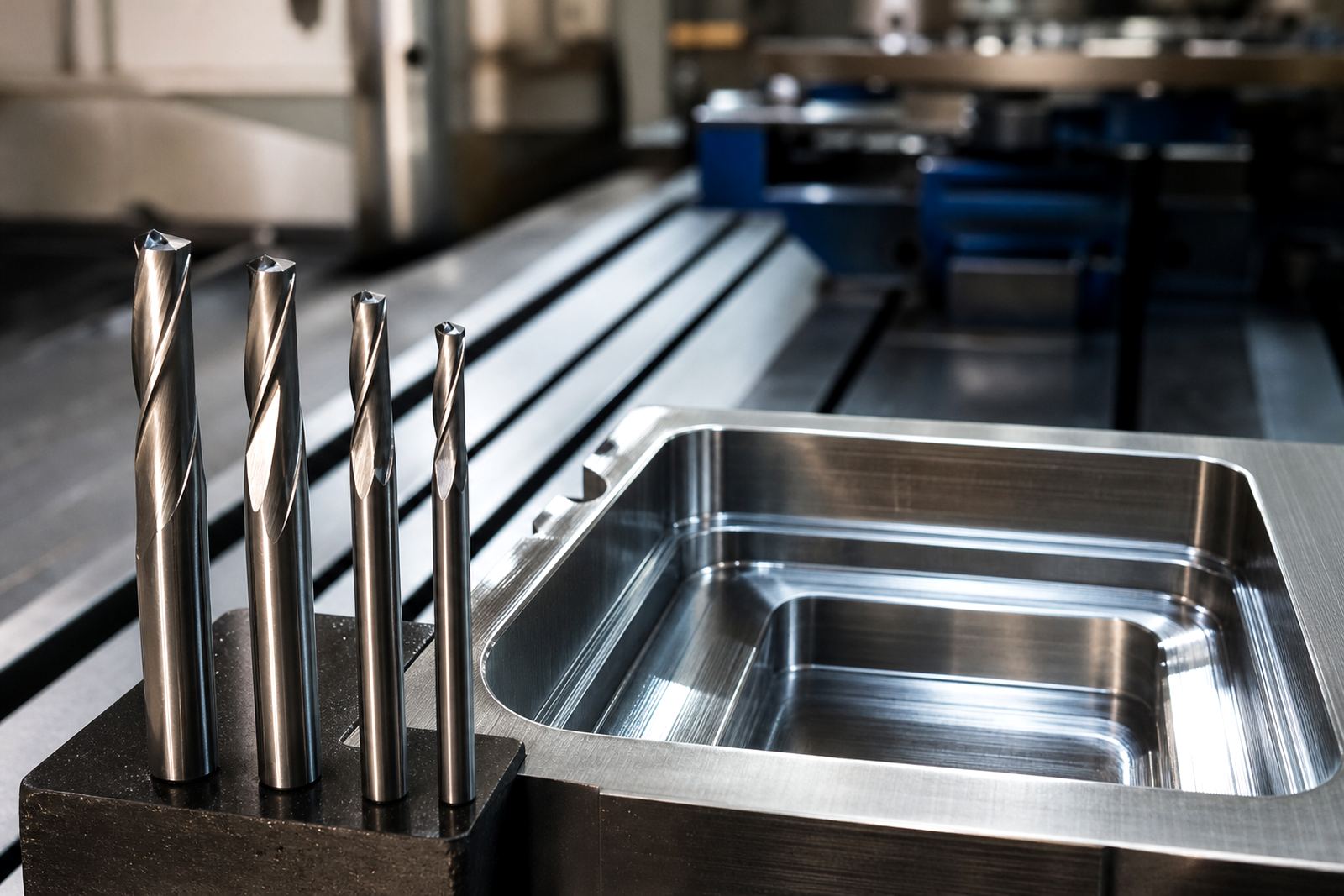
We supply solid carbide finishing end mills in a range of diameters and reach lengths to suit common CNC work. Typical sizes start from 3 mm and go up through 20 mm and larger options where application calls for it. Shops often choose short series tools for rigidity, while longer reach tools are used for pockets, mould features and deeper cavities. Corner radius and ball nose versions are also used when the part needs smoother transitions or contoured surfaces.
- Diameter options from 3 mm to 20 mm and selected larger sizes
- 2 flute, 3 flute and 4 flute options for different materials
- Square end, corner radius and ball nose styles
- Short series, standard reach and extended reach lengths
- Solid carbide construction for better wear resistance and rigidity
Flute count and helix choice should match the material and the machine spindle. For example, aluminium often benefits from open flute space for chip clearing, while steels may need a more conservative geometry to keep the tool stable. The correct finish is not only about sharpness, it is about how the cutter moves chips out of the cut and how much heat stays in the edge.
Where finishing cutters suit local production work
These end mills suit general engineering, mould and die work, automotive components, enclosure parts, fixtures, plates and many machined housings. In Gauteng, they are used heavily in shops doing turned and milled components for maintenance work and batch production. In coastal areas such as Cape Town, Durban and Gqeberha, the correct coating and storage practice matter more because humidity can affect tool life and packaging if stock is left open on the shelf.
Finishing cutters are especially useful when the last pass must improve the part without changing size. That applies to bores, slot walls, pocket floors and external profiles where the customer checks fit or surface finish. If a job has tight dimensional control or a cosmetic surface requirement, a finishing pass with the right cutter can save rework. Shops that run multiple shifts often keep a small standard stock of common diameters because a last minute tool shortage can stop a machine and waste a full setup.
- General engineering and production machining
- Mould, die and precision component work
- Fixture plates, housings and brackets
- Short-run jobbing and repeat batch work
- Parts that need a clean final wall or floor finish
Setup, spindle speed and cooling needs
Finishing end mills need a sound setup more than brute force. The holder must grip properly, stick-out should be kept as short as the part allows, and the machine spindle must run true. A small amount of runout can affect surface finish and tool life, especially on small diameters. For most finishing work, the tool is not overloaded by depth of cut, but it still needs the correct feed, speed and step-over for the material and machine condition.
These tools do not need power or gas in the normal sense, but they do depend on the CNC machine, coolant or mist system, and stable electricity. Where plants deal with load-shedding, it helps to protect unfinished parts and check the restart procedure after an outage. For many applications, flood coolant is preferred for chip clearing and temperature control, while air blast can help on some aluminium jobs if the machine and tooling suit it. Poor chip evacuation will dull a finisher quicker than most users expect.
Common setup points include using a proper tool holder, verifying tool length, checking workholding rigidity, and confirming the toolpath does not leave unnecessary dwell marks. A slight adjustment to feed or step-over can make a clear difference to the final finish, so test pieces are worthwhile on new material batches or new machine operators.
How to look after finishing end mills
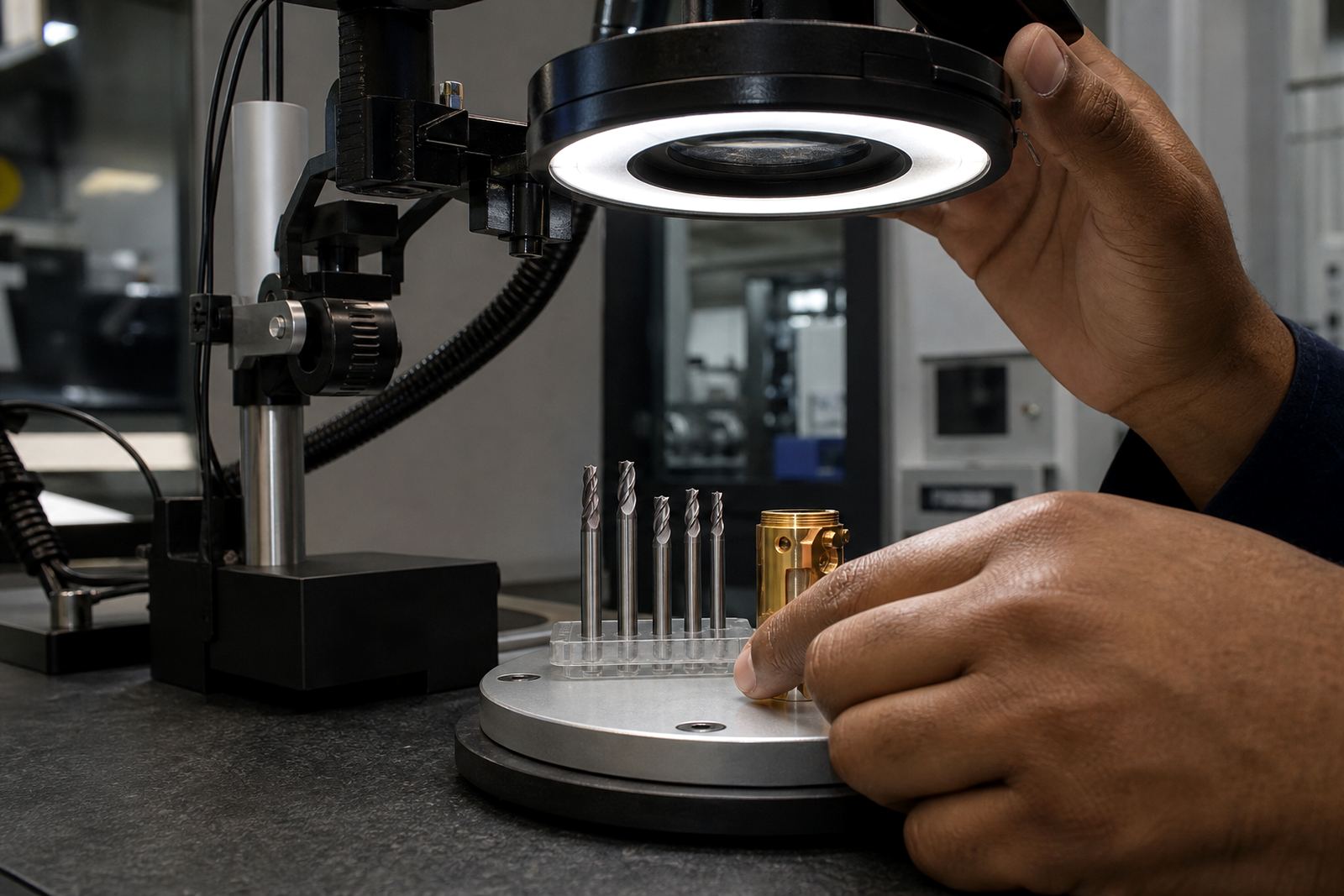
Good care extends tool life and keeps the edge doing proper work. After use, clean the cutter, check for edge wear and look for signs of rubbing, chip welding or edge chipping. Do not store carbide tools loose in a box where the cutting edges can knock together, because a small chip can ruin a clean finish on the next job. In humid areas, keep packaging dry and closed to avoid corrosion on holders and accessories.
- Keep each tool in a separate sleeve or tray
- Remove chips and coolant residue after every run
- Inspect for wear on the cutting edge and flute body
- Replace tools before finish quality starts to drift
- Review the programme if the tool is leaving chatter or polishing marks
When a finisher starts to rub instead of cut, the part finish usually changes first, followed by tolerance drift. That is the time to inspect the cutter rather than pushing for one more batch. In busy shops around Germiston, Boksburg and Alberton, a simple replacement rule often saves more money than trying to squeeze extra life out of a worn tool.
What to confirm before placing an order
When ordering finishing end mills, it helps to share the material, machine type and the finish you need. The more detail we have, the better the tool match and the fewer surprises on the floor. A job that runs well on aluminium may need a very different geometry for stainless or hardened steel. If you are unsure, our team can help with tool selection, sample trials and technical quotations for production work.
- Material type and hardness
- Diameter, flute count and overall length
- Square end, radius or ball nose requirement
- Coating preference if needed for the application
- Required surface finish and dimensional tolerance
- Machine type, holder style and coolant method
We support CNC machining shops across South Africa from our Wadeville base, with service areas covering Germiston Supply, Johannesburg Supply, Pretoria Supply, Boksburg Supply, Alberton Supply, Centurion Supply, Cape Town Supply and Durban Supply. If you need urgent tool supply, stock planning or help matching a finisher to the job, send an enquiry through the contact page and our team will follow up. Marius van der Merwe leads the business with support from Lerato Mokoena, Johan Smit, Anele Dlamini, Priya Naidoo, Thabo Molefe and Zanele Khumalo.
Key facts
| Type | Solid carbide finishing end mill |
|---|---|
| Diameter range | 3 mm to 20 mm and selected larger sizes |
| Flute options | 2 flute, 3 flute and 4 flute |
| Styles | Square end, corner radius and ball nose |
| Reach options | Short series, standard reach and extended reach |
| Use case | Final passes for cleaner walls, finer floors and tighter control |