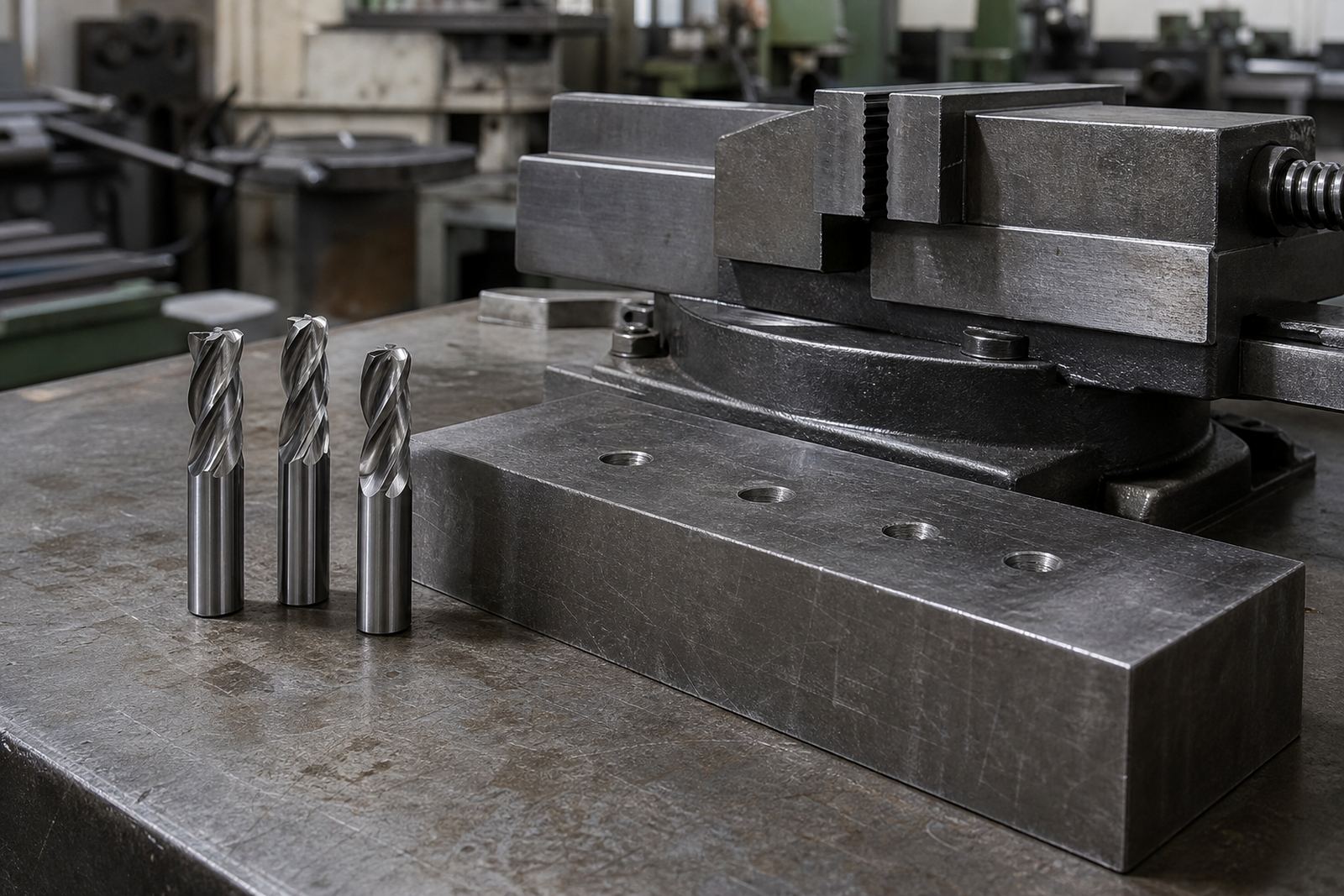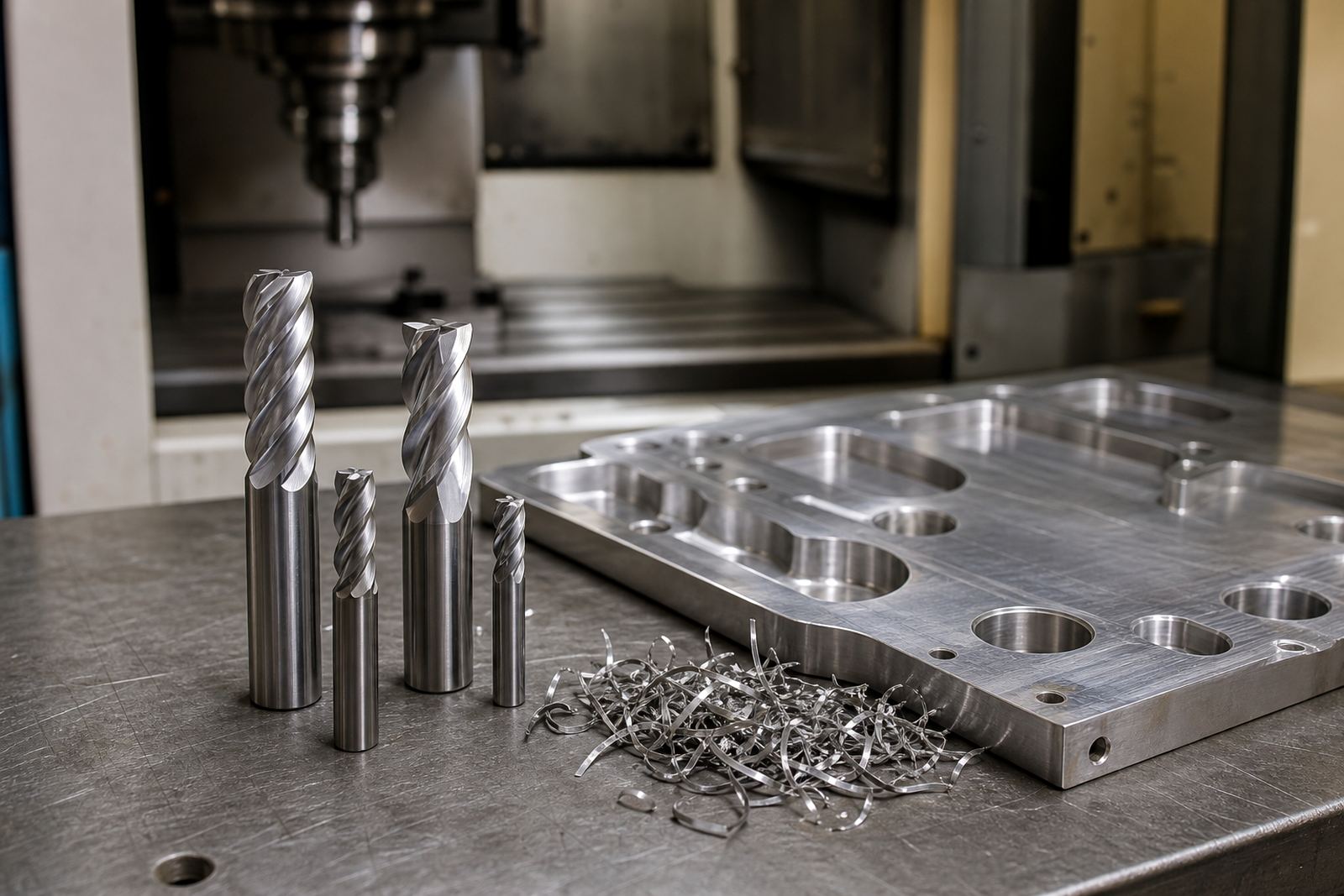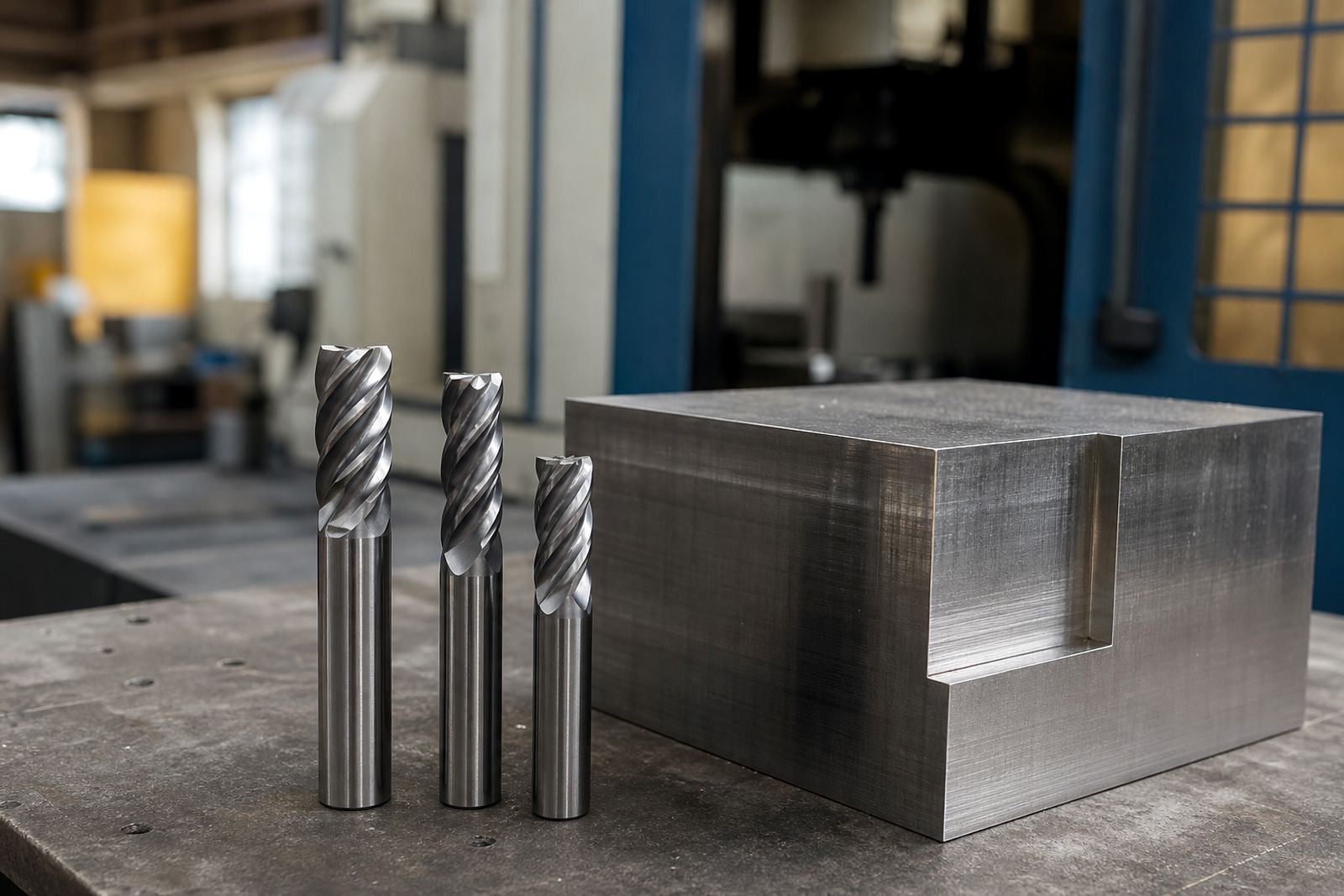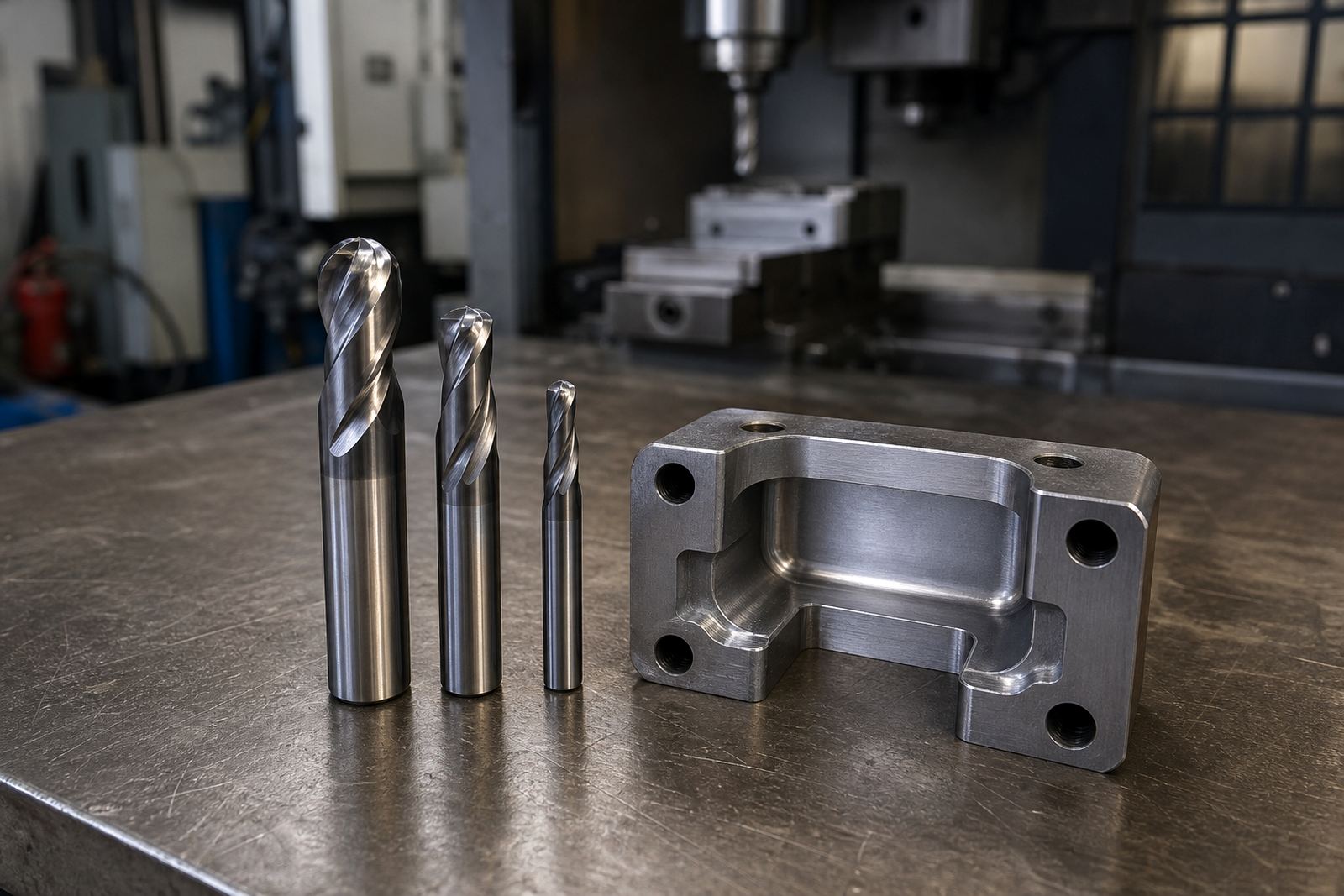
What a corner radius mill does on the machine
A corner radius mill has a small radius ground onto the cutting corner instead of a sharp 90 degree edge. That small radius spreads load better at the tip, which helps when you are taking heavier cuts in steel, stainless, cast iron, aluminium and many tool steels. It is a practical choice when a sharp corner would wear fast or chip at the edge, especially on long runs where tool life matters.
In everyday CNC work, these cutters sit between a square end mill and a full ball nose. You get better corner strength than a sharp tool, but more control than a full radius profile. That makes them useful for roughing, step finishing, pocketing and wall work where a small corner break is allowed. On many jobs, the right radius can reduce rework and give a more consistent finish with less edge breakage.
Sizes, flute counts and coating choices
We supply solid carbide corner radius mills in common metric sizes used across South African workshops. Typical diameters range from 3 mm through 20 mm, with longer reach options for deeper pockets and lower profile cutters for rigid machines. Shank sizes are usually matched to cutter diameter, although some larger diameters are also available with reduced shanks for clearance.
- Diameter options: 3 mm, 4 mm, 6 mm, 8 mm, 10 mm, 12 mm, 16 mm and 20 mm
- Corner radii: 0.2 mm, 0.5 mm, 1 mm, 2 mm and 3 mm common
- Flutes: 2 flute for aluminium, 3 flute for mixed work, 4 flute for steel and stainless
- Lengths: standard length, long reach and extra long reach for deeper cavities
- Coatings: uncoated and coated options for better wear resistance and chip flow
For dry or near dry machining, coating choice matters. In humid coastal areas like Durban or Gqeberha, coated tools often hold up better in storage and during day to day handling. The right flute count also makes a difference, because chip evacuation and finish quality are not the same on every material.
Where these cutters work best
Corner radius mills suit production shops that need edge strength without giving up accuracy. They are commonly used on CNC machining centres for mould work, bracket manufacture, machine parts, die components, fixture plates and general engineering jobs. In Gauteng shops where feed rates are pushed hard and load-shedding can interrupt a cycle, a stronger corner can help reduce sudden breakages when a job restarts after a stop.
They are especially handy where the drawing allows a small internal or external radius instead of a sharp corner. That includes side milling, slotting with lighter engagement, semi-finish passes and shoulder work. In stainless or tougher steels, the radius at the corner can improve tool life by reducing stress at the cutting point. For aluminium, a polished flute and the correct helix can help prevent built-up edge and keep the cut cleaner.
- Good for roughing where chip load is steady
- Useful for semi-finishing before final sizing
- Suitable for pockets, steps and shoulder machining
- Often selected where sharp corners chip too quickly
Machine setup, power use and shop conditions
These cutters do not need gas, but they do need the right machine setup. A rigid CNC machining centre with a sound spindle, correct holders and good runout control will get the best from them. Check that the holder is clean, the collet or chuck is within tolerance, and the tool is seated properly before starting a cut. Even a small amount of runout can shorten life and leave a poor finish.
On power use, nothing special is required beyond normal CNC operating conditions, but stable supply helps. If your workshop has voltage dips or interruptions, restart procedures should be checked before production starts again. Keep coolant delivery consistent, and where dry cutting is used make sure chip clearing is reliable. On some jobs, especially in dusty inland workshops, chips can recut if the air blast or coolant flow is weak, which raises heat and tool wear.
For best results, match the tool to the machine speed range. Smaller diameters usually prefer higher spindle speeds, while larger cutters need enough torque to keep chip load consistent. If your machine is not very stiff, step down the cut and keep the overhang as short as possible.
How to look after the tool and keep cut quality stable
Corner radius mills last longer when they are handled carefully between jobs and checked before reuse. Wipe off coolant and swarf after machining, then store the tool in a proper holder or sleeve so the cutting edge does not knock against other tools. In coastal workshops, a light protective oil can help prevent surface staining when tools are stored for a period, especially over weekends or shutdowns.
Inspect the cutting edge for chipping, corner wear and coating damage. A worn radius can start leaving rougher walls or a slight step at the edge, so it is worth checking before the next production run. If the tool has been used in abrasive cast material or hard scale, reduce expectations on finish and look at the wear pattern closely. For repeat jobs, keeping a record of material, speed, feed and depth of cut makes future setup quicker and more consistent.
- Clean after use and dry before storage
- Keep tools in sleeves or racks, not loose in a tray
- Check corner wear before starting a repeat run
- Replace tools showing chip marks or uneven wear
What to check when ordering for your next job
Ordering the right corner radius mill starts with the drawing and the material. Check the diameter, flute count, overall length, cutting length and the exact radius needed. If the radius is too large, the part may no longer meet spec. If it is too small, the edge may still chip too quickly. It helps to know whether the job is roughing only or whether the same tool must also leave a usable finish.
We also recommend checking machine capacity before selecting a long reach tool. Deep pockets, narrow walls and thin fixtures often need a shorter flute length with the correct stickout, not just a bigger cutter. If your team is running mixed jobs across Johannesburg, Pretoria or Cape Town, stock planning matters too. Keeping the right radius and diameter on hand can stop small delays from turning into a missed delivery. When a customer needs urgent tool supply, having the spec clear from the start saves time and avoids back and forth.
- Material to be cut, including hardness if known
- Tool diameter, flute count and overall length
- Corner radius required on the drawing
- Coolant method, dry, flood or air blast
- Machine type, spindle speed range and holder type
- Whether the job is roughing, semi-finishing or final finishing
Key facts
| Product type | Solid carbide corner radius end mills for CNC machining centres |
|---|---|
| Common diameters | 3 mm to 20 mm, with selected larger sizes on request |
| Corner radii | 0.2 mm, 0.5 mm, 1 mm, 2 mm and 3 mm common options |
| Flute options | 2 flute, 3 flute and 4 flute depending on material and chip flow |
| Applications | Roughing, semi-finishing, pocketing, shoulder work and step machining |
| Supply area | Germiston, Johannesburg, Pretoria, Boksburg, Alberton, Centurion, Cape Town and Durban, with nationwide supply across South Africa |