Why spotting drills are used before the main drill
A spotting drill is a short, rigid cutting tool made to create a precise cone or chamfer at the start of a hole. On CNC machining centres, this first contact matters. It helps the main drill enter on centre, reduces walk on hard or uneven surfaces, and supports cleaner hole location when the job calls for tight tolerances.
In South African workshops, spotting drills are especially useful where operators work across mixed material batches, long shifts, or older machines with some spindle wear. They are common in general engineering, sub-contract machining, metal fabrication and production runs where the first hole needs to be right the first time. Used correctly, they can save rework, scrap and time on secondary correction. For shops dealing with load-shedding interruptions, a reliable spotting routine also helps keep restart errors down.
- Helps keep drill points from wandering
- Improves hole position before drilling
- Supports consistent starts on CNC programs
- Useful for flat, angled and uneven faces
Solid carbide build and typical spotting drill sizes
CuTools Carbide supplies solid carbide spotting drills suited to CNC machining centres across Gauteng, the Western Cape, KwaZulu-Natal and the Eastern Cape. Solid carbide gives good wear resistance, high edge stability and repeatable performance where tooling must hold size over many parts. It also copes well with high spindle speeds and steady coolant delivery, which is why it is often chosen for production work.
Common options include short spotting drills for light chamfering and deeper point styles for more defined drill starts. Typical included angles are 90 degree, 120 degree and 142 degree, depending on the application and the main drill geometry. Shank sizes are usually offered from 3 mm up to 20 mm, with cutting diameters matched to the hole size and material. Lengths and flute counts vary by stock range, and some shops prefer shorter body lengths for extra rigidity on older machines.
- Solid carbide construction for stiffness and wear life
- Typical angles: 90 degree, 120 degree, 142 degree
- Short and standard reach options
- Metric sizes suited to CNC production work
Where spotting drills suit the job best
These tools are used where hole location matters and the first cut must be controlled. They suit steel plates, structural parts, machined blocks, stainless components, aluminium housings and cast parts. In Durban and coastal areas, many shops prefer carbide tools with proper coolant control because humidity and storage conditions can affect tool handling and surface condition if stock is left open too long.
Spotting drills are also helpful on curved or painted surfaces, and on jobs where the next operation uses a long twist drill, gun drill or tapping cycle. They can improve consistency when working with jigs and fixtures, especially where the component is clamped in a way that limits access. A good spotting cycle can make the main drilling operation quieter and more stable, which is useful on busy production floors where every minute counts.
- General engineering and machine shops
- Production drilling on CNC machining centres
- Hole starts before tapping or reaming
- Parts with tight positional tolerances
Machine setup, coolant and spindle needs
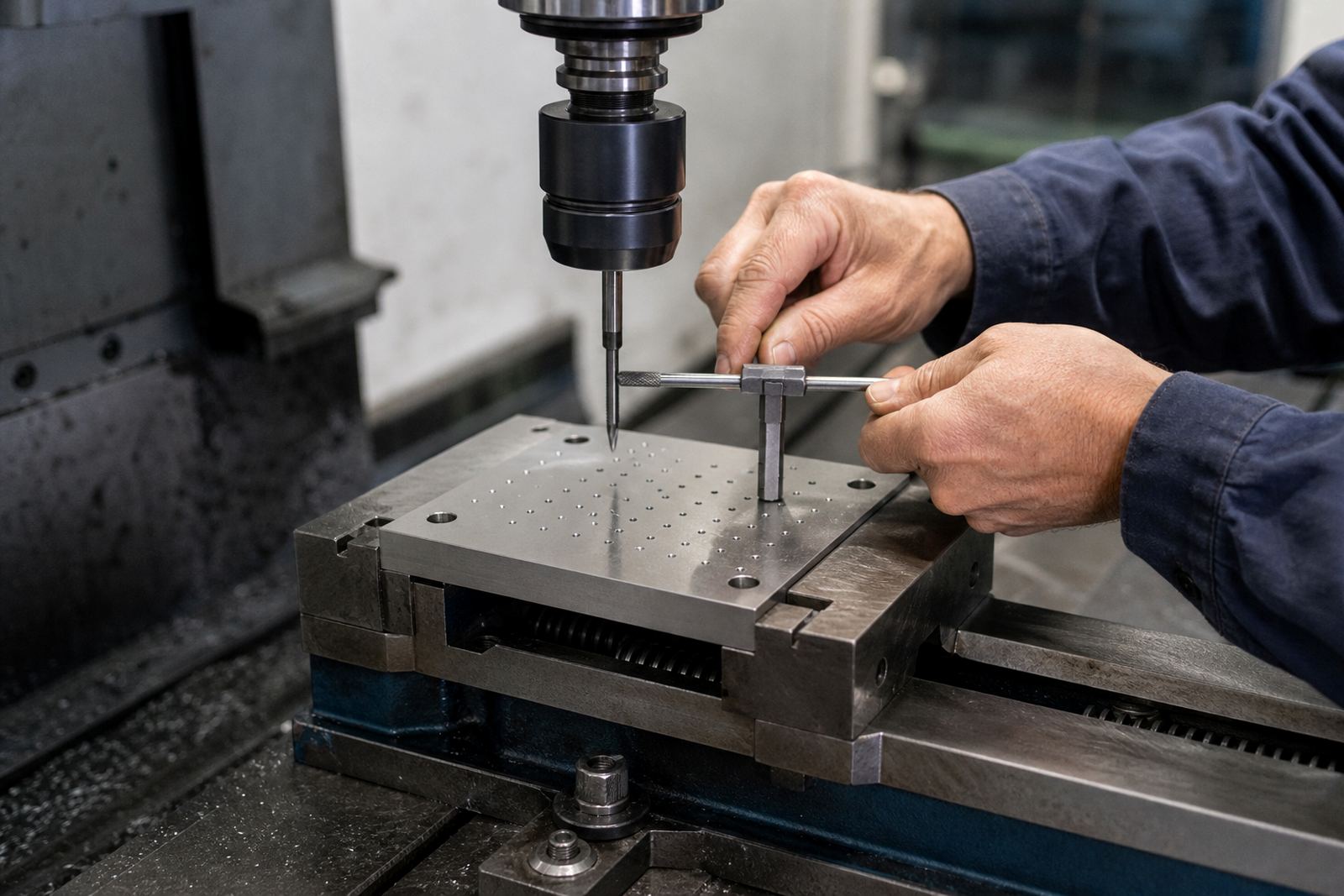
Spotting drills do not need gas. They run on standard CNC machining centres and conventional milling machines with a suitable tool holder, correct spindle speed and a rigid setup. The main requirement is proper alignment and a clean workholding arrangement. Any movement in the vice, fixture or collet can affect the hole start, so it is worth checking clamp pressure and runout before production starts.
Coolant is recommended for most applications, especially in stainless steel and higher speed cycles. Flood coolant is common, though some workshops use air blast for aluminium or where chip evacuation is easy. Speeds and feeds should be matched to the material, tool diameter and depth of spot required. If the point is too deep, the main drill may struggle to track correctly, so the spot only needs to be deep enough to guide the drill. On older machines with limited spindle accuracy, a shorter tool setup often gives better results.
- No gas supply required
- Use a rigid holder with low runout
- Coolant recommended for most materials
- Set spot depth to suit the main drill point
Care, storage and tool life on the shop floor
Solid carbide tools last longer when handled carefully. Keep spotting drills in their sleeves or racks so the cutting edges do not knock together. After use, clean off coolant and chips, then store them dry. This matters in coastal areas like Cape Town and Gqeberha, where damp air can leave residue on packaging and tool holders if they are left lying around.
Check for edge wear, chipping and a build-up of material on the cutting lips. If the tool starts to squeal, leaves an uneven cone or produces a burr around the spot, it may be time to replace it. In many shops, the first sign of trouble is inconsistent hole starting across a batch. Good housekeeping also helps: keep the tool magazine clean, check holder tapers regularly, and avoid using a worn spotting drill on harder material than it was selected for. That small step can prevent extra tool load and save a second setup.
- Store tools dry and separated
- Inspect for chipping and edge wear
- Keep holders clean and checked
- Replace tools when spot quality drops
What to check when ordering spotting drills
When ordering, it helps to confirm the material, hole size, spindle limits and the main drill that will follow. The correct angle is important. A 90 degree spotting drill is common for general work, while different angles can suit specific drill points and countersink style starts. You should also confirm whether the job needs a short rigid body or a longer reach to clear fixtures.
CuTools Carbide supports machine shops in Germiston, Johannesburg, Pretoria, Boksburg, Alberton, Centurion, Cape Town and Durban with tool selection, technical quotations and urgent tool supply. The team can help match the spotter to the material and process, and advise on feed, speed and tool life. For repeat work, it is worth standardising the chosen size and angle across the site so operators get the same result on every machine. That helps with stock planning and keeps production more predictable.
- Material type and hardness
- Main drill diameter and point style
- Required spot angle and depth
- Machine holder type and spindle limits
Key facts
| Tool type | Solid carbide spotting drill |
|---|---|
| Common angles | 90 degree, 120 degree, 142 degree |
| Typical shank sizes | 3 mm to 20 mm |
| Material use | Steel, stainless steel, aluminium and cast materials |
| Machine compatibility | CNC machining centres and milling machines |
| Service support | Tool selection, application support and urgent tool supply |