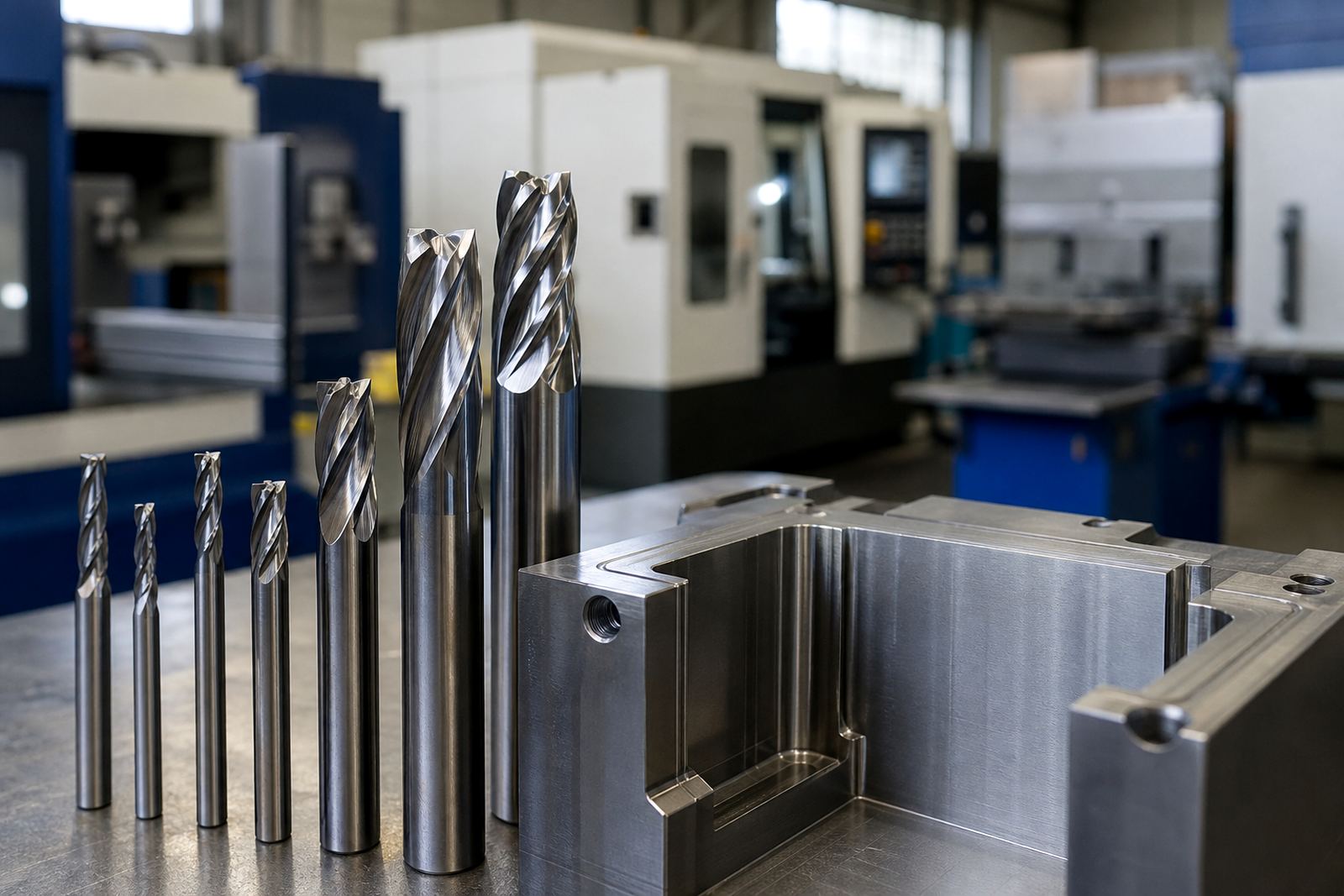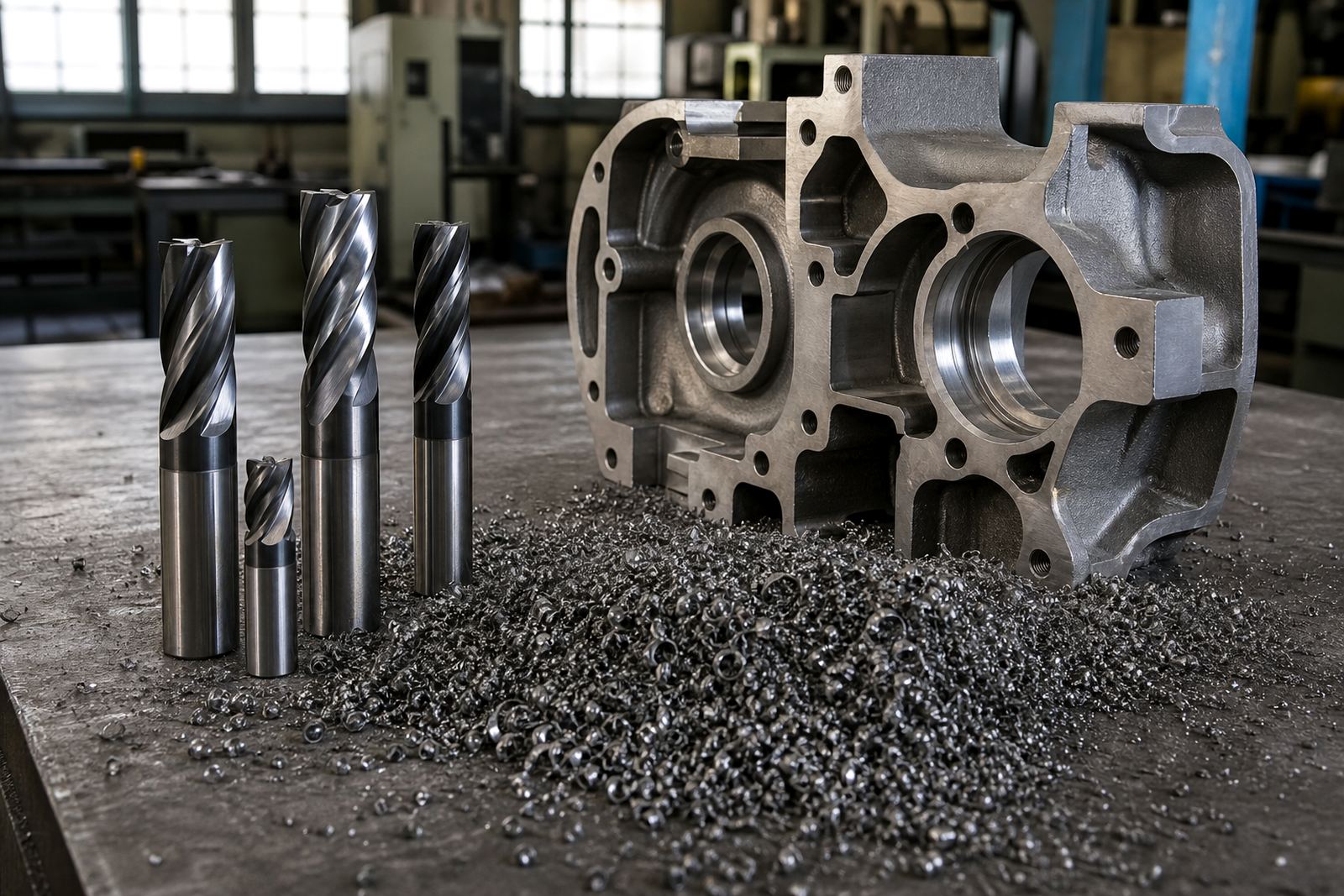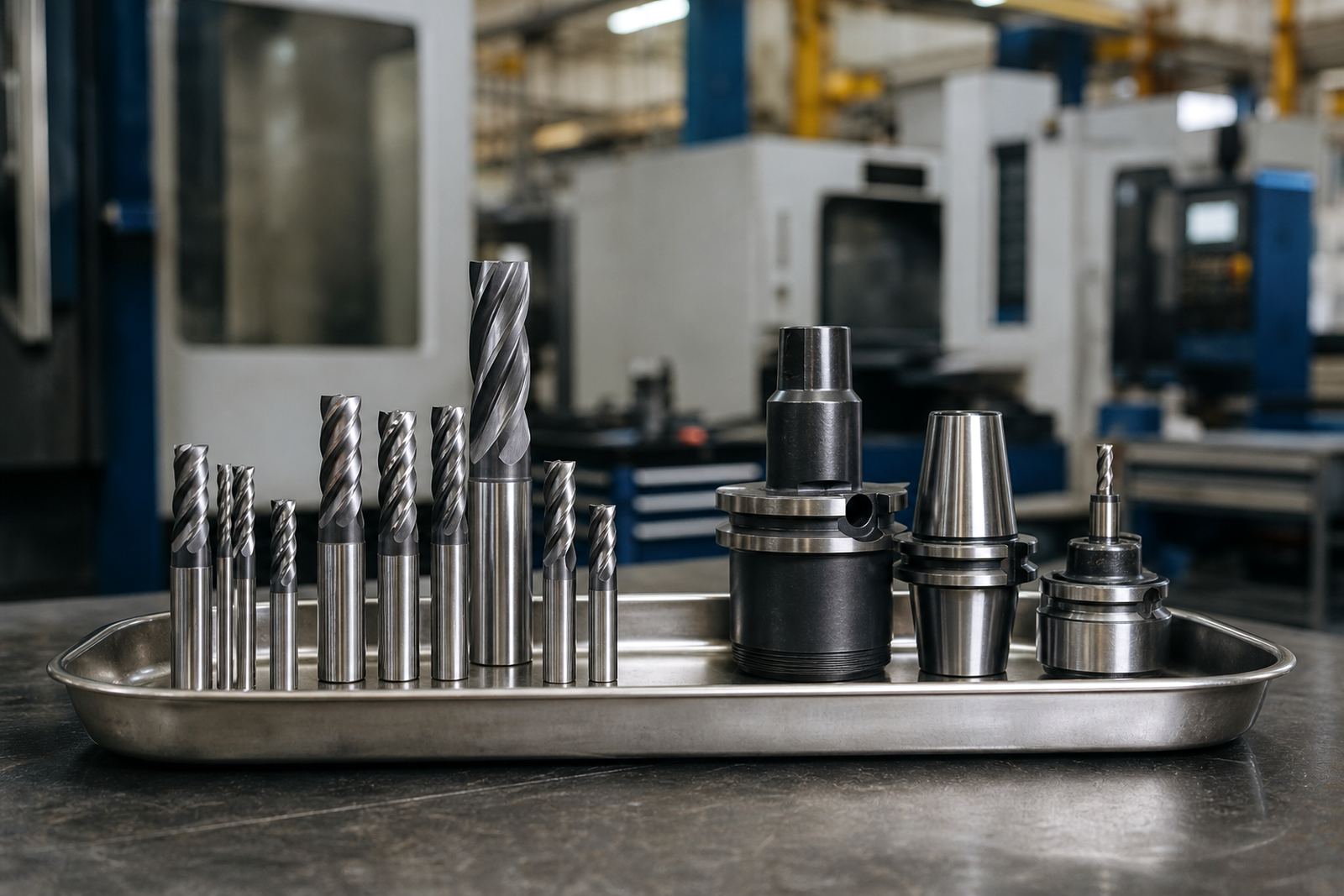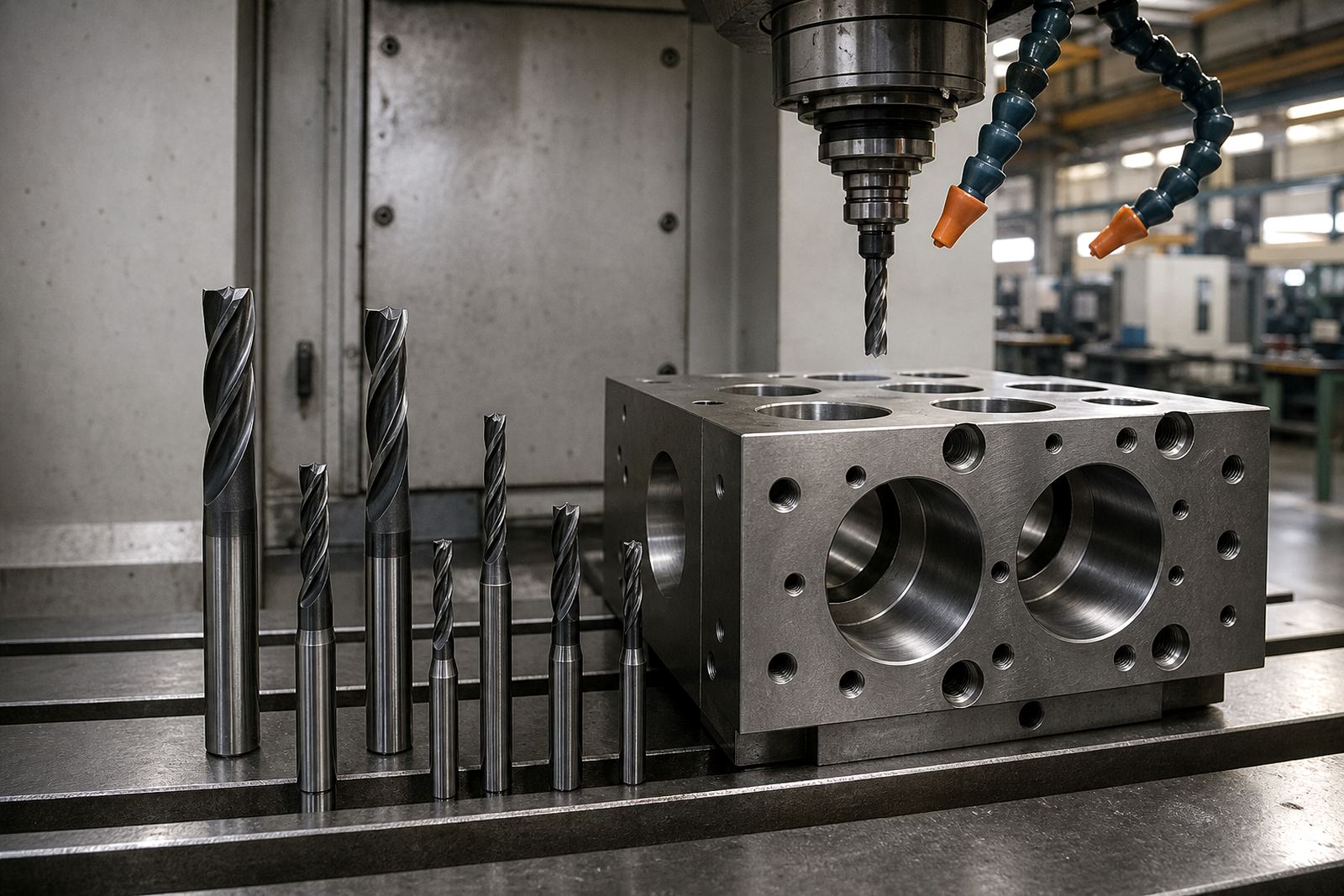
What a through coolant drill does on the machine
A through coolant drill is a solid carbide drill with internal coolant channels that send cutting fluid straight to the tip and cutting edges. That matters when you are drilling deeper holes, working with sticky stainless steel, or running continuous shifts where heat and chip build-up can slow production.
Compared with a standard external flood setup, internal coolant helps push chips out of the hole more effectively. It also supports better edge life, more stable cutting and less risk of work hardening in demanding materials. For CNC shops in Germiston, Johannesburg, Pretoria and beyond, that can mean fewer broken tools and more consistent hole sizes.
These drills are used on vertical machining centres, horizontal machines and production cells where repeatability is important. They suit batches where each part must come out the same, shift after shift.
Sizes, flute styles and point options available
CuTools Carbide supplies through coolant drills in a range of diameters for common production work. Typical sizes cover small pilot holes through to larger production diameters, with both short and extended lengths available depending on hole depth and machine rigidity. For deeper drilling, the shank and flute design need to match the job, not just the hole size.
Options may include different length-to-diameter ratios, split point geometry for easier starting, and point angles suited to the material. A 140 degree point can suit general-purpose drilling, while tougher applications may need a different angle or edge prep. The right choice depends on the material, spindle condition and how the part is clamped.
- Short series for rigid setups and shallow holes
- Long series for deeper holes and heavier stock
- Different diameters for general and precision drilling
- Geometry matched to steel, stainless steel or cast iron
- Shank options suited to standard CNC toolholders
Where these drills suit best in South African production
Through coolant drills are a practical choice in job shops and production environments where hole quality and cycle time both matter. They are often used in general engineering, automotive components, agricultural equipment, structural hardware, hydraulic parts and maintenance work where holes need to be accurate and clean on the first pass.
They are especially useful in materials that trap chips, build heat quickly or form long stringy swarf. Stainless steel, mild steel plate, alloy steel and some cast materials all benefit from better coolant delivery. In coastal areas like Cape Town, Durban and Gqeberha, proper tool care also helps limit corrosion from humidity when tools are stored between jobs.
If your shop is coping with load-shedding, planning becomes even more important. A drill that cuts faster and holds its edge longer helps reduce wasted cycle time when power windows are tight.
Installation, coolant pressure and machine checks
These drills need a CNC machine with through-spindle coolant or a setup that can deliver coolant through the toolholder. The pressure requirement depends on the tool diameter, hole depth and material, but consistent flow is more important than high pressure alone. If coolant delivery is weak or blocked, chip evacuation will suffer and tool life will drop.
Before running the tool, check that the holder is clean, the collet or chuck grips properly, and the coolant passage is open. Inspect the machine pump, filters and seals as well. A blocked filter or a worn seal can reduce pressure enough to cause chip packing inside the hole.
- Confirm through-spindle coolant is available on the machine
- Check coolant concentration and cleanliness before use
- Use proper tool projection, not more stick-out than needed
- Keep the holder and shank clean and dry
- Verify the part is clamped firmly for stable cutting
Care, resharpening and service life on the shop floor
Solid carbide drills can give a long service life when they are used within the correct speed and feed range. The main causes of early wear are poor coolant delivery, rubbing instead of cutting, and runout in the holder. If the drill starts squealing, shows edge chipping or leaves poor hole finish, it is time to review the setup.
Keep drills stored in labelled holders or trays so the cutting edges are not knocked together. In humid coastal areas, wipe tools down before storage and keep them away from oily swarf and moisture. On busy floors in Wadeville, Germiston, that small habit can prevent staining and unexpected wear.
Resharpening depends on the condition of the drill and whether the geometry can still be restored properly. If the margins, lips or point are damaged too much, replacement may be the better call. Regular checks on hole size, burr formation and surface finish make it easier to spot wear before it costs production time.
What to check when ordering the right drill
To match the correct through coolant drill to your job, you need more than just the hole diameter. Material, hole depth, machine type and required tolerance all affect the recommendation. A drill that works well in mild steel may behave very differently in stainless steel or hardened parts, so the application details matter.
When sending an enquiry through the contact page, include the size, depth, material grade if known, and whether the hole is blind or through. It also helps to share spindle speed limits, coolant pressure and the finish you need. That lets the team suggest a drill that fits the process instead of forcing a poor fit.
- Hole diameter and hole depth
- Material type and hardness
- Blind hole or through hole
- Required tolerance and finish
- Machine model and coolant delivery setup
- Expected batch size and production rate
Technical support from Germiston to shops nationwide
CuTools Carbide supports CNC machining shops from Wadeville, Germiston to Johannesburg, Pretoria, Boksburg, Alberton, Centurion, Cape Town and Durban. The focus is on practical tool selection, speed and feed advice, tool life optimisation, material matching and urgent supply when production is under pressure.
Under the guidance of Marius van der Merwe and the technical team, customers get help from ordering through to trial runs and production standardising. If a shop needs sample tool trials or on site consultation, the aim is to cut guesswork and get to a stable process faster. For many workshops that is the difference between chasing faults and getting the job out on time.
Key facts
| Tool type | Solid carbide through coolant drill |
|---|---|
| Coolant feature | Internal coolant channels to the cutting edge |
| Typical use | Deep hole drilling and production machining |
| Suitable materials | Steel, stainless steel, cast iron and selected alloys |
| Machine requirement | CNC machine with through-spindle coolant or equivalent delivery |
| Ordering details | Diameter, depth, material, tolerance, hole type and coolant pressure |