What square end mills do in day to day CNC work
Square end mills are used when you need a flat bottom cut and a sharp corner detail on the wall. They suit slotting, side milling, pocketing, contour work and edge finishing on steel, stainless steel, cast iron, aluminium and many common engineering plastics. In short, they are the general purpose cutter that gets used often and gets judged hard.
For local machining shops, the value is in repeatability. A square end mill that holds size, stays balanced at speed and clears chips properly saves time on rework and tool changes. That matters on long shifts, during load-shedding recovery runs, and when a machine has to catch up after stoppages. Our team in Wadeville, Germiston supports shops from Johannesburg, Pretoria, Boksburg, Alberton, Centurion, Cape Town and Durban with practical tool selection and stock planning.
Solid carbide construction and common size options
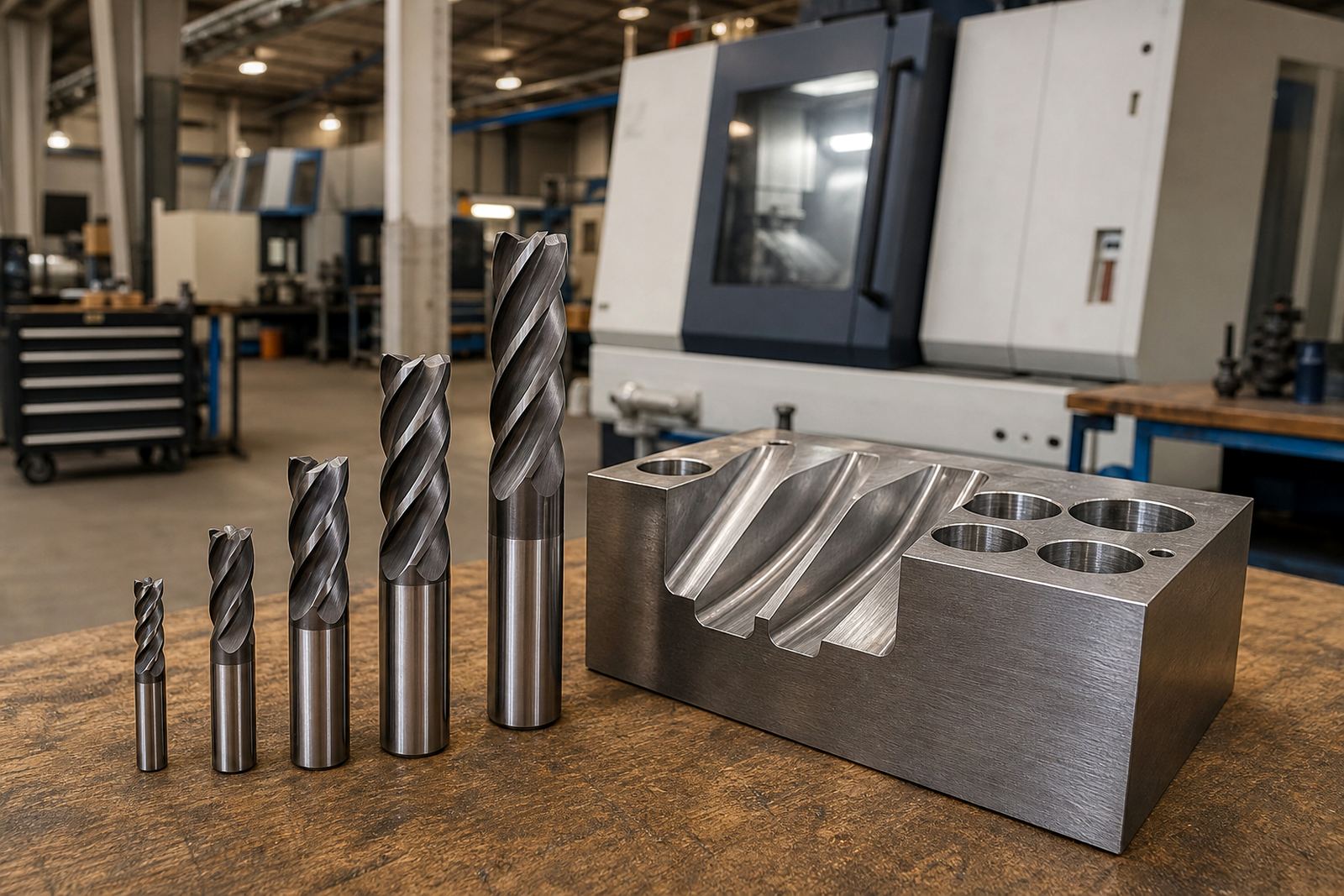
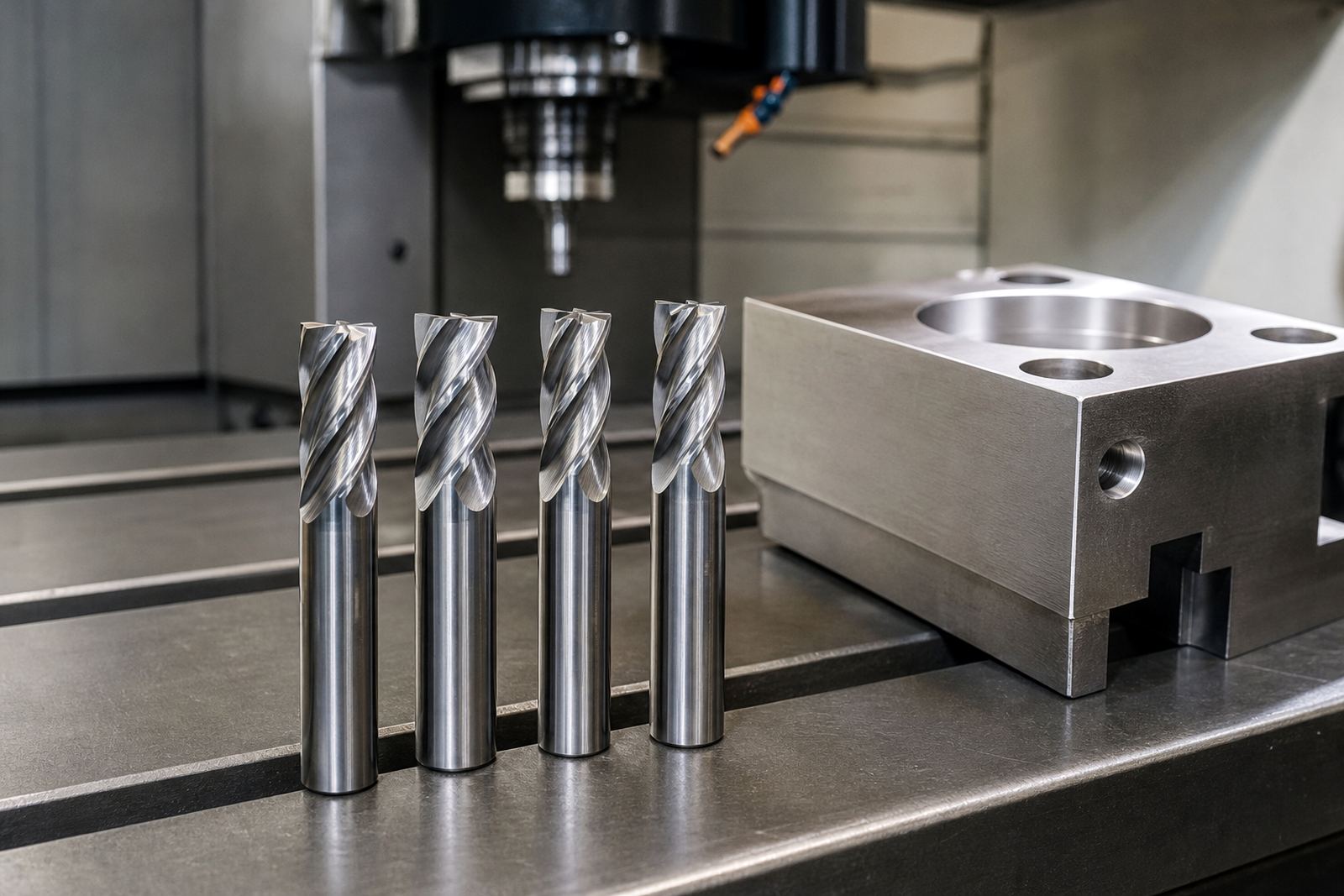
These cutters are made from solid carbide for stiffness, wear resistance and stable cutting in CNC machining centres. Solid carbide is the normal choice where you need better tool life than high speed steel, especially on production work, harder materials and high spindle speeds. The cutters are available in 2 flute, 3 flute and 4 flute patterns depending on the material and the chip load you want to carry.
- Common diameters from 1 mm to 20 mm, with larger sizes available on request
- Cut lengths for shallow profiling and deeper slotting jobs
- Standard overall lengths for compact toolholders and extended reach options
- Centre cutting styles for plunge entry where the job allows it
- Corner radii options for extra edge strength when a sharp 90 degree corner is not required
We help customers match diameter and flute count to the job, because a 4 flute cutter that works well in steel may pack up in aluminium if chip clearance is poor. That kind of mismatch is common and easy to avoid with the right selection.
Where square end mills suit best in South African workshops
Square end mills are suited to general engineering, automotive components, maintenance work, mould and die support, and small batch production. They are also a practical choice for workshops that do a lot of fixture work, mild steel brackets, aluminium plates and stainless parts. In coastal areas such as Cape Town and Durban, proper storage matters because humidity can affect tool boxes and holders if they are left open in the shop.
These cutters are commonly used where finish and dimensional control both matter. Typical jobs include:
- Slotting and keyway style cuts
- Profile machining on plates and blocks
- Pocketing and step cutting
- Facing small localised areas
- Cleaning up edges after sawing or flame cutting
If your shop handles mixed work, one square end mill range can cover a lot of the daily output. That makes ordering simpler and helps keep emergency buying to a minimum.
Machine setup, spindle power and coolant requirements
Square end mills can be run on modern CNC machining centres with the usual attention to spindle speed, feed rate, tool overhang and holder condition. They do not need gas. What they do need is a machine that is set up properly, a sound toolholder and the right coolant or air strategy for the material. On aluminium, chip evacuation is key. On steel and stainless steel, steady coolant delivery or a controlled through tool setup can improve tool life and surface finish.
Check that your machine has enough spindle power for the diameter and flute count you intend to run. A 10 mm cutter in mild steel is a very different demand from a 16 mm cutter in stainless steel. If the cutter is being pushed too hard, you will see edge wear, chatter marks and short life before the tool has paid for itself. Our technical team can advise on speed, feed and step-over settings for your application, and we can assist with on site consultation where needed.
- Use the shortest practical stick-out
- Check holder runout before long production runs
- Keep coolant nozzles aimed at the cut
- Do not run a worn spindle taper or damaged collet
- Adjust feeds if chip colour changes or the cut starts squealing
How to care for cutters and stretch tool life
Square end mills last longer when they are cleaned, inspected and stored properly. Wipe off coolant after use, remove fine chips from flutes and keep cutters in individual slots or sleeves so the edges do not knock together. In humid areas and during winter storage, light corrosion can appear on tool shanks and holders if they are not kept dry. That is avoidable with basic shop discipline.
If a cutter starts to leave a rough wall, builds up heat, or needs more power than usual, it may be time to inspect the edge rather than keep forcing the same tool through another batch. Tool life optimisation is often a matter of small changes, not a full process overhaul. We also help with production standardising so the same part does not get run differently by every operator on the floor.
- Check for chipped cutting edges before each shift
- Keep coolant concentration in range
- Avoid mixed storage with damaged drills or end mills
- Rotate stock so older cutters are used first
- Log tool life on repeat jobs for better planning
What to check when ordering square end mills
When ordering, the most important detail is not just diameter. You need the material, flute count, cut length, overall length, coating requirement if any, and the type of work it will do. If you are matching a replacement tool, measure the current cutter and confirm the part dimensions before placing the order. A small difference in cut length or neck clearance can affect the whole setup.
Please check the following before sending an enquiry through our contact page:
- Material being machined
- Diameter and cut length required
- Number of flutes needed
- Whether a sharp corner or corner radius is needed
- Machine type and holder style
- Expected batch size and target tool life
CuTools Carbide supports CNC machining shops with tool selection, sample tool trials, technical quotations and urgent tool supply. From Wadeville we supply Germiston, Johannesburg, Pretoria, Boksburg, Alberton, Centurion and other centres across South Africa, with practical help from a team that understands production pressure and the cost of downtime.
Key facts
| Product type | Solid carbide square end mills |
|---|---|
| Typical diameters | 1 mm to 20 mm standard, larger sizes on request |
| Flute options | 2 flute, 3 flute and 4 flute |
| Common use | Slotting, profiling, pocketing and edge finishing |
| Compatible materials | Steel, stainless steel, cast iron, aluminium and plastics |
| Supply area | Germiston base with national supply across South Africa |