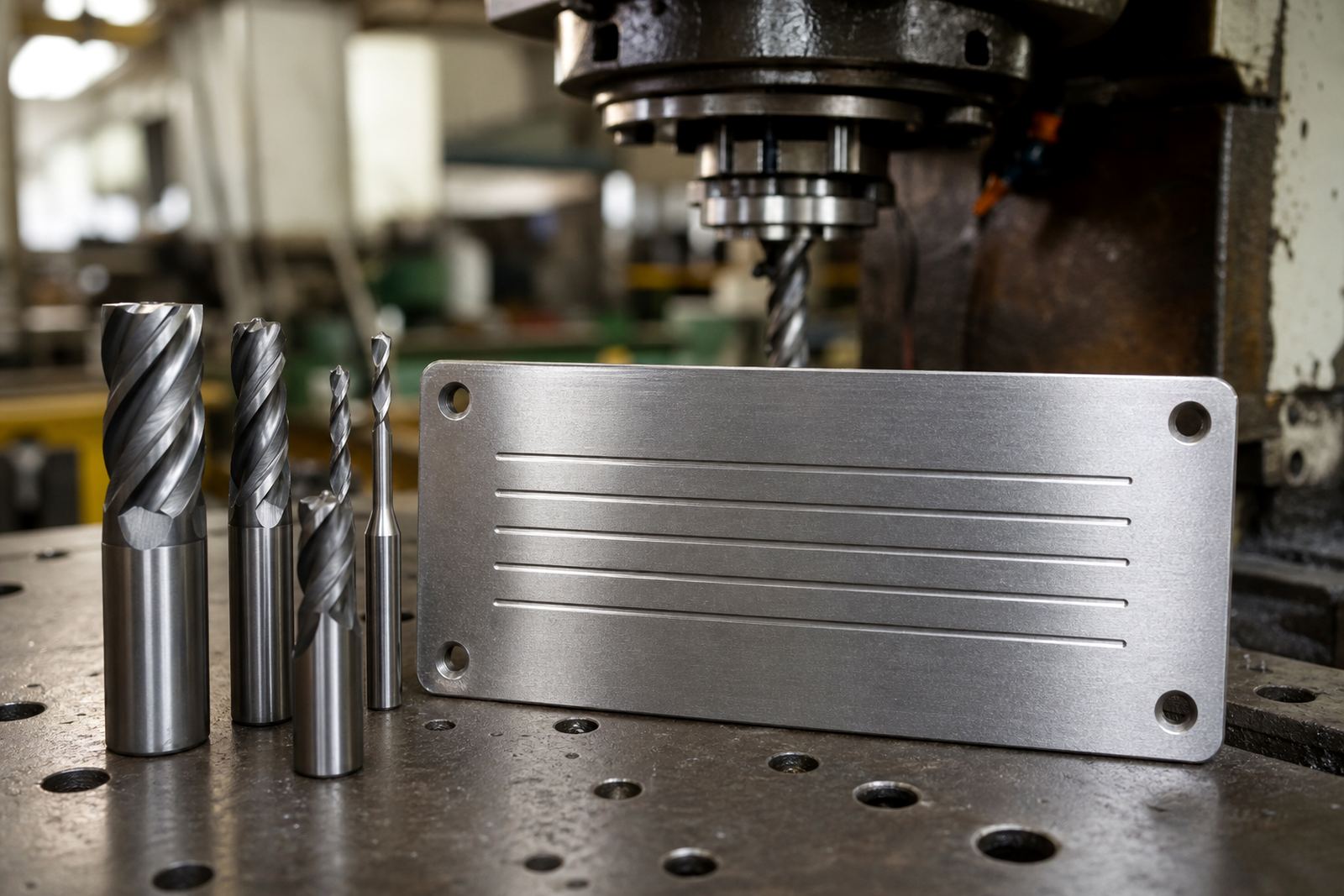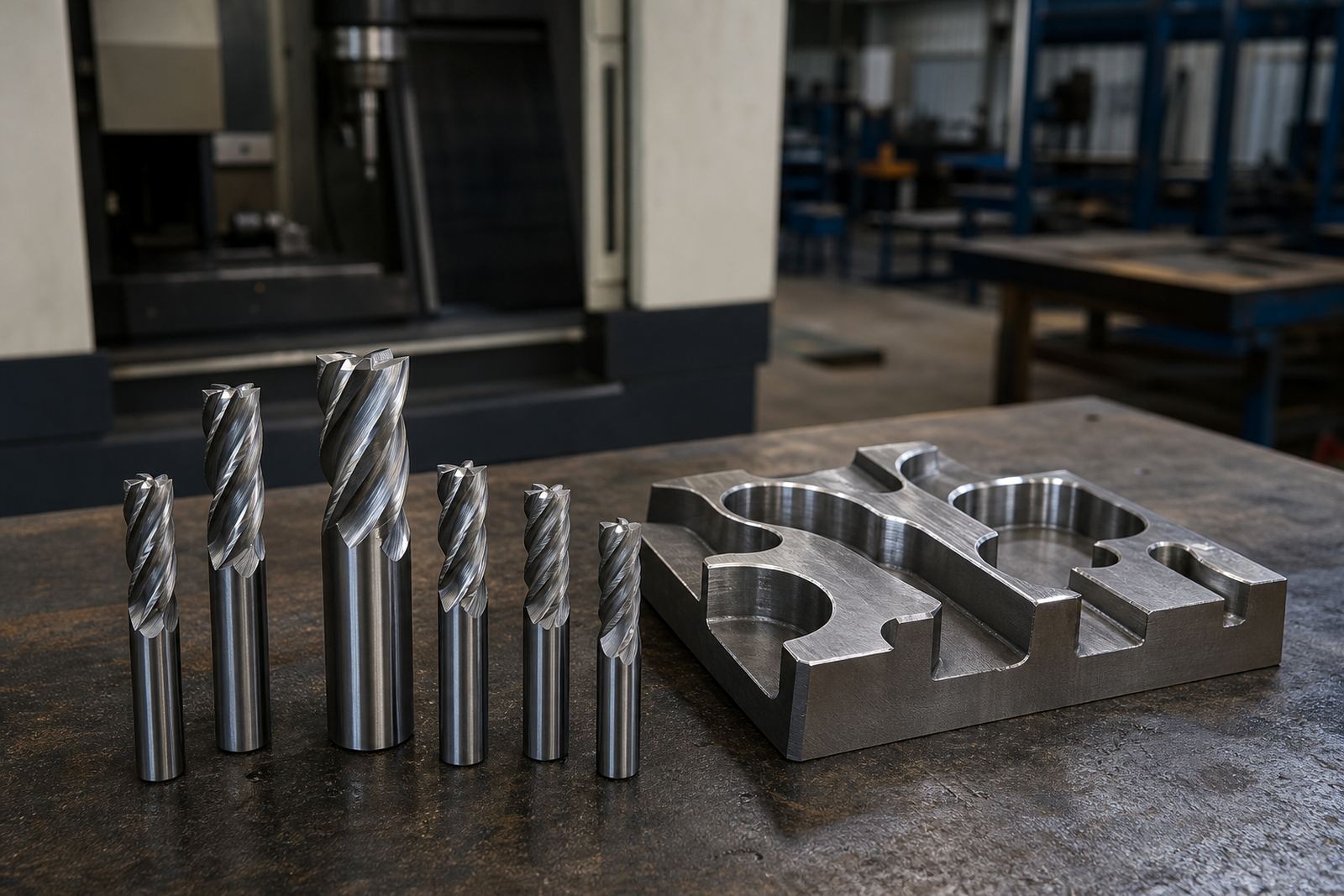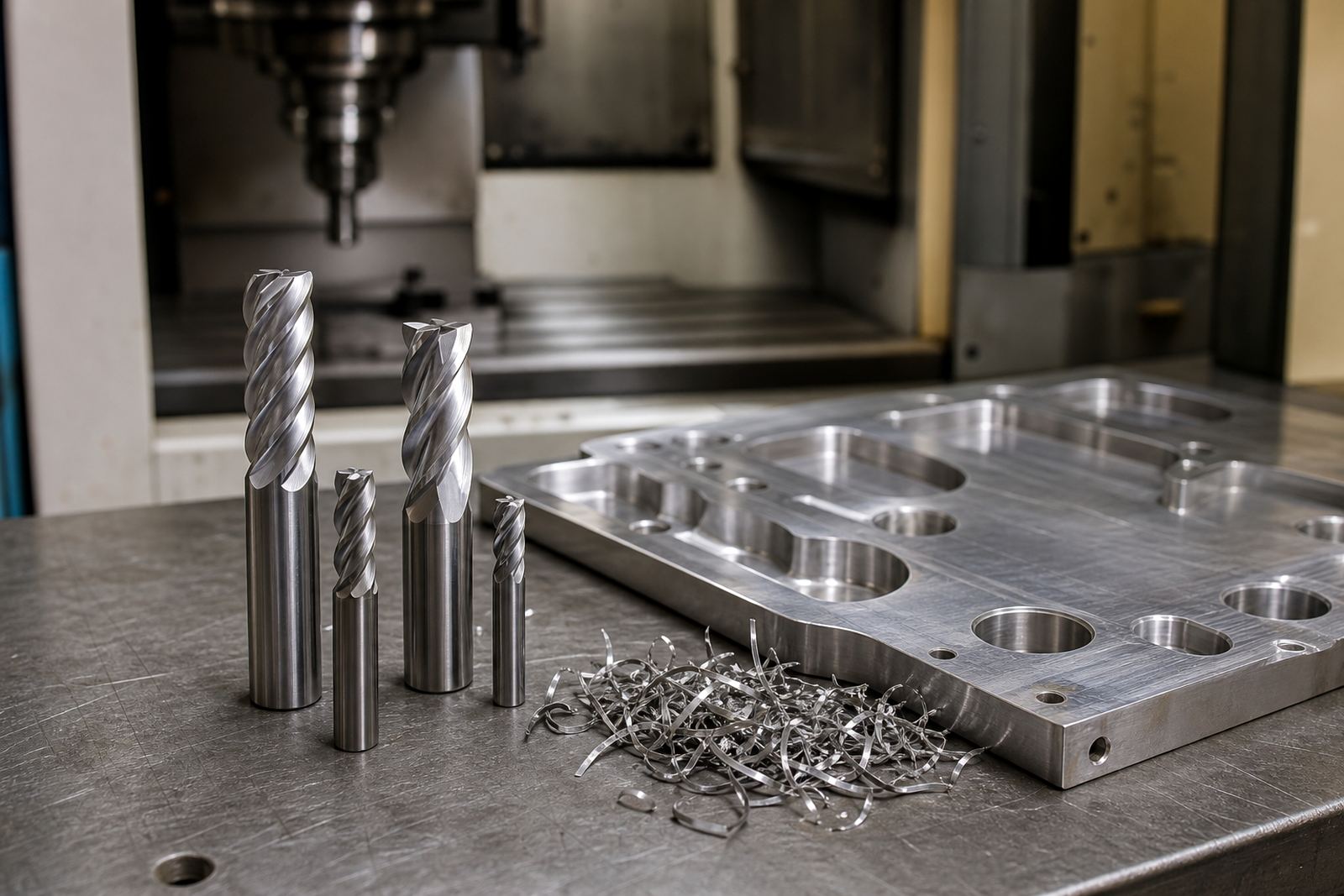

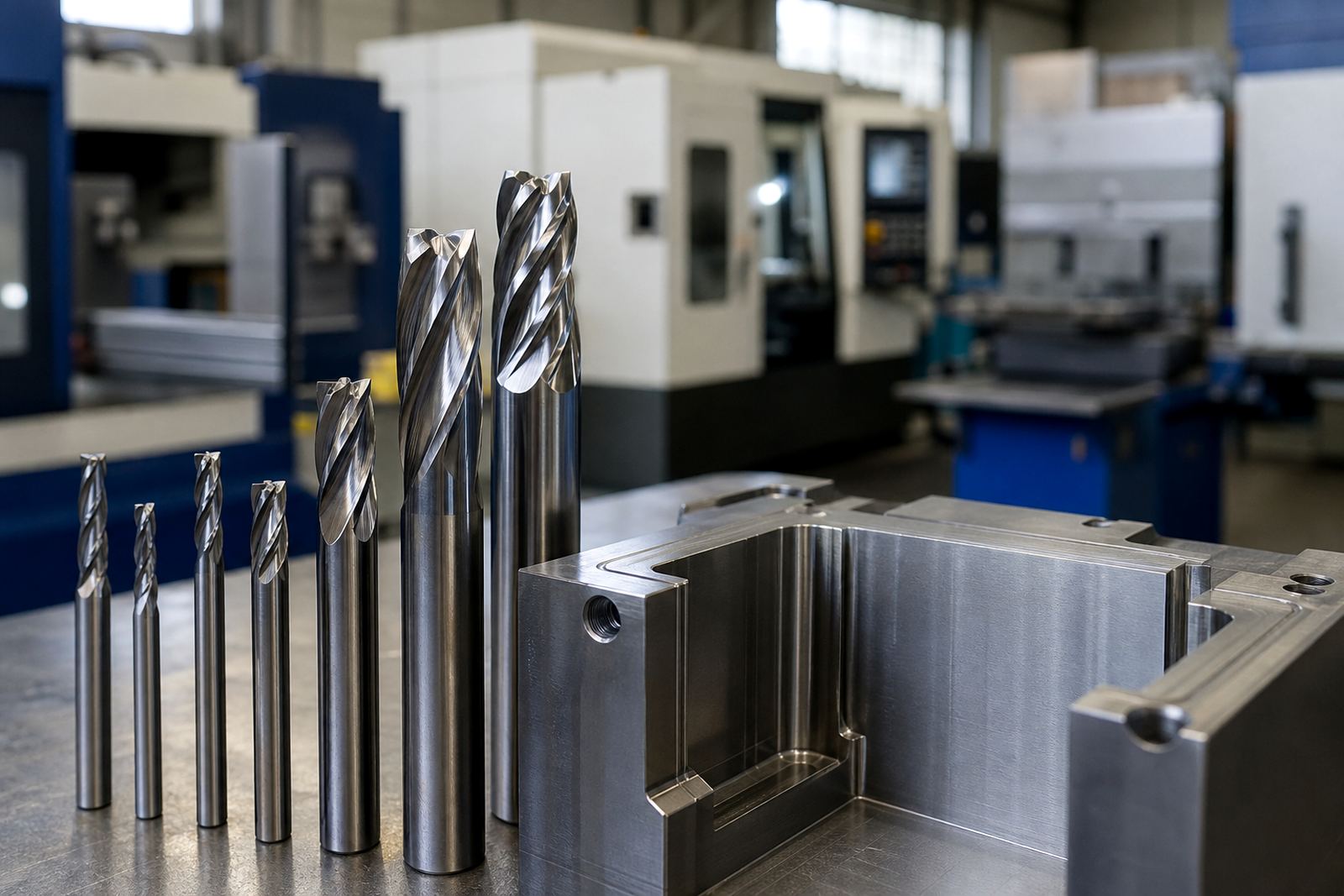
What tapered end mills do on the machine
Tapered end mills have a cutting section that narrows toward the tip, so the tool stays more rigid over a longer reach than a straight shank of the same overhang. That makes them useful for mould and die work, engraving style cuts, pocket walls and forms where the cutter must reach into depth without whipping. In a CNC machining centre, the taper helps reduce deflection, chatter and poor edge finish when the work is narrow or the cavity gets deeper.
These tools are supplied as solid carbide, which gives better wear resistance and heat handling for high speed cutting. They are used in steel, tool steel, stainless steel, aluminium and selected non ferrous materials, depending on the flute geometry and coating. For shops in Germiston, Boksburg or Johannesburg that run tight tolerances all day, the extra stiffness can make the difference between a clean wall and a second pass. It also helps when a part has long reach features and the machine setup is not perfectly forgiving.
Common sizes, angles and flute options
Choosing the right taper starts with the angle, tip size and overall reach. A shallow taper gives a more gradual wall profile and better access in deep cavities, while a steeper taper can be better where side clearance is limited. Tip diameters, flute lengths and shank sizes all need to suit the holder, spindle and the feature being cut.
- Taper angles commonly supplied for mould and form work, with options selected to suit the cut depth and wall shape
- Tip diameters from fine detail sizes up to larger cutting diameters for heavier stock removal
- Two flute options for aluminium and non ferrous materials, and multi flute options for steels and stainless steel
- Uncoated and coated versions, depending on material, surface finish and wear life required
- Metric sizing for CNC shops working to local drawings and tool lists
- Custom application matching where the part geometry or machine setup needs a specific reach or taper
For some jobs a longer flute is needed, but more flute length is not always better. If the tool projects too far, chatter can return very quickly. The right selection balances geometry, machine power and the finish expected on the final surface.
Where tapered cutters suit the job best
Tapered end mills suit mould-style pockets, deep side walls, cavity finishing, draft angle features and narrow areas where a standard end mill would flex too much. They are also useful in jigs, fixtures, electrode related parts and machining where wall straightness matters. In a production environment, they can reduce the number of tool changes because one tool can handle roughing and finishing in a single setup, depending on the allowance left on the part.
They are a practical choice for engineering shops in Pretoria, Centurion, Cape Town, Durban and Gqeberha that cut parts with deep features and need repeatability from one batch to the next. On a humid coastal site, proper storage matters too, because even solid carbide tools can suffer if holders, collets or stored cutters pick up surface contamination. The tool itself is hard, but the setup still needs care.
- Mould and die cavities
- Deep pocket finishing
- Thin wall and rib features
- Drafted surfaces and form work
- Long reach machining where rigidity is limited
Setting up the cutter for stable cutting
A tapered end mill should be held in a clean, accurate holder with the shortest practical stick-out. Check runout before running production, because even a small error will show up at the tip of a tapered tool. The spindle taper, collet, nut and shank must be clean and undamaged. If the tool is clamped badly, the taper cannot compensate for poor setup.
Use conservative entry moves at first, then increase feed once the cut is stable. In harder materials, keep an eye on chip evacuation and coolant delivery. If chips are recutting in a deep pocket, the edge will fail early. For shops dealing with load-shedding, restarting a cycle after a power cut should include a quick check on zero position, tool length offset and part clamping before cutting resumes.
- Keep tool projection as short as the geometry allows
- Match holder size to shank size for best grip
- Confirm spindle speed, feed and step over before production
- Use coolant or air blast where chip packing is an issue
- Check workholding for movement before the first part runs
Care, storage and tool life control
Solid carbide tools last longer when they are cleaned, dried and stored properly. After use, remove chips and coolant residue, then keep the tool in a dry rack or box where the cutting edges will not rub against other tools. In coastal areas, humidity can lead to staining on holders and fixtures, so a little routine care goes a long way. Tools should also be inspected for edge wear, micro chipping and built-up material before they go back into production.
Tool life can be improved by watching the first sign of chatter, edge wear or a change in surface finish. If the cutter starts to sound different, the process may need a feed change, a shorter reach or a different taper angle. Regular stock planning helps too, because a shop that waits until the last minute often ends up using the wrong tool or running worn stock a bit too far. That costs time and parts.
- Store cutters in labelled holders or sleeves
- Keep them dry after coolant use
- Inspect flute edges before each batch
- Replace tools that show chipping or taper wear
What to confirm before placing an order
When ordering tapered end mills, give the exact material, feature depth and finish requirement so the right cutter can be matched to the job. If you are running a mould cavity, include the wall angle, smallest radius and whether the tool is for roughing or finishing. If the job is a repeat production run, share the existing tool data if it worked well, or the problem if it did not.
It also helps to confirm the machine type, spindle holder system and the tooling length available. A small detail like flute count or coating choice can change how the tool behaves in stainless steel compared with aluminium. For urgent tool supply, technical quotations or sample tool trials, the Germiston team can assist through the enquiry form on the contact page and help match the cutter to the part before stock is released.
- Material being cut and hardness range
- Feature depth, wall angle and smallest radius
- Required finish and tolerance
- Machine type, holder and maximum stick-out
- Whether the tool is for roughing, finishing or both
- Any past tool life issues, chatter or chip removal problems
Key facts
| Material | Solid carbide |
|---|---|
| Application | Mould work, deep cavities, slender wall features |
| Geometry | Tapered profile with selected angle and tip size options |
| Flutes | Two flute and multi flute options |
| Use | CNC machining centres for steels, stainless steel, aluminium and non ferrous materials |
| Supply area | Germiston, Johannesburg, Pretoria, Cape Town, Durban and Gqeberha |