What chatter sounds and looks like on the machine
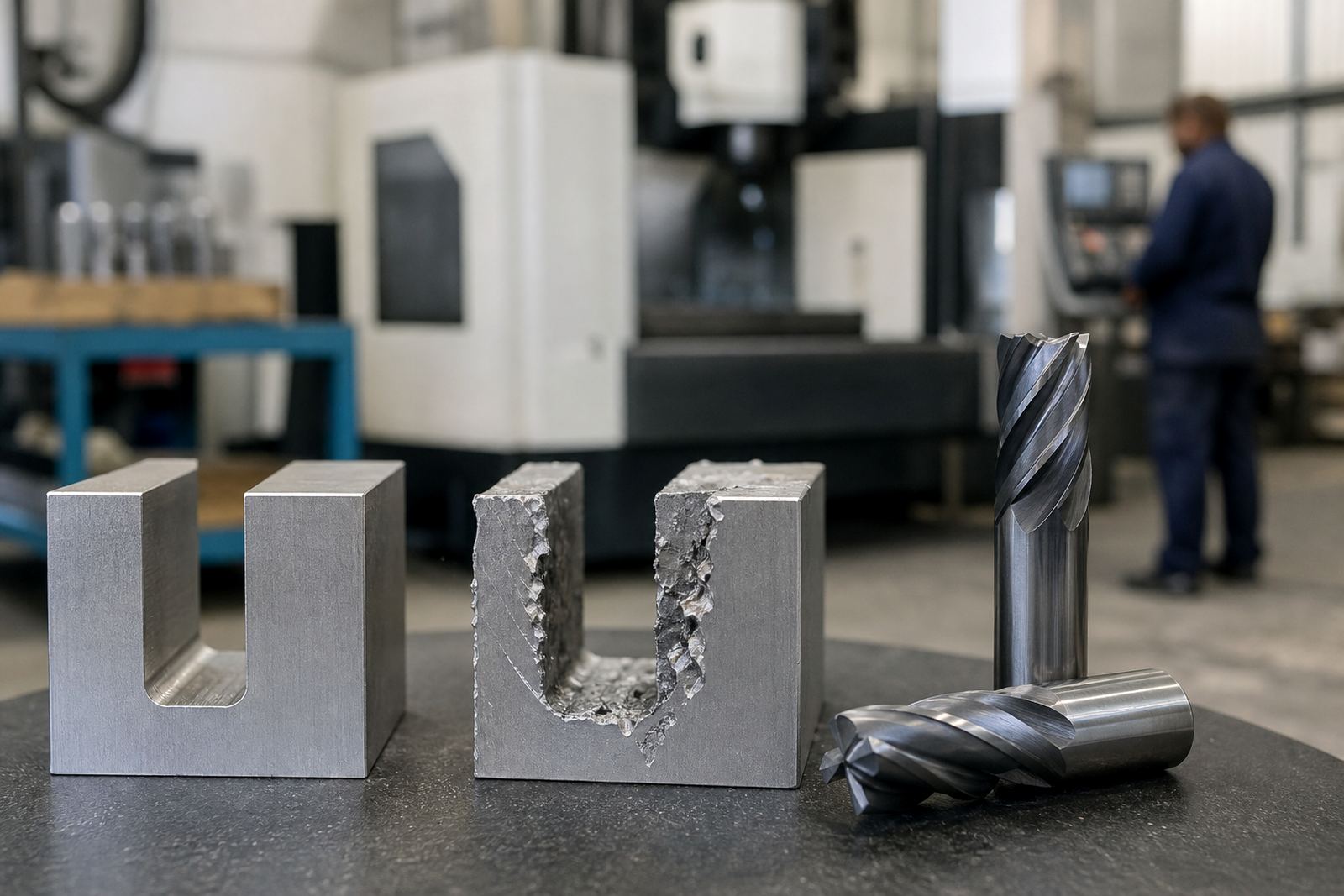
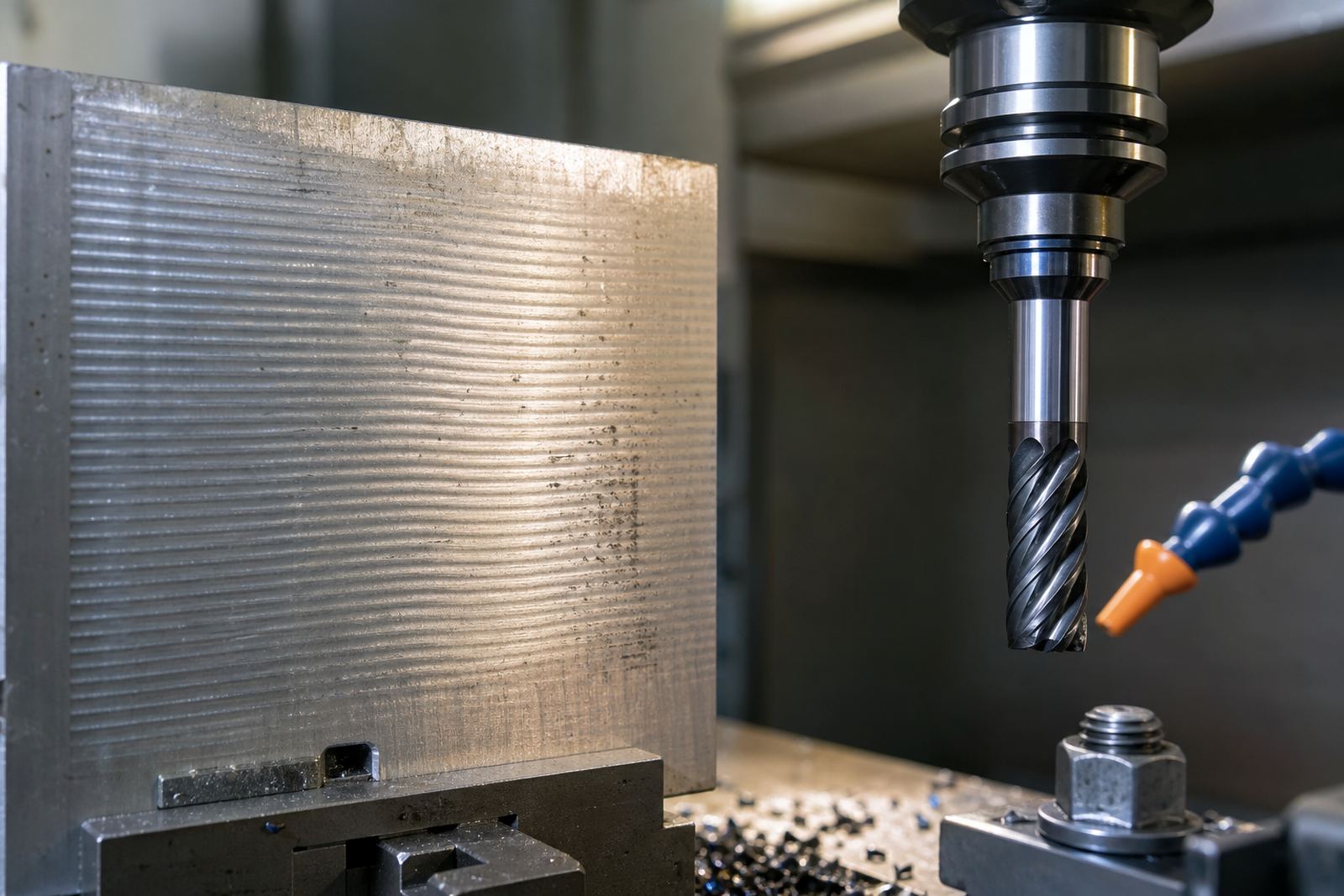
Chatter usually starts as a high pitched squeal, a mark on the wall of the cut, or a fine ripple on the finished surface. In mild steel it may show as a dull band on the side of the component, while on aluminium it can leave a washboard finish that gets worse as the tool moves deeper.
It is easy to blame the cutter first, but the problem is often a mix of machine condition, workholding and tool overhang. A solid carbide end mill can only do so much if the part is moving, the holder is dirty, or the spindle is running outside the right speed range.
The most common causes of vibration in South African workshops
Many vibration issues start with long stick out. If the tool projects too far from the holder, it bends under load and starts to bounce. That is common when shops try to reach deep pockets or work around fixtures without changing the approach.
Another regular cause is poor clamping. Thin plate, uneven jaws, or a part sitting on swarf can all create movement. On machines that are older or seeing long production runs, spindle wear and loose components can add another layer of instability.
- Too much tool overhang for the cut depth
- Incorrect spindle speed or feed per tooth
- Poor part support or weak clamping pressure
- Worn holders, collets or spindle taper damage
- Interrupted cuts on castings, scale or welded material
- Machine resonance from specific speed ranges
How to improve cut stability before changing the tool
Before moving to a different cutter, look at the basics. Clean the taper, check the holder, and make sure the tool is seated properly. A small amount of dirt or a chip in the holder can create runout and that alone may be enough to trigger chatter.
Then look at the cut itself. Reduce radial engagement, shorten stick out where possible and avoid aggressive stepovers on light machines. If the machine is battling with load-shedding recovery, let it warm up properly after restart so the spindle and axes settle before production starts. On a warm day in Gauteng, or in coastal humidity in Durban, coolant condition also matters because thin or contaminated coolant can worsen tool behaviour.
Tool geometry and cutting data must work together
A strong cutting edge helps, but geometry and speed need to match the material. For example, a long reach tool with the wrong flute form can chatter even if it is brand new. In tougher steels, a smaller chip load with the correct speed often gives better stability than forcing a heavy cut.
When the chip is too thin, the tool rubs instead of cutting and vibration builds. When the feed is too high, the edge gets slammed on every revolution. The right balance depends on the job, but these changes usually help:
- Increase feed slightly if the tool is rubbing
- Drop spindle speed if the machine is ringing
- Use shorter tools where the job allows it
- Choose a cutter with a more suitable flute count
- Step down in smaller passes on deep pockets
A Germiston example: turning a noisy roughing job into a stable run
A machining shop in Wadeville was roughing a medium carbon steel component for a local equipment repair customer. The job was running on a small CNC machining centre and the operator was getting chatter near the bottom of the pocket. Surface finish was inconsistent, and the tool life was far below plan.
The issue was not just the cutter. The tool was hanging out too far, the part was clamped on a narrow set of jaws, and the cutting data was too aggressive for the machine. After reducing overhang, improving support and adjusting speed feed values, the cut became steadier and the finish improved within the same shift. The change also cut down on rework, which matters when production time is already tight.
When to ask for application support and trial runs
If chatter keeps coming back on the same part, it is worth stepping back and checking the full process. Material type, machine rigidity, tool reach, coolant delivery and stock condition all play a part. On stainless, for example, work hardening can make the cut harsher if the tool is not taking a clean chip. On aluminium, chip evacuation can be the issue if the flute space is not right for the depth of cut.
For shops in Johannesburg, Pretoria, Cape Town, Durban or Gqeberha, getting the right tool advice early can save a lot of scrap. CuTools Carbide assists with tool selection, speed feed advice, tool life optimisation, material matching, stock planning and sample tool trials. The aim is simple: keep the process steady, reduce vibration and make the job repeatable.