Why tiny carbide tools need a different routine
Micro end mills and drills behave differently to larger cutters. A tool under 3 mm diameter has very little margin for error, so small knocks, runout, poor clamping and wrong feed settings can ruin a job fast. In a busy CNC shop in Wadeville or Boksburg, that matters because one broken cutter can stop a production run and throw off the rest of the day.
Solid carbide gives you the stiffness needed for fine work, but it also means the tool is less forgiving if it is dropped or side-loaded. The safest approach is to treat every small tool like a precision instrument, not a consumable item. That means careful handling from the warehouse shelf to the toolholder and into the machine. A little extra care here saves a lot of scrap and rework later.
Storage that keeps edges clean and straight
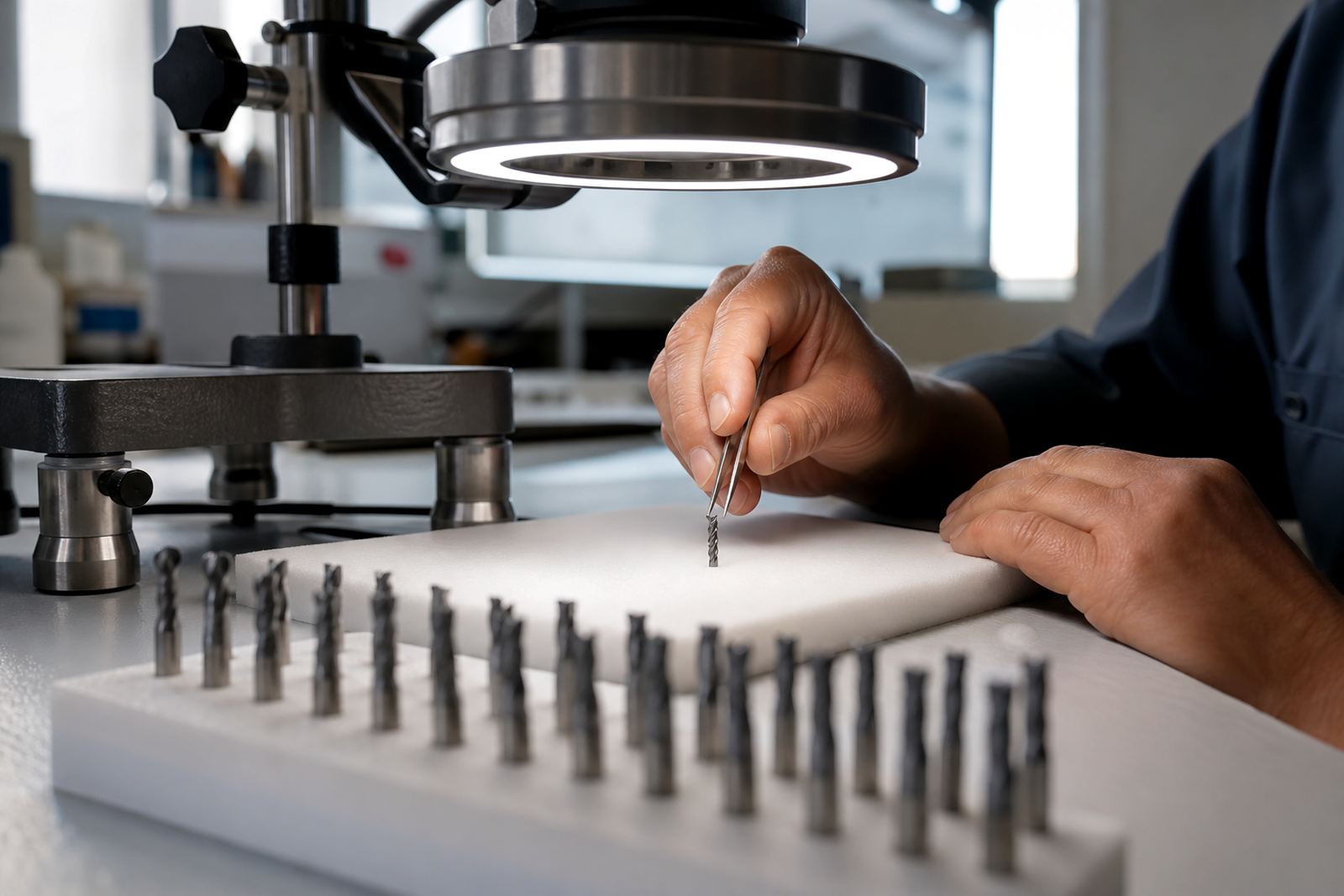
Micro tools should be stored so the cutting edges do not touch each other. A loose box of cutters on a bench is asking for chips on the flutes and tiny edge damage that you may only notice once the first part fails. Keep tools in labelled trays, sleeves or foam inserts, and separate new stock from used tools so there is no mix-up during a rush order.
In Gauteng shops where dust, forklift movement and frequent stock handling are part of daily life, closed storage is worth it. It helps keep cutting edges clean and also protects against accidental drops. If you are near the coast, the same discipline helps with humidity and light corrosion on holders and accessories. Even carbide tools need proper storage around them, because the shank and toolholder can pick up rust or grime that affects accuracy.
- Store each tool in its own slot or sleeve
- Keep carbide away from loose steel swarf and grinding dust
- Mark worn, sampled and new tools clearly
- Return tools to storage only after cleaning and inspection
Handling methods that stop edge damage before setup
Most micro tool damage happens before machining starts. The wrong habit is to pick up a cutter by the flutes, place it on a metal surface or let it roll across a bench. Hold it by the shank only, and if the tool is very small use a clean cloth or a proper handling sleeve. Finger pressure on the cutting edge can be enough to chip the tip on a fine drill.
For shops doing repeat work in Johannesburg or Pretoria, standard handling rules should apply to every operator and setter. That includes one clear place for unpacking tools, one place for inspection and one place for mounting. A small change in routine can cut down on accidental breakages. It also helps new staff learn the right method quickly instead of picking up bad habits from the floor.
- Never tap a micro tool against a hard surface to shake off swarf
- Use clean gloves or dry hands when unpacking delicate cutters
- Inspect flute edges under good light before mounting
- Do not reuse damaged packaging for fresh tools
Toolholder fit and runout: where accuracy is won or lost
With small-diameter carbide tools, runout is often the real problem, not the cutter itself. If the holder is dirty, the collet is worn or the clamping force is uneven, the tool will not cut true. That leads to oversize holes, chatter and premature breakage. Clean the taper, collet and nut before assembly every time. Even a thin film of oil or a chip trapped in the seat can throw the setup off.
Keep stick-out as short as the job allows. A micro end mill with too much overhang will deflect, especially in harder materials or when side milling. In a Durban shop cutting thin-wall components, extra stick-out can turn a sharp cutter into a broken one in seconds. Use the smallest practical gauge length and check that the tool is seated fully before tightening. If you are running a high-speed machine, balance and holder condition matter even more.
Also check spindle condition and machine alignment. A tool can only perform as well as the machine holding it, so if you see repeat breakage across different jobs, the issue may be with the setup rather than the cutter. This is where a proper technical review saves time and money.
Setup advice for first cuts and delicate materials
Micro tools are best introduced gently into the cut. Starting too aggressively can cause immediate damage, especially in stainless steel, hardened tool steels or abrasive alloys. When setting up a new job, begin with a conservative speed and feed, then adjust from the actual cutting result. Listen to the cut, check the chip form and inspect the first part before pushing the cycle harder.
Good setup also means choosing the right tool for the material. A fine tool for aluminium is not the same as a tool for mild steel or stainless. Matching tool geometry to the job reduces cutting load and gives better tool life. For local manufacturers in Centurion or Germiston working with mixed batches, this can mean less downtime and fewer last-minute changes. If the part needs fine slots, small holes or light profiling, the setup must support that from the start.
- Use conservative entry moves on the first run
- Check coolant delivery reaches the cutting zone
- Watch for squeal, dusting or inconsistent chip size
- Record the best speed and feed for the next batch
A Wadeville example: one small drill, one costly stop
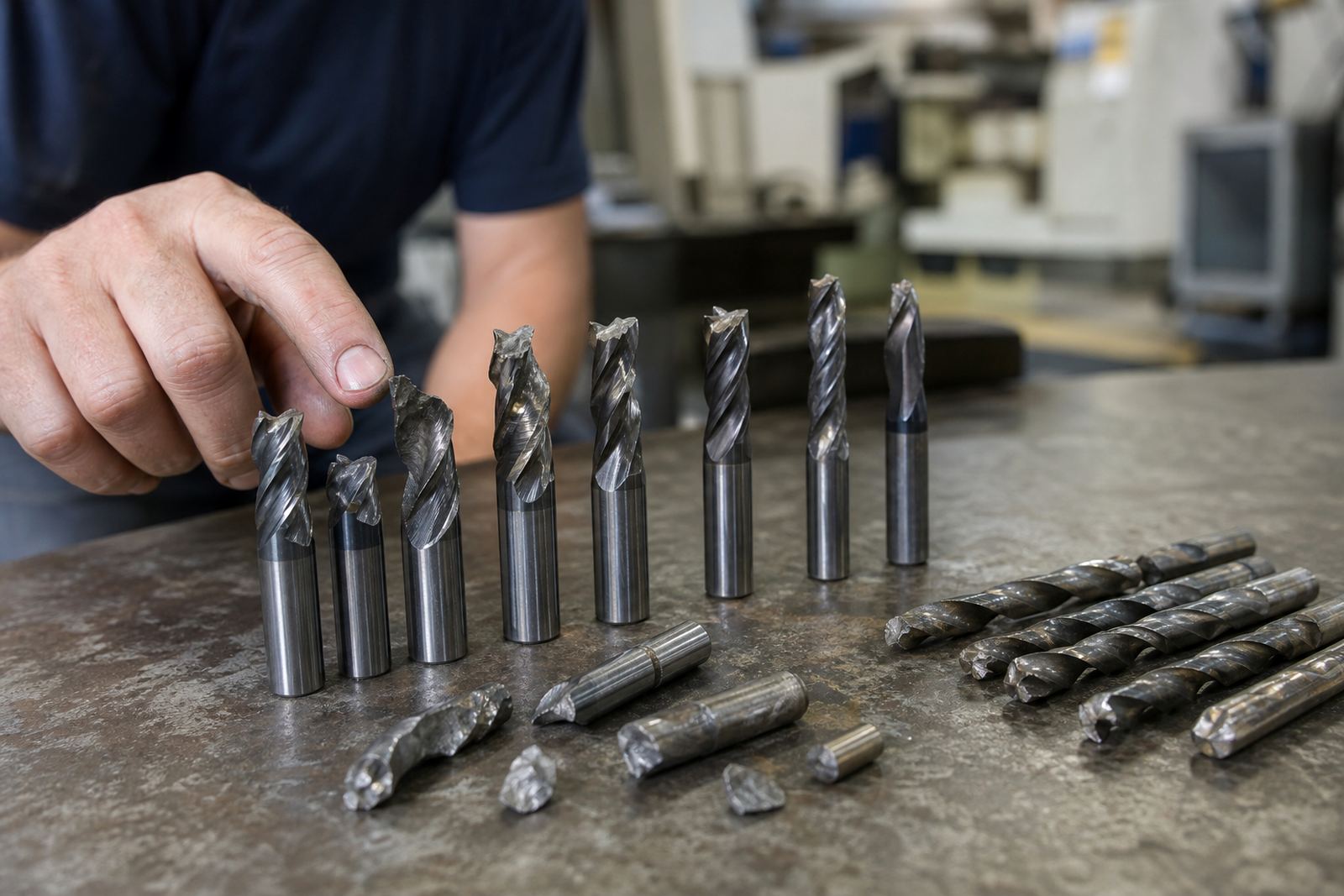
A local machining shop in Wadeville had repeated breakage on a tiny carbide drill used for a small component. The machine was fine, but the toolholder had light contamination and the drill was being set with too much stick-out. The team also unpacked spares on a crowded bench, so a few tools picked up small nicks before they ever reached the spindle. Once the handling routine changed, the breakages dropped sharply and the output became more stable.
The fix was not complicated. Tools were stored separately, holders were cleaned at every changeover and the first cuts were slowed down slightly while the process was checked. That kind of practical discipline is what protects micro tooling. It does not take long, but it does need consistency across shifts.
For shops across South Africa, from Cape Town to Gqeberha, the message is the same. Micro tools reward careful hands, clean setup and steady process control. When those three things are in place, small carbide tools can deliver very accurate work and good life without constant interruptions.
What to build into your shop floor standard
If you want better results from delicate carbide tooling, make the handling routine part of the job card, not an optional habit. That includes clear storage, clean holders, controlled setup and proper first-run checks. It also helps to keep notes on which tool geometry, speeds and feeds work best for each material, so the next job starts with useful data instead of guesswork.
A practical standard should cover training too. New operators need to know that micro tools are not handled like general-purpose cutters. One careless move can cost more than the tool itself because it may also scrap material, waste machine time and delay delivery. In a busy South African workshop, that is why good micro tool handling is worth the effort. It keeps precision jobs moving and helps the whole team work with more confidence.