Start with the job list, not the price list
When a factory standardises carbide tooling, the first step is to map the actual work being done on the floor. A buyer in Germiston does not need a catalogue answer. They need to know which materials are being cut, which machines are running, what spindle speeds are realistic and where the current process is losing time.
That means separating finishing work from roughing, and separating short runs from repeat production. A tool that works well on mild steel may behave very differently on stainless, cast iron or aluminium. If the cutting edge is chosen only on price, the result is often short tool life, repeat setup changes and more calls to the tool crib during a busy shift.
For standardising, the better question is simple: which sizes, lengths and corner radii will cover most of the plant’s recurring work with the least variation.
Choose a standard range that suits real machine capacity
Good production buying starts with the machines already on site. A CNC machining shop in Wadeville will often have a mix of older machines and newer centres, and that changes the tooling choice. Some spindles handle higher feed rates with ease, while others need a more measured approach to avoid vibration, chatter and premature wear.
Standardising should not mean forcing one tool onto every machine. It should mean choosing a controlled range that fits the actual power, holders and workholding in use. If the line runs through load-shedding backlogs or starts up after long idle periods, the tooling needs to be dependable from the first part after changeover. Coastal humidity in Durban can also affect storage and handling, so packaging and stock rotation matter more than many buyers think.
- Match flute length to the deepest feature usually machined.
- Keep common diameters and reach lengths in stock for repeated jobs.
- Confirm holder compatibility before locking in a standard.
- Allow for both finishing and production roughing where needed.
Stock planning is part of production control
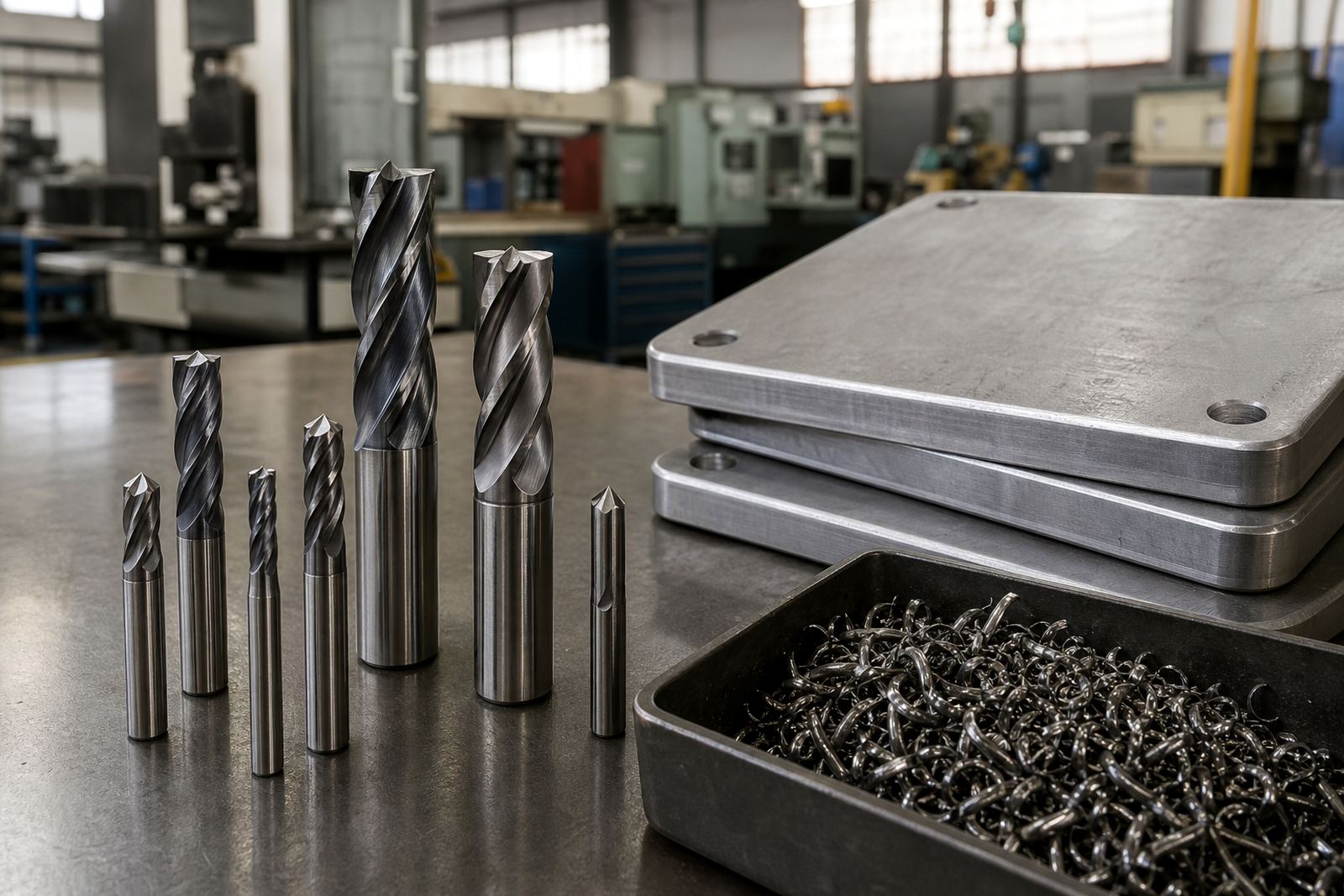
A standard tooling list only works if the store room supports it. Buyers who plan for production hours, not just purchase orders, avoid the stop-start pattern that slows output. In a Johannesburg factory, a missing 6 mm carbide end mill can hold up a batch of parts, upset dispatch and create pressure on the next shift. That cost is often bigger than the tool itself.
Stock planning should cover fast movers, emergency backup and the items that fail most often under load. It also helps to track how many parts each tool typically makes before a changeout. If one tool lasts 120 parts and another lasts 300, that difference should shape the reorder point. The aim is not to overstock everything, but to keep the right items available when the machine is booked.
At CuTools Carbide, buyers often ask for help with stock planning because a lean store can still be safe if the consumption pattern is clear. The key is discipline, not guesswork.
Use application support to cut trial and error
Standardising carbide tooling is easier when technical support is part of the process. A production buyer does not need every cutting detail, but they do need clear guidance on feeds, speeds, depth of cut and tool life expectations. That is where application support saves money.
Speed and feed advice matters because many tool problems are actually process problems. A cutter may be blamed for failing, when the real issue is a poor step-over, excessive stick-out or inconsistent coolant delivery. If the shop runs dry on certain jobs, or if coolant mist is limited by local safety rules, the tool choice should reflect that from the start.
Useful support usually covers the following:
- Material matching for carbon steel, stainless, aluminium and other common substrates.
- Tool life optimisation for repeat jobs and long production runs.
- Process troubleshooting when finish, burrs or wear are inconsistent.
- Production standardising so the same tool behaves the same way across shifts.
Ask for technical quotes, not just unit prices
Price per tool can mislead a buyer if it is not tied to usage. A cheaper cutter that lasts half as long, or leaves a poor finish, can push labour and machine time higher. Technical quotations help because they compare the tool against the job, not against a shelf price alone.
For buyers in Pretoria, Cape Town or Gqeberha, the practical question is whether the tooling supply can support the same specification each time. A standard should not change every few months because of availability issues. Consistency matters for operators, setters and quality inspectors, especially when the same part must pass through multiple machines and more than one shift.
When you ask for a technical quote, include the material, machine type, tolerance target and current pain points. That gives a supplier enough detail to recommend a more stable set-up. It also reduces the risk of buying a box of tools that looks fine on paper but does not suit production.
Build a local supply relationship that can respond quickly
Production buyers often need more than a monthly delivery. They need a supplier who can respond when a drawing changes, a tool breaks mid-run or a client moves up an order. A local base in Wadeville, Germiston helps because urgent supply is easier when stock, picking and dispatch are managed close to the manufacturing belt.
For shops across Johannesburg, Pretoria, Boksburg, Alberton and Centurion, the value is in shorter lead times and clearer follow-up. It also helps when the same team handles the enquiry, the technical check and the order after that. A buyer should not have to explain the job three times to get one answer.
At CuTools Carbide, the team includes Marius van der Merwe, Lerato Mokoena, Johan Smit, Anele Dlamini, Priya Naidoo, Thabo Molefe and Zanele Khumalo. That mix of sales, technical and warehouse support matters when production needs are time-sensitive and the requirment is specific.
What a good standard should deliver over time
The best carbide standard is the one that holds up over many orders, not only the first one. Buyers should expect fewer tool changes, more predictable cycle times and less scrap from inconsistent cutting. If that is not happening, the standard needs review.
A useful review cycle is quarterly for active production tooling and monthly for high-risk items. Check which tools are moving fastest, which are causing support calls and where a different length, coating or geometry would improve results. Keep notes from the floor, because operators often spot the issue before the spreadsheet does.
Standardising carbide supply is really about control. If the same job can be repeated with the same tool and the same setup, the buyer has done the job properly. If not, the plant keeps paying for variation.