Mould Shop Brief from the Cape Town Side
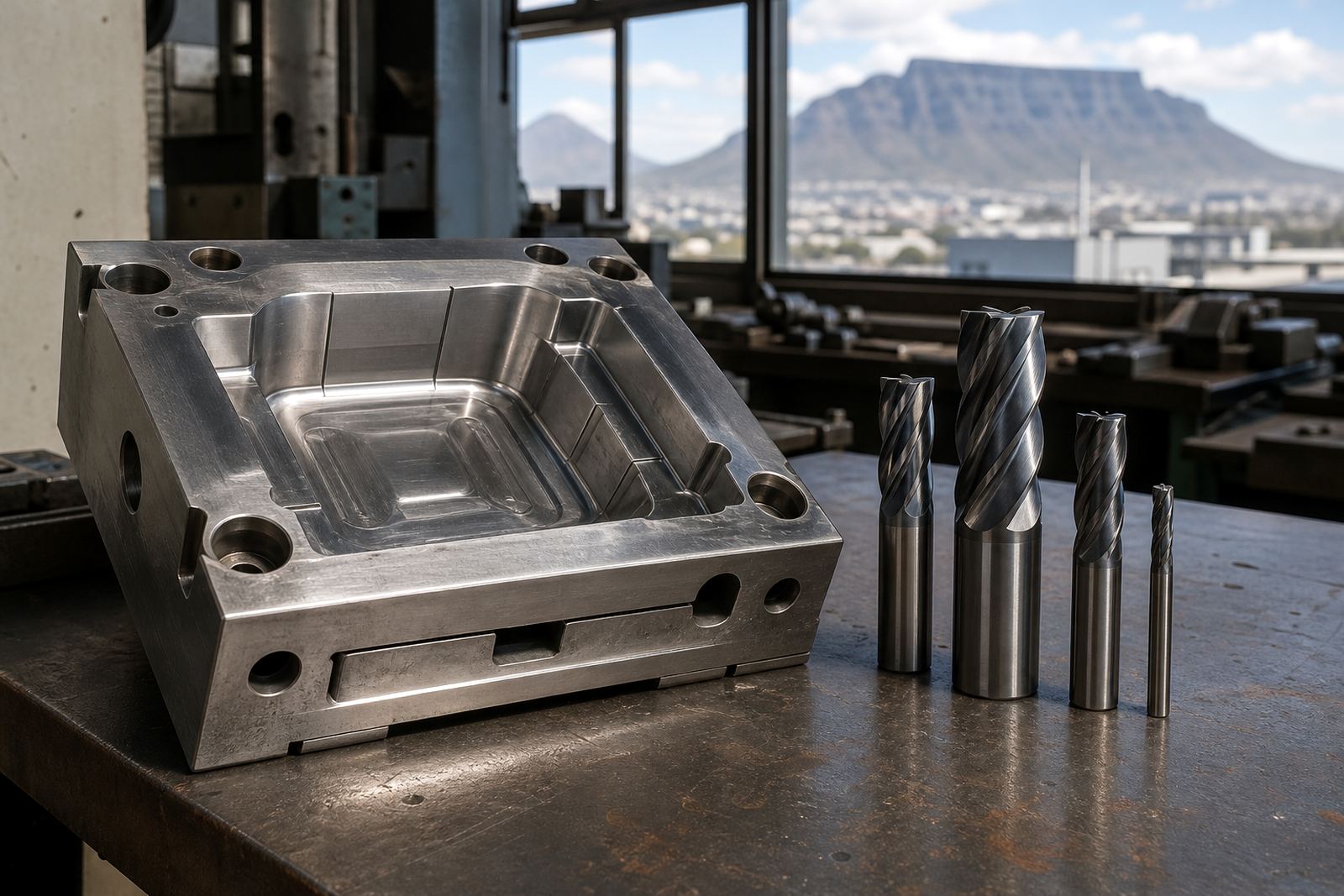
The customer was a mould-focused machining shop in Cape Town working on cavity features, fine ribs and narrow pocket work for small batch production. Their main problem was that standard straight tools were leaving marks in tight areas and the operators were spending too much time hand finishing parts after machining.
The brief was simple: improve access into deeper cavity walls, reduce chatter on finishing passes and keep the machines running through long production shifts. They also needed tools that would hold up in a shop where coolant mist, coastal humidity and regular stop-start production can punish cutting edges quicker than expected.
- Work type: cavity machining, fine finishing and detail clean-up
- Machine type: CNC machining centres
- Issue: poor reach, visible tool marks and frequent tool changes
- Goal: better finish, less rework and more stable tool life
Cutting Constraints on the Job
The shop was dealing with shallow entry angles, narrow wall clearances and material that was not forgiving on the last pass. They also needed a solution that would suit multiple operators, because production in mould work often shifts between day and night teams and the settings must stay repeatable.
Power interruptions were another factor. Like many Gauteng and coastal businesses, they had to work around load-shedding and occasional machine restarts, so any tool choice had to support predictable cutting data and quick return to production after downtime. The aim was consistency, not guesswork.
- Tight cavity access with limited room for tool holder clearance
- Surface finish requirement that reduced hand polishing time
- Need for repeatable feeds and speeds across operators
- Tool path had to suit short runs and urgent jobs
What We Supplied for Better Cavity Reach
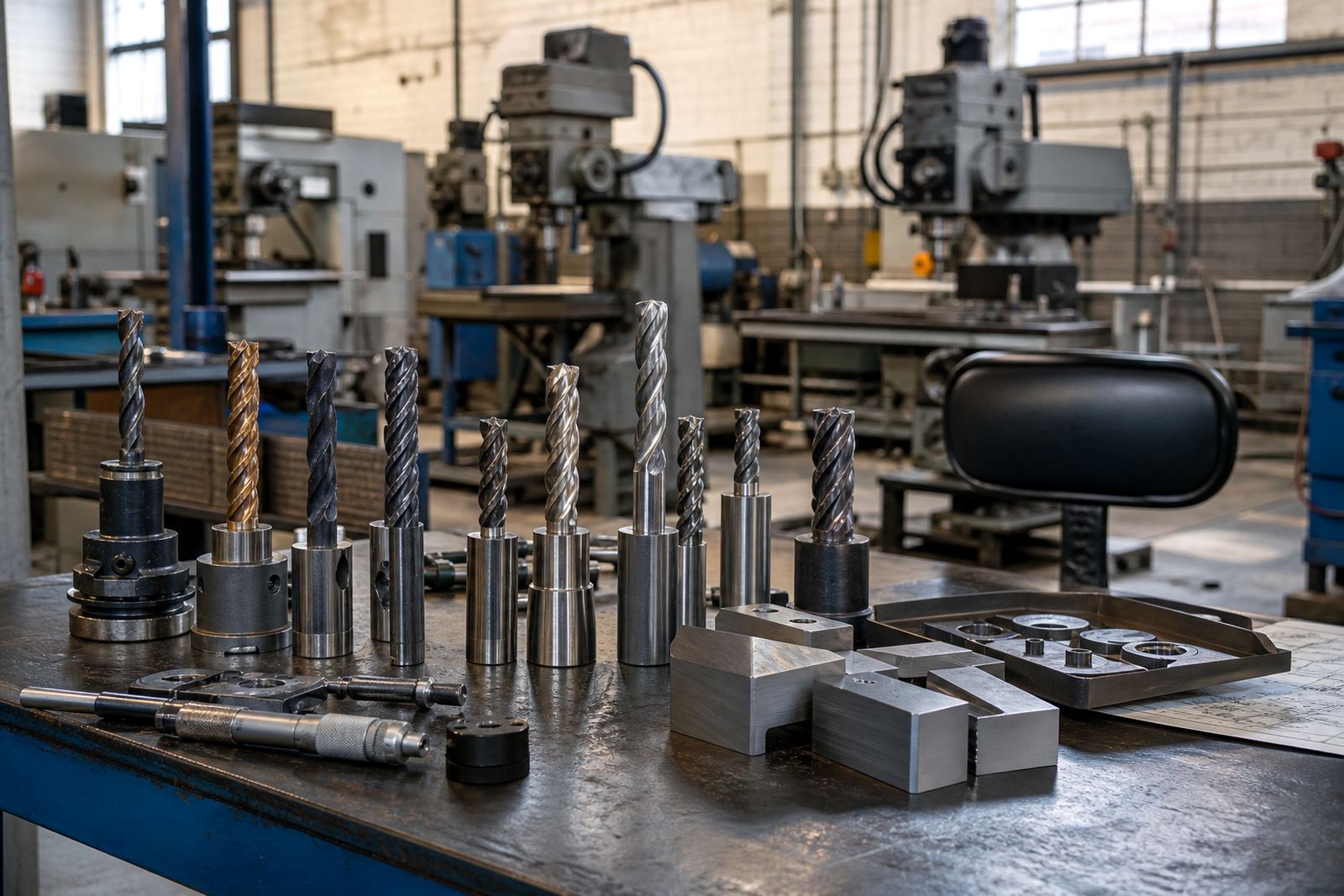
We supplied tapered solid carbide end mills in small diameters for finish passes and detail access, along with matching solid carbide drills for pilot and spotting work. The selected tools were chosen for stable cutting in mould steel and for keeping chip evacuation under control in deeper pockets.
We also worked through the application setup with the client, including step-over limits, cutting depth and the order of roughing before finishing. One of the practical changes was moving to a lighter finishing strategy with tighter control on radial engagement, which reduced rubbing and helped the cutting edge last longer.
- Tapered solid carbide end mills for cavity walls and reach
- Solid carbide drills for accurate pilot holes
- Tool life and wear review after the first runs
- Application notes for feed, speed and step-over
Three-Week Trial and Shop Floor Feedback
The first trial ran over three weeks, with the team testing the tools on live jobs rather than isolated sample blocks. That gave a clearer picture of how the cutters handled actual mould components, tool changes and the small interruptions that happen in day-to-day production.
By the end of the trial the operators reported cleaner cavity access, less chatter on the last pass and a noticeable drop in hand finishing. The technical team also found the tools easier to standardise across similar jobs, which helped when the workload shifted between jobs of different depth and detail.
- Week 1: trial setup and first cutting data checks
- Week 2: finish-pass tuning and operator feedback
- Week 3: repeat job comparison and tool wear review
Results on Finish, Access and Tool Life
The result was a smoother cavity wall finish and better access into the deeper sections of the mould, with less evidence of rubbing at the edge of the cut. The shop could complete more parts without stopping for rework, and the finish quality was good enough to cut down on manual polishing time.
In practical terms, that meant better machine utilisation and fewer emergency tool changes during the week. It also improved stock planning because the team could forecast tool use more accurately once the cutting data had been set properly. Not every job behaved exactly the same, but the production team had a repeatable baseline to work from.
- Improved cavity access on detail features
- Cleaner finish on sidewalls and last-pass surfaces
- Less hand polishing after machining
- More predictable tool wear across similar jobs
What We Would Repeat on the Next Mould Job
If we were doing the same type of job again, we would start with a short application review before selecting the final tool sizes. That lets the team match cutter geometry to the cavity depth, steel grade and machine setup instead of forcing one tool to do too much work.
We would also keep the same approach to sample tool trials and operator feedback, because mould shops often get the best value when the cutting data is tuned to the real part not just the catalogue spec. For repeat work, that is usually where the savings show up first.
- Confirm cavity depth and holder clearance before ordering
- Use a short sample run on the exact part geometry
- Set a standard feed and speed sheet for all shifts
- Review tool wear after the first batch and adjust quickly
Key facts
| Project location | Cape Town, Western Cape |
|---|---|
| Client type | Mould-focused CNC machining shop |
| Tools supplied | Tapered solid carbide end mills and solid carbide drills |
| Material focus | Mould steel finishing and detail cavity work |
| Trial period | 3 weeks |
| Outcome | Better access, improved finish and less hand polishing |