Jet Park subcontract work needed steadier stainless cutting
The client is a high-mix subcontract machine shop in Jet Park, near the industrial belt between Germiston and Boksburg. Most of their work is short to medium runs for engineering customers, with stainless components in the mix every week. Their main problem was chip packing on slotting and side milling, especially on 304 and 316 stainless parts running on CNC machining centres.
The shop needed a better result without changing the whole process. Parts were coming off with rougher wall finish than expected, and operators were stopping machines to clear long stringy chips. In a busy shop with two shift pressure and load-shedding interruptions to manage, that extra downtime adds up fast. They wanted a practical tool change that would hold up on local production shifts and not need constant babysitting.
- Client type: subcontract machine shop
- Area: Jet Park, Germiston
- Main material: stainless steel, mainly 304 and 316
- Machine type: CNC machining centres
- Issue: chip build-up and unstable finish
The brief was simple: better chip break and longer tool life
The brief was to improve chip control, keep the finish consistent and reduce premature tool wear. The shop asked for a solution that would work on existing CNC programmes with as little disruption as possible. They were not looking for a full process redesign, just a sharper answer to a stubborn stainless problem.
There were a few constraints. The machines were shared across several jobs, so any new tool had to be easy to set up and repeat. Material batches varied between deliveries, which is common with stainless in South Africa, and the shop also had to work around power cuts and compressed production windows. We needed a cutter that could stay stable when the operator had to pause, then pick up again without chasing the cut all day.
- Goal one: improve chip evacuation
- Goal two: reduce edge breakdown in stainless
- Goal three: maintain consistent dimensional control
- Goal four: avoid extra machine time
What we supplied and how we set it up
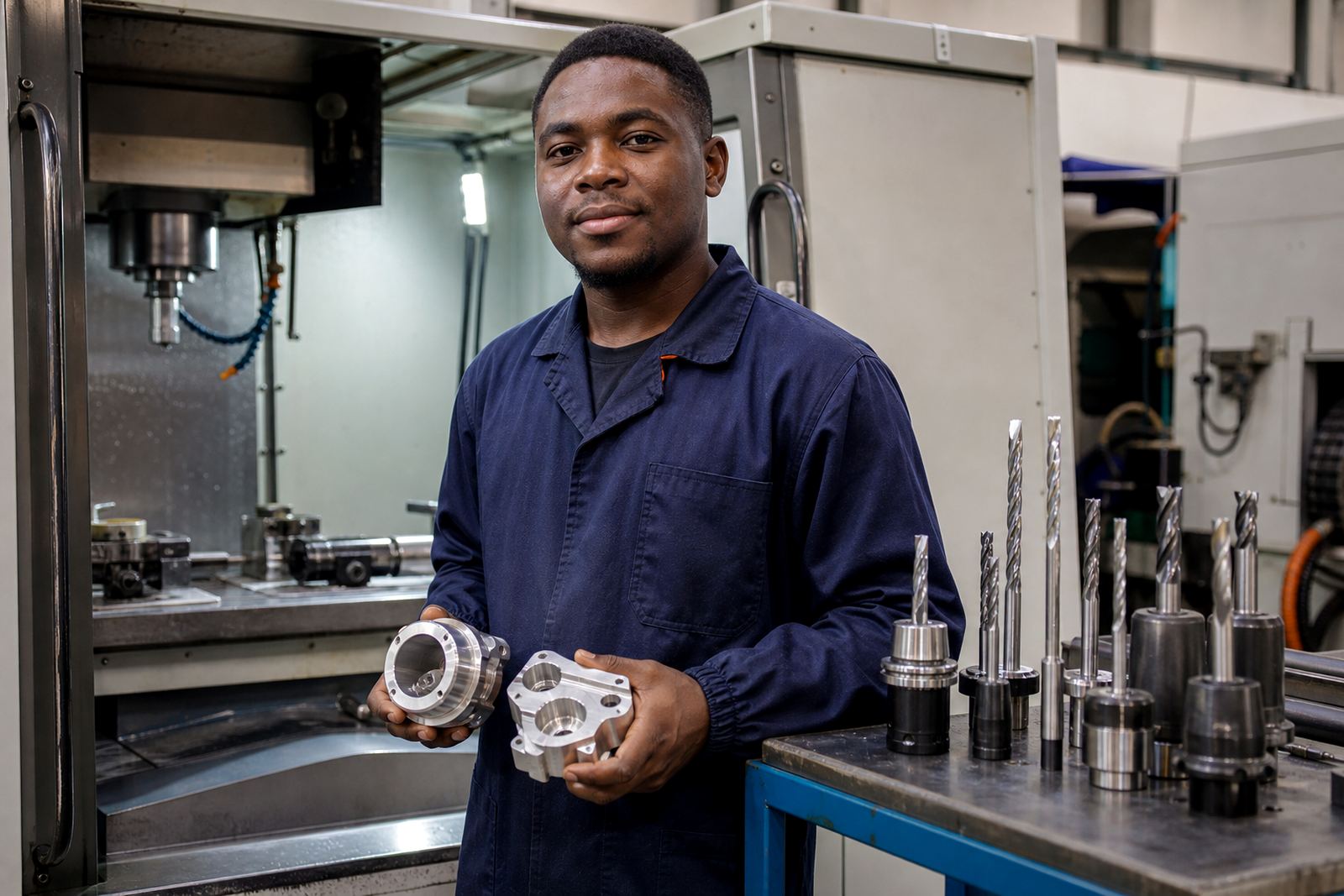
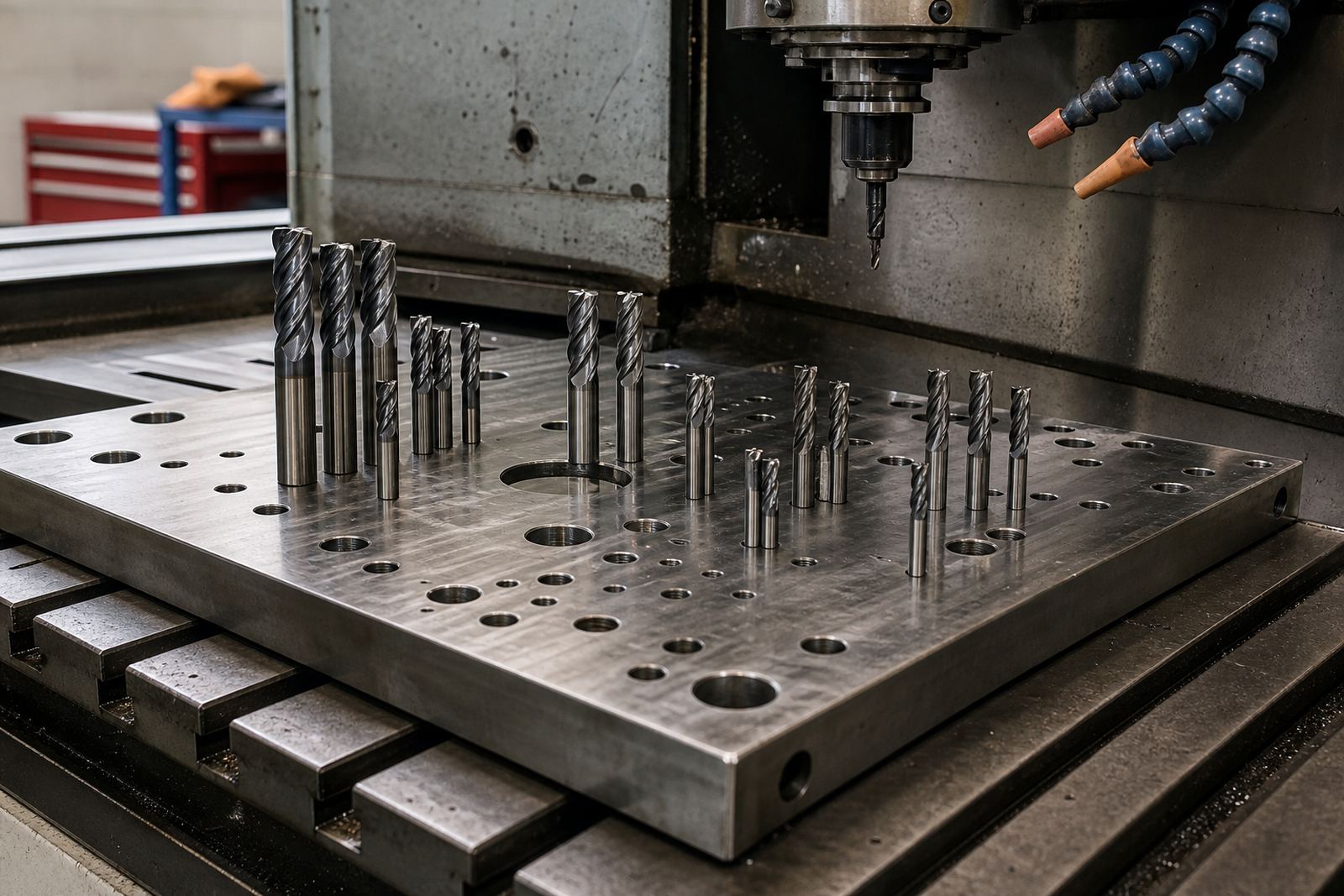
We supplied solid carbide end mills with revised geometry for stainless work, including a sharper cutting edge, variable helix design and a polished flute to help move chips out of the cut. For the deeper pockets and drilled features, we also supplied solid carbide drills matched to the same material family so the shop could keep tool behaviour consistent across operations. The tools were selected for CNC machining centre use, with sizes covering the most common jobs in their weekly schedule.
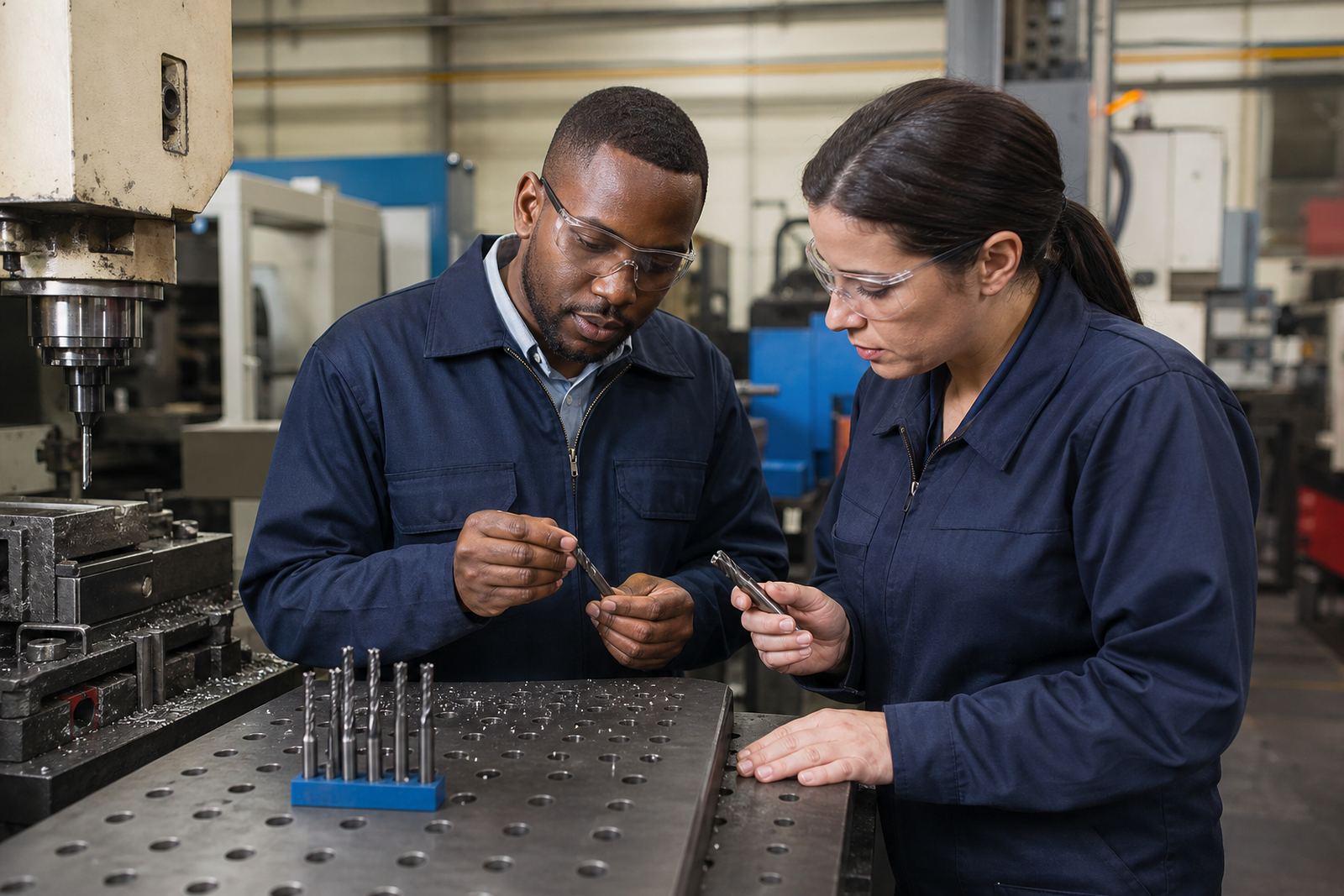
Johan from our technical applications side worked through the application first, then helped set starting speeds and feeds around the actual job conditions. The trial focused on three areas: engagement depth, feed rate and coolant delivery. We also checked tool stickout and holder condition because on stainless, even a small issue there can throw the cut off. The team in the shop ran the tools on existing part programmes, then adjusted the feed in small steps until chip shape and surface finish settled down.
- Tool type: solid carbide end mills and drills
- Geometry: variable helix, polished flutes, stainless-optimised edge prep
- Typical diameters trialled: 6 mm, 8 mm, 10 mm and 12 mm
- Application: slotting, side milling and holemaking
- Support included: speed and feed advice plus on site consultation
Two week trial, measured on the shop floor
Week one was used for trial cuts and baseline checks. We looked at chip shape, sound at the spindle and the condition of the cutting edge after each run. By the end of the first week, the shop had already seen cleaner chip evacuation on the same stainless parts they had been struggling with. The operator feedback was that the tool felt less grabby and the machine was not spending as much time clearing swarf.
In week two we fine-tuned the programme settings and confirmed the repeatability across different operators. That was important because a subcontract shop cannot rely on one person standing over every machine all day. Once the settings were locked in, the customer kept the same tool family across similar jobs, which made stock control easier and reduced guesswork at the machine. It also helped that the tools arrived from Wadeville without delays, so the shop could keep moving while they sorted the process out.
- Trial duration: 2 weeks
- Check points: chip form, finish, edge wear, repeatability
- Outcome focus: fewer stops and more stable cycle times
- Supply route: Wadeville to Jet Park
What changed on the stainless jobs
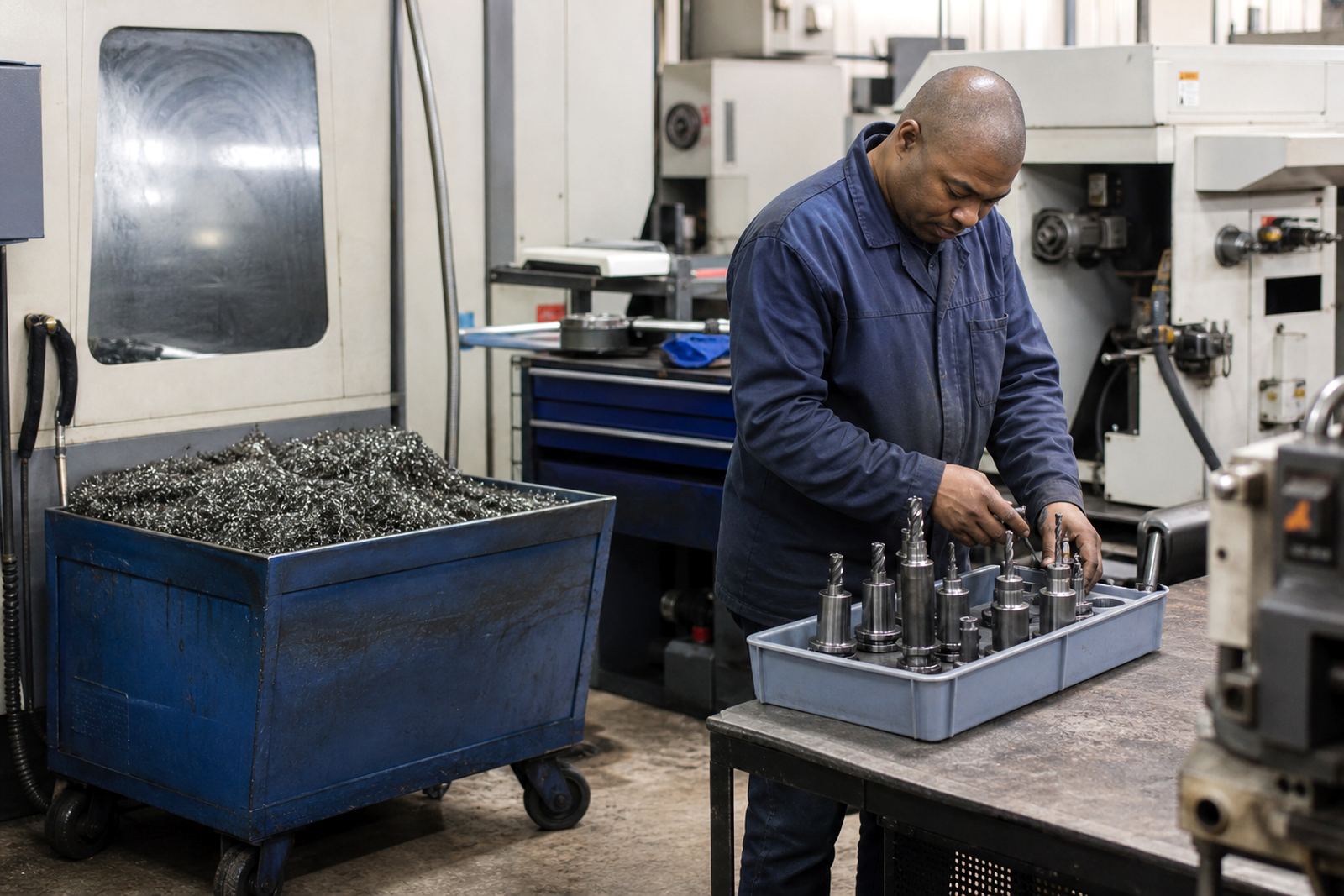
The biggest change was chip control. Instead of long tangled swarf wrapping around the cutter, the chips came off shorter and cleared more cleanly from the cut. That reduced manual clearing and gave the machinists a better view of the part during longer runs. The edge lasted longer too, which meant fewer tool changes during the shift and better confidence on repeat batches.
Surface finish improved on the problem features and the shop reported less variation from part to part. On a few jobs they were also able to nudge the feed up once the cut was stable, which gave them a small but useful gain in throughput. For a subcontract operation, that kind of change matters because it is not just about one part, it is about keeping the whole machine shop moving. The customer described the process as steadier and easier to manage under pressure.
- Cleaner chip break on stainless steel
- Longer usable tool life
- More consistent wall finish
- Less operator intervention during runs
What we would repeat on a similar Jet Park job
If we were called to a similar job again, we would start with the same sequence: identify the material grade, check the existing holder setup and test the cutter on a real production part before changing the whole programme. Stainless behaves differently from job to job and small changes in coolant direction or tool engagement can make a big difference. We would also keep an eye on stock planning so the shop has the right diameters on hand before the next run starts.
For subcontract work in Jet Park, where fast turnaround and mixed batches are common, the value is in practical support not theory. The same approach works well across Gauteng and beyond, whether the parts are heading to Johannesburg, Pretoria, Boksburg, Alberton, Centurion, Cape Town, Durban or Gqeberha. If a shop needs a better answer for stainless, we can help with tool selection, sample trials, urgent supply and technical quotations. That makes it easier to keep production steady when the order book is full and time is tight.
- Start with the part, not only the tool
- Set the cut for repeatability across operators
- Keep spare tools in stock before the rush
- Use trial data to lock in the best feed and speed
Key facts
| Client type | Subcontract machine shop |
|---|---|
| Town | Jet Park, Germiston |
| Material | Stainless steel 304 and 316 |
| Tooling supplied | Solid carbide end mills and drills |
| Timeline | 2 weeks |
| Main result | Improved chip control and longer tool life |