The brief from a busy Germiston fixture workshop
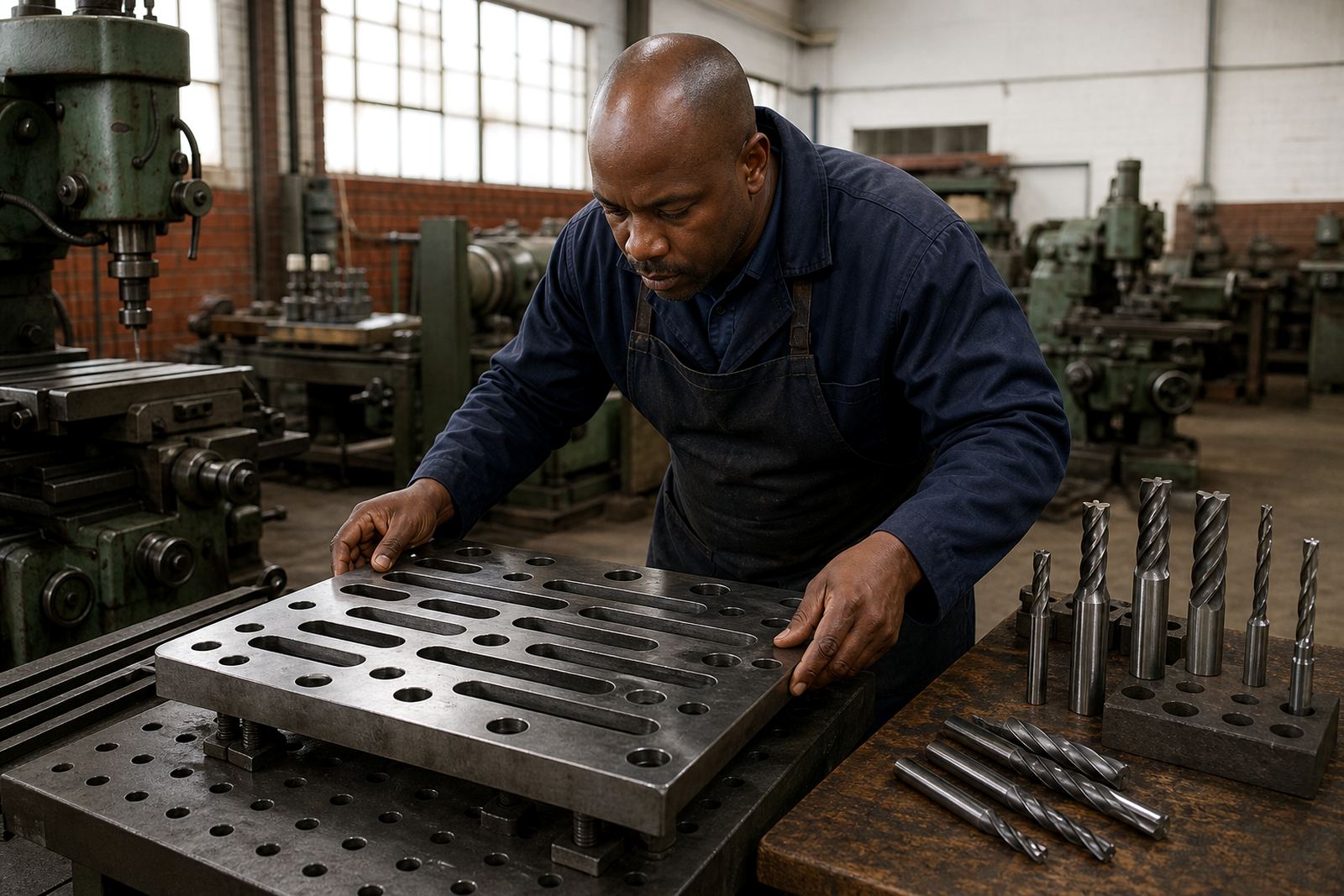
The client is a local fixture builder in Germiston making aluminium and mild steel components for jigs, locating plates and support parts used in repeat production. Their issue was not a complete tool failure, it was consistency. Slots were coming out a touch wide on some runs and slightly tight on others, which meant extra hand work before assembly.
They needed a practical fix that would suit a real shop floor in Wadeville conditions, with CNC machines running around other jobs and no time for long experiments. The brief was simple: improve slot repeatability, protect surface finish, and reduce the amount of rework on parts that had to fit together first time.
- Work type: fixture plates, slotting and profile machining
- Materials: aluminium and mild steel
- Machines: CNC machining centres used for short production runs
- Main issue: slot consistency and tool wear variation
What was getting in the way of clean slotting
The shop was using general purpose cutters that were not stiff enough for the way the parts were held. Some jobs had limited clamping area, a common problem when you are machining fixture parts that have already been roughed and drilled. On lighter cuts the tools were acceptable, but once depth increased the cutter deflected a bit and the slot wandered.
There was also a production pressure issue. The team wanted dependable life over a full shift, and they needed tooling that would stay predictable during load-shedding recovery periods when machines are stopped and restarted. That matters more than many people think because a warm machine, a resumed program and a worn cutter can all affect the next part.
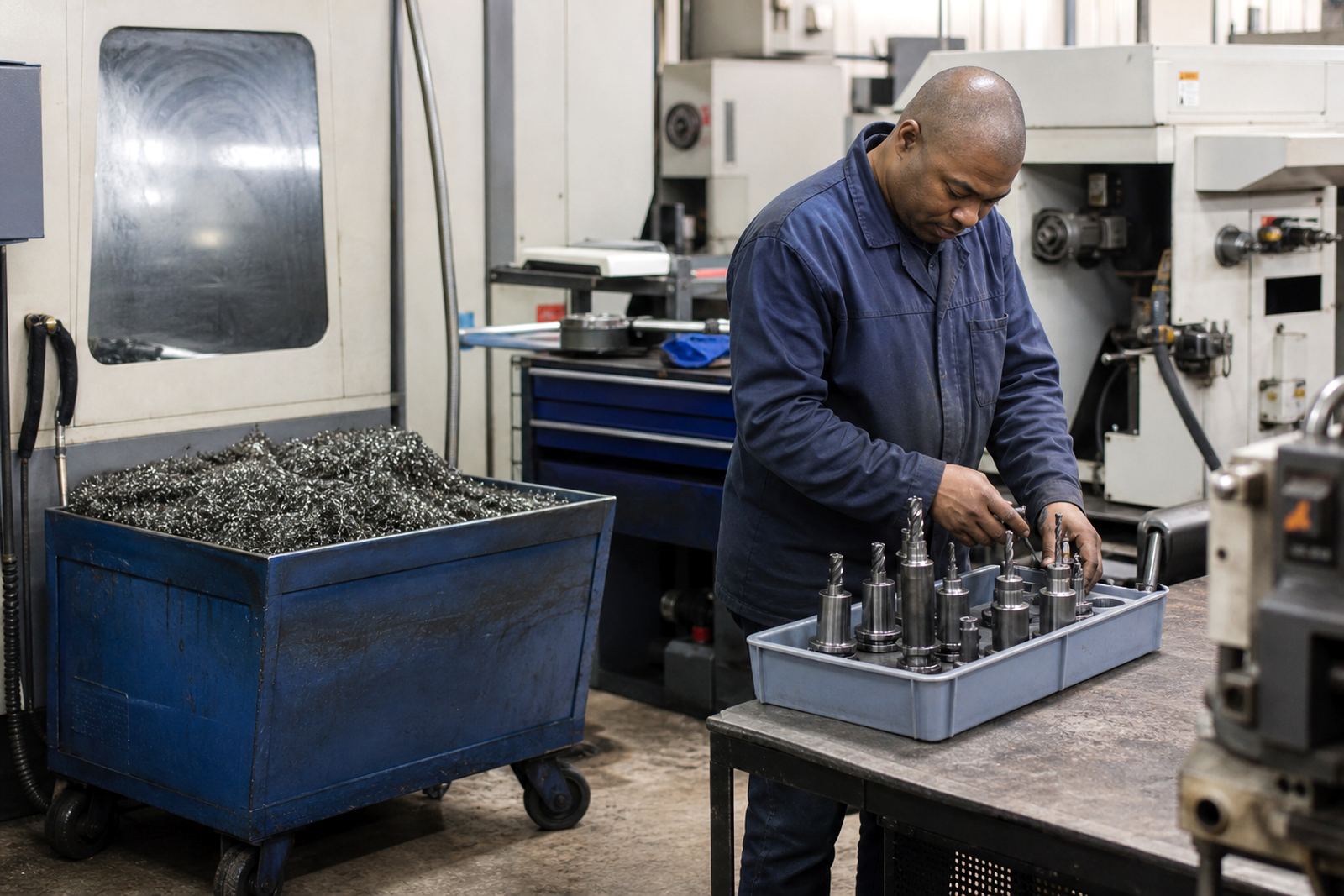
We also looked at chip evacuation and coolant delivery. In a workshop close to industrial dust and coastal stock movement down the line, chip packing can start causing heat build-up and edge wear faster than expected. The old setup was not bad, just not matched properly to the task.
The tooling change we supplied
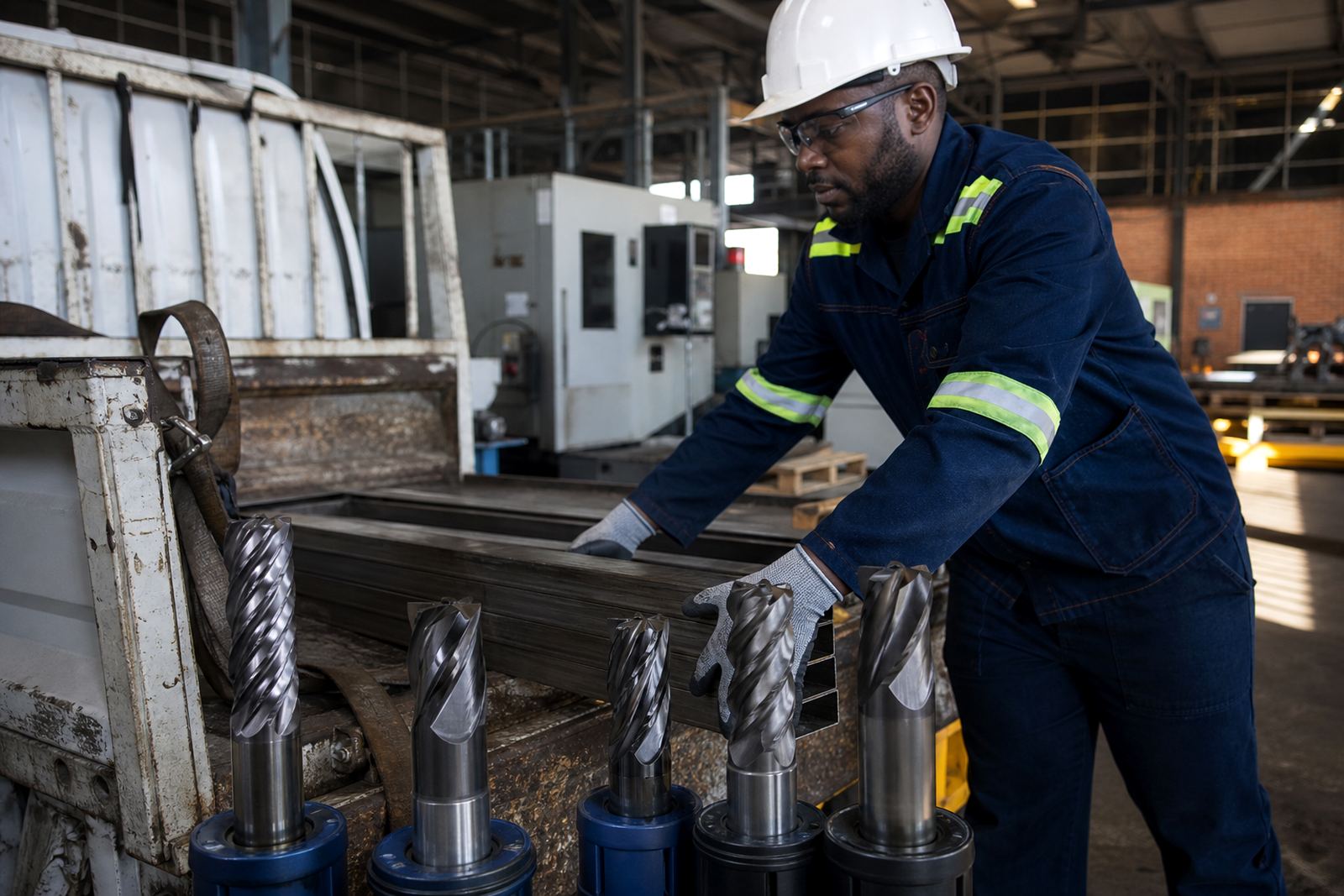
We selected a more rigid solid carbide end mill family for slotting and light profiling, with sizes suited to the fixtures being made. The main change was moving to a shorter reach tool with better stiffness, which reduced deflection and gave more stable walls in the slot. Where needed, we paired this with a drill selection for clean pilot and fixing holes so the full job could stay on one consistent process route.
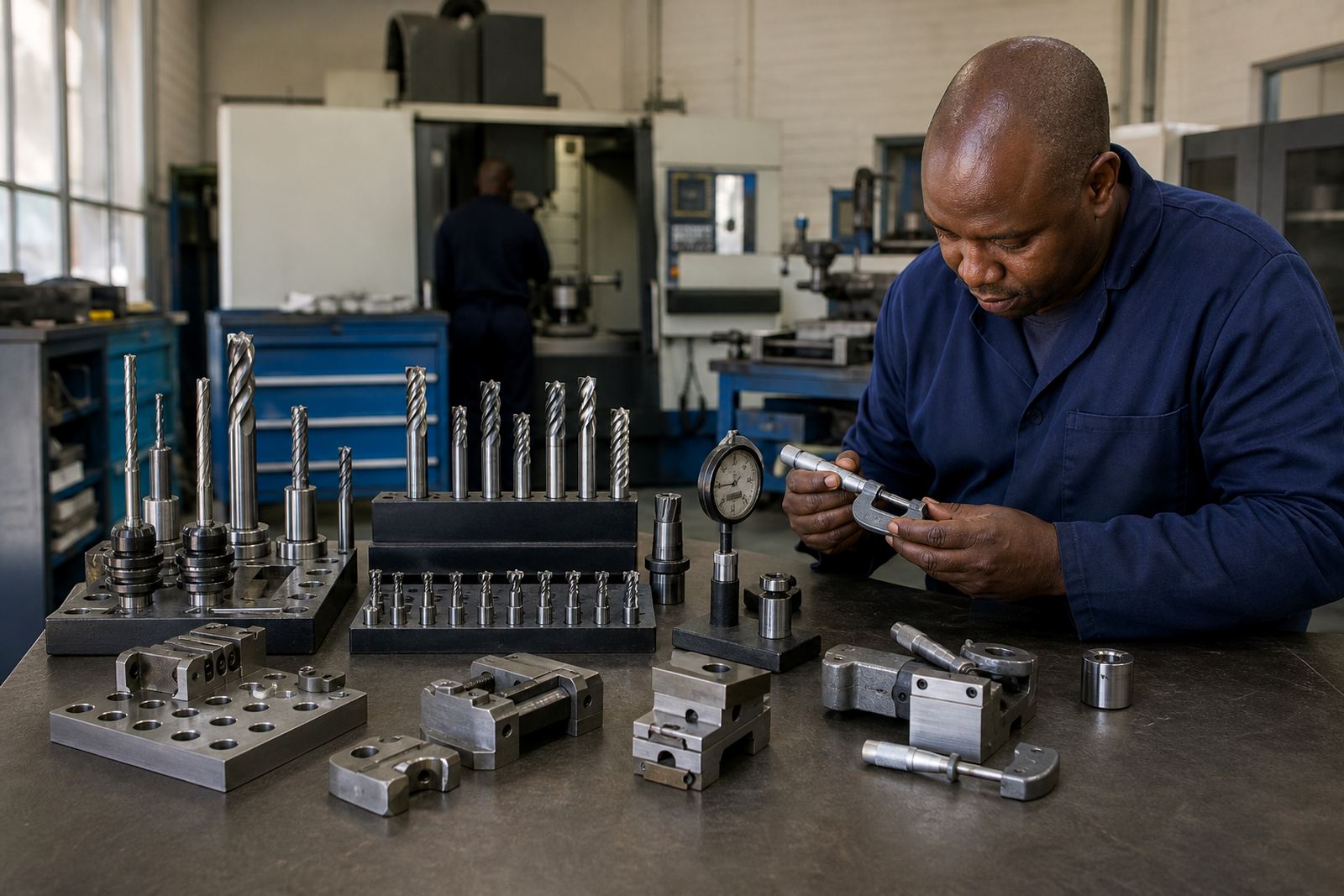
The tools were supplied in the diameters the shop actually uses, instead of forcing one general size to do everything. That meant they could separate roughing, semi-finish and finish passes properly. Johan from our technical side worked through the cutting conditions with their programmer so the settings matched the material and the machine condition, not just the catalogue figures.
- Solid carbide end mills for slotting and finish passes
- Shorter flute and overall geometry for better rigidity
- Drills for accurate pilot and clearance holes
- Application support on feeds, speeds and stepdown
How the trial ran over four weeks
The change was handled over four weeks from first call to settled production. Week one was the problem review and sample selection. Week two was the first tool trial on a repeat fixture part. Week three was where we adjusted the feed rate and corrected a small chip clearing issue on one material thickness. By week four the shop had a stable routine for the same job family and was comfortable standardising it.
The timeline was not rushed, because in a fixture shop the smallest change can affect fit across a batch. We kept the trial controlled and only changed one major thing at a time. That made it easy for the team to see what improved, and where the cut needed a minor tweak.
- Week 1: review, material check and tool matching
- Week 2: first production trial on a fixture component
- Week 3: cut condition adjustment and finish check
- Week 4: repeat run and process sign-off
Results on slot fit and finishing time
Once the more rigid end mill selection was in place, slot consistency improved and the amount of dressing by hand dropped off. The walls came out cleaner, and the team reported less variation from the first part to the last part in a batch. That kind of improvement is important for a fixture maker because the finished component has to locate properly every time, not only when the tool is fresh.
They also gained a better sense of tool life. Instead of changing cutters early because of unpredictable wear, they could plan replacement based on actual use. That made stock planning easier for the buyer and reduced the stress on the machine operators during busy production weeks. There was less stop-start correction and more confidence in the cut.
- More consistent slot width across repeated parts
- Cleaner side finish with less hand correction
- Better tool life predictability for planning
- Less rework before assembly or welding
What we would do again for a similar shop
If a fixture builder in Germiston, Boksburg or Alberton brings us the same problem again, we would follow the same approach. First check the clamp style and part support, then match the cutter to the actual depth and material, and only then fine tune the feed and speed. Too many shops try to solve a rigidity issue with a faster feed, and that usually makes the part worse not better.
We would also keep sample trials close to the real production route. A test cut on scrap is useful, but the real answer is how the tool behaves on the actual job, with the same coolant, the same operator and the same machine condition. That is how you get a result the team can trust.
For shops running across Johannesburg, Pretoria and the rest of Gauteng, the lesson is the same: when slotting has to be exact, rigidity and process control matter more than just picking a sharp cutter. With the right end mill selection, a fixture shop can keep parts within spec and keep the workflow moving.
Key facts
| Client type | Local fixture builder in Germiston, Gauteng |
|---|---|
| Project focus | Improve slot consistency on CNC machined fixture parts |
| Materials | Aluminium and mild steel |
| Tooling used | Solid carbide end mills and matching drills |
| Timeline | 4 weeks from review to settled production |
| Outcome | Less rework, cleaner slots, more predictable tool life |