The brief from a busy coastal workshop
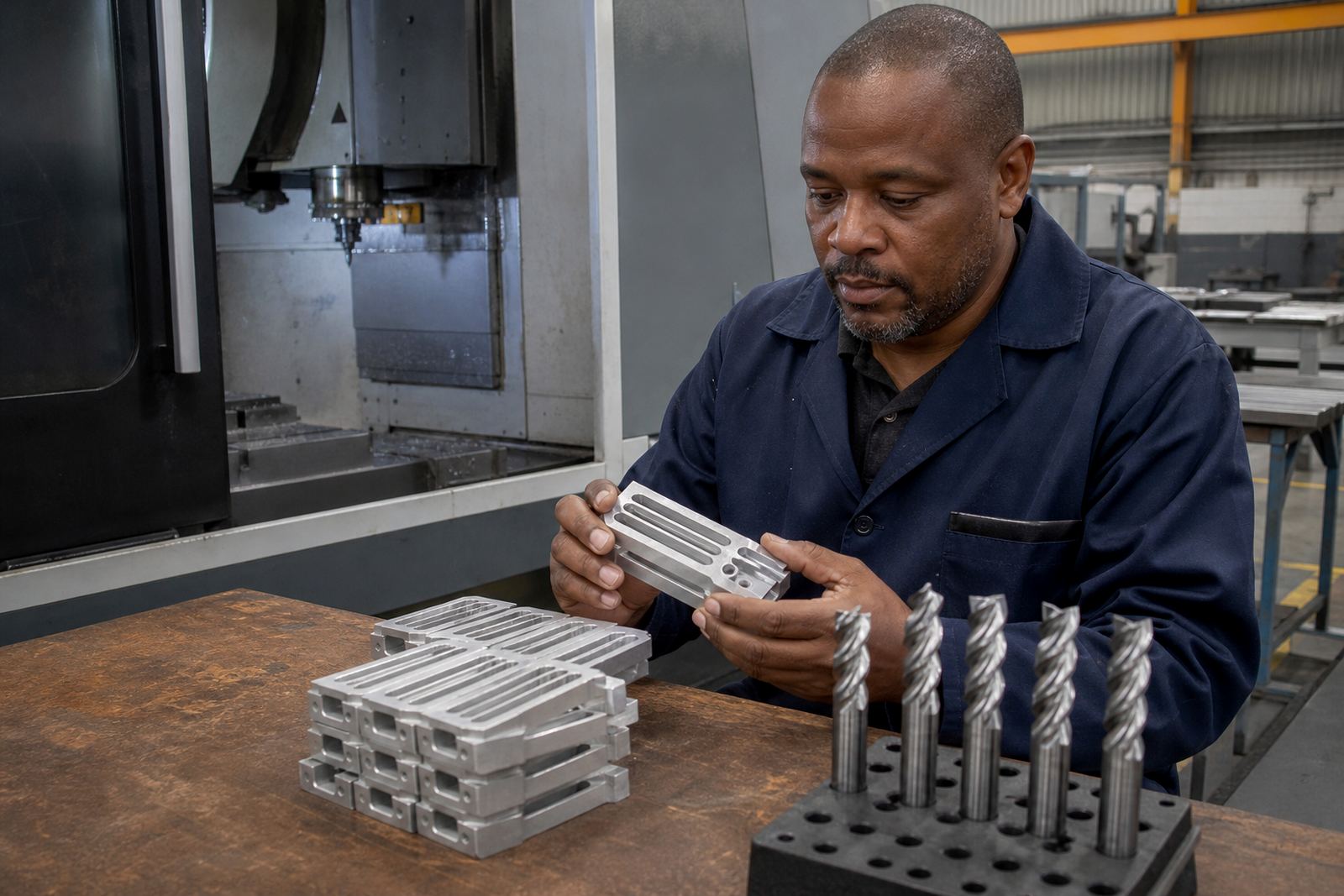
The client was a CNC machining shop in Gqeberha cutting aluminium parts for local manufacturing work and repeat production runs. Their slotting operations were slowing down because standard cutters were filling with chips, edges were wearing too quickly, and operators were spending too much time clearing poor finishes and tweaking feeds on the fly.
The brief was simple enough to state, but not simple to solve: improve slotting performance, keep cycle times under control, and reduce the number of cutters written off before their expected life. The shop also had to work through coastal humidity and occasional load-shedding, so consistency mattered more than ever.
What was getting in the way
The main problems were chip evacuation, tool deflection and finish quality on deeper slots. In aluminium, a cutter that does not clear chips properly can start recutting material, which creates heat and leaves a rough edge. That leads to extra deburring and more machine time, which is costly when jobs are booked tightly.
There were also practical shop-floor limits. The team wanted tools that would suit a range of CNC machining centres, avoid constant programme changes, and run reliably on both short and medium production batches. One minor issue was that the existing process had too much trial and error, which made planning harder than it should of been.
- Material: aluminium components with repeated slotting passes
- Problem areas: chip packing, edge wear and poor finish
- Operating conditions: coastal humidity, production pressure and occasional power interruptions
The cutters and advice we supplied
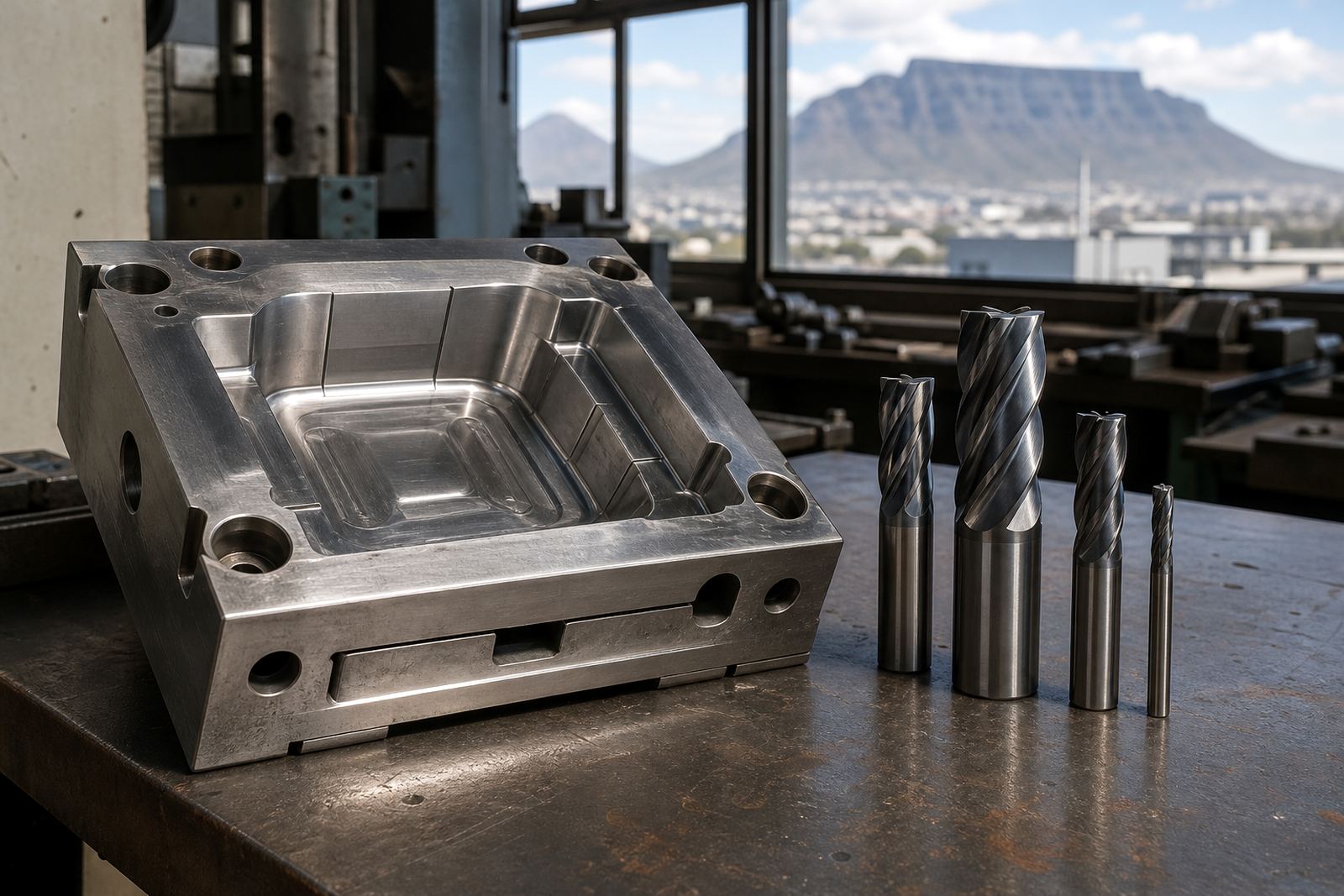
We supplied high-chip-clearance solid carbide end mills selected for aluminium slotting, with geometry that helps throw chips out of the cut instead of trapping them in the flute. The recommendation focused on cutters with polished flutes, sharp cutting edges and a stable body for better control in slotting and side milling.
We also gave the team speed and feed guidance for the specific machine setup, including starting points for spindle speed, feed rate and depth of cut. The aim was not to force one setting across every job, but to give the operators a reliable base line they could use across repeat work.
- Solid carbide end mills for aluminium slotting
- High-chip-clearance flute design for cleaner evacuation
- Application support for feeds, speeds and depth of cut
- Material matching for repeat production on CNC machining centres
How the trial was run over three weeks
Week one was used to review the existing programme, the part geometry and the machine constraints. We looked at the slot width, cut length, workholding and the machine condition before suggesting the first trial tools. Week two focused on sample runs and side-by-side comparison against the previous cutter type.
By week three the shop had enough data to standardise the better performing setup. The operators were able to keep the same tooling for more of the shift, and the tool path only needed minor adjustments rather than major rework. That made the process easier to repeat for the rest of the team.
- Week 1: process review and tooling selection
- Week 2: sample tool trials and cutting parameter checks
- Week 3: standardising the better setup for repeat work
What changed on the shop floor
The first improvement was cleaner chip flow. With the right flute design and a more suitable cutting window, the machine spent less time fighting packed chips in the slot. That gave the parts a better finish and reduced the amount of post-machining clean-up needed after each run.
Tool life also became more predictable. Instead of operators changing cutters early because they looked tired, the shop could run longer with more confidence and schedule replacements around actual wear. That made planning easier and reduced waste on the floor.
- Better slot finish on aluminium parts
- Less chip recutting and heat build-up
- More stable tool life across repeat runs
- Reduced rework and less deburring time
What we would repeat on the next job
If we were doing the same type of job again, we would start with the same sequence: inspect the part, confirm the slotting demands, choose a cutter with strong chip clearance, then test the feed and speed window before locking in the production setting. That order keeps the process practical and avoids chasing problems later in the shift.
For coastal workshops, we would also keep an eye on storage and handling so cutters stay dry and protected between runs. In Gqeberha, that small detail can matter as much as the tool itself. If the shop is running mixed aluminium work, we would usually recommend keeping a small standard range on hand so urgent jobs do not stop the line.
Local support for machining shops across South Africa
CuTools Carbide works with CNC machining shops in Gqeberha, Johannesburg, Pretoria, Cape Town, Durban and other industrial centres that need practical tooling support. Our team helps with tool selection, material matching, urgent supply and technical quotations through the enquiry form on our contact page.
For shops under pressure from short lead times, load-shedding or tight production targets, the right carbide cutter can make a real difference. This project showed that a cleaner cut and a steadier setup can save time all week, not just on one job.
Key facts
| Project location | Gqeberha, Eastern Cape |
|---|---|
| Client type | Coastal CNC machining shop |
| Material machined | Aluminium |
| Tooling supplied | High-chip-clearance solid carbide end mills |
| Timeline | 3 weeks from review to standardised setup |
| Main outcome | Cleaner slotting with better tool life and less rework |