Midrand Plate Work That Needed Faster Holemaking
The client was a Midrand machining shop handling medium to heavy steel plate for general engineering and fabrication work. Their main pain point was holemaking on CNC machining centres, where cycle times were dragging and drill wear was making planning difficult.
The brief was straightforward: reduce drilling time, improve hole consistency, and keep tool changes predictable across repeat runs. The team wanted a solution that could hold up on long production shifts and still work for mixed jobbing work, not just one neat part number.
They were also working under normal local shop conditions, with load-shedding interruptions, coolant management to watch, and operators needing tools that could be set up quickly without constant trial and error.
What Was Holding the Job Back
The original process used general purpose drilling methods that were safe but slow. On thicker plate, the holes were coming through with too much heat, short tool life, and inconsistent chip control. That meant more stops for cleaning, more inspection, and more risk on the second and third operation.
The part mix also created a few constraints:
- Plate thickness varied from 12 mm to 28 mm
- Hole sizes ranged from 6 mm to 18 mm
- Coolant pressure was available, but not always used properly
- Operators needed a repeatable process for day and night shifts
- Production had to stay stable during power interruptions and restart cycles
There was no appetite for a complicated special tool setup. The shop needed something practical that could run well on standard CNC machining centres in Gauteng conditions, and not fall apart when the job queue changed.
The Carbide Drill Setup We Recommended
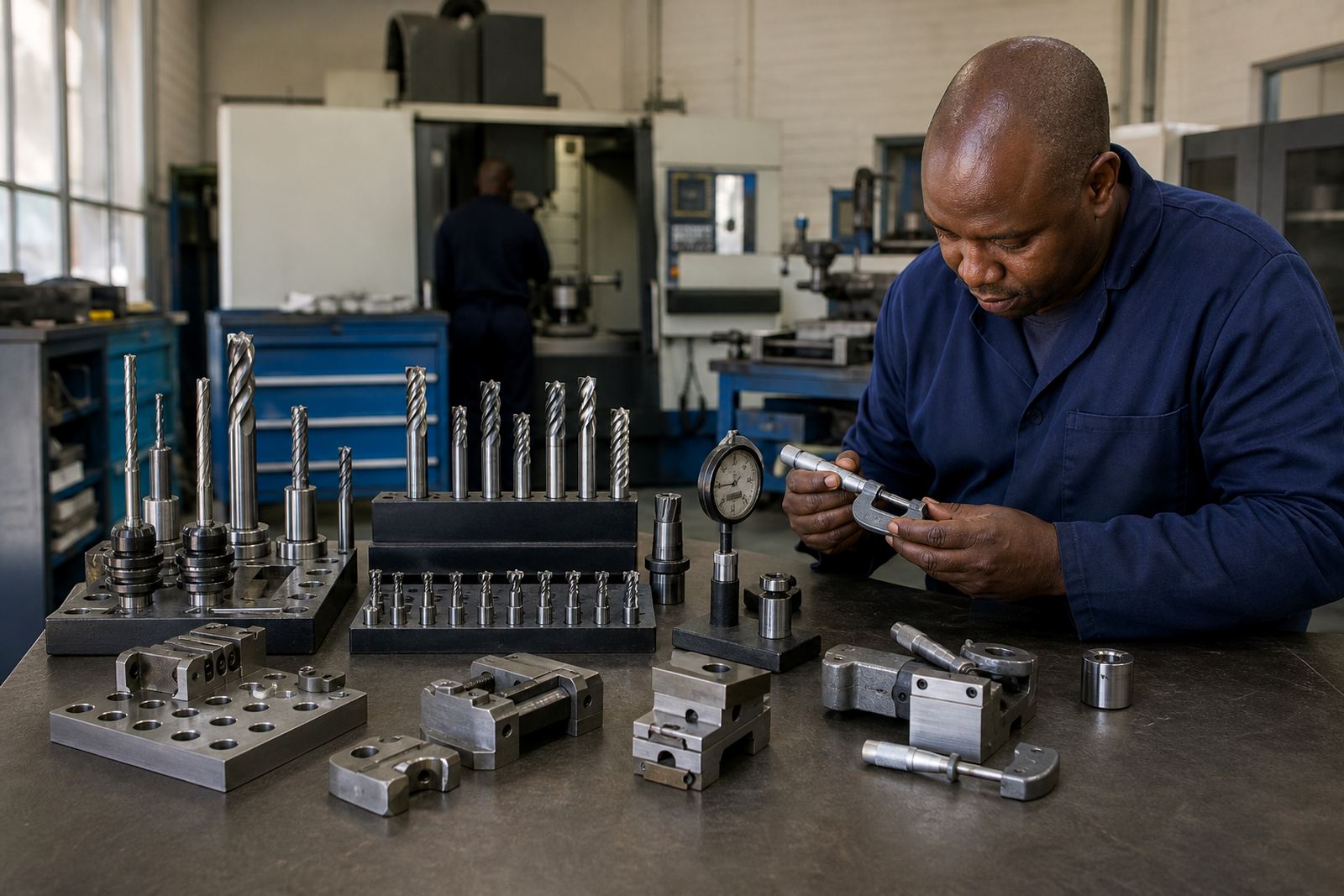
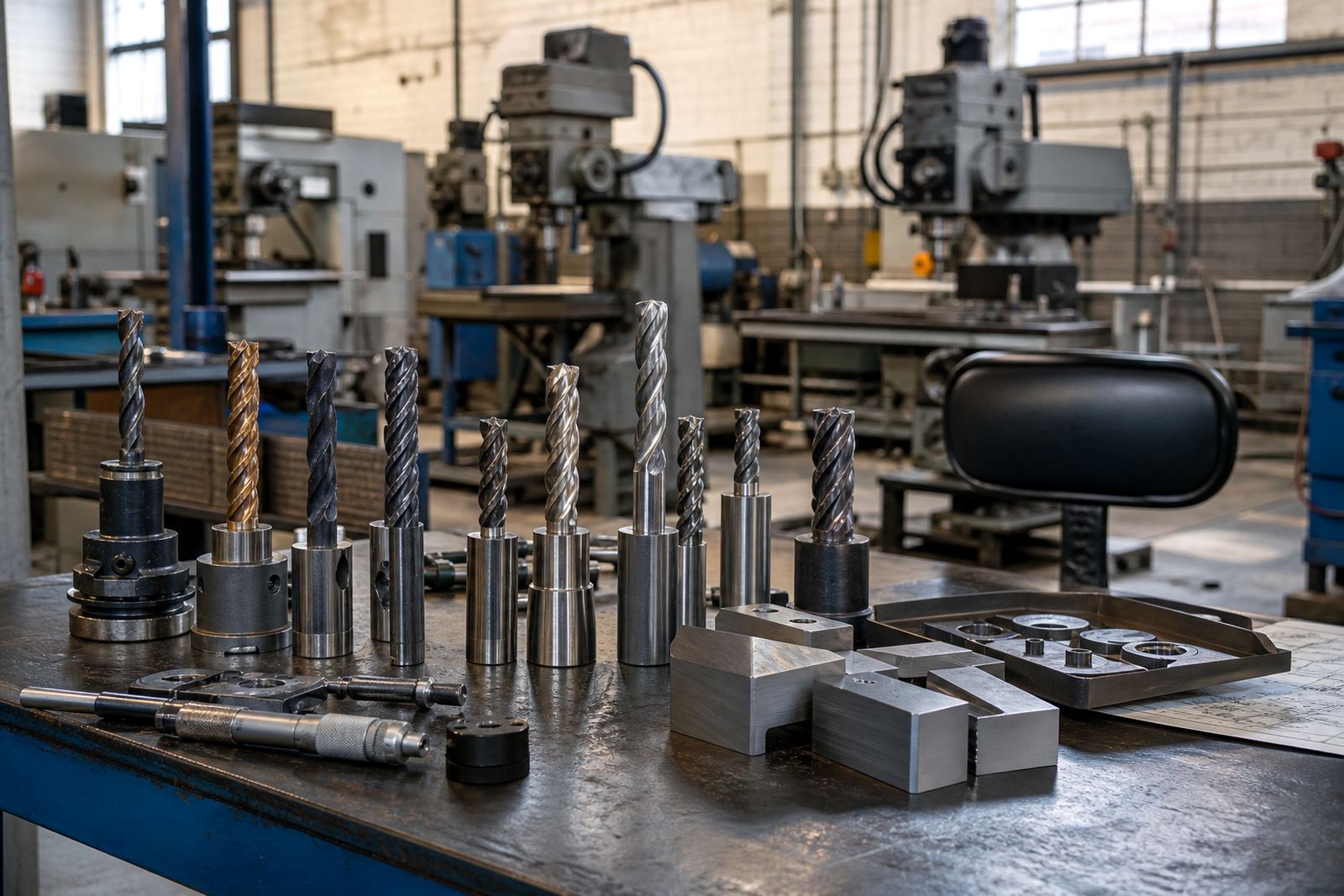
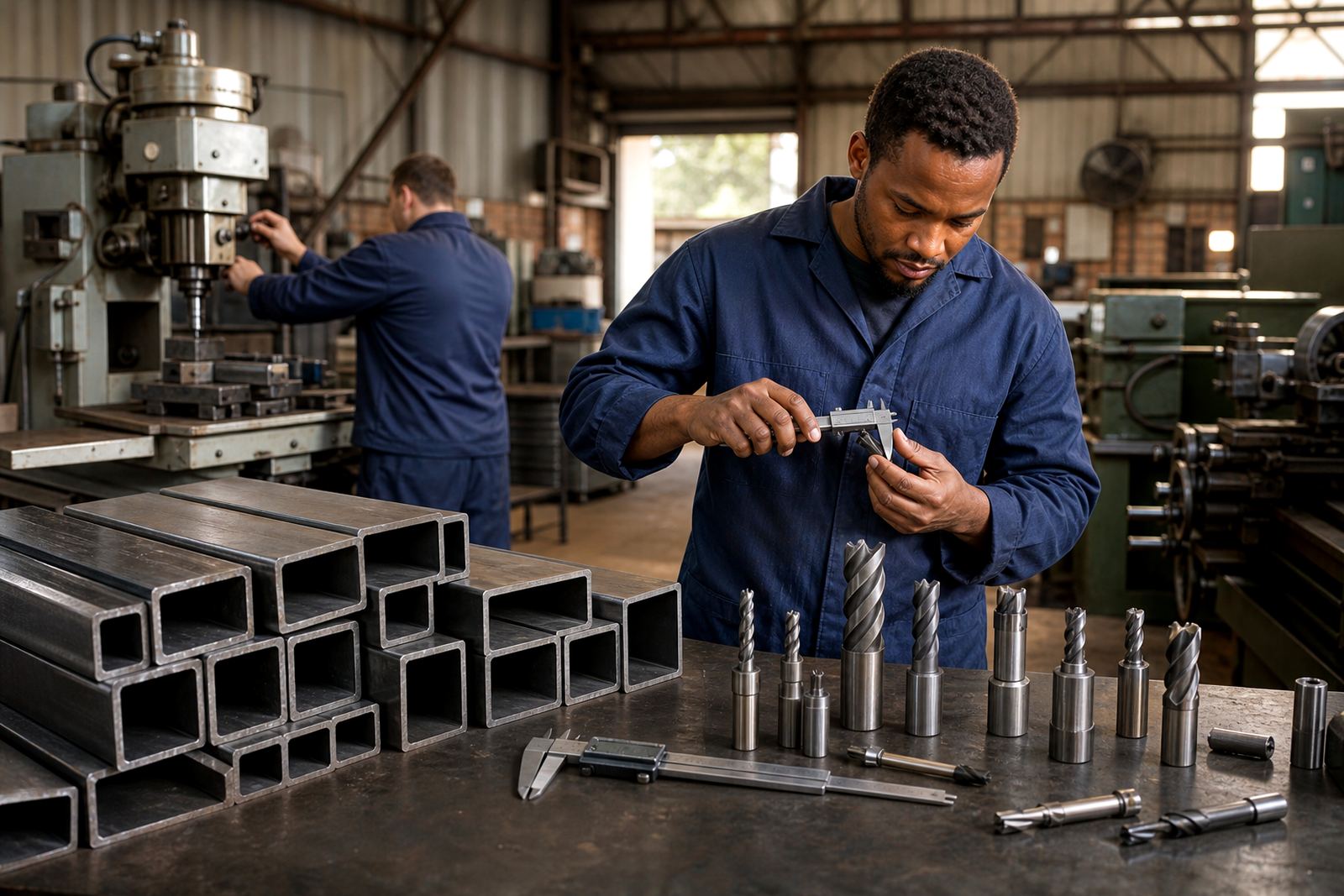
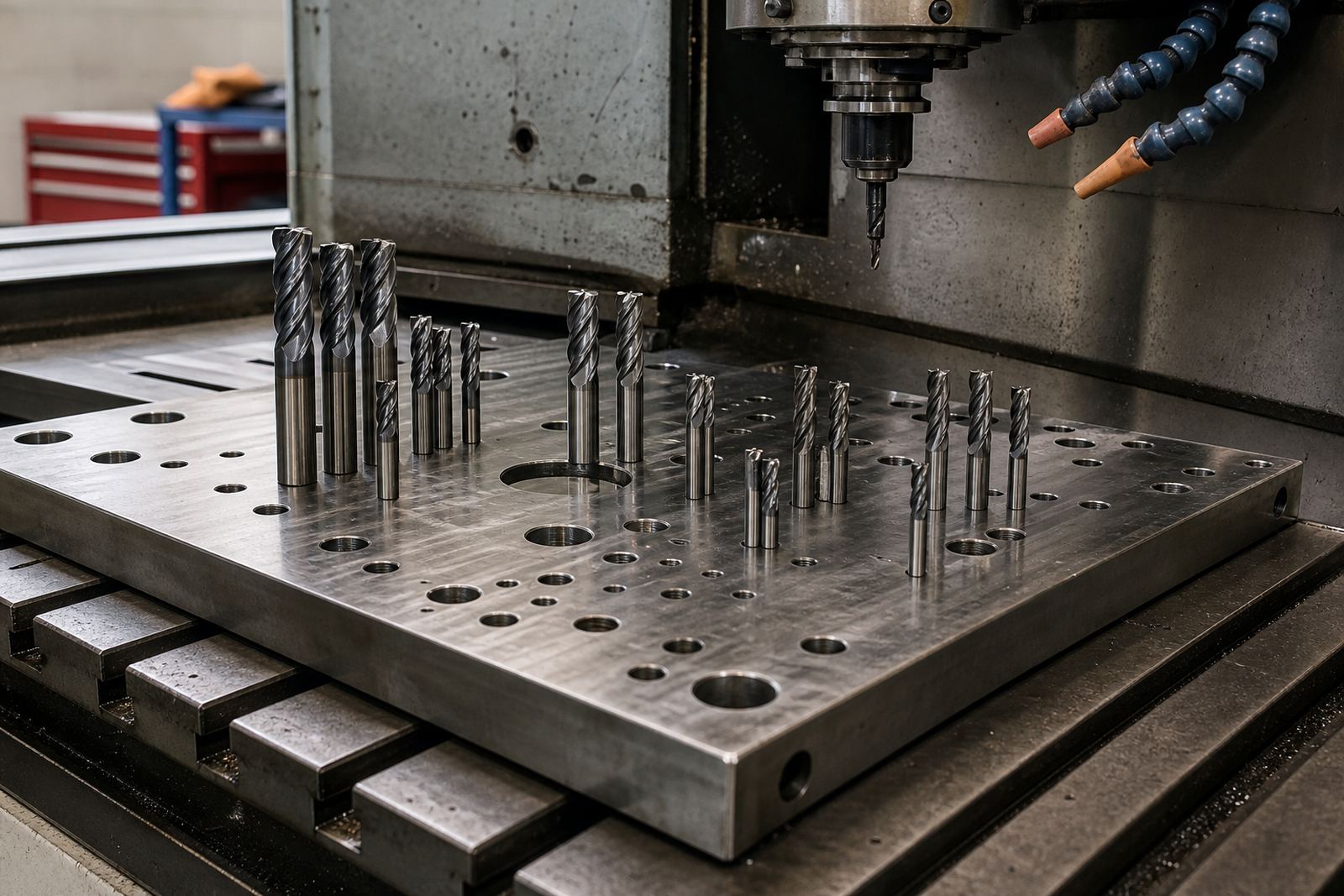
We selected coolant-fed solid carbide drills suited to plate machining and high efficiency chip evacuation. The focus was on stable drilling, better heat control, and a shorter cycle per hole. In this case, the tooling package was built around specific hole diameters and plate depths, with attention to entry conditions and breakout quality.
Key specs used on the job included:
- Solid carbide construction for wear resistance and rigidity
- Internal coolant delivery for chip removal and cooler cutting
- Diameter range matched to the hole schedule, mainly 6 mm to 18 mm
- Suitable for steel plate machining on CNC centres
- Use of short overhang where possible to limit deflection
- Feed and speed settings adjusted for the exact material and thickness
We also gave the team speed and feed advice for the machine, plus guidance on pecking only where necessary. In practice, the right chip flow did more for stability than simply pushing harder. It sounds simple, but on plate work that makes a real difference.
How We Put the Job in Motion
The project moved in stages over about three weeks. Week one was technical review and tool selection. We worked through the part drawings, hole count, material, and machine capability, then matched the drill range to the job.
In week two we supplied sample tools for trial runs and checked the first results. The client’s operators tested the drills on a production part and compared cycle time, surface condition, and hole finish against the old method. We then adjusted the starting parameters and coolant approach.
By week three the process was standardised for regular production. The shop had a repeatable set of cutting data, a clearer tool life expectation, and a plan for stock holding on the most used diameters. That reduced the pressure on urgent ordering and kept the job moving without last minute scrambling.
Results On the Floor
The biggest gain was cycle time. The client improved holemaking speed enough to make the job more competitive and cut unnecessary machine standing time. The drilling process became more predictable, with cleaner chip evacuation and less heat build-up at the cutting edge.
They also saw better consistency between shifts. That matters in a shop running multiple jobs, because the day team and night team were no longer fighting different tool behaviour. Tool wear was easier to track, which made stock planning and replacement timing more accurate.
- Faster cycle times on repetitive holes
- Improved hole quality and consistency
- Less downtime for tool changes and cleaning
- More stable tool life between batches
- Better planning for repeat plate jobs
For a Midrand operation, that combination means fewer interruptions and tighter delivery dates. It also helped the shop keep one eye on municipal and utility disruptions without losing too much productive time.
What We Would Repeat On Similar Plate Jobs
If we were doing the same sort of work again, we would follow the same approach: match the drill to the material first, then refine the cutting data on the actual machine. That gives better results than guessing from a generic chart and hoping the job behaves.
We would also keep a small buffer stock of the most used sizes, especially on jobs with repeat plate patterns. On-site machining work around Johannesburg and Midrand can move quickly, and waiting on one missing diameter can stall a full order. It is better to have the common sizes on hand and let the technical data do the heavy lifting.
For shops running plate work in Gauteng, the main lesson is that good holemaking is not just about the drill. It is about chip flow, coolant delivery, machine stability, and honest feed settings. Get those right and the rest follows more easily.
Key facts
| Project | Midrand plate machining |
|---|---|
| Client type | CNC machining shop |
| Town | Midrand, Gauteng |
| Tooling used | Coolant-fed solid carbide drills |
| Material range | Steel plate, 12 mm to 28 mm |
| Timeline | About 3 weeks |