Project brief from a Vereeniging fabrication shop
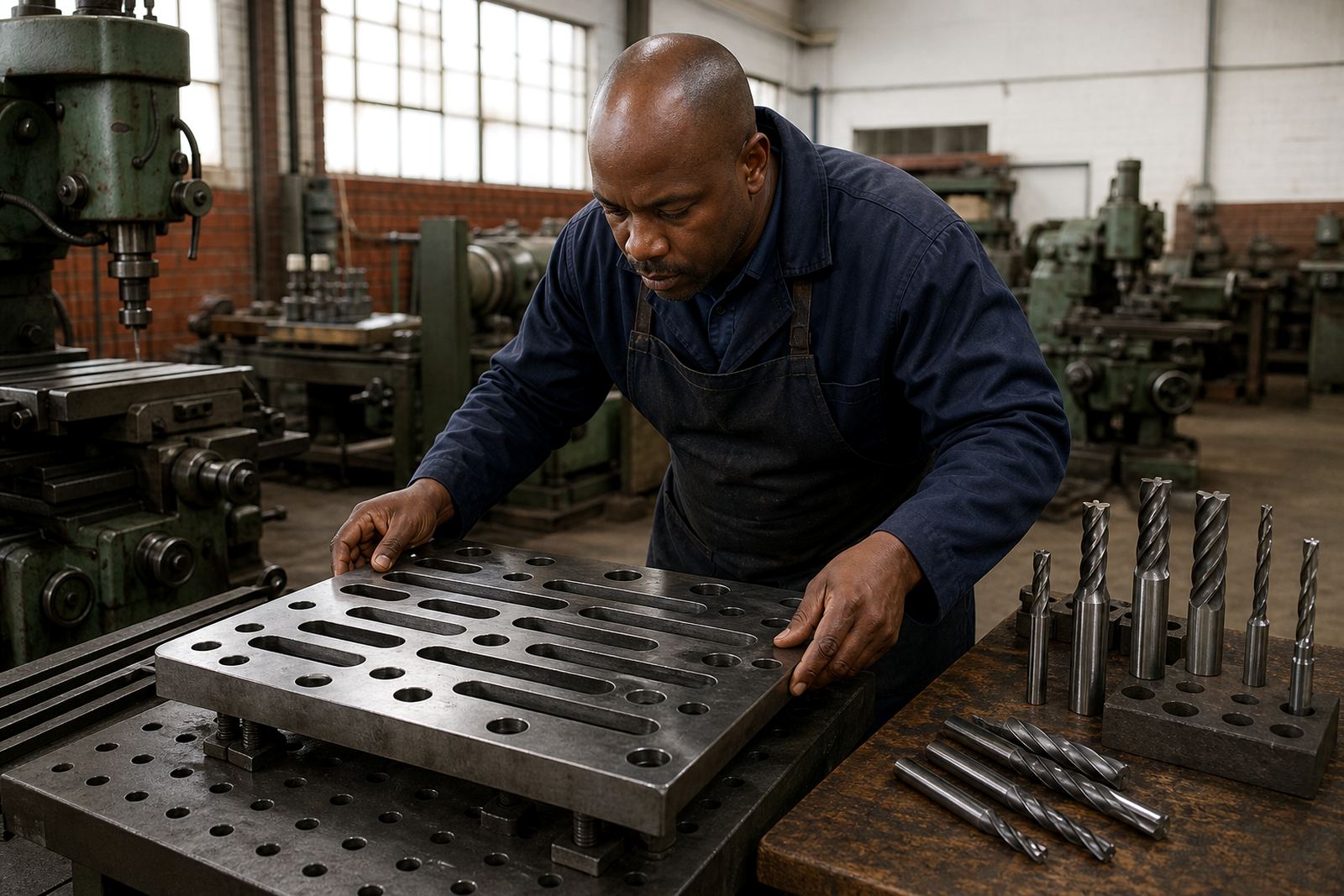
The job came from a steel fabrication support shop in Vereeniging that machines parts for structural work, plant maintenance and repair batches. Their main issue was edge breakage and inconsistent corner profiles on thicker steel sections, especially when jobs moved between day shift and night shift. They needed cleaner internal corners, less rework, and a tool range that could hold up in ordinary shop-floor conditions without constant adjustment.
The brief was straightforward: improve profile accuracy on milled components and reduce tool changes during repeat work. The shop wanted a supply partner who could recommend the right solid carbide end mills for steel, not just send a catalogue list. Their CNC operators also asked for practical speed and feed guidance that could be used immediately on the machine floor.
What limited the job on the shop floor
The shop was working under normal production pressure, with mixed batches, short lead times and a fair amount of material variation. Some jobs were cut from mild steel plate, others from heavier sections with scale and occasional hard spots. In a steel environment that is not cleaned up perfectly before machining, tool wear climbs quickly and the profile starts to drift.
There were also practical constraints. Load-shedding meant the team could lose setup time and then need to restart a job later, so consistency mattered more than ever. They needed tools that would keep their edge after stoppages, and a process that would still make sense when the machine came back online. The shop also wanted to avoid waiting on urgent local supply every time a tool chipped or snapped.
- Material mix: mild steel and heavier fabricated sections
- Problem areas: corner accuracy, edge finish and tool wear
- Operating pressure: short turnaround times and interrupted shifts
- Need: repeatable setup data for several CNC operators
Corner radius tooling and support we supplied
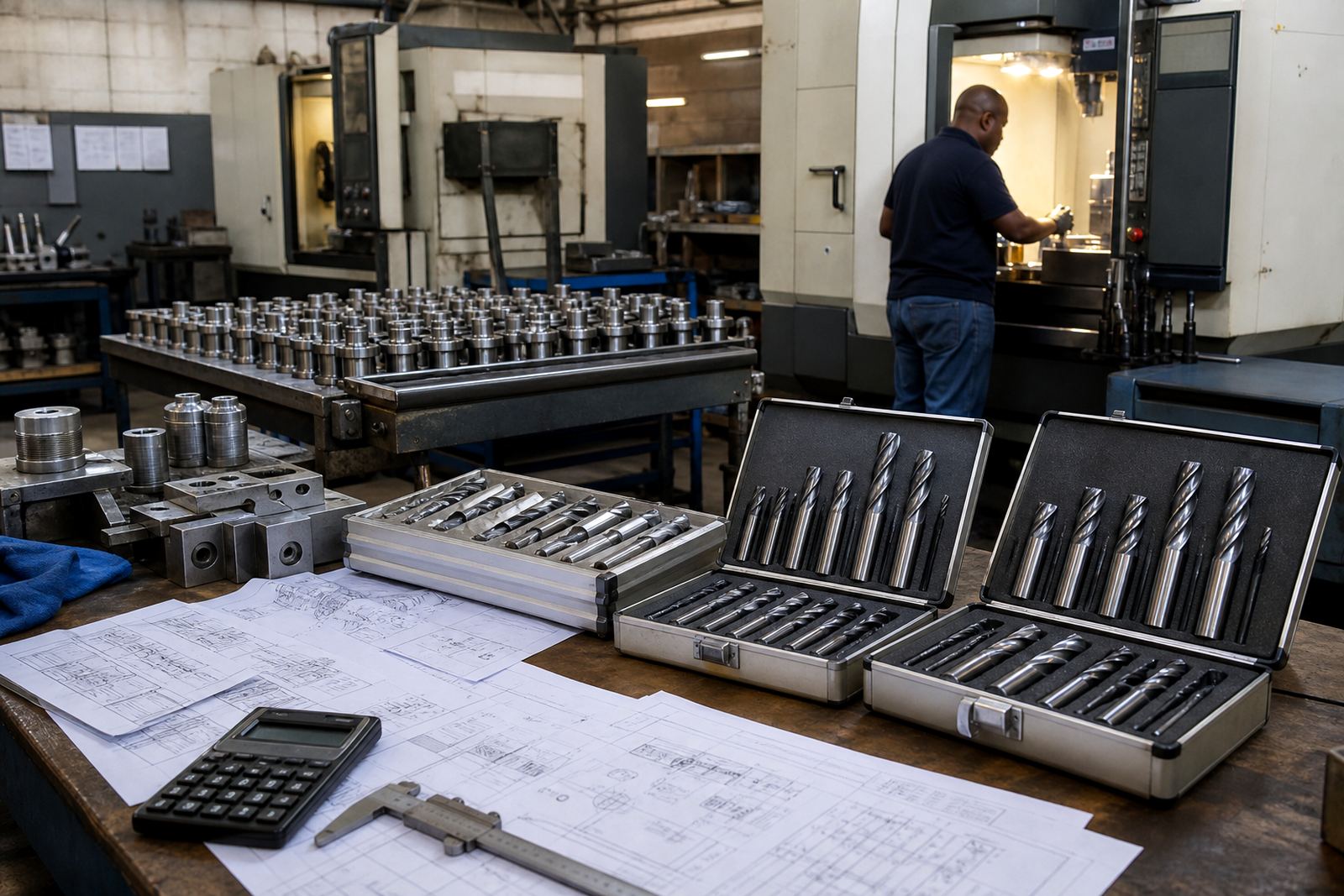
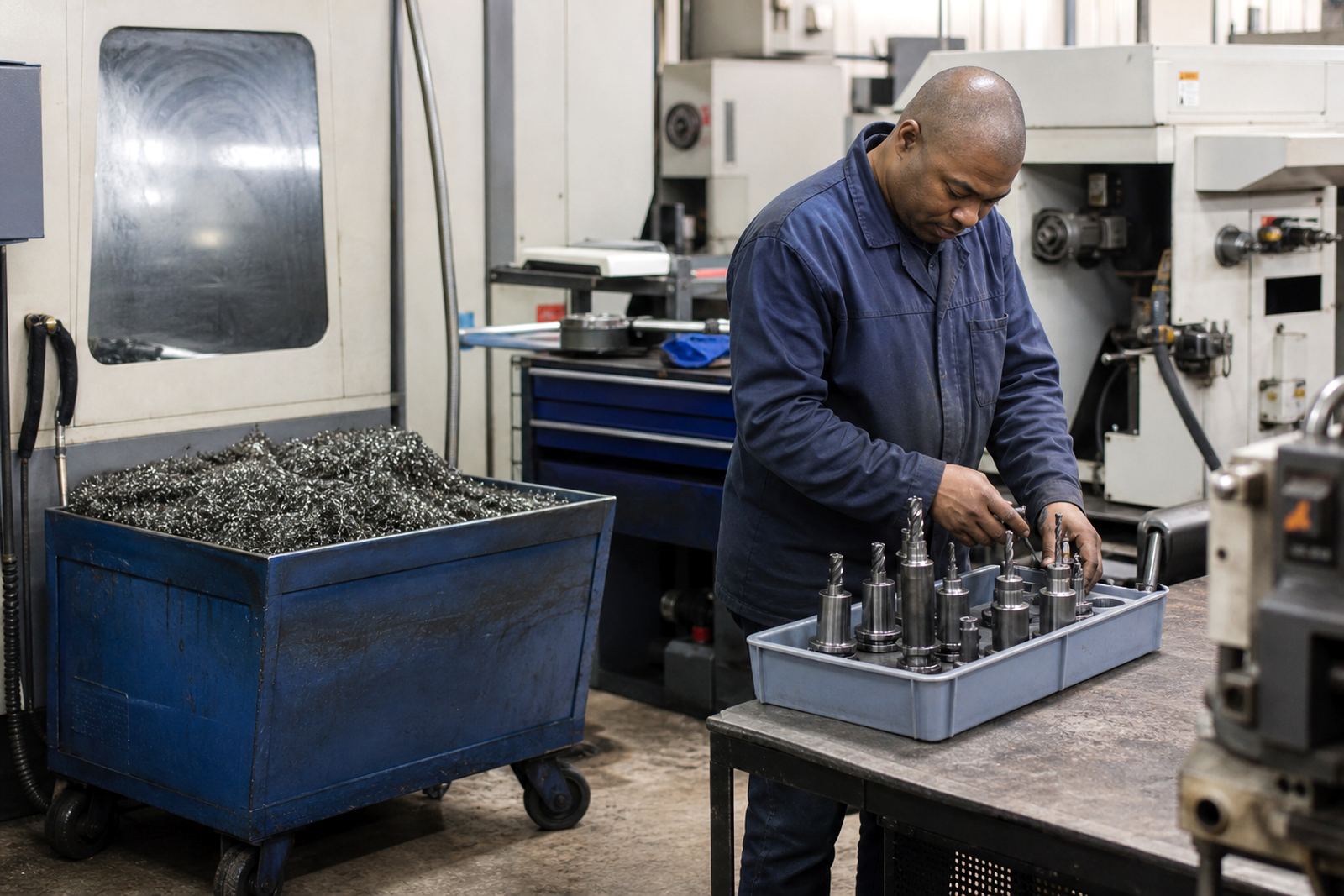
We supplied solid carbide end mills with corner radius geometry for profile finishing and controlled corner blending. The selected tools were aimed at steel machining on CNC centres, with a focus on accuracy, tool life and better chip control. We also matched the tool choice to the shop's actual material mix so they were not using the same cutter for every job.
Along with the tools, we provided application support on spindle speed, feed rate, step over and depth of cut. The key was to keep the cut stable enough for clean corners while avoiding unnecessary heat build up. We supplied technical quotations for the trial batch, then adjusted the recommendation after the first parts were measured. Johan Smit worked through the machining data with the team, while Thabo Molefe coordinated stock handling and urgent issue replacement from Wadeville, Germiston.
- Solid carbide end mills with corner radius geometry
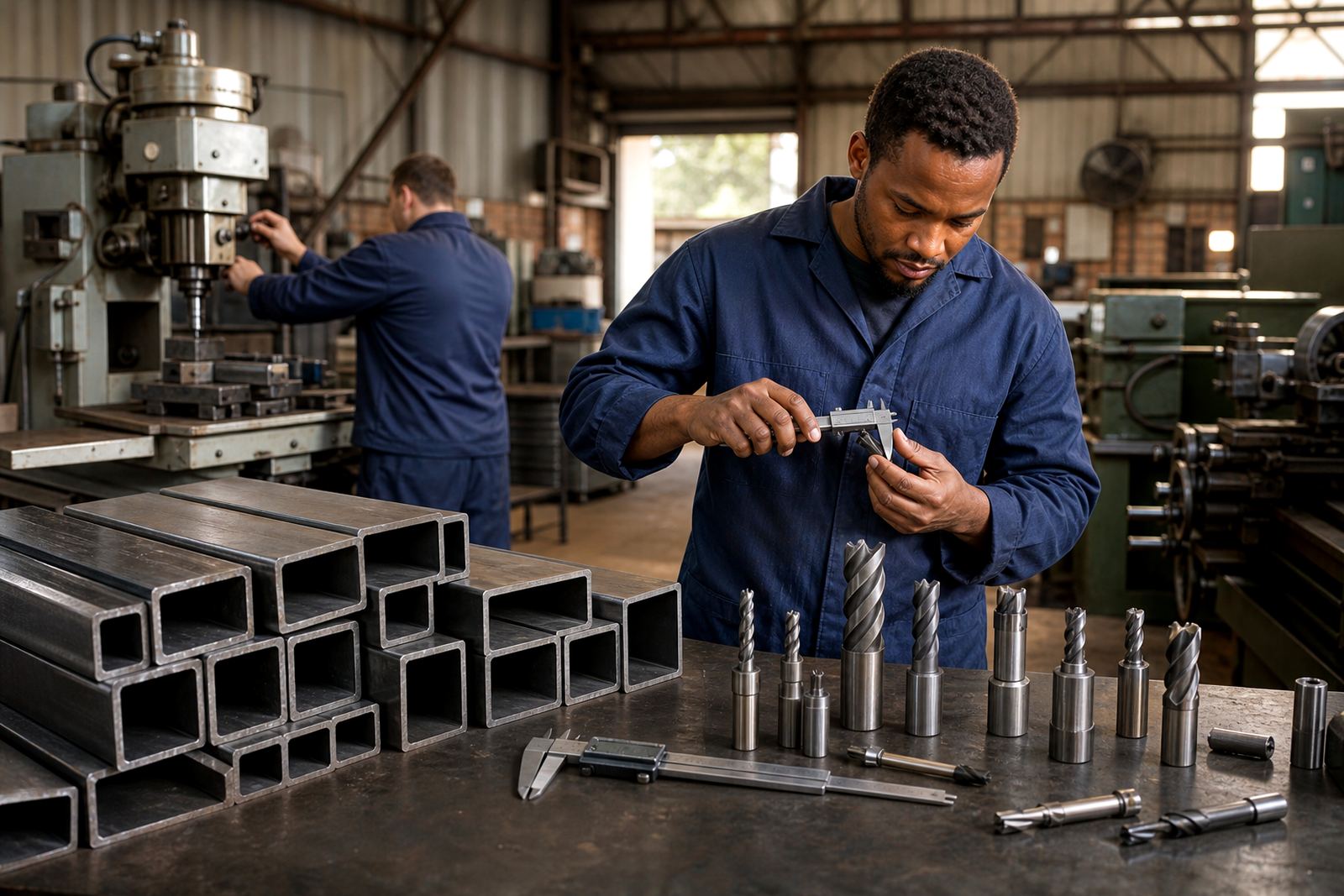
- Sizes used in the trial: 6 mm, 8 mm and 10 mm diameter
- Flute style selected for steel cutting and chip evacuation
- Measured focus: profile accuracy, tool wear and edge quality
Trial period and process changes over three weeks
The first week was used for tool selection, sample supply and a quick review of the current cutting data. The shop then ran the trial parts over the next two weeks on one CNC machine before rolling the tooling into a second machine. This gave the operators a clean comparison between their old cutter setup and the new corner radius tools.
During the trial we adjusted the feed slightly on heavier sections and reduced one finishing pass that was causing unnecessary rubbing. That simple change helped the cutter stay cooler and improved the finish at the radius. The team kept notes on tool life, and by the end of week three the results were already clear enough for standardising. The process was practical, not complicated, and it fit the way the shop actually runs.
Measured results on profile accuracy and repeatability
The shop reported better corner consistency across repeat batches and less hand finishing after machining. Internal radii came out cleaner, and the profile matched drawing requirements more reliably from the first component to the last. That cut down on rework and helped the fabrication crew move parts on to welding and fitting sooner.
Tool wear also became more predictable. Instead of replacing cutters early because of chipped corners, the team could plan tool changes based on actual cutting time. In simple terms, the machine stayed productive for longer and the operators had fewer surprises. The improved finish also made downstream assembly easier, because mating parts sat more cleanly and needed less adjustment.
- Better profile accuracy on repeated steel parts
- Less rework and less manual edge correction
- More predictable tool life for scheduled production
- Cleaner corner finish on machined profiles
What we would repeat for the next steel shop
If we were doing the same type of work again, we would follow the same pattern: start with the actual material, test on one machine, then standardise once the parts prove out. That approach works well for fabrication shops in Vereeniging, Johannesburg and Pretoria where production pressure is real and downtime is expensive. It also keeps the recommendation grounded in what the CNC machine can actually hold, not just what the tooling chart says.
We would also repeat the stock planning side. For shops that deal with urgent maintenance work and municipal or industrial repair jobs, keeping a small core range of solid carbide end mills on hand is sensible. It helps when a job lands after hours or when load-shedding interrupts the week. With the right sizes already available, the team can keep going without waiting for last-minute supply.
For this project, the biggest value came from a focused tool choice, simple setup guidance and reliable local supply from Wadeville. The shop got a better cut on steel profiles and a repeatable process they could use across more than one machine.
Key facts
| Client type | Steel fabrication support shop |
|---|---|
| Town | Vereeniging, Gauteng |
| Project duration | 3 weeks |
| Tools supplied | Solid carbide end mills with corner radius geometry |
| Tool sizes used | 6 mm, 8 mm, 10 mm diameter |
| Main outcome | Improved profile accuracy and reduced rework |