When alloy steel starts costing time and money
Alloy steel jobs usually show up when a client wants strength, wear resistance or heat tolerance, and then expects a clean finish with tight tolerances. In CNC machining centres around Germiston, Johannesburg and Pretoria, the common pain points are chatter, premature edge wear, work hardening and hot chips that keep running back into the cut. If the machine is not rigid, or if the tool is too long for the job, the cutting edge starts failing before the batch is done.
For these parts, the real aim is not only removing metal. It is keeping the tool stable enough to hold size, protect surface finish and stay consistent over a shift. That matters especially where load-shedding has interrupted production before and operators need a restart that does not waste a fresh tool on the first component.
Typical CNC set-up for tougher alloy steels
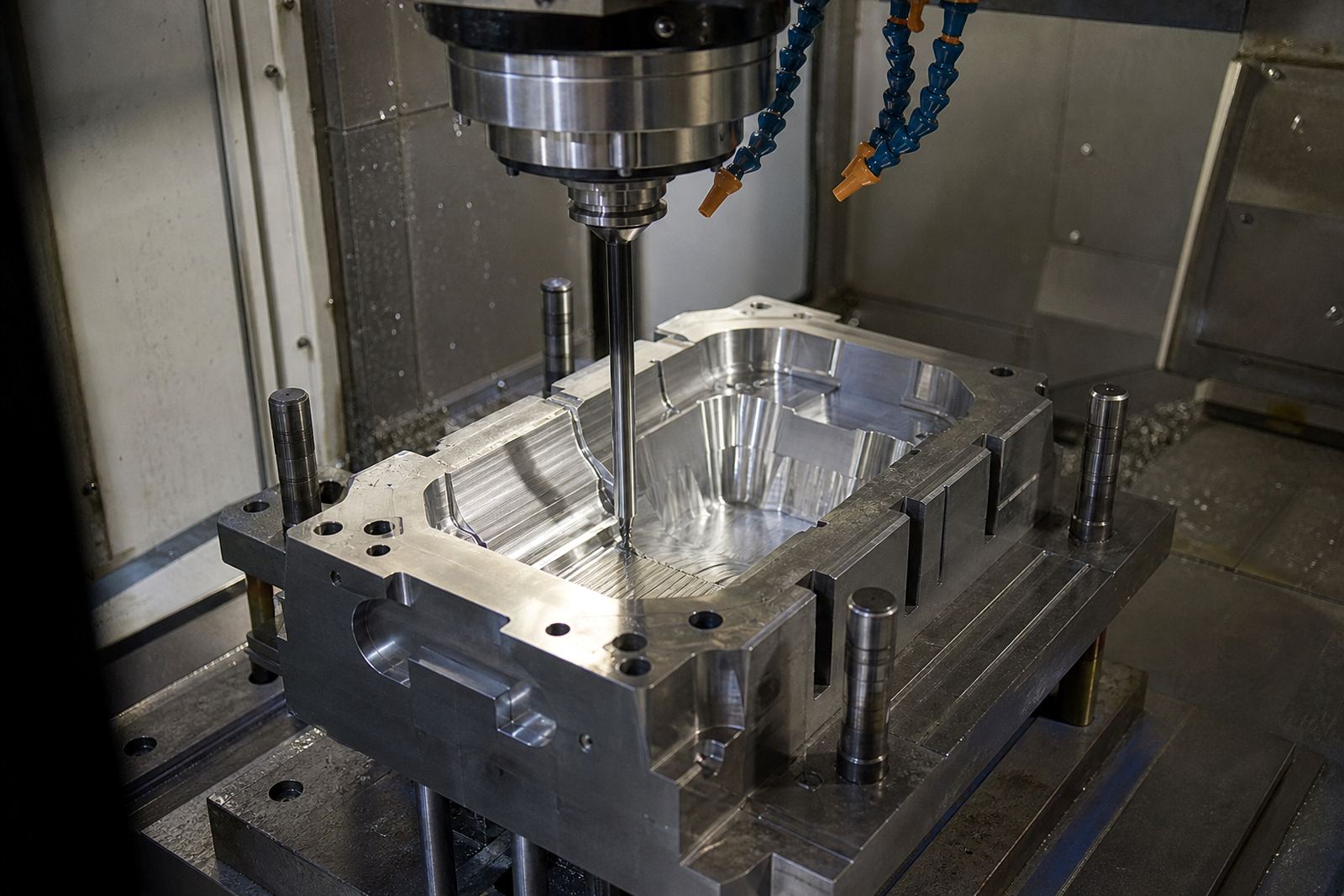
A solid carbide end mill or drill for alloy steel needs a machine set-up that can keep runout low and coolant where it is needed. On most shops we see vertical machining centres, 3-axis and 4-axis mills, plus drilling cycles on production runs from small bracket work to heavier machined blocks. The better results usually come from short tool overhang, solid holders and a clean spindle taper. If the holder is dirty, the best cutting edge will still struggle.
- Short gauge lengths where possible, especially on 6 mm to 16 mm cutters.
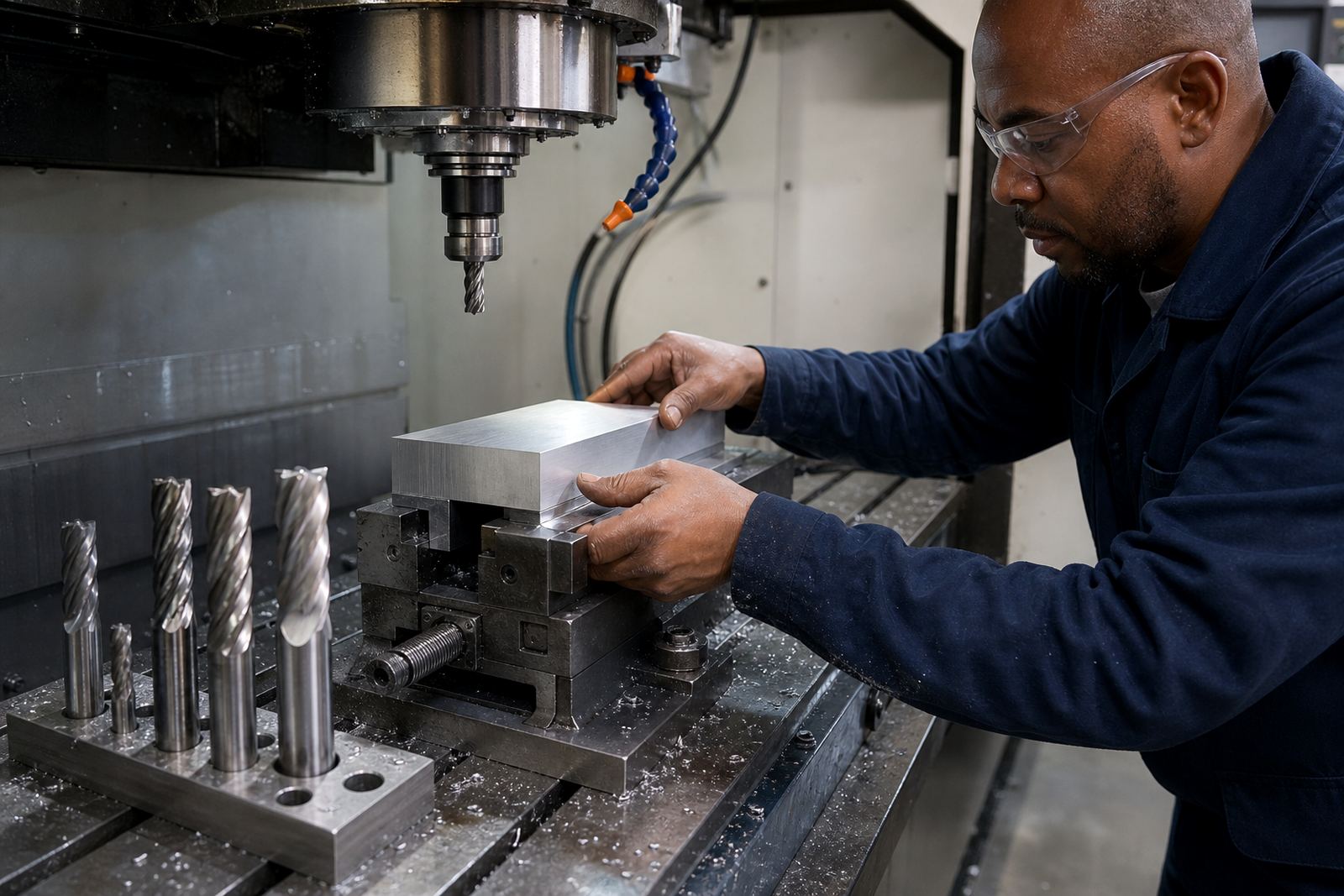
- Rigid clamping on vice jaws or custom fixtures, not loose packing blocks.
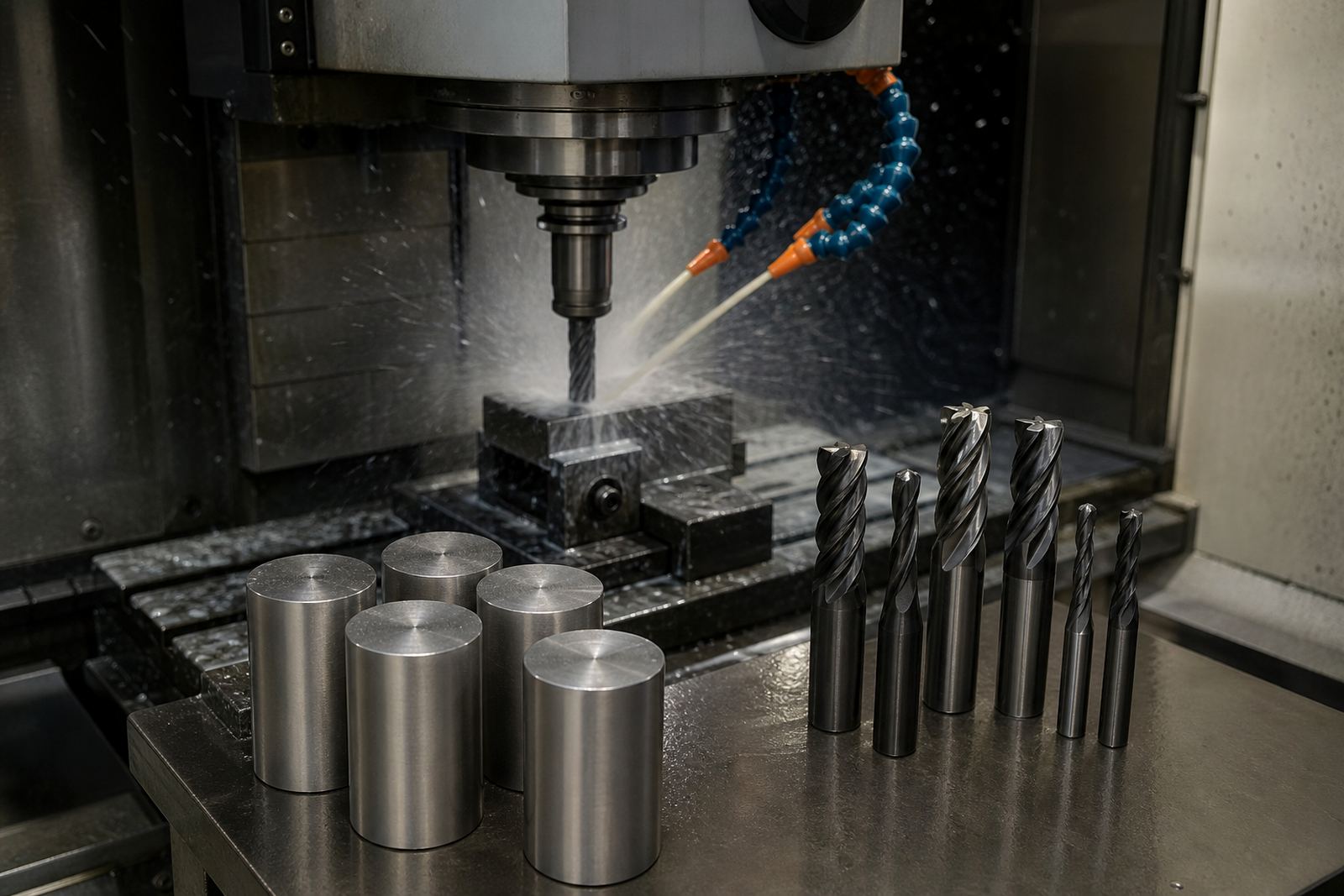
- Coolant aimed directly at the cut, or through-tool delivery on deeper drilling.
- Careful chip evacuation so recutting does not blunt the edge.
- Tool paths with smooth entry and exit, especially on corners and pockets.
For alloy steel, the setup often matters as much as the tool choice. A machine in good condition can carry a larger depth of cut, while a worn spindle or poor fixturing can turn even a premium tool into an expensive short-term fix.
Tool choices that suit heat, rigidity and edge stability
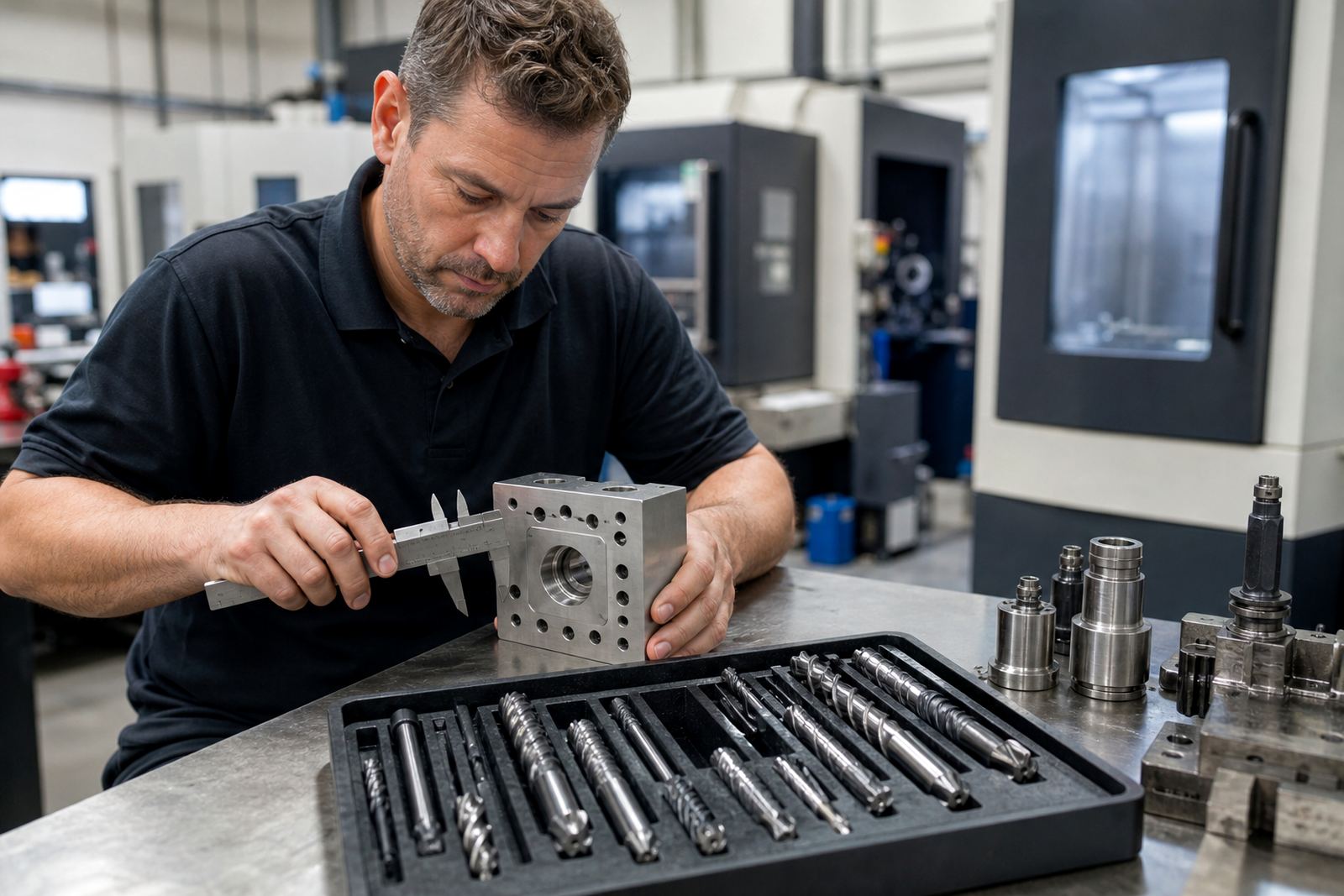
Our solid carbide end mills and drills are used where the material is tougher than standard mild steel and the shop needs predictable performance. For alloy steel machining, common choices include roughing end mills for stock removal, finishing end mills for wall and floor finish, and drills sized for pilot holes, tapping preparation and deep-hole work. Geometry, coating and flute count all affect how the tool behaves in heat. A tool that is too aggressive may cut fast for a short time, then lose its edge on the second part.
In many alloy steel applications, shops in Durban, Cape Town and Gqeberha also have to account for humidity and storage. If cutters are left open on a bench or near cooling water spray, corrosion marks and contamination can start before the tool even sees the machine. Keep them dry, labelled and returned to stock properly, because mix-ups cost more than the cutter itself.
- Use a more stable cutter when the job needs consistent edge wear across a batch.
- Choose drill lengths to suit the actual hole depth, not the biggest drill in store.
- Match flute count to chip load and slot width.
- Keep a separate setup for finishing passes so roughing damage does not affect tolerance.
Layout and planning advice for production shops
On a busy floor, the best alloy steel work is usually planned before the first chip is cut. That means confirming the material grade, hardness condition, batch size, drawing tolerance and surface finish requirement. It also means checking whether the job needs one-off machining, repeat production or a trial run before release. For shops supplying engineering work across Gauteng, proper planning can reduce tool changes, lower power draw and keep the machine from standing idle while someone looks for the next size drill.
We recommend that shops keep a small standard range of solid carbide tools for common hole sizes and slot widths, then add special tools only where the part truly needs them. This helps with stock planning and avoids overbuying. If a client in Centurion or Boksburg needs urgent tool supply, the fastest response is usually based on clear drawings, material spec and current cycle time. Without that, there is too much guesswork and the order slows down.
- Group similar alloy steel jobs together to reduce changeovers.
- Set up one machine for roughing and another for finishing when volume justifies it.
- Keep a written record of speeds, feeds and measured tool life per material grade.
- Review coolant concentration and pressure on a weekly basis.
Common mistakes that shorten tool life
Most tool failures in alloy steel machining are not mysterious. They come from small errors repeated through a shift. The first mistake is running the cutter too fast because the part looks simple. The second is using excessive stick-out, which increases vibration and breaks edge stability. The third is poor chip evacuation, especially in deeper pockets where hot swarf packs into the flutes and starts rubbing instead of cutting.
Another common issue is expecting one tool to do everything. Roughing, semi-finishing and finishing each place different demands on the cutting edge. When the same end mill is used for all three, the tool often wears unevenly and the final size drifts. A few shops also skip application support and then blame the tool when the problem was actually poor clamping, a worn holder or an incorrect feed rate. That sort of error is costly and avoidable.
Budget ranges for alloy steel machining tools
Budget depends on diameter, length, coating, drilling depth and how critical the job is. For standard solid carbide end mills used on alloy steel, shops often budget from about R180 to R950 per tool for common sizes. More specialised cutters for deeper reaches, tighter tolerances or heavier production work can sit from around R1 000 to R2 500 each. Solid carbide drills typically start around R160 and can move into the R1 500 plus range when the geometry and length are more demanding.
For planning purposes, a small production batch may need a tool allowance of R500 to R3 000 depending on part count and complexity. A larger repeat job with process support, sample tool trials and production standardising may need a higher upfront budget, but it usually pays back through longer tool life and less downtime. In a plant that is already working around power interruptions, that extra control often matters more than chasing the cheapest cutter on paper.
- Low volume trial work: from about R500 to R1 500 in tooling allowance.
- Repeat production batches: from about R2 000 to R8 000 depending on tool count.
- Higher precision or deep drilling jobs: from about R5 000 upward on full tooling sets.
How CuTools Carbide supports alloy steel work
From our base in Wadeville, Germiston, we support machining shops across Johannesburg, Pretoria, Cape Town, Durban and Gqeberha with tool selection, technical quotations, speed feed advice and urgent tool supply. Our team handles practical questions about material matching, tool life optimisation and process troubleshooting, because alloy steel jobs usually need more than a part number. They need someone to look at the cut, the machine and the production target together.
Whether you are standardising a repeat job or testing a new component for a customer, we can help you choose a cutter that suits the material and the machine. The aim is simple: fewer surprises, cleaner cuts and a more predictable cost per part.