
When brass parts need a cleaner finish on the first run
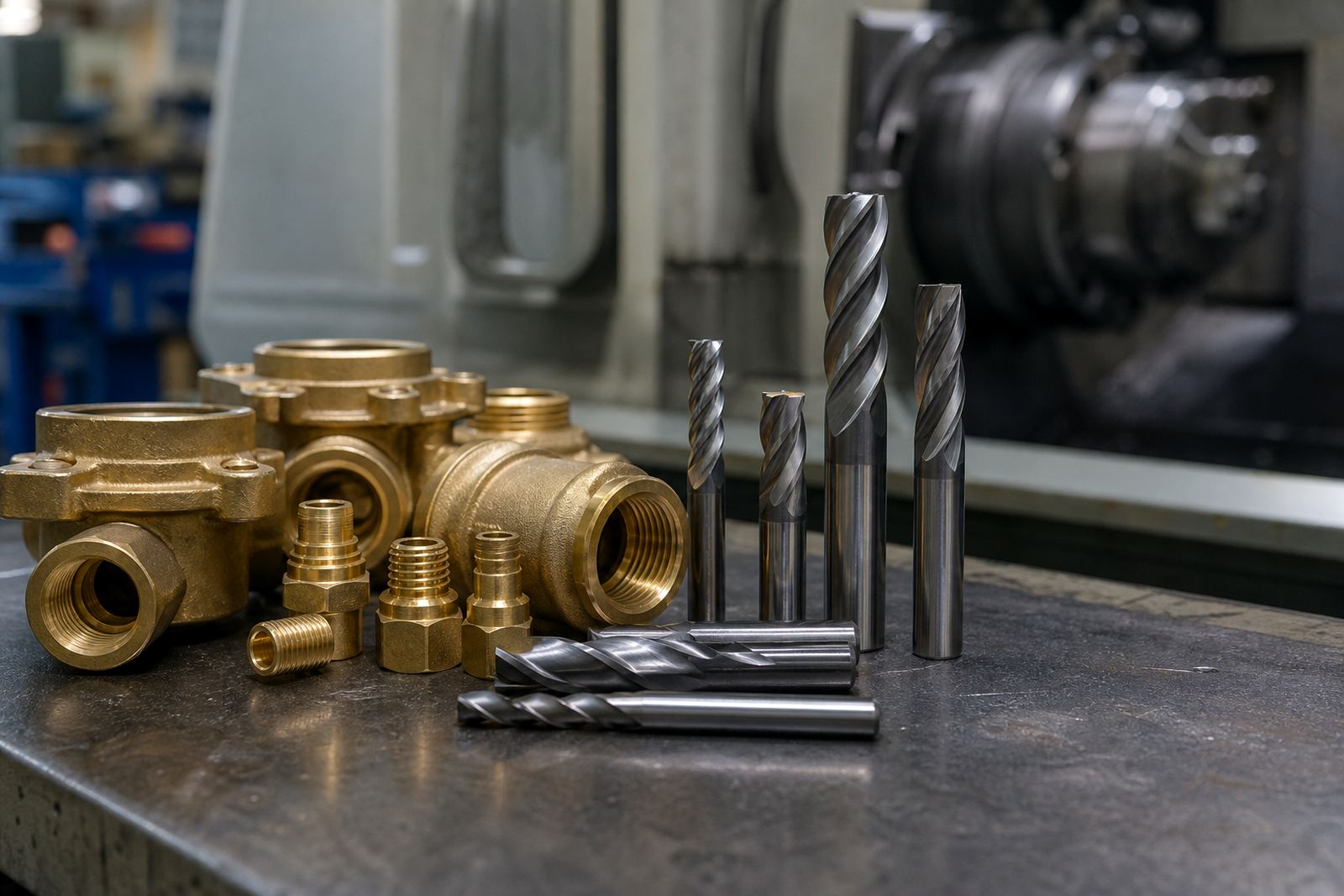
Brass jobs often look simple until a shop starts pushing cycle times or trying to hold a neat edge on small features. In practice, the best results come from sharp solid carbide tools, stable workholding and feeds that suit the alloy, not the steel settings someone copied from another job. For fittings, valve parts, electrical connectors and decorative turned-milled items, the main goal is clean cutting with very little burr formation.
In Germiston and wider Gauteng, many shops run brass on mixed production days with stainless, aluminium and mild steel. That is where the wrong tool choice causes trouble. Brass will tolerate fast cutting, but a poor flute form or a dull edge can leave torn surfaces, taper on drilled holes and extra hand finishing. For repeat work, it is better to standardise a small, proven tool set than keep changing inserts and feeds from one operator to the next.
Typical CNC set-up for brass fittings and turned-milled parts
Most brass work is done on CNC milling machines, turning centres with live tooling, or milling and turning combinations for parts that start round and end up with flats, cross holes or pockets. A practical set-up usually includes small diameter solid carbide end mills, centre cutting drills, spot drills and finishing tools for edge clean-up. On small fittings, even a 3 mm or 6 mm cutter can make the difference between a part that goes straight to packing and one that needs de-burring.
- Solid carbide end mills for slotting, profiling and pocketing
- Drills for through holes and accurate pilot holes
- Finishing cutters for light passes on cosmetic surfaces
- Short projection tooling where rigidity matters more than reach
- Toolholders and collets checked for runout before setup
For shops near the coast, like Durban or Gqeberha, moisture in the air can affect machine storage and tool condition. Keep the machine area dry, clean and free of dust build-up. On long shifts during load-shedding or generator use, it helps to keep a clear restart routine so the same tool offsets and work offsets are not lost between stops.
Tool selection for different brass grades and part types
Not every brass part cuts the same way. Free-machining brass is usually forgiving, while tougher or lead-free grades may need more attention on tool geometry and chip control. The most useful approach is to match the cutter to the part style and the machine setup rather than ordering one general purpose tool for everything.
CuTools Carbide supports brass machining with tool selection advice for small shops and high-volume production alike. The aim is to reduce burrs, keep holes on size and get consistent tool life without over-spending on special tooling that does not earn its keep.
- For tiny fittings: short tools, sharp cutting edges and lighter stepovers
- For deep pockets: stronger tool support and controlled chip evacuation
- For drilled holes: correct point angle and steady peck strategy where needed
- For cosmetic faces: finishing passes with low radial load
- For mixed batches: a fixed tool list so setup time stays predictable
Layout and planning advice for shops running brass every week
Good brass machining starts before the spindle turns. Parts should be staged so the first operation leaves enough grip for the second, and the fixture should support thin walls and small bosses. On turned-milled parts, the sequence matters: face, rough, finish and only then remove the features that hold the part stable. Shops that plan the route well usually see less scrap and far fewer burr related complaints.
When planning the tool layout, keep the longest tool out of the path unless it is truly needed. A short, rigid cutter gives better edge quality on brass and usually lasts longer too. Shops in Pretoria, Johannesburg and Boksburg that run repeat orders often benefit from one standard setup sheet for each family of part. That keeps operator change-over simple and helps when a machine has to be restarted after an unplanned stop.
- Keep tool stick-out as short as possible
- Separate roughing and finishing tools clearly
- Use consistent offsets and part naming on repeat work
- Check chip evacuation on blind pockets before full production
Common brass machining mistakes that cost time and Rand
The most common mistake is treating brass like a soft material that needs no care. Brass will machine quickly, but the wrong speed feed balance can create chatter, smearing or an edge that looks good until deburring starts. Another issue is using worn tools for too long. A tool that seems fine on one part can start leaving a slight burr on the next batch, and that small defect can become a full rework pile.
Another trap is buying tools only on price. Low-cost cutters that lose edge quickly end up costing more once setup time, scrap and extra operator handling are counted. If a shop is spending a few hundred Rand more on the right cutter but saving a batch of 200 parts from hand finishing, the numbers usually make sense.
- Too much radial engagement on thin brass walls
- Blunt drills that wander and leave oversize holes
- Poor clamping that marks soft surfaces
- Ignoring burrs until final assembly
- Running the same settings on every brass grade
Budget ranges for carbide tooling in South African workshops
Budgets depend on hole sizes, finish quality and how many parts a shop must produce between changeovers. For small brass runs, a basic starter set of solid carbide drills and end mills may sit in the low thousands of Rand. A more complete production set with spare diameters, finishing tools and backup stock can move into a mid-range budget that is easier to justify when the same parts are repeated every week.
For shops in Cape Town, Durban, Gqeberha and Gauteng, stock planning matters as much as tool choice. Keeping a few fast-moving sizes on hand avoids waiting on urgent jobs and helps when a machine loses time to maintenance or a power interruption. CuTools Carbide assists with technical quotations, sample tool trials and urgent tool supply so your team can choose the right range without overbuying. A small shop may only need a few key sizes, while a larger plant may prefer to set aside budget for standardising the full brass range.
- Starter tooling for light brass work: roughly R1,500 to R4,000
- Regular production stock: roughly R5,000 to R15,000
- Broader multi-machine planning: from R15,000 upward depending on size range
That budget can shift quickly if the job mix includes deep holes, fine finishes or tight tolerances, so it helps to review the actual part list before placing an order.