What mild steel machining asks from the tool
Mild steel looks easy on paper, but it can be unforgiving when the cutter is not matched to the job. In CNC shops around Germiston, Johannesburg, Pretoria, Cape Town, Durban and Gqeberha, the same work often shifts between laser-cut plate, bar stock, flats and mild structural sections, with scale and surface variation from one batch to the next. That is where a balanced solid carbide end mill and drill range makes a real difference.
For everyday components, the aim is usually clean chips, stable tool life and a finish that does not need extra rework. Shops making brackets, mounts, housings and general production parts usually need tools that can handle moderate feeds, occasional interrupted cuts, and the kind of machine downtime that comes with load shedding or maintenance stops. A tool that keeps its edge through those interruptions saves more than one that is cheap on the day and inconsistent on the floor.
For most mild steel work, the practical goal is not the fanciest tool geometry. It is a cutter that holds size, clears chip properly and runs reliably across a full shift. In humid coastal conditions, especially near Durban and Gqeberha, keeping stock dry and tools correctly packed also helps stop corrosion and edge damage before a job even starts.
Typical CNC setup for steady steel work
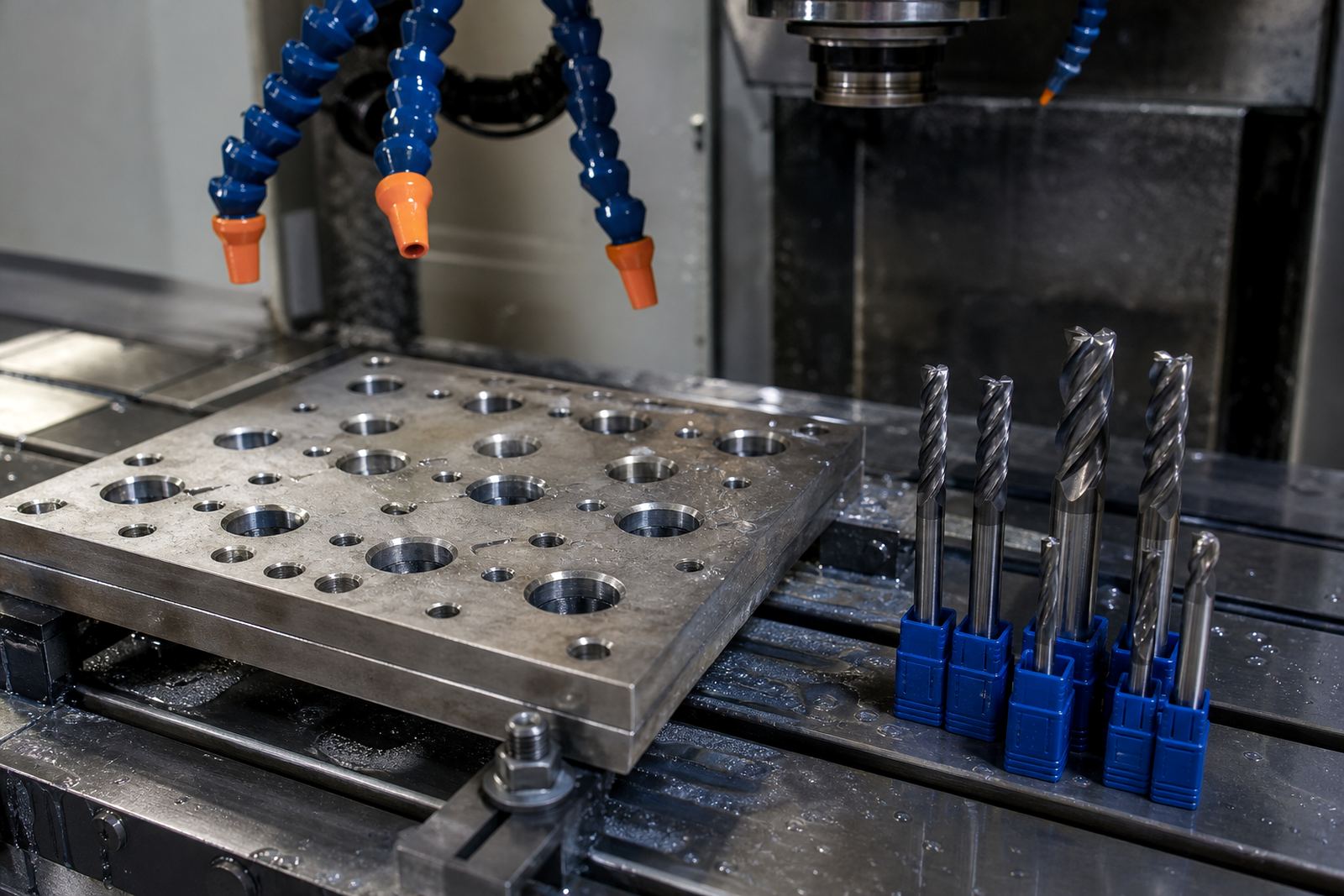
Most mild steel jobs in local shops are run on vertical machining centres with standard collet or side-lock holders, and drills set up for repeat production holes. Some shops also use palletised fixtures or quick-change plates so they can keep parts moving during short runs. The common setup is simple, but the details matter: spindle condition, runout, coolant delivery and workholding pressure all affect tool life.
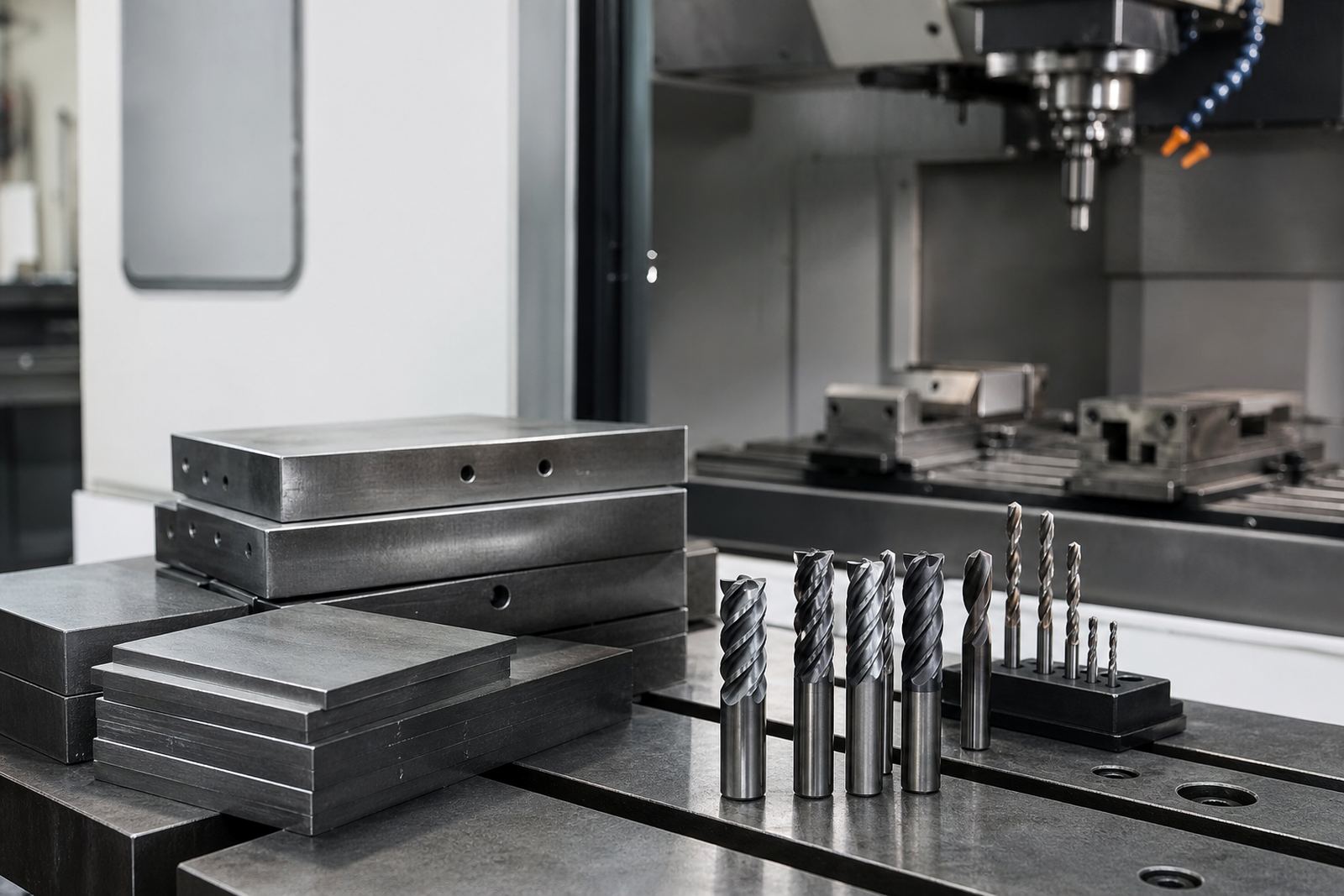
- Solid carbide end mills for slotting, profiling and finishing mild steel parts
- Stub and general purpose drills for through holes and tapped hole preparation
- Coated or uncoated options depending on speed, finish and machine condition
- Coolant through the tool or flood coolant where chip evacuation is a problem
- Stable vises, step clamps or fixtures that keep thin parts from lifting
On older machines or in smaller workshops, it is often better to choose a cutter that tolerates a bit more variation rather than pushing speed to the limit. Shops that work through power cuts need tools that come back into cut cleanly after a restart, not tools that chip on the first resumed pass. A short recovery time matters when production is already under pressure.
Layout and planning that save time on the floor
Good planning around mild steel machining starts before the first cut. Tool choice, holder length, coolant access and part orientation should all be matched to the material thickness and the machine available. Thin brackets need a different approach to heavy plate parts, and a job that looks simple can still eat time if the chip path is poor or the clamp layout blocks the cutter.
For shops supplying local fabrication, agricultural, mining support or general engineering customers, it helps to standardise a few core tool sizes. That makes reordering easier and reduces the number of emergency purchases. A sensible standard set might include 6 mm, 8 mm, 10 mm and 12 mm end mills, plus common drill sizes used for clearance holes, pilot holes and tapped holes. Keep the range tight enough to manage stock, but broad enough to cover day-to-day work.
- Keep overhang as short as possible to limit chatter and taper
- Plan roughing first, then finishing passes to reduce tool load
- Leave enough clearance for chip evacuation on slotting jobs
- Separate tools used on scale-heavy material from clean stock where possible
- Store cutters in dry, labelled boxes to avoid edge damage and rust marks
In Germiston and Boksburg, where many shops handle mixed production and repair work, clear tool planning also helps with turnaround. If the next job is already kitted, the machine spends less time waiting and more time cutting.
Common mistakes that shorten tool life
One of the biggest mistakes on mild steel is treating every job as if it were the same. A cutter that works well on small mild steel brackets may struggle on thick plate with scale or a welded edge. Another common problem is using too much stick-out because the holder on hand is convenient. That extra length can turn a clean cut into chatter and broken corners very quickly.
Feed and speed problems also show up often. Running too slowly can rub the cutting edge and generate heat, while pushing too hard on a machine with poor rigidity can chip the tool. The correct balance depends on the machine, the workholding and the job size, but it should always be tested carefully rather than guessed. Shops that do not document their settings usually lose time repeating the same mistakes on the next batch.
- Using the wrong drill point for the hole depth and chip load
- Skipping a proper pilot hole on larger diameters
- Ignoring coolant direction on deep pockets or blind holes
- Holding thin parts too lightly and allowing movement under cut
- Mixing worn tools with fresh ones in the same production run
Another issue is neglecting material variation. Mild steel from different suppliers can behave differently, especially if there is surface scale or a hard outer layer. A slight change in finish or chip colour can be the first sign that the setup needs adjusting.
Budget ranges for mild steel tooling in Rand
For South African shops, tooling budget needs to match the size of the work and the number of repeat jobs. A small maintenance workshop may only need a few core cutters each month, while a production shop machining steel parts every day will keep a much larger rotating stock. It is better to budget for dependable tools than to keep replacing low-cost cutters that do not hold up.
As a rough guide, a basic mild steel tooling pack for a small CNC shop may start from about R2 500 to R6 000, depending on quantities and diameters. A more complete monthly working stock for steady production can range from R8 000 to R25 000 or more, especially where several machines run different part families. Special sizes, long-reach cutters and larger drill diameters will push that number up.
Budget planning should also include downtime risk. If a cutter failure stops a machine on a Friday afternoon, the real cost is not only the replacement tool but also the missed delivery and overtime needed to catch up. Shops in Cape Town, Durban and Pretoria often ask for urgent supply support because one missing size can stall a whole batch. Planning a small buffer stock is usually cheaper than emergency ordering.
Choosing the right support for everyday steel work
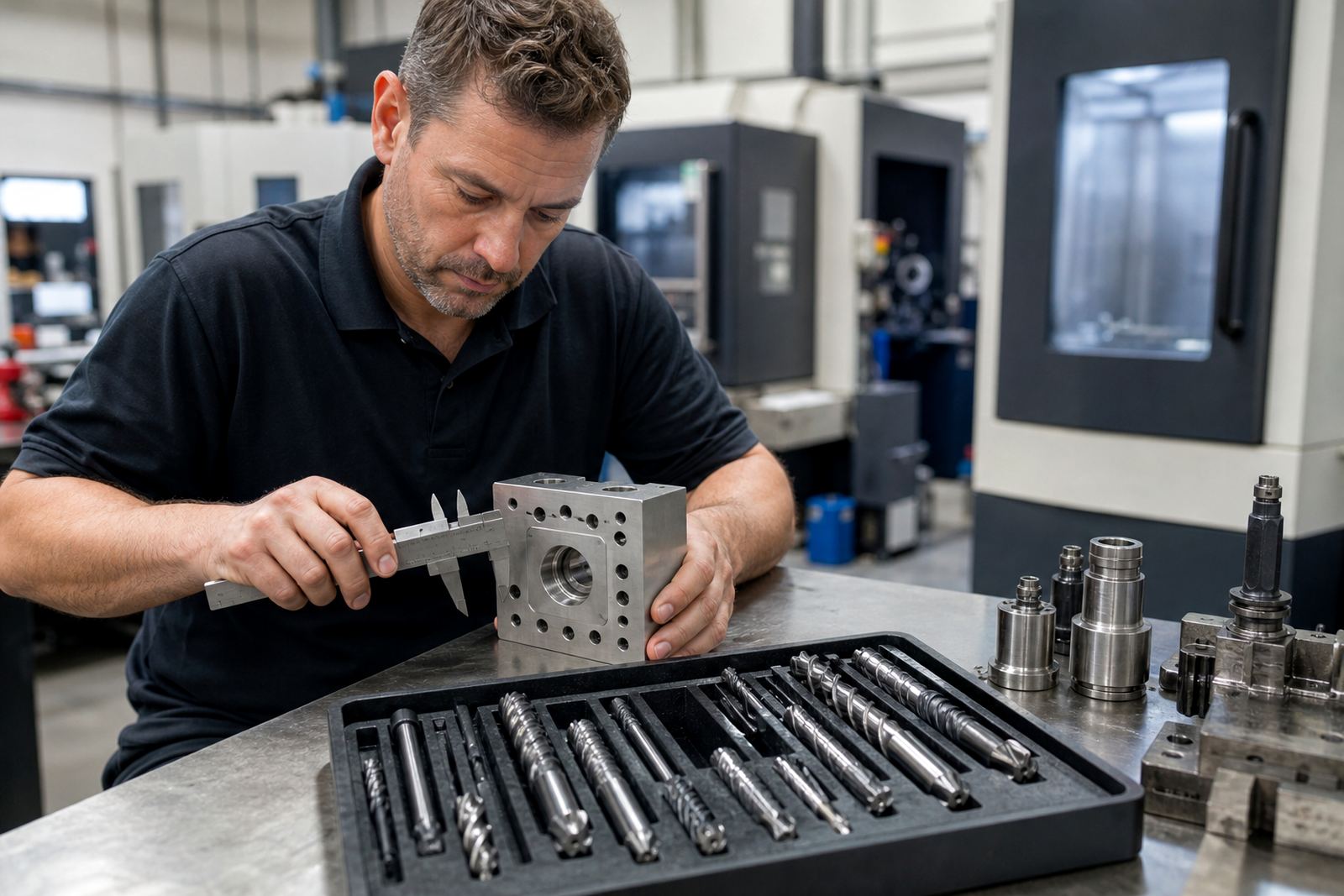
CuTools Carbide works with CNC machining shops across South Africa that need solid carbide end mills and drills for mild steel and related production work. The practical approach is simple: match the tool to the machine, the part and the required finish, then keep the setup repeatable. That includes help with tool selection, application support, speed and feed advice, tool life optimisation and material matching.
If a shop is struggling with breakout, poor finish, short tool life or inconsistent hole size, the answer is often not a complete process change. It may be a small adjustment to cutter length, feed, coolant direction or stock planning. Technical quotations can be put together for ongoing production, sample tool trials are useful on new parts, and on site consultation can help sort out problems that do not show up clearly on paper.
For mild steel machining, the best result is usually the boring one: clean chips, consistent size, fewer reworks and a machine that keeps earning. That is what good carbide selection should deliver, day after day.