Why copper needs a different cutting strategy
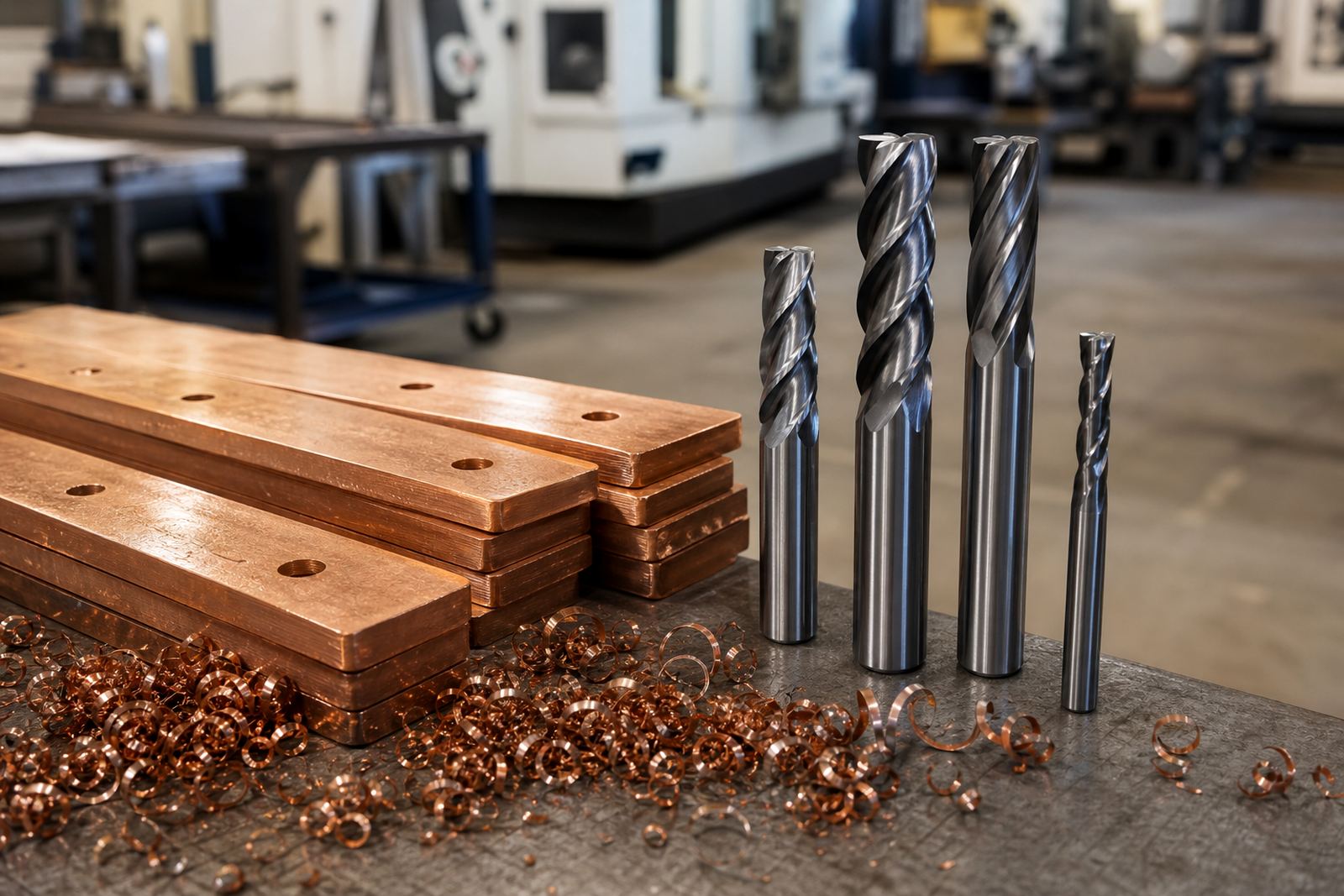
Copper can look easy on paper, but in the machine it often behaves like a soft, sticky material that likes to smear instead of shear. That is where sharp solid carbide tools matter. For copper machining, the goal is not only a clean finish, but also low cutting pressure, stable chip flow and enough rigidity to keep edge quality consistent from the first part to the last.
In workshops around Wadeville, Germiston, and across Johannesburg, Pretoria, Cape Town, Durban and Gqeberha, we see the same pattern: shops try a general-purpose cutter first, then fight built-up edge, burrs and poor size control. Copper parts for electrical components, thermal parts, busbars, connectors and precision housings need a tool that can stay sharp under continuous production. Our team, led by Marius van der Merwe with support from Johan Smit and Lerato Mokoena, helps match the tool to the part and the machine before the job becomes expensive.
Typical CNC setups for copper parts
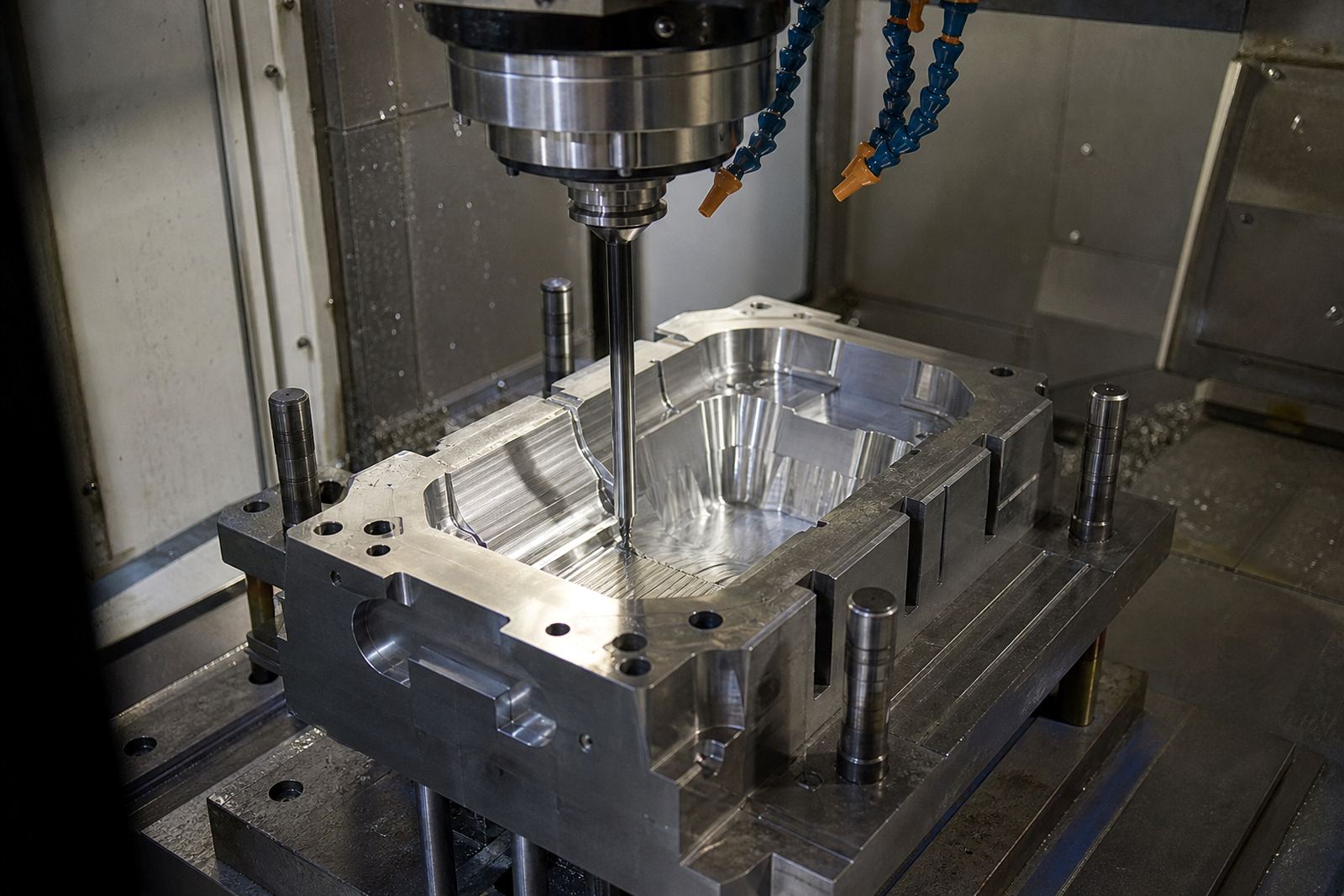
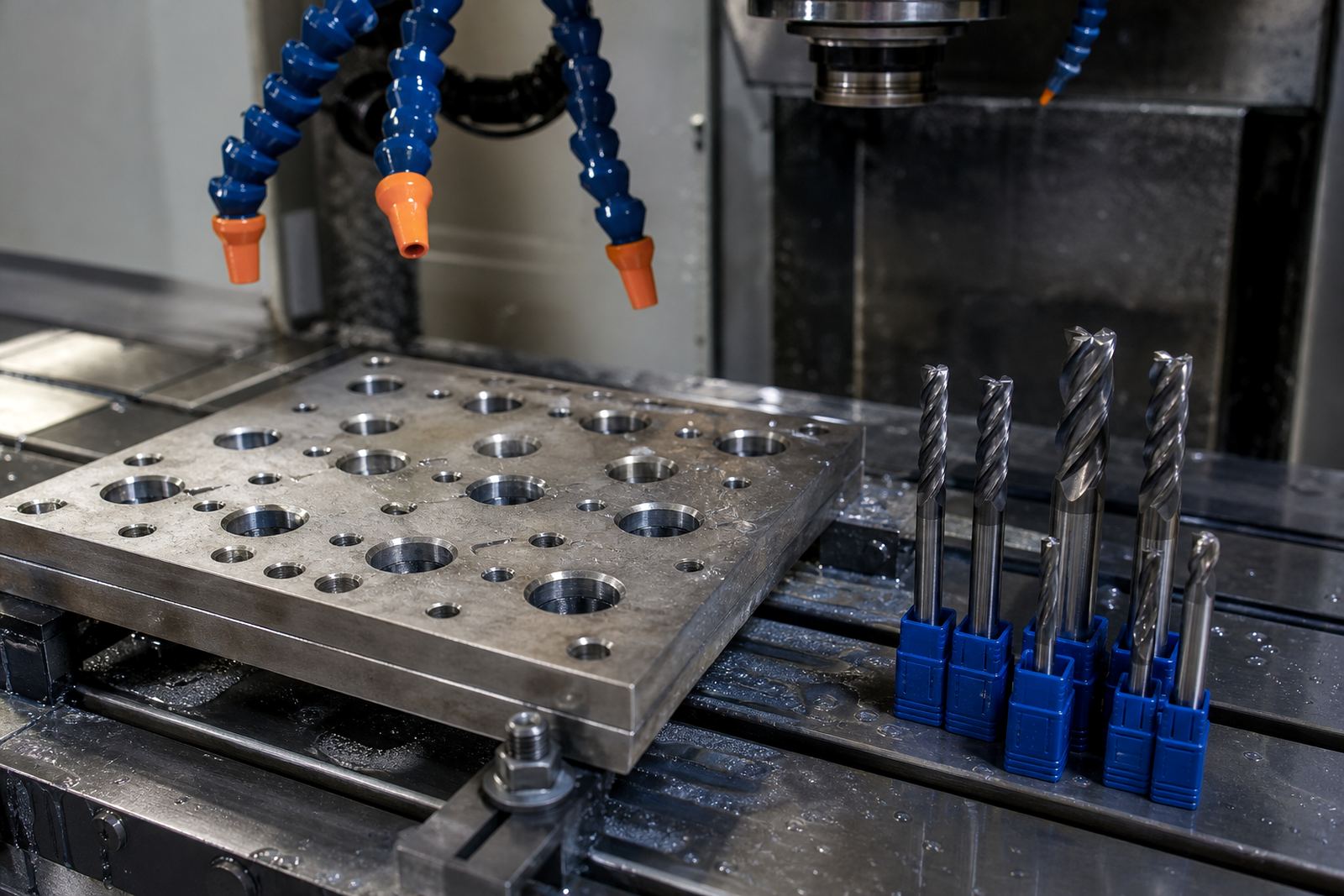
Most copper jobs run on vertical machining centres, small horizontal machines, or compact CNC mills set up for repeat work. Shops often use high-speed spindles, through-spindle coolant on more demanding jobs, and fine-pitch workholding to keep the part from moving under light cutting forces. A clean setup matters as much as the cutter itself.
For copper, we usually look at short gauge lengths, minimal overhang and rigid toolholders. Collet holders may suit lighter work, while shrinking or hydraulic style holders are often better where finish and repeatability are critical. If the machine is working during load-shedding recovery or after power interruptions, the first concern is always consistency. A tool that cuts well at one spindle speed but pulls burrs when conditions change can cause scrap very quickly.
- Short, sharp solid carbide end mills for slotting and finishing
- Drills with polished flutes for clean chip exit in soft copper
- Stable holders with low runout for better edge control
- Coolant delivery that clears chips instead of recutting them
- Workholding that prevents part lift on thin or flat sections
Feed, speed and chip control that actually works
Copper rewards controlled feed and a sharp edge. It usually does better with clean chip formation rather than slow rubbing. That is why speed feed advice is part of the job, not an afterthought. If the feed is too light, the tool tends to rub and smear. If it is too aggressive, the edge can chip or burr size starts drifting.
Johan Smit and the technical team often start with the machine, the cutter diameter, flute count and the copper grade before suggesting a starting point. Pure copper, oxygen-free copper and copper alloys can behave differently, so a one-size setting is not the answer. In practice, a shop may need to test spindle load, adjust coolant pressure and watch chip shape after the first few runs. A small change in feed can improve finish a lot, so do not guess.
- Use sharp edges and avoid worn tools on finishing passes
- Keep chips moving clear of the flute to prevent recutting
- Watch for burrs at exits, corners and pocket walls
- Check actual runout before blaming the cutting data
- Use sample tool trials when the part is costly or tight-tolerance
Layout planning for copper parts with tight tolerances
Copper machining works best when the part layout supports the cut. Thin walls, long profiles and deep pockets can flex if the tool path is not planned properly. For production standardising, we often help clients break the job into roughing, semi-finishing and final finishing steps. That reduces tool load and gives a cleaner final edge.
On parts where electrical contact or thermal transfer matters, burr management should be planned from the start. A sharp entry, sensible toolpath direction and a final pass that leaves even stock can save rework. On-site consultation is often useful where a shop is running several similar parts and wants to reduce tool changes, not just one-off problems. Priya Naidoo and Anele Dlamini often coordinate stock planning with the production team so urgent jobs do not stall when a cutter wears out mid-run.
Layout also matters for stock holding. If your copper arrives in sheet, plate, bar or cut blanks, the way you nest the work can affect chatter and finish. In coastal areas like Durban and Gqeberha, stored copper can also oxidise faster in humid conditions, so clean handling and sensible stock rotation help keep surfaces predictable.
Common copper machining mistakes that drive up cost
The biggest mistake is using a tool that is not sharp enough for a gummy non-ferrous cut. The second is assuming copper will always machine the same way as brass or aluminium. It will not. Many shops also run too much dwell at the bottom of a hole or pocket, which causes smearing and dulls the edge faster than expected. Another common issue is poor chip evacuation in small pockets and blind holes.
Thabo Molefe in the warehouse sees the effect of bad planning every week: urgent reorders, half-used tools that no longer cut clean, and last-minute deliveries into Gauteng or the Cape because the first setup was too optimistic. Technical quotations are easier to compare when the tool count, expected life and machine type are written down properly. That helps with budget control and avoids surprises.
- Do not use dull tools for final passes
- Do not run with poor coolant flow or blocked nozzles
- Do not ignore burrs, they usually point to the real problem
- Do not mix copper grades in the same setting without checking the cut
- Do not buy only on price if tool life matters in production
Budget ranges for shops from one-off jobs to regular production
Budget for copper machining depends on tool diameter, flute count, coating choice where relevant, and how much life you need from each tool. A small shop doing occasional copper parts may spend a few hundred Rand per cutter for basic end mills and drills, while a production line with tight tolerances may plan for higher grade tools and backup stock. The cheapest option is not always the lowest cost when the job is gummy and the deadline is fixed.
For many South African machining shops, a sensible starting budget for a test run might be R1 500 to R5 000 for a small set of cutters and drills. For ongoing work with multiple part numbers, stock planning can move into the R10 000 to R25 000 range depending on usage, tool diameters and urgency. On larger recurring copper programs, it is worth setting aside a separate monthly tool budget so urgent tool supply does not disrupt production. Zanele Khumalo and the procurement side can help align buying with actual consumption, which is better than guessing month to month.
If the copper job is critical, ask for sample tool trials and material matching before committing to volume. That usually saves time and money, especially when the parts are for electrical, thermal or precision assembly work.
How CuTools Carbide supports copper machining across South Africa
CuTools Carbide supplies solid carbide end mills and drills from Wadeville, Germiston to CNC machining shops across South Africa. The work is practical and direct: tool selection, application support, tool life optimisation, material matching and technical quotations that help shops make the right call. Whether you are in Germiston, Boksburg, Alberton, Centurion or further afield, the aim is to keep your copper jobs cutting cleanly and consistently.
For customers dealing with short lead times, machine pressure or a new copper part that keeps throwing burrs, the enquiry form on our contact page is the right first step. We can help with urgent tool supply, production standardising and on-site consultation where needed. The right cutter, used the right way, can turn a difficult copper job into a steady production run.