
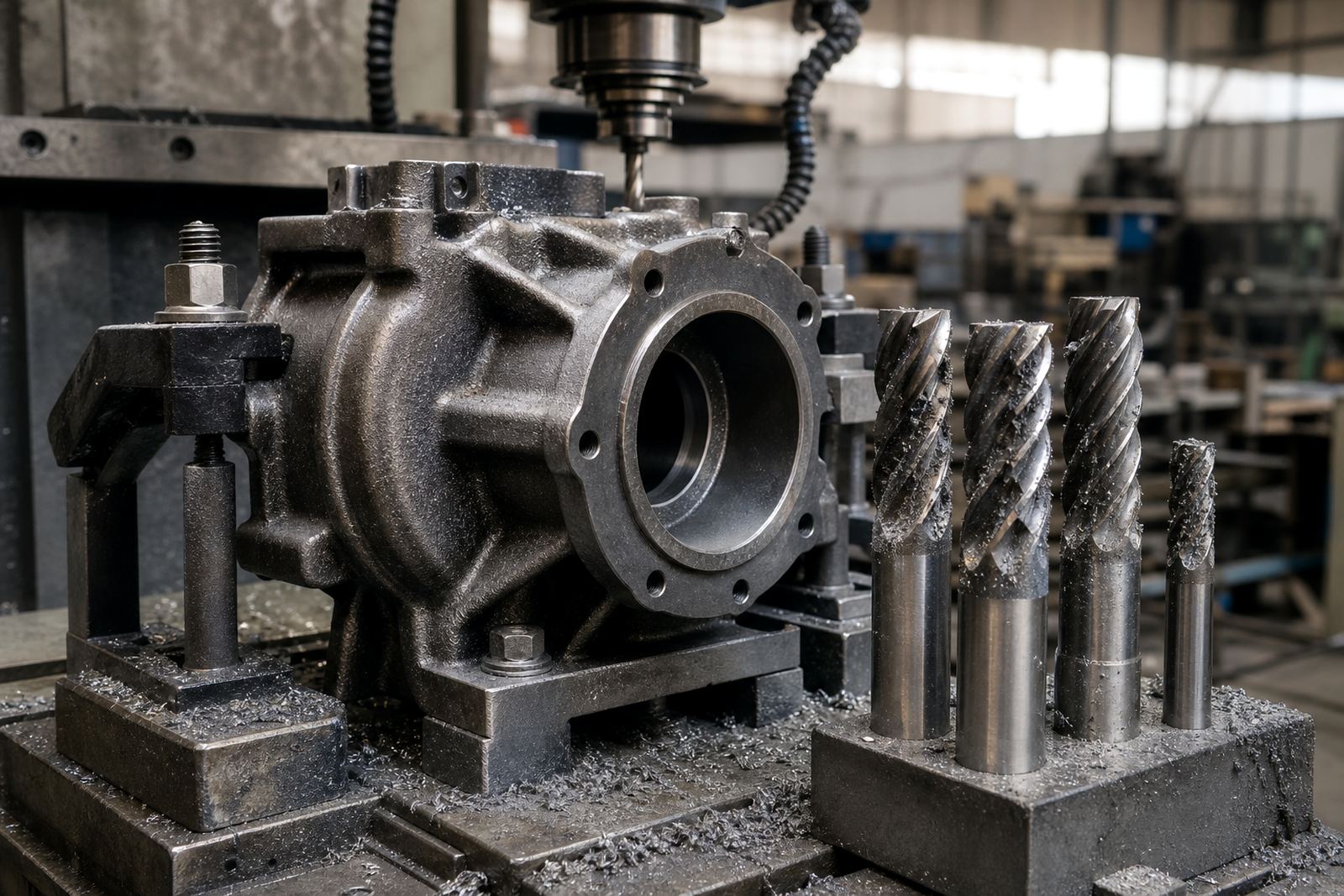
When cast iron parts need clean, repeatable cycles
Cast iron jobs usually arrive with a clear priority: keep cycle times steady, hold size on bores and faces, and avoid tool changes that slow the shift. In workshops around Wadeville, Germiston, Johannesburg and Pretoria, these parts often run in batches for pumps, gearboxes, compressors and general machine build. The material is abrasive, dusty and unforgiving on worn tooling, so the process needs proper tool selection from the start.
For cast iron housings and covers, the common issue is not only tool wear but inconsistency between parts. One casting may have slight skin variation, another may carry sand, and a third may have interrupted cuts around ribs and pockets. That is where the right solid carbide end mill or drill makes a clear difference. The aim is clean cutting, stable spindle load and a finish that does not force extra hand work at the end of the shift.
Typical CNC equipment set for cast iron work
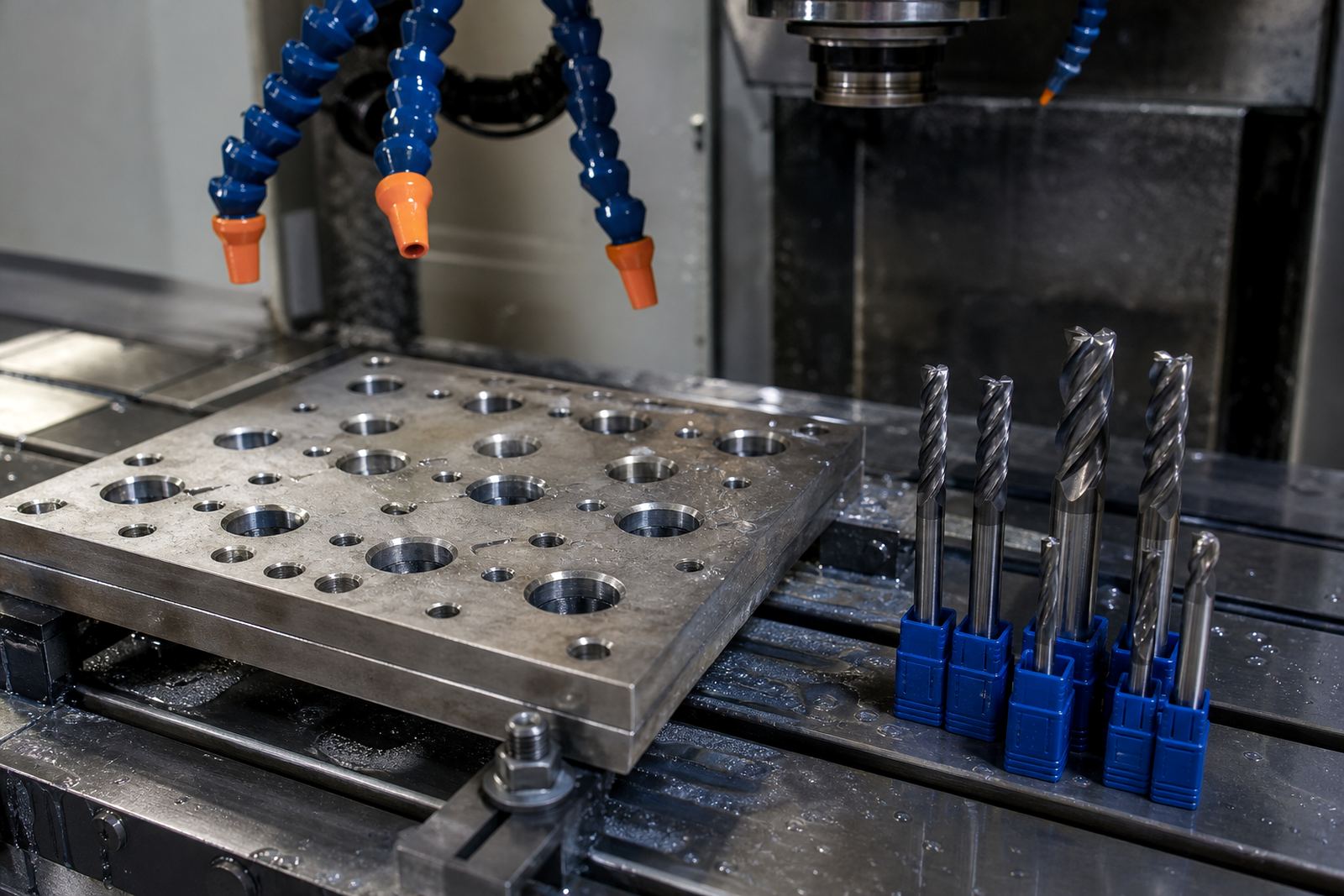
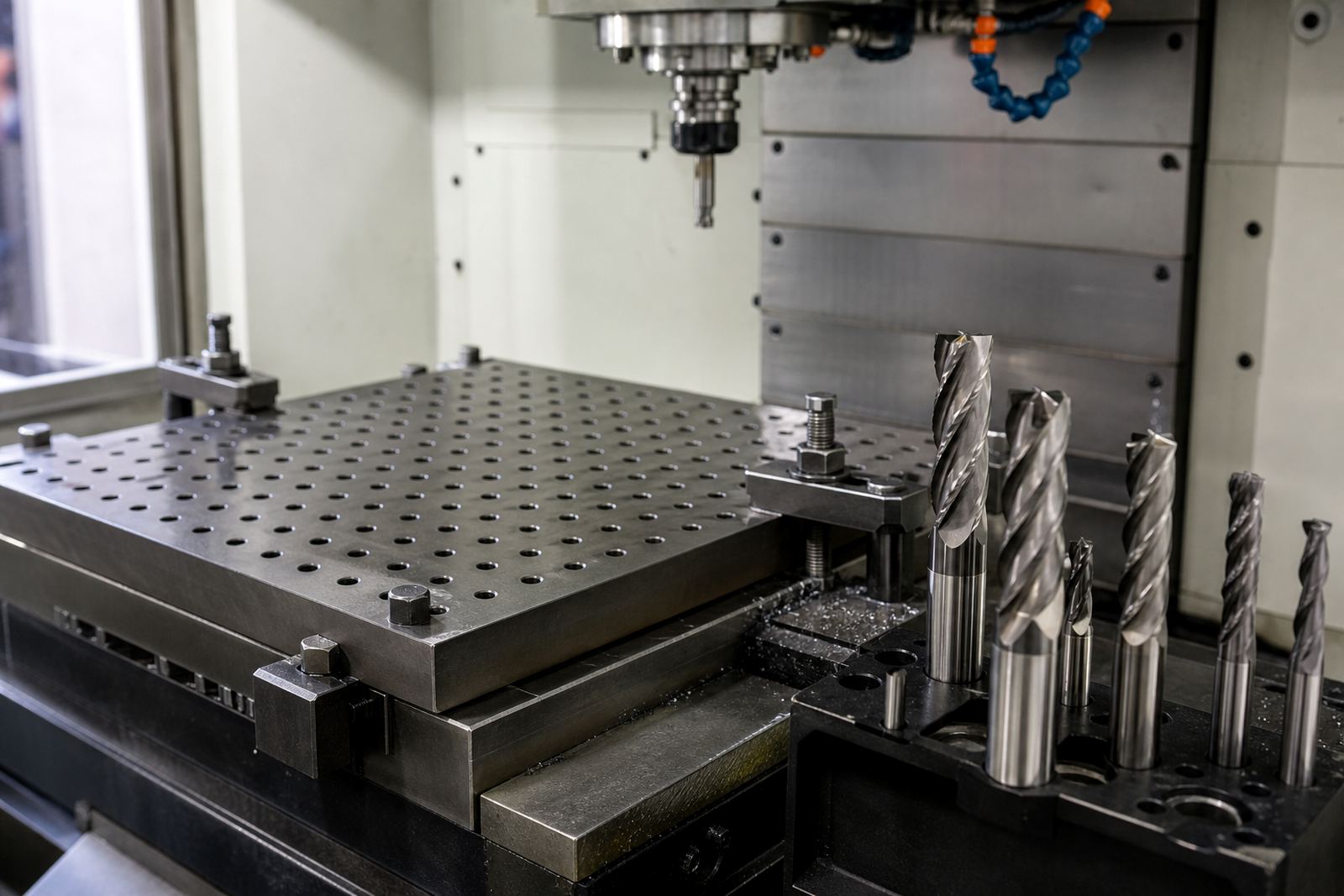
Most production shops handling cast iron on CNC machining centres use a simple tool set that covers roughing, finishing, spot drilling and hole production. The machine may be a vertical machining centre, sometimes with through-coolant capability, and in many Gauteng shops it is running alongside older machines that still do good work if the tooling is matched properly.
- Solid carbide roughing end mills for fast stock removal in pockets and open faces
- Solid carbide finishing end mills for gasket faces, mating surfaces and light finishing passes
- Centre drills or spot drills to start holes cleanly on hard cast skin
- Solid carbide drills for repeated hole patterns in housings and covers
- Stub-length tools where rigidity matters more than reach
- Longer-reach tools only where the setup really requires it, not by default
On cast iron, a shorter tool is usually a better tool. It deflects less, holds better edge life and gives a cleaner result. If the component has deep pockets or awkward ribs, the setup should be planned so the machine is not forced into unnecessary tool overhang.
Layout and planning advice before the first cut
Good planning starts with the casting itself. Check the raw part for flash, scale, core shift and clamping points before programming. A stable fixture saves time, and on cast iron it also helps keep dust under control. In some shops, the simplest arrangement is the best one: firm clamping, short tool stick-out and direct chip evacuation to the sump or extraction system.
For production in Cape Town, Durban and Gqeberha, humidity and coastal air can affect storage and machine upkeep. Cast iron dust mixes with moisture and becomes messy quickly, so tool storage, coolant condition and machine cleaning need regular attention. In inland areas such as Pretoria, Centurion and Boksburg, the problem is often dust build-up from extended runs, especially when load-shedding has interrupted the normal cleaning routine and the shift restarts under pressure.
- Keep the part datums consistent across batches
- Plan roughing before finishing so the final tool only removes a small allowance
- Allow for a light skim on rough cast skin rather than forcing one heavy pass
- Use proper chip evacuation and avoid recutting fine dust
- Check whether the tool path leaves thin walls or chatter-prone areas untreated
A practical setup also includes a spare set of the most used sizes. If a 10 mm or 12 mm tool is doing the bulk of the work, keep replacement stock ready so a job does not stop waiting for the next delivery. That small buffer often saves more than it costs.
Common mistakes that shorten tool life
Cast iron can make a good tool look bad if the process is wrong. One of the most common errors is using too much tool length for a job that only needs a short reach. Another is pushing feed too low, which can rub instead of cut and leave the edge worn in a dull, sandy way. The tool then fails early and the operator blames the carbide, when the real issue was the cutting data.
Another mistake is treating all cast iron the same. Grey iron, ductile iron and abrasive wear grades do not behave identically. The tool that works well on one job may struggle on the next if the material changed but the programme did not. Mixed batches cause this often, especially in repair work where the drawing is old and the raw casting source varies.
- Running a finish tool too hard on rough skin
- Using worn collets or holders that allow chatter
- Leaving coolant dirty, thin or contaminated with cast dust
- Ignoring spindle load changes until the tool breaks
- Ordering only one size and then waiting when it chips
Speed and feed advice should be checked against the actual machine, holder and part condition. A conservative start is often the safest approach, then the cycle can be adjusted once the cut is stable. That is better than guessing and ending up with scrap housings.
Budget ranges that fit workshop reality
Cast iron tooling budgets vary with batch size, hole count and the quality target on the finished part. A small maintenance shop may only need a few key sizes, while a production line turning out repeated housings will need deeper stock planning. For South African workshops, a sensible monthly tooling allowance for one CNC machining centre can start around R3 500 to R8 000 for light repeat work, and move into R12 000 to R35 000 or more where volumes are steady and the parts are more demanding.
As a rule, budget for the tools that keep the job moving rather than only the tool that does the final cut. That means roughers, finishers, drills and at least one backup size on the most used diameter. If a supplier can help with sample tool trials, that often reduces waste before full production starts. It is usually cheaper to test one or two options than to buy the wrong batch and lose an afternoon of machine time.
For shops in Germiston, Johannesburg, Pretoria, Boksburg, Alberton, Centurion, Cape Town and Durban, urgent tool supply matters when a job is due and the machine is booked. Stock planning should reflect local delivery times, shift patterns and whether the plant has to work through weekends or recovery days after power interruptions.
How CuTools Carbide supports cast iron jobs
CuTools Carbide works with CNC machining shops across South Africa that need dependable solid carbide end mills and drills for cast iron production. The team in Wadeville, Germiston helps with tool selection, application support, speed feed advice, tool life optimisation and technical quotations. Where needed, the focus is on one real question: how to get the part finished cleanly without wasting time or tooling.
The team includes Marius van der Merwe, Lerato Mokoena, Johan Smit, Anele Dlamini, Priya Naidoo, Thabo Molefe and Zanele Khumalo. That mix of sales, technical support, warehouse control and quality oversight helps keep the supply side practical, not theoretical. Shops can send an enquiry through the contact page for stock planning, sample tool trials, on site consultation or help with a difficult cast iron component that is eating tools too fast.
For cast iron work, the best result usually comes from small improvements done properly: better tool length, cleaner fixturing, tighter stock control and the right cutting data. Get those right and the job becomes more predictable, even on dusty, awkward castings that have caused trouble before.