
When plastics start to blister, smear or pull at the cut
Plastics machining is usually where a shop finds out very quickly whether the tooling choice is right. When the edge is too aggressive, the part heats up, chips weld back onto the cut and the finish goes dull before the job is even halfway through. On CNC machining centres in Germiston, Johannesburg, Pretoria, Cape Town, Durban and Gqeberha, that means lost time, more hand finishing and a lot of scrap that should never have left the table.
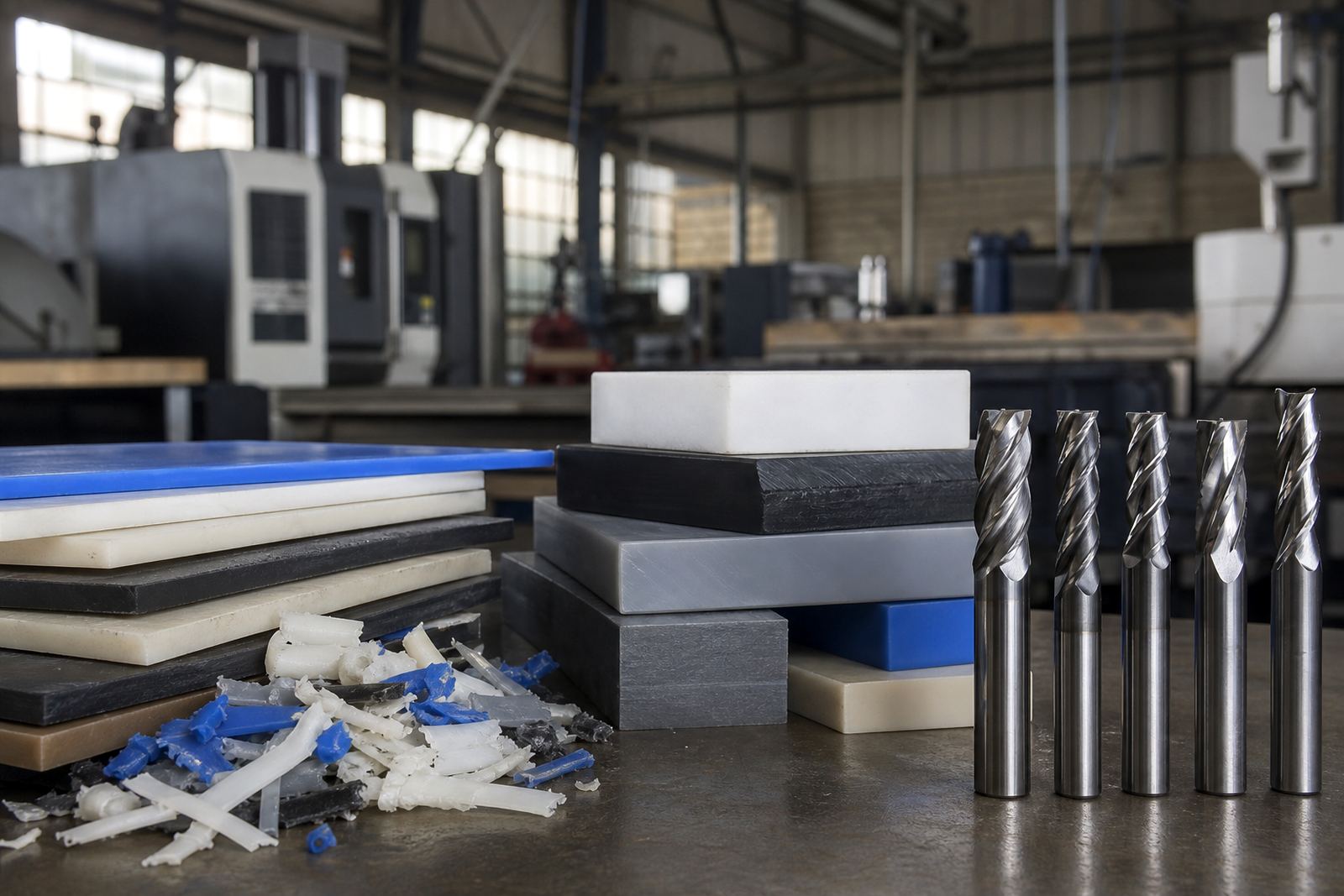
CuTools Carbide works with manufacturing and engineering clients who machine engineering plastics such as nylon, acetal, UHMW, PVC, acrylic, polycarbonate and glass-filled grades. The main target is simple: clean edges, controlled heat and a stable process that holds size without melting the surface. In many cases the difference is not a miracle setting, it is the correct flute style, a sharper cutting edge and a plan for chip evacuation before the job begins.
Typical CNC set-up for clean plastic cutting
A plastics job does not need the same tool path or tool geometry you would use for mild steel. Most shops get better results with solid carbide end mills and drills that are prepared for free cutting, light chip load and low heat build-up. In bigger production runs, the machine set-up matters just as much as the tool itself.
- 2 flute solid carbide end mills for better chip clearance in softer plastics
- Special geometry drills for clean entry and reduced grabbing
- Sharp tools with polished flutes where chip release is important
- Vacuum extraction or strong air blast to move chips away from the cut
- Rigid workholding to stop chatter on thin sheets and long components
- Coolant only where it suits the material, because some plastics do not like flood conditions
For many shops the best results come from dry cutting with air, especially on acrylic and polycarbonate where surface finish matters. On some materials a light coolant strategy helps, but it must be checked against the grade and the part requirement. A bad coolant choice can cause more trouble than it solves, especially with swarf sticking to the cutter or the operator chasing a cloudy finish.
Planning the layout so the part stays flat and true
Before the first part is cut, the layout should already answer three questions: how will the material be clamped, where will chips go, and how will heat be managed through the full cycle. Plastics move differently from metals, so a setup that looks neat can still fail if the sheet bows or the component shifts after the first roughing pass.
For sheet work, support is important over the full span. For block material, allow for stress release between passes. If the job has deep pockets or thin walls, roughing should be done with enough clearance for chip evacuation and a finishing pass should be left for the final surface. On production work, Johan Smit in technical applications often gets called in to review the tool path before parts are released to the floor, because a small change in step-over can save a full batch.
- Leave enough stock for finishing, but not so much that heat builds up in the last pass
- Use climb cutting where the material and machine suit it
- Keep engagement consistent to avoid sudden rubbing at corners
- Test the first part for edge quality, size and any signs of whitening or melting
In coastal areas like Durban and Gqeberha, humidity can also affect storage and handling. Sheets may pick up surface contamination and packaging can trap moisture, so stock planning should include proper storage, clean handling and first-in, first-out rotation. In Gauteng, dust and warm factory air can still affect finish quality if the material is left open on the shop floor for too long.
Common mistakes that cost time and Rand
Most plastics issues are not caused by the material alone. They come from running too fast with the wrong cutter, using blunt tools for too long, or trying to force one set of settings across different polymers. A job that runs well on acetal can behave very differently on acrylic or filled nylon.
The most common mistakes include excessive spindle speed with too little chip load, poor chip extraction, pushing drills too hard on entry, and ignoring the edge condition of the cutter. Another common problem is using the same approach for roughing and finishing, which usually gives a decent looking rough cut and a poor final surface. Zanele Khumalo often flags these jobs when procurement and quality are both involved, because the real cost shows up in rejects and rework, not only in tooling spend.
- Running worn tools until they start melting the cut edge
- Letting chips recut into the slot or pocket
- Choosing a drill point that grabs on thin wall sections
- Using too much clamping force and marking the part
- Ignoring the difference between unfilled and filled plastics
For shops under load-shedding pressure, the extra risk is restart consistency. If power drops mid-cycle, the machine may recover but the part can shift or cool unevenly. That is where simple process notes and repeatable tool records help more than guesswork.
Budget ranges for plastics machining tooling
Budget depends on the size of the cutter, the grade of carbide, the geometry and whether the job is a one-off or repeat production. For standard plastics work, many shops start with a sensible range that covers general profiling, slotting and drilling without paying for tooling they will never use. For tighter tolerances or high-volume work, better geometry usually pays back quickly.
A practical starting point for solid carbide end mills and drills in plastics machining is often in the range of a few hundred Rand for smaller cutters, moving into the low thousands Rand for larger or special-purpose tools. A shop doing short runs may spend less overall, but the cost per part is often higher if the cutter wears early or the finish needs hand work. For steady production, better tool life and fewer rejects usually justify the higher initial spend.
Thabo Molefe in warehouse coordination and Priya Naidoo in customer support often help clients plan stock around expected demand, because a missing 6 mm cutter can stop a whole batch. Where urgent supply is needed, it is better to hold the common sizes on the shelf and order the specials before the job becomes critical.
How CuTools Carbide supports plastics jobs across South Africa
CuTools Carbide supplies solid carbide end mills and drills from Wadeville, Germiston to CNC machining shops across South Africa, including Johannesburg, Pretoria, Cape Town, Durban and Gqeberha. The team supports tool selection, application support, speed and feed advice, tool life optimisation, material matching and urgent tool supply for production work that cannot wait.
For plastics machining, that often means comparing the material grade, the machine condition and the finish requirement before the first tool is picked. Marius van der Merwe leads the business with a practical focus on reliable supply and usable advice, not theory. If a shop is working on transparent parts, food-grade components, electrical housings or shaped spacers, the right tooling choice can reduce finishing time and improve consistency from one batch to the next.
Clients reach the team through the enquiry form on the contact page. From there, the goal is to keep the setup simple, the tooling suitable and the process repeatable, even when the factory floor is busy and the deadline is tight.