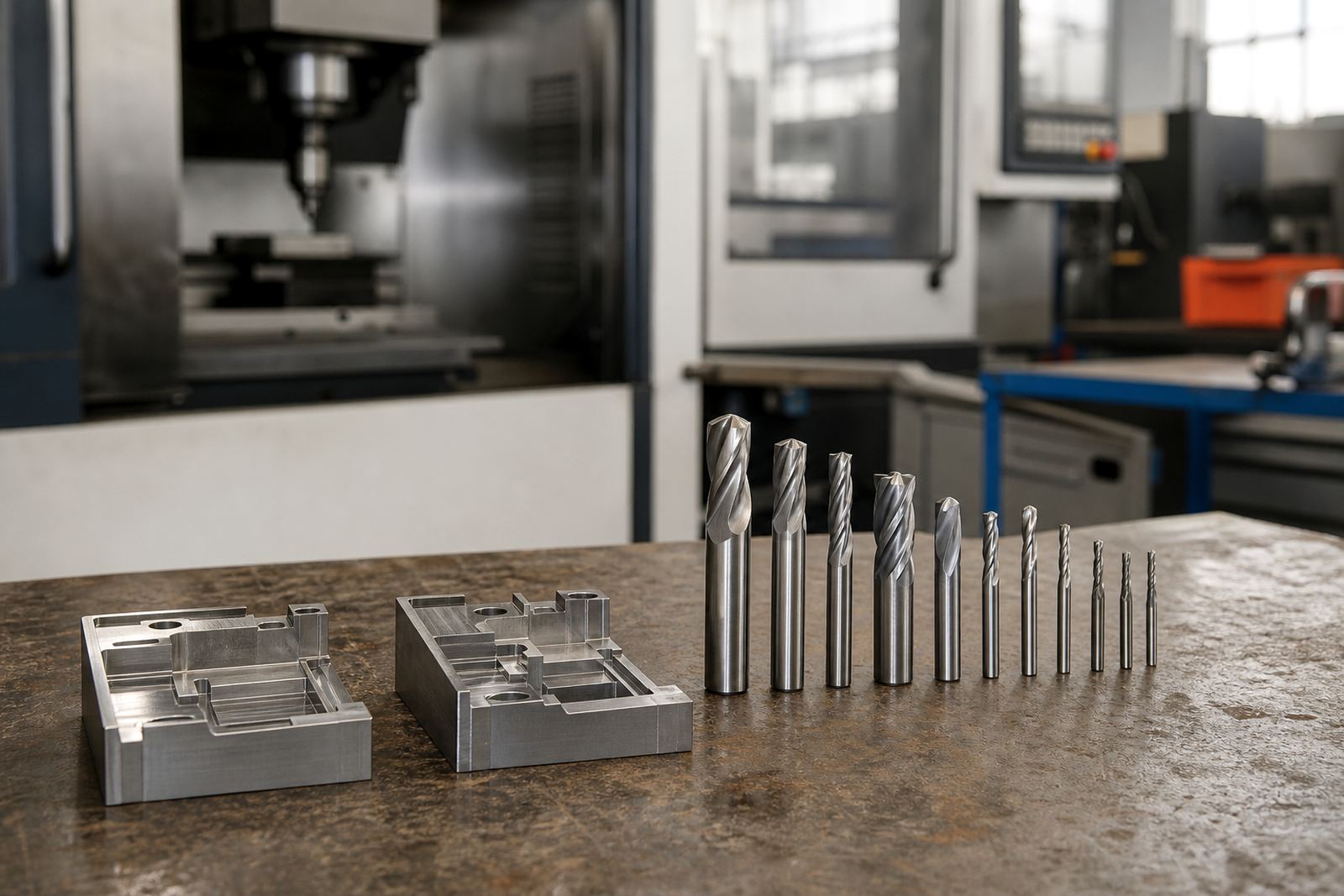
What stock planning covers for machining shops
Our stock planning service helps you decide which solid carbide end mills and drills to keep on hand, how many pieces to hold, and when to reorder before a line stops. It suits jobbing shops, production floors, maintenance teams, and contract machinists working with steels, stainless steels, cast iron, aluminium, and mixed material batches.
We look at your current tool use, machine count, part mix, shift patterns, and the lead times that affect your floor. In Germiston, Johannesburg, Pretoria, Cape Town, Durban and Gqeberha, we see very different demand patterns, so the stock profile needs to match local conditions, not a generic list.
- Repeat-order planning for high use end mills and drills
- Minimum, target, and emergency stock levels
- Tool groupings by diameter, flute count, and coating type
- Advice for humidity, rust prevention, and sealed storage
How we build a sensible stock profile
We start with the tools that affect uptime most: roughing cutters, finishing cutters, spot drills, job-specific drills, and the sizes that you use every week. Then we work out a practical holding level based on consumption, breakage history, and the consequences of running out during a shift.
The aim is to keep enough stock to cover busy periods, supplier delays, and load-shedding related scheduling changes, without tying up cash in slow movers. A shop running two shifts in Wadeville will need a very different profile from a small precision cell in Centurion or a marine-facing workshop in Durban where corrosion and moisture play a bigger role.
- Review of tool usage by machine and part family
- Reorder point setting for fast moving items
- Buffer stock advice for seasonal or contract work
- Storage notes for dry cupboards, desiccant packs, and sealed bins
What we need from your team
To set up stock planning properly, we need a clear picture of your current tooling and your production rhythm. We do not need a full system overhaul on day one. A simple tool list, monthly usage estimate, and a few examples of repeated jobs are usually enough to get started.
Our team in Wadeville works with your sales, production, and stores staff to make sure the numbers are practical. Lerato Mokoena handles commercial alignment, Johan Smit checks the application side, and Thabo Molefe helps with warehouse flow so the plan stays usable on the floor, not only on paper.
- Current tool list with sizes and quantities
- Typical monthly consumption or job frequency
- Machine types and spindle limits
- Notes on urgent jobs, night shift work, and any tooling bottlenecks
Turnaround and review rhythm
For a basic stock plan, turnaround is usually quick once we have the details. Smaller shops may only need one review session, while larger sites in Pretoria, Boksburg, Alberton, or Cape Town often need a staged setup across different departments.
After the first plan is agreed, we recommend a review every 4 to 12 weeks depending on usage. Fast changing production, new materials, or frequent tool breakage may need a shorter cycle. If you are running close to capacity, a monthly review can prevent emergency buying and stop the store from carrying odd sizes that never move.
- Initial stock review and item grouping
- Suggested reorder levels and hold quantities
- Follow-up adjustment after first production cycle
- Routine checks based on actual tool wear and usage
Pricing approach that suits production budgets
Stock planning is priced according to the size of the operation and the amount of support needed. A single workshop with a limited range of cutters will need less time than a multi-machine site with several part families and different shift patterns. We keep the approach straightforward so you can see where the time goes and what it saves.
In most cases, pricing is based on the number of tool groups, the complexity of your repeat orders, and whether you need on site consultation. If you only need a stock reset and reorder schedule, that stays lean. If you want broader production standardising, material matching, and tool life optimisation alongside it, we will quote accordingly. No unnecessary extras, just the parts that help keep stock under control.
Spec-driven planning for end mills and drills
We plan around the actual tool specifications you use, because stock planning only works when the stored item matches the job. Solid carbide tools are often grouped by diameter, overall length, flute length, helix, and coating type. We also look at the material being cut, since a tool used in stainless steel is not always the right spare for mild steel or aluminium.
Our team pays attention to the details that affect shelf life and repeat use, especially in coastal areas and during seasonal humidity. Good stock planning also helps with municipal compliance on storage and housekeeping, because a tidy tool store reduces damage, loss, and unnecessary waste.
Why repeat ordering helps keep your floor running
A stable stock pattern makes daily work easier. Operators are less likely to substitute the wrong tool, stores staff spend less time hunting for missing items, and supervisors can trust that common sizes are actually available when the job lands. That matters when the order is urgent and the machine time is booked.
It also supports better buying decisions. Instead of ordering in a panic, you can place repeat orders on a planned cycle and keep the right mix of fast movers and safety stock. For many shops, that is the difference between stopping a machine for half an hour and keeping production on schedule. It sounds simple, but it saves money every week.
Key facts
| Focus | Repeat ordering and practical stock profiles for CNC tooling |
|---|---|
| Tool types | Solid carbide end mills and drills |
| Typical review interval | 4 to 12 weeks, depending on usage |
| Planning inputs | Consumption data, machine list, part mix, and breakage history |
| Suitable for | Jobbing shops, production floors, and maintenance teams |
| Service areas | Germiston, Johannesburg, Pretoria, Boksburg, Alberton, Centurion, Cape Town, Durban |