
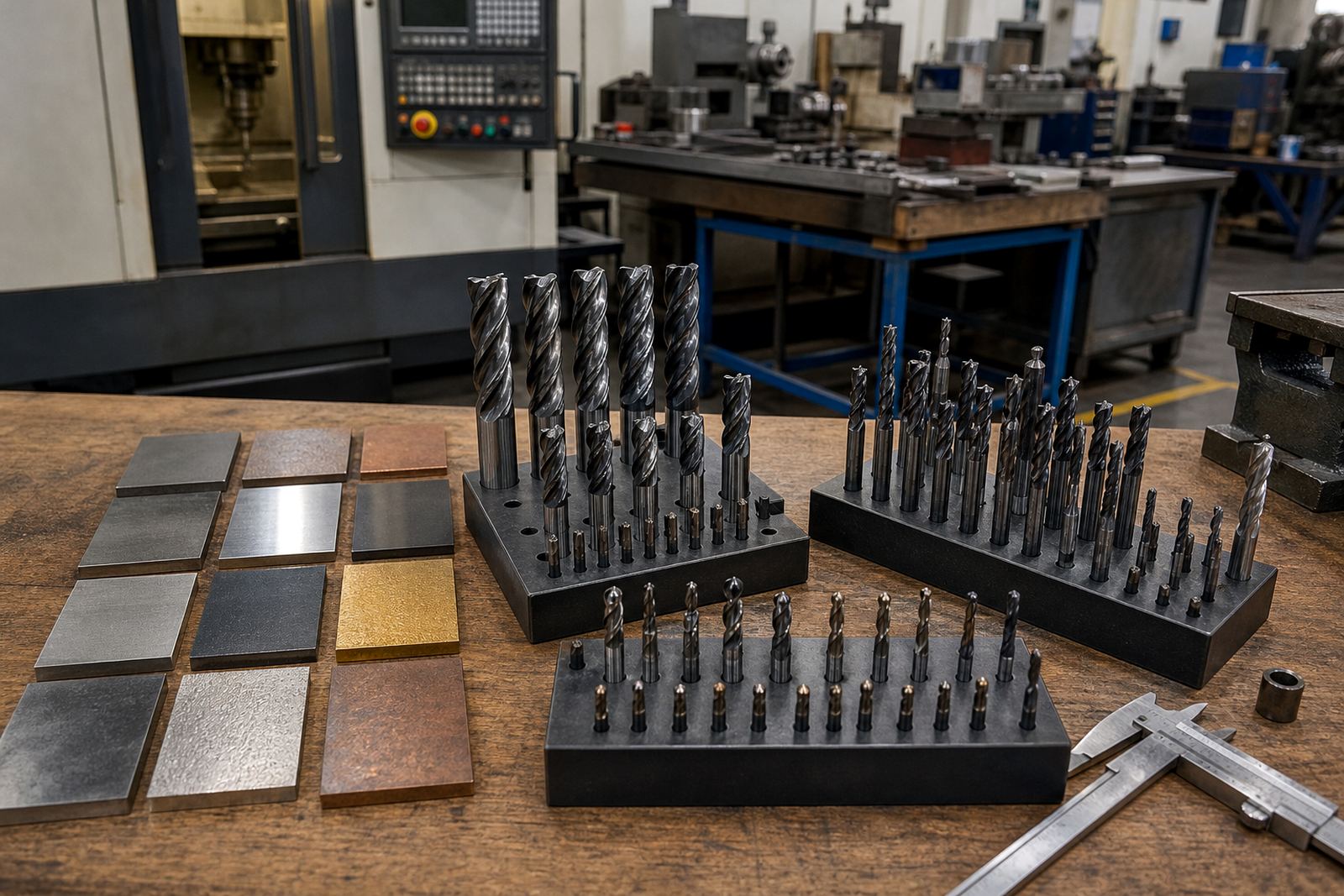
What Material Matching Covers On The Shop Floor
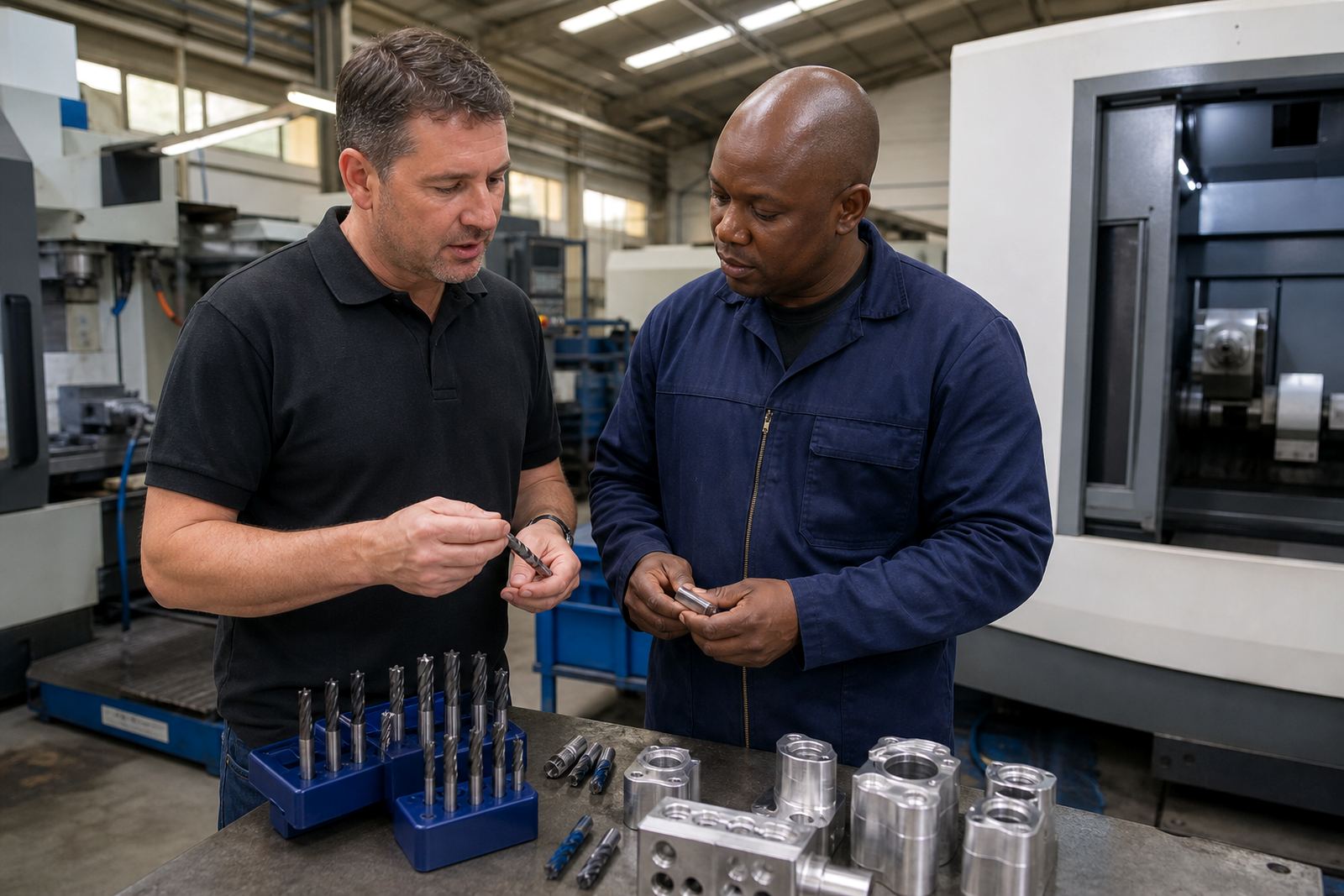
Material matching is the process of pairing the right carbide geometry, flute count, coating and edge prep to the material being machined. A tool that works well in free cutting aluminium may struggle in stainless, while a drill set up for mild steel can rub in a tougher grade and wear out early. We help shops avoid that mismatch before the first part is cut.
Our support covers common production materials such as aluminium, carbon steels, alloy steels, stainless steels and mixed batches where the material certificate is not always exact. We also assist with cast iron, tool steel and other machining grades used by local manufacturing plants, maintenance workshops and contract CNC shops. Where a job runs across shifts and load-shedding backup power, we look at stable cutting conditions that hold up when feed and speed control must stay consistent.
- Solid carbide end mills for roughing, finishing and slotting
- Solid carbide drills for through holes and blind holes
- Geometry advice for chip control and surface finish
- Material specific guidance for harder or gummy alloys
- Support for repeat jobs and production standardising
How We Match Tools To Aluminium, Steel And Stainless
Aluminium usually calls for sharp cutting edges, polished flutes and a geometry that clears chips quickly. In steel, especially when cycle times are tight, the balance shifts toward edge strength and wear resistance. Stainless needs even more care because heat builds up fast and the wrong tool can chatter or work harden the surface.
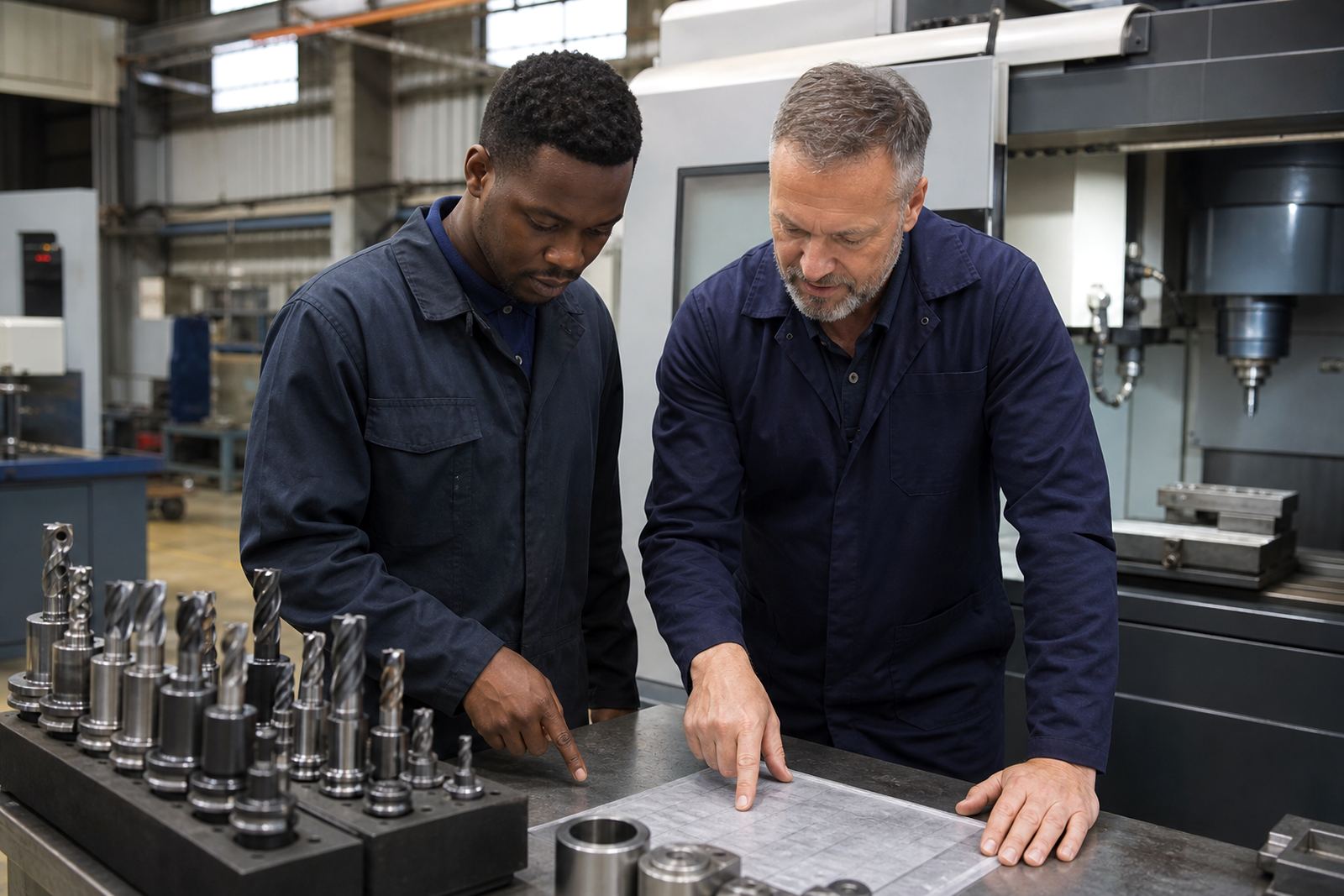
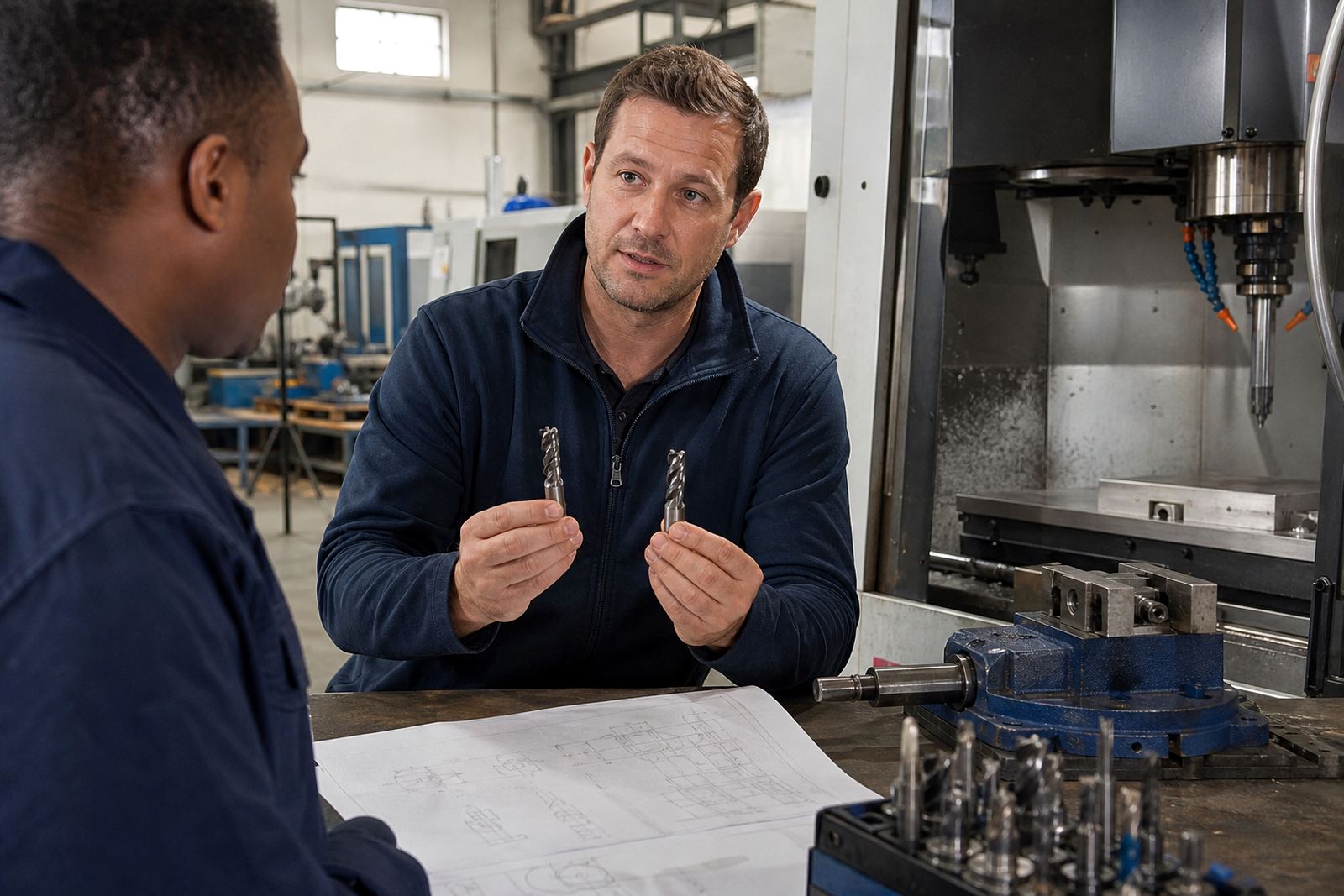
We look at the full cutting picture, not just the material name. That includes spindle speed, feed rate, hole depth, coolant delivery, workholding, and whether the machine is running a short duty cycle or a full day production run. For deeper pockets, thin wall parts or interrupted cuts, the tool choice may change again. A 4 flute end mill that is ideal for one stainless job may be the wrong choice for another, so we match the tool to the actual cut, not only the drawing.
- Geometry matched to chip load and material hardness
- Flute count chosen for chip evacuation or tool strength
- Coating advice for heat, wear and built up edge
- Diameter and reach suited to depth of cut
- Corner style matched to finish and edge life
What The Service Includes From First Query To Tool Choice
Once the enquiry comes in through the contact page, our team reviews the job details and checks the material type, machine type and tool application. If the shop already has a tool in mind, we can assess whether it is the right fit or whether a different geometry would give better life and fewer rejects. When needed, we ask for sample parts, a drawing or the current tool data so the recommendation is based on real cutting conditions.
The service can include technical quotations, sample tool trials and on-site consultation for plants in Germiston, Johannesburg, Pretoria, Boksburg, Alberton, Centurion, Cape Town and Durban. We also help with production standardising where multiple operators are using slightly different settings and tool changes are happening too often. That kind of drift is common on busy shops, and it usually shows up in edge wear, poor finish or short drill life.
- Review of material, machine and job requirements
- Tool recommendation by diameter, flute count and coating
- Advice on cutting data and chip control
- Trial support on selected production runs
- Feedback loop after the first parts are cut
Typical Turnaround And How Pricing Is Handled
For standard material matching requests, response time is usually quick once the job details are complete. Same day feedback may be possible for straightforward work, while more complex applications may need a deeper review of the part, material grade and machining conditions. Urgent tool supply is possible where stock is available, and that helps when a production line cannot wait for a long procurement cycle.
Pricing depends on the size of the job, the amount of technical input required and whether a trial or site visit is needed. We keep the approach practical: basic matching guidance is handled as part of the quotation process, while more involved support may be billed as a technical service. There is no point loading extra cost onto a job if a simple tool change will solve the problem. The aim is to keep the tool spend in line with the output, not push unnecessary premium items.
- Standard requests: quick review once details are received
- Complex jobs: deeper assessment of material and cutting conditions
- Trial tools quoted according to application and stock status
- On-site support priced by scope and location
- Repeat production work can be planned around monthly demand
Maintenance Intervals For Keeping Tool Performance Steady
Carbide tools do not usually need maintenance in the way a machine does, but they do need regular review. If a tool starts leaving a poorer finish, pushing up amperage or making chips that look inconsistent, that is a sign the geometry or cutting data should be checked. Waiting until the tool fails completely often means more scrap, more downtime and extra tool cost.
As a general guide, shops should review tool life at set production intervals, especially on repeat jobs. A weekly check may suit high volume work, while low volume or jobbing shops may review after each batch. For stainless and abrasive materials, the interval can be shorter because edge wear builds faster. We can help set a practical review cycle so the shop knows when to replace, re-order or change the cutting strategy. In coastal areas like Durban and Gqeberha, storage conditions matter too, because moisture can affect packaging and handling if tools are left exposed.
- Check finish quality and chip shape regularly
- Review tool wear after each batch on critical jobs
- Store tools dry and sealed where humidity is high
- Keep a record of cutting data and tool life
- Reassess matching when material source changes
Why Shops In Germiston And Beyond Use This Support
Shops come to us for material matching when they need fewer guesswork changes and more repeatable output. That matters whether the work is in Johannesburg on a high mix production line, in Pretoria on precision component work, or in Cape Town and Durban where humidity, stock holding and delivery timing can all affect planning. Matching the tool to the material saves time on the machine and reduces the chance of reworking parts.
CuTools Carbide is based in Wadeville, Germiston and supplies CNC machining shops across South Africa. Our team includes people who deal with selection, technical applications, operations and quality, so the support is practical and not just a catalogue answer. If your job needs a carbide end mill or drill chosen for a specific material, we can help narrow it down and keep the process moving.
Key facts
| Service area | Germiston, Johannesburg, Pretoria, Cape Town, Durban, Gqeberha and surrounding industrial areas |
|---|---|
| Materials matched | Aluminium, carbon steels, alloy steels, stainless steels, cast iron and tool steels |
| Tool types | Solid carbide end mills and solid carbide drills |
| Typical diameters | 0.5 mm to 20 mm, depending on stock and application |
| Common features | 2 flute, 3 flute, 4 flute, variable helix, corner radius, through coolant where applicable |
| Turnaround | Quick review for standard enquiries, urgent supply where stock is available |